manuals.online logo
Brands
  1. Home
  2. •
  3. Brands
  4. •
  5. Eaton
  6. •
  7. Control Panel
  8. •
  9. Eaton JSB FX4200 Series User manual

Eaton JSB FX4200 Series User manual

Other Eaton Control Panel manuals

Eaton VoCALL 5 User manual

Eaton

Eaton VoCALL 5 User manual

Eaton Greengate ControlKeeper CK4A-SSRC User manual

Eaton

Eaton Greengate ControlKeeper CK4A-SSRC User manual

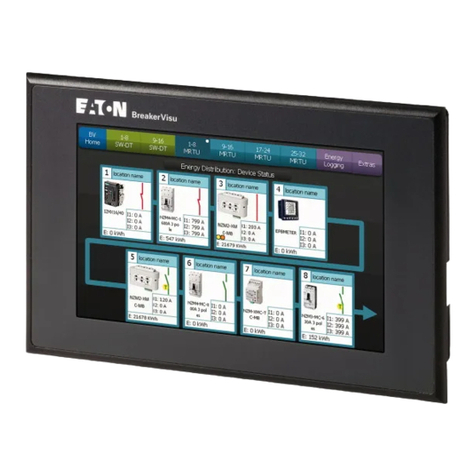
Eaton BreakerVisu NZM-XMC-MDISP35-MOD Manual

Eaton

Eaton BreakerVisu NZM-XMC-MDISP35-MOD Manual

Eaton DF6100 User manual

Eaton

Eaton DF6100 User manual

Eaton Cuttler-Hammer FDAP-M User manual

Eaton

Eaton Cuttler-Hammer FDAP-M User manual

Eaton MEMSHIELD 4 User manual

Eaton

Eaton MEMSHIELD 4 User manual

Eaton DF6200 User guide

Eaton

Eaton DF6200 User guide

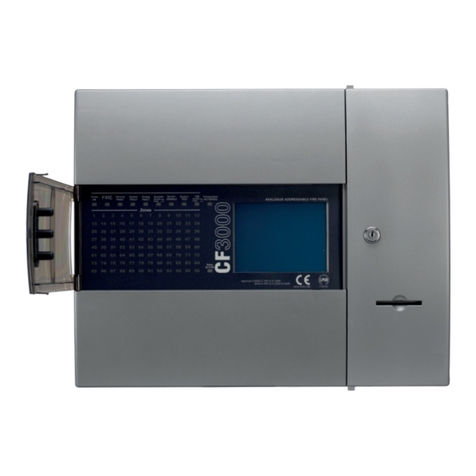
Eaton CF3000 User manual

Eaton

Eaton CF3000 User manual

Eaton BreakerVisu NZM-XMC-MDISP35-MOD Manual

Eaton

Eaton BreakerVisu NZM-XMC-MDISP35-MOD Manual

Eaton BiWire Flexi User manual

Eaton

Eaton BiWire Flexi User manual

Eaton BreakerVisu NZM-XMC-MDISP35-MOD User manual

Eaton

Eaton BreakerVisu NZM-XMC-MDISP35-MOD User manual

Eaton EFCV8ZONE User manual

Eaton

Eaton EFCV8ZONE User manual

Eaton FX6000 User manual

Eaton

Eaton FX6000 User manual

Eaton BiWire Flexi User manual

Eaton

Eaton BiWire Flexi User manual

Eaton EASY-RTD-DC-43-03B1-00 Manual

Eaton

Eaton EASY-RTD-DC-43-03B1-00 Manual

Eaton InsulGard Instruction Manual

Eaton

Eaton InsulGard Instruction Manual

Eaton P1RX 240Vac Max User manual

Eaton

Eaton P1RX 240Vac Max User manual

Eaton XV300 Series User manual

Eaton

Eaton XV300 Series User manual

Eaton CF2000 User manual

Eaton

Eaton CF2000 User manual

Eaton Cutler-Hammer PanelMate User manual

Eaton

Eaton Cutler-Hammer PanelMate User manual

Eaton VoCALL 5 User manual

Eaton

Eaton VoCALL 5 User manual

Eaton COOPER POWER SERIES User manual

Eaton

Eaton COOPER POWER SERIES User manual

Eaton Greengate LiteKeeper 8 User manual

Eaton

Eaton Greengate LiteKeeper 8 User manual

Eaton DALI User manual

Eaton

Eaton DALI User manual

Popular Control Panel manuals by other brands

GENEVO PRiMA 6 installation manual

GENEVO

GENEVO PRiMA 6 installation manual

NAPCO X 255 - Programming instructions

NAPCO

NAPCO X 255 - Programming instructions

Next Systems UNIR1 230 instruction manual

Next Systems

Next Systems UNIR1 230 instruction manual

HORNER HE-XPW1E0 user manual

HORNER

HORNER HE-XPW1E0 user manual

DSC CLASSIC PC1555 instruction manual

DSC

DSC CLASSIC PC1555 instruction manual

Bosch Solution 2000 installation guide

Bosch

Bosch Solution 2000 installation guide

VRinsight MS Panel user manual

VRinsight

VRinsight MS Panel user manual

Zeiss SYCOP 3 Quick reference guide

Zeiss

Zeiss SYCOP 3 Quick reference guide

HULTSTEINS ECOFRIDGE DISPLAY user manual

HULTSTEINS

HULTSTEINS ECOFRIDGE DISPLAY user manual

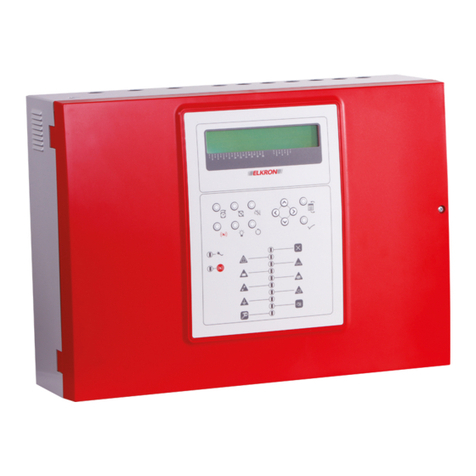
Elkron C420 Programming manual

Elkron

Elkron C420 Programming manual

GST GST200-2 Installation and operation manual

GST

GST GST200-2 Installation and operation manual

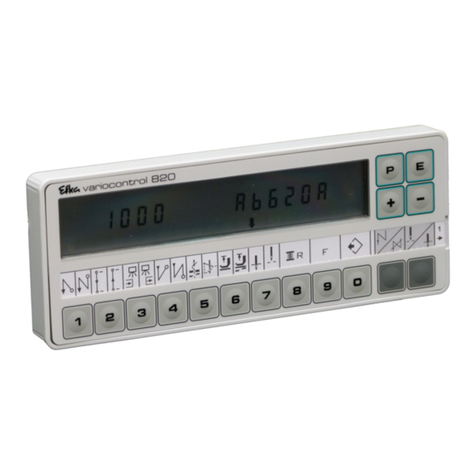
Efka Variocontrol V810 instruction manual

Efka

Efka Variocontrol V810 instruction manual

RDZ PC-HRX user manual

RDZ

RDZ PC-HRX user manual

STG-BEIKIRCH MZ3 operation instruction

STG-BEIKIRCH

STG-BEIKIRCH MZ3 operation instruction

AMX AutoPatch CP-15 instruction manual

AMX

AMX AutoPatch CP-15 instruction manual

Cebora 208-10 instruction manual

Cebora

Cebora 208-10 instruction manual

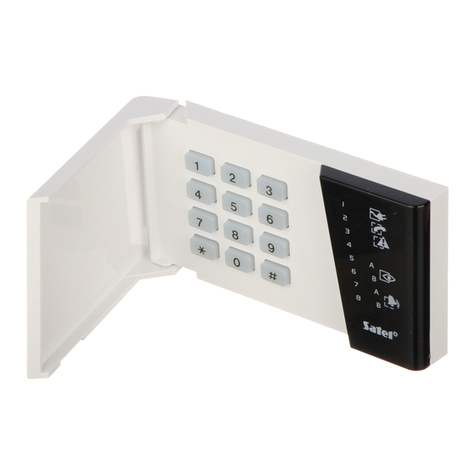
Satel CA-6 KLED-S user manual

Satel

Satel CA-6 KLED-S user manual

Evolution IQ plus 800 installation manual

Evolution

Evolution IQ plus 800 installation manual

manuals.online logo
manuals.online logoBrands
  • About & Mission
  • Contact us
  • Privacy Policy
  • Terms and Conditions

Copyright 2025 Manuals.Online. All Rights Reserved.

IMPORTANT
Ensure that all equipment connected to this panel is fully compatible.
If in doubt, check with supplier or contact Technical Helpline.
TECHNICAL SPECIFICATION
1. INSTALLATION
The panel should be installed in a clean, dry, reasonably well ventilated place, and not in direct sunlight.
Temperatures in excess of 40°C may cause problems, contact technical help line for further information.
The panel should be located away from any potential hazard, in a position where it is readily accessible to authorised staff and
to the fire services, ideally on the perimeter of a building near a permanent entrance.
When mounting the panel to the wall, do not drill through the fixing holes on the back plate, as this could allow brick dust to
contaminate the circuitry.
Cable entry can be from rear or top, 20mm conduit entries are provided at top, cable entry aperture is provided at rear.
Do not fit smoke detectors into bases until all building work likely to cause dust is complete.
Smoke detectors are delicate and can be affected by dust and give false alarms, or slow response.
It is essential that if smoke detectors are fitted prior to building work being complete, then protective covers or bags are used
to prevent dust entry.
9. COMMISSIONING THE SYSTEM
Assuming that the installation instructions have been followed and successfully completed, then the complete fire alarm system
is now ready for commissioning.
Test each detector and call point in turn to check that it operates the alarm correctly. Reset after each test. Check that all the
sounders operate.
10. WALK TEST
A walk test function has been included in this panel to enable one person (i.e. the contractor/ installer) to test the fire alarm
without an assistant. This function is for the sole use of the contractor/installer and not for normal operational use.
The walk test access code is concealed inside the fire alarm control panel. Once the walk test code has been correctly entered
the test in progress indicator will show and the buzzer will pulse, this sets a time window of 10 minutes. If a sensor is triggered
within this time the sounders will operate for a short time then the system will automatically reset.
If a sensor is not triggered within this time duration then the system will automatically reset and return to normal operation.
To end the walk test press reset.
11. HANDOVER
If there is a delay in the occupation of the building and the fire alarm is not required, ensure that the battery is regularly
charged, otherwise it may be permanently damaged.
The responsible person should be acquainted with the logbook check, test and operating procedures. Hand over the Access
Code keyfob to the responsible person.
12. AFTER CARE
Do not clean the panel exterior with solvent cleaners or harsh abrasives.
13. FUSE REPLACEMENT
Refer to fuse schedule on PCB for details of replacement fuses.
14. TECHNICAL HELPLINE
For technical assistance contact our technical helpline. Tel 01302 303350
Installation Instructions for:
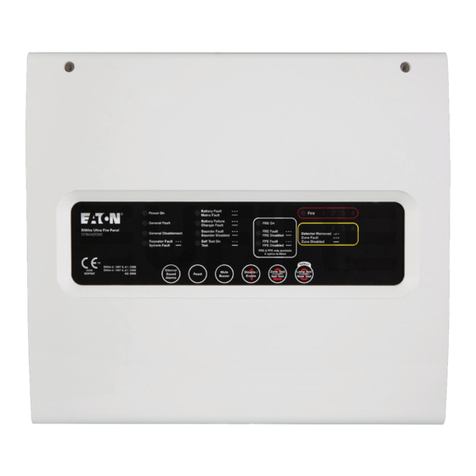
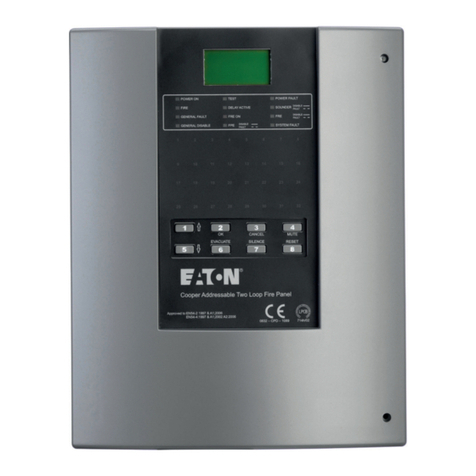
4200 Series Fire Panels (8 Zone Version)
CC1234
8 ZONE
Supply Voltage 230Vac +10%,-15%
Number of zones 8
Nominal Current 40mA
Battery 1 x 12V 7 AH
No of sounder circuits 2
Total sounder circuit load 800mA total max
Sounder circuit EOL device 6K8 resistor
Detector zone EOL device EOLM-1
Number of detectors per zone 20 Max
-4-
3. MAINS CONNECTION
The mains supply should be exclusive to the fire alarm as detailed in BS 5839 pt. 1. A plug and socket is not satisfactory.
We recommend that a switched double pole fused spur unit is used and marked FIRE ALARM DO NOT SWITCH OFF, and this
should be solely for the use of the fire alarm. This also provides a method of isolating the supply for maintenance purposes.
The mains supply should only be connected to the terminal block marked MAINS.
4. BATTERY CONNECTION
Connect the red battery wire to the red battery terminal (+), connect the black battery wire to the black battery terminal (-).
5. CLASS CHANGE
The sounder circuits can be operated by an external volt free contact. A short circuit at this terminal will activate non-latching
sounders, (no indication will show on the fire alarm panel) This is sometimes used for schools at Class Change times.
6. OUTPUTS
6.1. FAULT RELAY
The fault relay provides a set of fused volt free changeover contacts, which operate in the event of a fault condition occurring,
these contacts are not monitored.
For connection details refer to connection diagram on page 2 or refer to PCB.
6.2. FIRE RELAY
The fire relay provides a set of fused volt free changeover contacts, which operate in the event of a fire condition occurring,
these contacts are not monitored.
For connection details refer to connection diagram on page 2 or refer to PCB.
7. RECOMMENDED CABLE TYPE AND SIZE
Mains Wiring:
1.0mm2- 1.5mm2Mineral insulated or similar fire proof cable.
Zone Wiring:
1.0mm2- 1.5mm2Mineral Insulated or similar fire proof cable.
Sounder Wiring:
1.0mm2- 2.5mm2Mineral Insulated or similar fire proof cable.
INSTALLATION GUIDE
DO NOT USE A HIGH VOLTAGE INSULATION TESTER WHEN WIRING IS CONNECTED TO ANY ELECTRONIC
EQUIPMENT.
Do not use excessive force when tightening the screws on the terminal blocks.
8. INSTALLATION CHECK
Panel: With EOLM-1 fitted in the panel, connect the mains and battery and check that the green power on indicator is lit and
no other indicators are showing.
Check that the panel operates correctly by entering the correct access code, then silence, then reset, check that all the indicators
show momentarily.
Zone circuits: Disconnect the mains and battery. Wire in the zone circuits one at a time, with the EOLM-1 transferred to the
end of the zone (check polarity) but with no sensors plugged in.
Power up the panel by connecting the mains and battery. Check that the panel indicates a zone fault. Check that the furthest
call point operates correctly by using one of the plastic test keys provided. (ie. the fire alarm goes into the fire condition).
Reset the panel. Complete all zone circuits as above.
Fit all detectors and check that the panel shows healthy (ie. No faults showing). If there is a problem, check the faulty circuit
for continuity, correct polarity and the polarity of the EOLM-1. DO NOT USE A HIGH VOLTAGE INSULATION TESTER.
Sounder circuits: Disconnect the mains and battery. Wire in one of the sounder circuits transferring the end of line resistor,
to the end sounder in that circuit.
Power up the panel as before and verify that no fault shows. If there is a fault, check the circuit for continuity and polarity.
DO NOT USE A HIGH VOLTAGE INSULATION TESTER.
Repeat as above for next sounder circuit.
Momentarily operate a call point using one of the plastic test keys provided, and check that all the sounders operate, and the
fire indicator shows on the fire alarm control panel. Reset the panel.
2. WIRING INSTRUCTIONS
Refer to diagram below for connection of external circuits to fire panel.
For individual components such as detectors, callpoints and sounders, refer to the instructions supplied with the components.
2.1. ZONE WIRING
The zone circuit must be terminated with the EOLM-1 (supplied with panel connected to zone terminals), taking care to observe
the correct polarity. Do not fit any other component such as an end of line resistor to the zone circuit, The EOLM-1 should be
removed from the panel and fitted to the furthest component on each zone, it is used to monitor the zone wiring for open or
short circuits and to detect removal of detectors.
The EOLM-1 works in conjunction with a diode fitted in each sensor base, so that all call points continue to operate, even if all
sensor heads have been removed.
Zones can be wired with detectors and callpoints wired in any order, the EOLM-1 can be sited in a break glass call point or in a
detector base.
Wiring for each zone should be a single continuous radial circuit, spurs and tees are not permitted.
If any zones are to be unused, the EOLM -1 end of line device should be left in place in the panel otherwise a zone fault will be
indicated. Perform installation check on panel before connecting zone circuits. See section 8.
2.2. SOUNDER WIRING
Each sounder circuit is monitored for open/short circuit and terminated with a 6800 ohm resistor (supplied with panel
connected to sounder terminals.)
This resistor should be removed from the panel and fitted to the final sounder in the circuit, it is used to monitor the integrity
of the external wiring.
The 4200 series fire alarm control panels have two separately protected, monitored sounder circuits for use with polarised and
suppressed bells or sounders, suppressed relays and suppressed strobes.
Electrical insulation tests should not be carried out if the cables are connected to the fire alarm panel, detectors, callpoints, bells,
sounders or strobes.
The wiring for each sounder circuit is to be a radial circuit with the end of line resistor fitted at the end of that circuit, no spurs
or tees are permitted. (Refer to wiring diagrams and instructions enclosed with sounders, for details of connection).
Perform installation check before connecting sounder circuits. See section 8.

NE
FIRE RELAY
N/C C N/0 N/O C N/C
FAULT RELAY
L
CLASS
CHANGE
-2- -3-
EOLM-1 At end of circuit
End of line resistor
at end of circuit