manuals.online logo
Brands
  1. Home
  2. •
  3. Brands
  4. •
  5. Korg
  6. •
  7. Computer Hardware
  8. •
  9. Korg A5 Guitar User manual

Korg A5 Guitar User manual

Other manuals for A5 Guitar

2

Other Korg Computer Hardware manuals

Korg Toneworks AX3G User manual

Korg

Korg Toneworks AX3G User manual

Korg EXB-PCM09 User manual

Korg

Korg EXB-PCM09 User manual

Korg PA1X User manual

Korg

Korg PA1X User manual

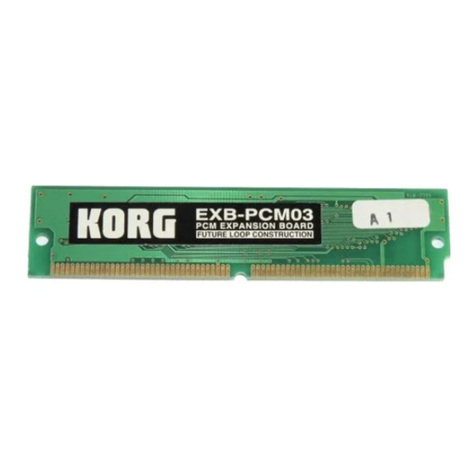
Korg EXB-PCM-03 User manual

Korg

Korg EXB-PCM-03 User manual

Korg AIB-8 User manual

Korg

Korg AIB-8 User manual

Korg EXBP-MP3 User manual

Korg

Korg EXBP-MP3 User manual

Korg EXB-FW User manual

Korg

Korg EXB-FW User manual

Korg EasyStart PX24D Owner's manual

Korg

Korg EasyStart PX24D Owner's manual

Korg EXB-PCM05 User manual

Korg

Korg EXB-PCM05 User manual

Korg EXB-PCM04 User manual

Korg

Korg EXB-PCM04 User manual

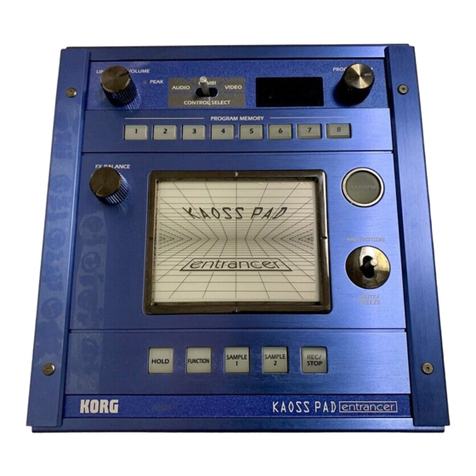
Korg EasyStart KAOSS PAD Entrancer User manual
Korg

Korg EasyStart KAOSS PAD Entrancer User manual

Korg M3 User manual

Korg

Korg M3 User manual
Popular Computer Hardware manuals by other brands
EMC2 VNX Series Hardware Information Guide

EMC2

EMC2 VNX Series Hardware Information Guide

Panasonic DV0PM20105 Operation manual

Panasonic

Panasonic DV0PM20105 Operation manual

Mitsubishi Electric Q81BD-J61BT11 user manual
Mitsubishi Electric

Mitsubishi Electric Q81BD-J61BT11 user manual

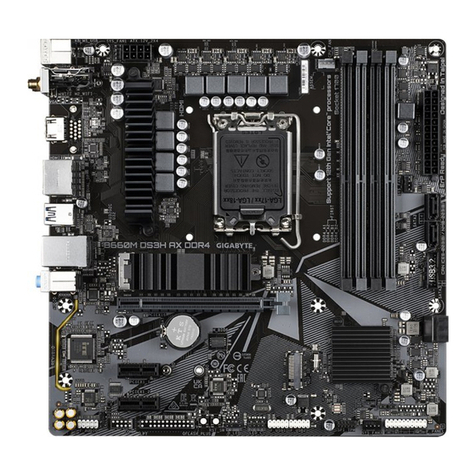
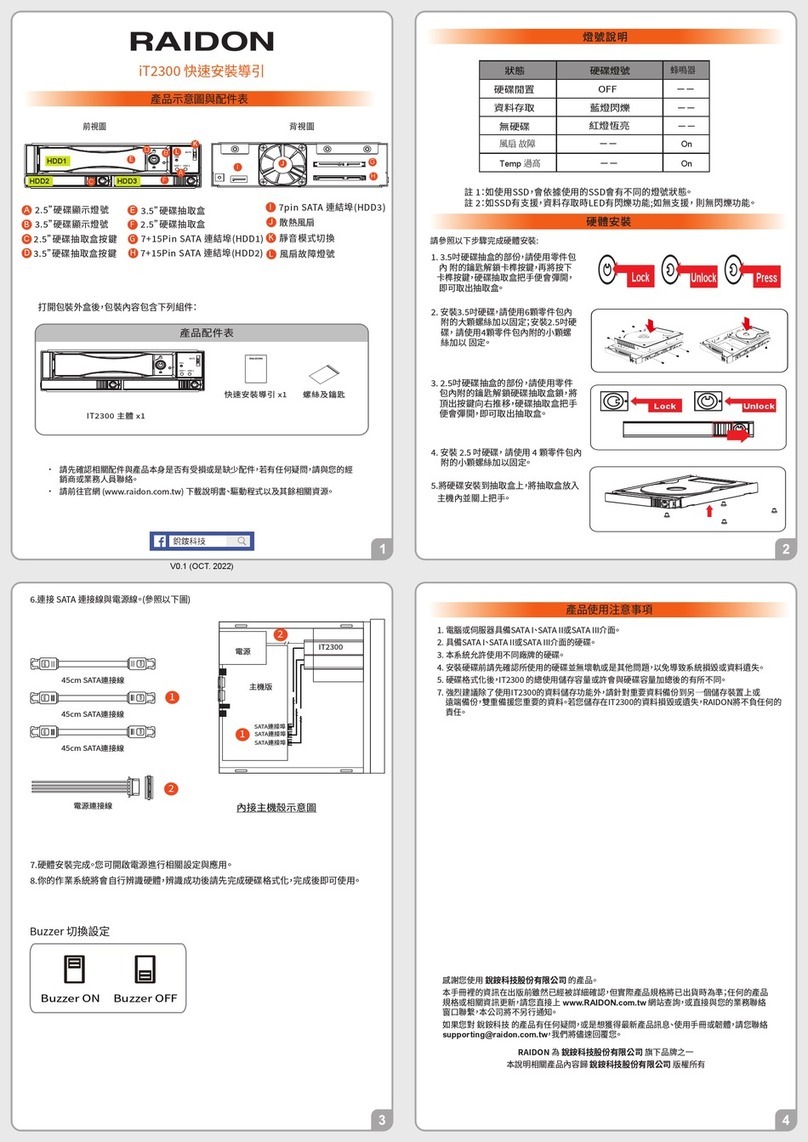
Gigabyte B660M DS3H AX DDR4 user manual
Gigabyte

Gigabyte B660M DS3H AX DDR4 user manual

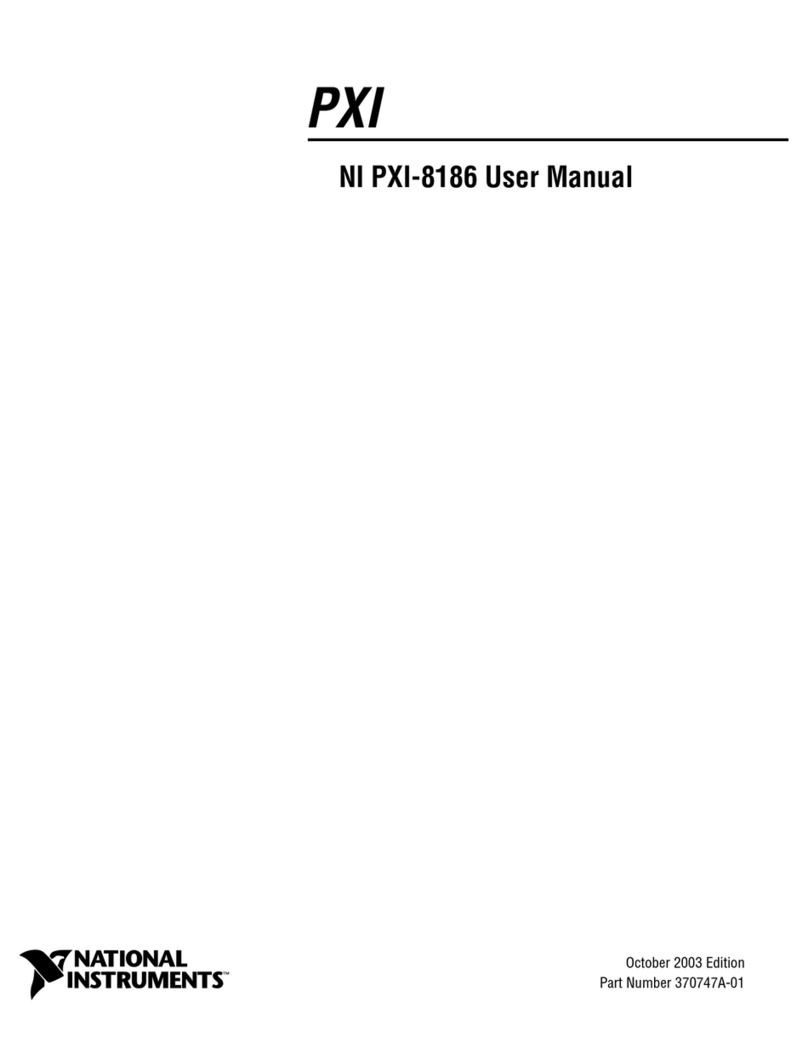
Raidon iT2300 Quick installation guide
Raidon

Raidon iT2300 Quick installation guide

National Instruments PXI-8186 user manual
National Instruments

National Instruments PXI-8186 user manual

Hauppauge WinTV-HVR-2250 Quick installation guide

Hauppauge

Hauppauge WinTV-HVR-2250 Quick installation guide

Kontron CP6002 user guide

Kontron

Kontron CP6002 user guide

Manhattan 702843 user manual

Manhattan

Manhattan 702843 user manual

Aphex 230 instruction manual

Aphex

Aphex 230 instruction manual

Intel NUC 12 Pro user guide

Intel

Intel NUC 12 Pro user guide

Galaxy GHDX2-2430S-24F4D Installation and hardware reference manual

Galaxy

Galaxy GHDX2-2430S-24F4D Installation and hardware reference manual

Intel AXXRMFBU4 Quick installation user's guide

Intel

Intel AXXRMFBU4 Quick installation user's guide

Kontron DIMM-PC/MD product manual

Kontron

Kontron DIMM-PC/MD product manual

ST X-NUCLEO-SAFEA1B How to use

ST

ST X-NUCLEO-SAFEA1B How to use

STEINWAY LYNGDORF SP-1 installation manual

STEINWAY LYNGDORF

STEINWAY LYNGDORF SP-1 installation manual

Advantech ASMB-935 Series user manual

Advantech

Advantech ASMB-935 Series user manual

Jupiter RAM PACK instructions

Jupiter

Jupiter RAM PACK instructions

manuals.online logo
manuals.online logoBrands
  • About & Mission
  • Contact us
  • Privacy Policy
  • Terms and Conditions

Copyright 2025 Manuals.Online. All Rights Reserved.

PERFORMANCE
SIGNAL
PROCESSOR
AS
OWNER'S
MANUAL
fc
[
CONNECTION
\
WITH
|
BASGeesssssssscnnennsesssenrsnnsssssenseneg
|
3}
|
PLAYING
PRESET
PROGRAMS
[PROGRAM
MODE]
+++ee00e4
|
|
OPERATING
INDIVIDUAL
EFFECTS
[MANUAL/EDIT
MODE]**5
|
:
|
CREATING
ORIGINAL
PROGRAMS
[Manual/Edit
Mode]+++=6
|
:
SAVING
EFFECTS
[PROGRAM
WRITE]eeeeseseseeeeeeseeseeee8
|
:
OTHER
USEFUL
FUNCTIONS
cecccccccccccccccccccccccccccccceeeG
|
EFFECT
Pe
Eee:
Ee
epee
ee
|
IMPORTANT
SAFETY
INSTRUCTIONS
WENeINUNLe!
:
When
using
electric
products,
basic
precautions
should
always
be
followed,
including
the
following.
1.
Read
all
the
instructions
before
using
the
product.
2.
To
reduce
the
risk
of
injury,
close
supervision
is
necessary
when
a
product
is
used
near
children.
3.
Do
not
use
this
product
near
water
—
for
example,
near
a
bathtub,
washbowl,
kitchen
sink,
in
a
wet
basement,
or
near
a
swimming
pool,
or
the
like.
4.
This
product,
either
alone
or
in
combination
with
an
amplifier
and
headphones
or
speakers,
may
be
capable
of
producing
sound
levels
that
could
cause
permanent
hearing
loss.
Do
not
operate
for
a
long
period
of
time
at
high
volume
level
or
at
a
level
that
is
uncomfortable.
If
you
experience
any
hearing
loss
or
ringing
in
the
ears,
you
should
consult
an
audiologist.
5.
The
product
should
be
located
so
that
its
location
or
position
does
not
interfere
with
its
proper
ventilation.
6.
The
product
should
be
located
away
from
heat
sources
such
as
radiators,
heat
registers,
or
other
products
that
produce
heat.
7.
The
product
should
be
connected
to
a
power
supply
only
of
the
type
described
in
the
operating
instructions
or
as
marked
on
the
product.
8.
The
power-
supply
cord
of
the
product
should
be
unplugged
from
the
outlet
when
left
unused
for
a
long
period
of
time.
9.
Care
should
be
taken
so
that
objects
do
not
fall
and
liquids
are
not
spilled
into
the
enclosure
through
openings.
10.
The
product
should
be
serviced
by
qualified
service
personnel
when:
A.
The
power-supply
cord
or
the
plug
has
been
damaged;
or
B.
Objects
have
fallen,
or
liquid
has
been
spilled
into
the
product;
or
C.
The
product
has
been
exposed
to
rain;
or
D.
The
product
does
not
appear
to,
operate
normally
or
exhibits
a
marked
change
in
performance;
or
E.
The
product
has
been
dropped,
or
the
enclosure
damaged.
11.
Do
not
attempt
to
service
the
product
beyond
that
described
in
the
user
-
maintenance
instructions.
All
other
servicing
should
be
referred
to
qualified
service
personnel.
Congratulations
and
thank
you
for
purchasing
the
KORG
A5
BASS
Performance
Signal
Processor.
To
get
the
most
out
of
this
advanced
instrument
and
enjoy
it
in
its
optimum
condition
for
the
longest
possible
time,
please
read
this
manual
carefully,
and
keep
it
handy.
TABLE
OF
CONTENTS
NAMES
AND
FUNCTIONS
OF
CONTROLS
OTHER
USEFUL
FUNCTIONS
«+++
+-++++eee+>
tee
eeeeees
9
AND
TERMINALS
«scccccctc
cece
errr
eesti
eeeennene
2
1.
Comparison
with
Preset
Data--+++++s++sesseereeeees
9
CONNECTION
WITH
BASS
«++
-ccccc
rece
eerste
eeseeeees
3
EFFECT
PARAMETER
LIST
-----eccr
eect
eseeeeees
10
PLAYING
PRESET
PROGRAMS
1.
COMPRESSOR
[COMPRESSOR]
«+++
+++ +++
+++
ees
10
[PROGRAM
MODE]
--++
rece
rt
et
crete
cere
r
eee
c
eee
eeees
4
2.5
BAND
EQ
[5
BAND
EQ]---
++
eres
ec
er
eect
rece
10
OPERATING
INDIVIDUAL
EFFECTS
3.
DYNAMIC
EXCITER
[DYNA
XCITE]-:+°°csrrseceee:
11
[MANUAL/EDIT
MODE]
-<°
+--+
e
crete
cet
r
reer
resets
5
4.
CHORUS/FLANGER
[CHORUS/FL]
etette
sss
eee:
11
CREATING
ORIGINAL
PROGRAMS
5.
REVERB/DELAY
[REV/DELAY]
ert
rtter
rere
reer
12
[Manual/Edit
Mode]:
+++
++
errs
sere
eet
e
cere
cere
cece
eeees
6
6.
UTILITY
Ae
re
12
UTILITY
Ae
ee
occ
7
ERROR
MESSAGES
<<<
ccc
c
eee
c
cere
cece
et
eeeeeeeeee
13
SAVING
EFFECTS
[PROGRAM
WRITE]
---
essere
eeeereees
8
TROUBLESHOOTING:
+
+-eccctstc
cece
eee
ee
eeenscavens
13
SPECIFICATIONS
AND
OPTIONS
«+--+
+-sserereeee
eres
14
THE
FCC
REGULATION
WARNING
This
equipment
generates
and
uses
radio
frequency
energy
and
if
not
installed
and
used
properly,
that
is,
in
accordance
with
the
manufacturer’s
instructions,
may
cause
interference
to
radio
and
television
reception.
It
has
been
type
tested
and
found
to
comply
with
the
limits
for
a
class
b
computing
device
in
accordance
with
the
specifications
in
Subpart
J
of
Part
15
of
FCC
Rules,
which
are
designed
the
provide
reasonable
protection
against
such
interference
in
a
residential
installation.
However,
these
is
no
guarantee
that
interference
will
not
occur
in
a
particular
installation.
If
this
equipment
does
cause
interference
to
radio
or
television
reception,
which
can
be
determined
by
turning
the
equipment
off
and
on,
the
user
is
encouraged
to
try
to
correct
the
interference
by
one
of
the
following
measures:
CANADA
@
Reorient
the
receiving
antenna.
è
Relocate
the
equipment
with
respect
to
the
receiver.
è
Move
the
equipment
into
a
different
outlet
so
that
equipment
and
receiver
are
on
different
branch
circuits.
if
necessary,
the
user
should
consult
the
dealer
or
an
experienced
radioftelevision
technician
for
additional
suggestions.
The
user
may
find
the
following
booklet
prepared
by
the
Federal
Communications
Commision
helpful.
"How
to
Identify
and
Resolve
Radio
—
TV
Interference
Problems”.
This
booklet
is
available
from
the
US
Government
Printing
Office,
Washington
D.C.
20402,
stock
No.
004
—
000
—
0003454.
THIS
APPARATUS
COMPLIES
WITH
THE
"CLASS
B”
LIMITS
FOR
RADIO
NOISE
EMISSIONS
SET
OUT
IN
RADIO
INTERFERENCE
REGULATIONS.
CET
APPAREIL
EST
CONFORME
AUX
NORMES
"CLASS
B”,
POUR
BRUITS
RADIOELECTRIQUES.
TEL
QUE
SPECIFIER
DANS
LE
REGLEMENT
SUR
LE
BROUILLAGE
RADIOELECTRIQUE.
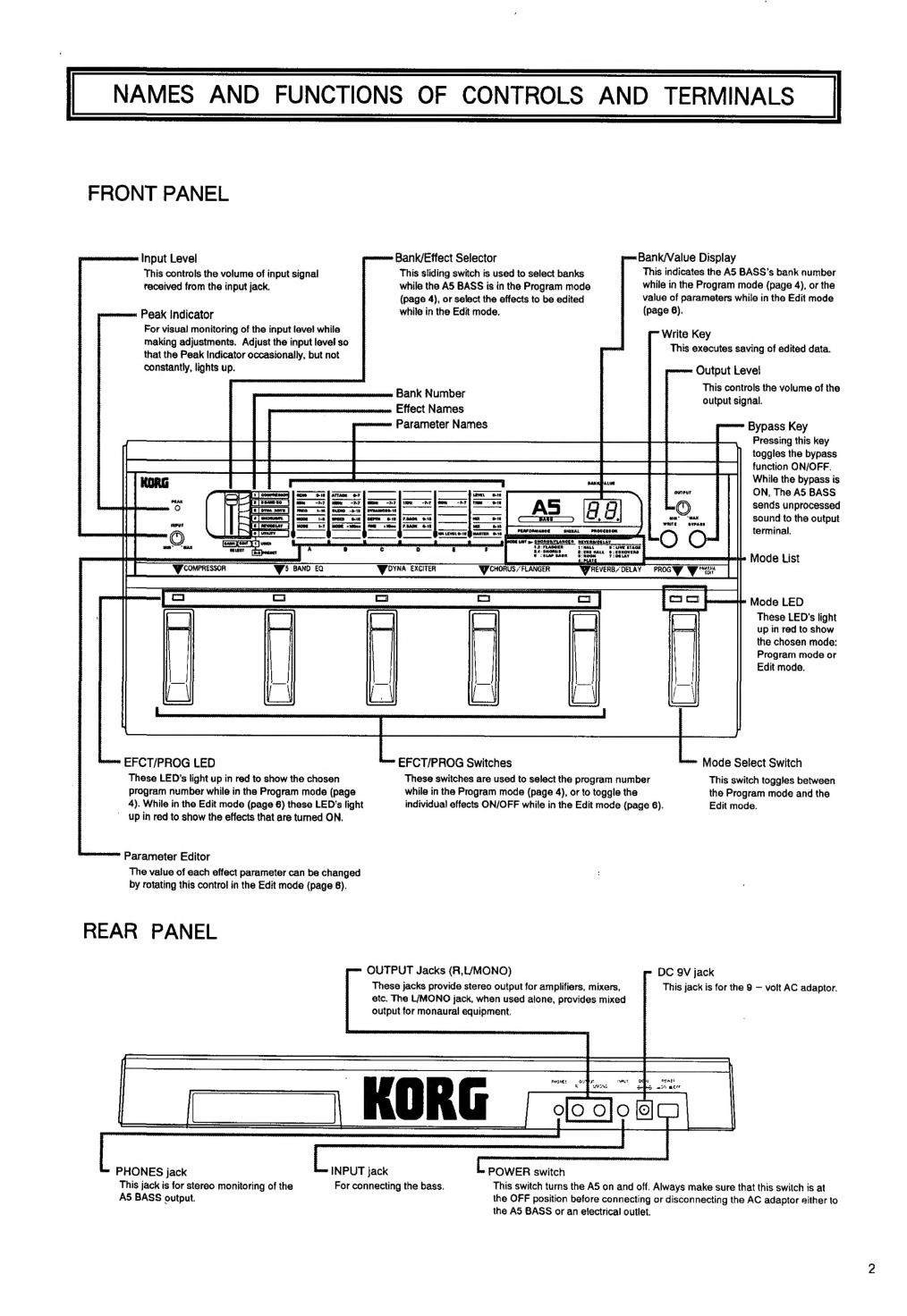
NAMES
AND
FUNCTIONS
OF
CONTROLS
AND
TERMINALS
FRONT
PANEL
Input
Level
This
controls
the
volume
of
input
signal
received
from
the
input
jack.
Peak
Indicator
For
visual
monitoring
of
the
input
leve!
while
making
adjustments.
Adjust
the
input
level
so
that
the
Peak
Indicator
occasionally,
but
not
constantly,
lights
up.
Bank/Effect
Selector
This
sliding
switch
is
used
to
select
banks
while
the
A5
BASS
is
in
the
Program
mode
(page
4),
or
select
the
effects
to
be
edited
while
in
the
Edit
mode,
Bank
Number
Effect
Names
Parameter
Names
Bank/Value
Display
This
indicates
the
A5
BASS’s
bank
number
while
in
the
Program
mode
(page
4),
or
the
value
of
parameters
while
in
the
Edit
mode
(page
6).
Write
Key
This
executes
saving
of
edited
data.
Output
Leve!
This
controls
the
volume
of
the
output
signal.
Bypass
Key
ee
SS
ON
NO
E
See!
a
at
MENGES
Sencar
mea
merry
EFCT/PROG
LED
These
LED's
light
up
in
red
to
show
the
chosen
program
number
while
in
the
Program
mode
(page
4).
While
in
the
Edit
mode
(page
6)
these
LED's
fight
up
in
red
to
show
the
effects
that
are
turned
ON.
Parameter
Editor
The
value
of
each
effect
parameter
can
be
changed
by
rotating
this
control
in
the
Edit
mode
(page
8).
REAR
PANEL
HANAL
Phootiton
ONE
LiT
ge
CHORUSFLANGER
REVEAROSLAY
12:
FLANGER
1:
NALL
a4:
thaonug
$:
UNS
HALL
$:
ROON
Pià
pee
ee
ee
P
REVERB
DELAY
PROG
Wyant
EFCT/PROG
Switches
These
switches
are
used
to
select
the
program
number
while
in
the
Program
mode
(page
4),
or
to
toggle
the
individual
effects
ON/OFF
while
in
the
Edit
mode
(page
6).
OUTPUT
Jacks
(R,UMONO)
function
ON/OFF.
While
the
bypass
is
ON,
The
A5
BASS
sends
unprocessed
sound
to
the
output
terminal.
US:
Liva
STAGE
Mode
List
Mode
LED
These
LED's
light
up
in
red
to
show
the
chosen
mode:
Program
mode
or
Edit
mode.
Mode
Select
Switch
This
switch
toggles
between
the
Program
mode
and
the
Edit
mode.
DC
9V
jack
These
jacks
provide
stereo
output
for
amplifiers,
mixers,
etc.
The
L/MONO
jack,
when
used
alone,
provides
mixed
output
for
monaural
equipment.
This
jack
is
for
the
9
—
volt
AC
adaptor.
PHONES
jack
INPUT
jack
POWER
switch
This
jack
is
for
stereo
monitoring
of
the
For
connecting
the
bass.
This
switch
turns
the
A5
on
and
off.
Always
make
sure
that
this
switch
is
at
AS
BASS
output.
the
OFF
position
before
connecting
or
disconnecting
the
AC
adaptor
either
to
the
AS
BASS
or
an
electrical
outlet.
|
CONNECTION
WITH BASS
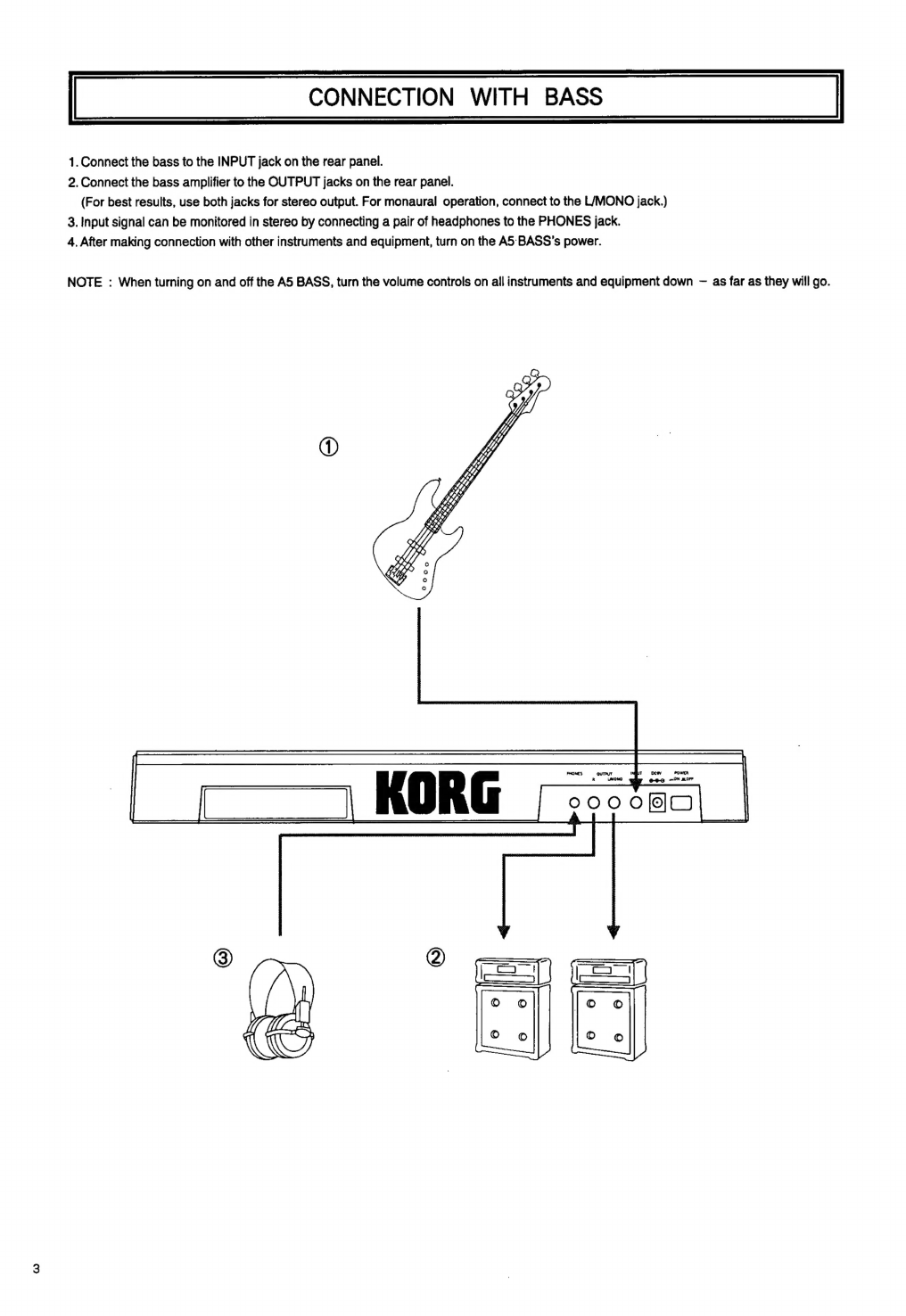
1.
Connect
the
bass
to
the
INPUT
jack
on
the
rear
panel.
2.
Connect
the
bass
amplifier
to
the
OUTPUT
jacks
on
the
rear
panel.
(For
best
results,
use
both
jacks
for
stereo
output.
For
monaural
operation,
connect
to
the
L/MONO
jack.)
3.
Input
signal
can
be
monitored
in
stereo
by
connecting
a
pair
of
headphones
to
the
PHONES
jack.
4.
After
making
connection
with
other
instruments
and
equipment,
turn
on
the
A5'
BASS'’s
power.
NOTE
:
When
turning
on
and
off
the
A5
BASS,
turn
the
volume
controls
on
all
instruments
and
equipment
down
—
as
far
as
they
will
go.
PO)
e009
ON
mor
000000
®
d
= =
©
©
Jo
©
© ©
© ©
PLAYING
PRESET
PROGRAMS
[PROGRAM
MODE]
About
Preset
Programs
—
The
A5
BASS
has
a
total
of
30
effect
programs
stored
in
6
banks.
Each
bank
holds
5
effect
programs.
Banks
2
—
6
are
factory
presets
with
a
total
of
25
preset
programs.
Bank
1
is
the
user
area
for
storing
edited
effect
programs
(see
page
8
for
details).
BANKI
|[PROGRAM1]|
|PROGRAM2|
|PROGRAM3|
|PROGRAM4|
|PROGRAMS|
|
[User
area
l
(This
area
can
store
edited
programs.)
BANK2
PROGRAM1!
|
PROGRAM2]/
|
PROGRAM3}
|
PROGRAM4|
|PROGRAM5
BANK3
PROGRAMI
|
|
PROGRAM2|
|PROGRAM3|
|
PROGRAM4|
|
PROGRAMS
Preset
area
BANK4
PROGRAM?
|
|
PROGRAM2}
|
PROGRAM3]/
|}
PROGRAM4]
|
PROGRAM5
(This
area
cannot
store
edited
programs.)
BANK5
PROGRAM1|
|PROGRAM2|
|
PROGRAM3|
|PROGRAM4|
|
PROGRAMS
BANK6
PROGRAMI
|
|PROGRAM2/
|
PROGRAM3/|
|
PROGRAM4]
|
PROGRAMS
1.When
the
power
is
first
turned
on,
the
A5
BASS
automatically
enters
into
the
Program
mode.
To
switch
to
the
Program
mode
from
the
Manual
Edit
mode,
simply
press
the
Mode
Select
Switch.
PROG
Wt
~
Pai
Te
—
|__|
Press
the
switch
until
the
PROG
LED
lights
red.
2.Set
the
input
level
while
playing
the
bass.
Carefully
raise
the
input
level
until
the
Peak
Indicator
occasionally,
but
not
constantly,
lights
up.
l
PEAK
“/
|
Nee
input
Adjust
the
input
level
such
that
the
O
Peak
Indicator
occasionally
tights
up.
MIN
' *
MAX
3.Switch
the
Bank/Effect
Selector
to
the
bank
that
contains
a
program
you
wish
to
play.
(For
parameters
within
each
program,
refer
to
the
attached
"Effect
Parameter
List’.)
Bank
2
is
selected
in
the
figure
below,
for
example.
[1
[COMPRESSOR
}2
[5BANDEO
|
[3
[DYNAXCITE
|
l4
[CHORUSFL
|
[s
[REVOELAY
|
ejn
_—_
BS
E7
The
currently
selected
bank
number
is
shown
in
the
Bank/Value
Display.
4.
Press
any
of
the
EFCT/PROG
switches
(1
—
5)
to
select
the
effect
program
you
wish
to
play.
For
example,
program
1
containing
"Slap
1”
is
selected
in
the
figure
below.
5.Play
the
bass
to
hear
the
effect
sound
with
"Slap
1”.
To
hear
the
unprocessed
sound
without
effects,
press
the
Bypass
key.
Re
—
pressing
the
Bypass
key
returns
the
effect
sound.(The
Mode
LED's
blink
while
in
Bypass
mode.)
6.Repeat
the
above
procedures
(3
thru
5)
for
selecting
programs
in
other
banks.
To
continue
selecting
programs
in
the
same
bank,
simply
press
the
EFCT/PROG
switches.
NOTE
:
Shifting
to
a
different
bank does
not
select
programs
in
that
bank
immediately.
To
select
programs
in
a
new
bank,
you
must
press
one
of
the
5
EFCT/PROG
switches
after
entering
the
new
bank.
OPERATING
INDIVIDUAL
EFFECTS
[MANUAL/EDIT
MODE]
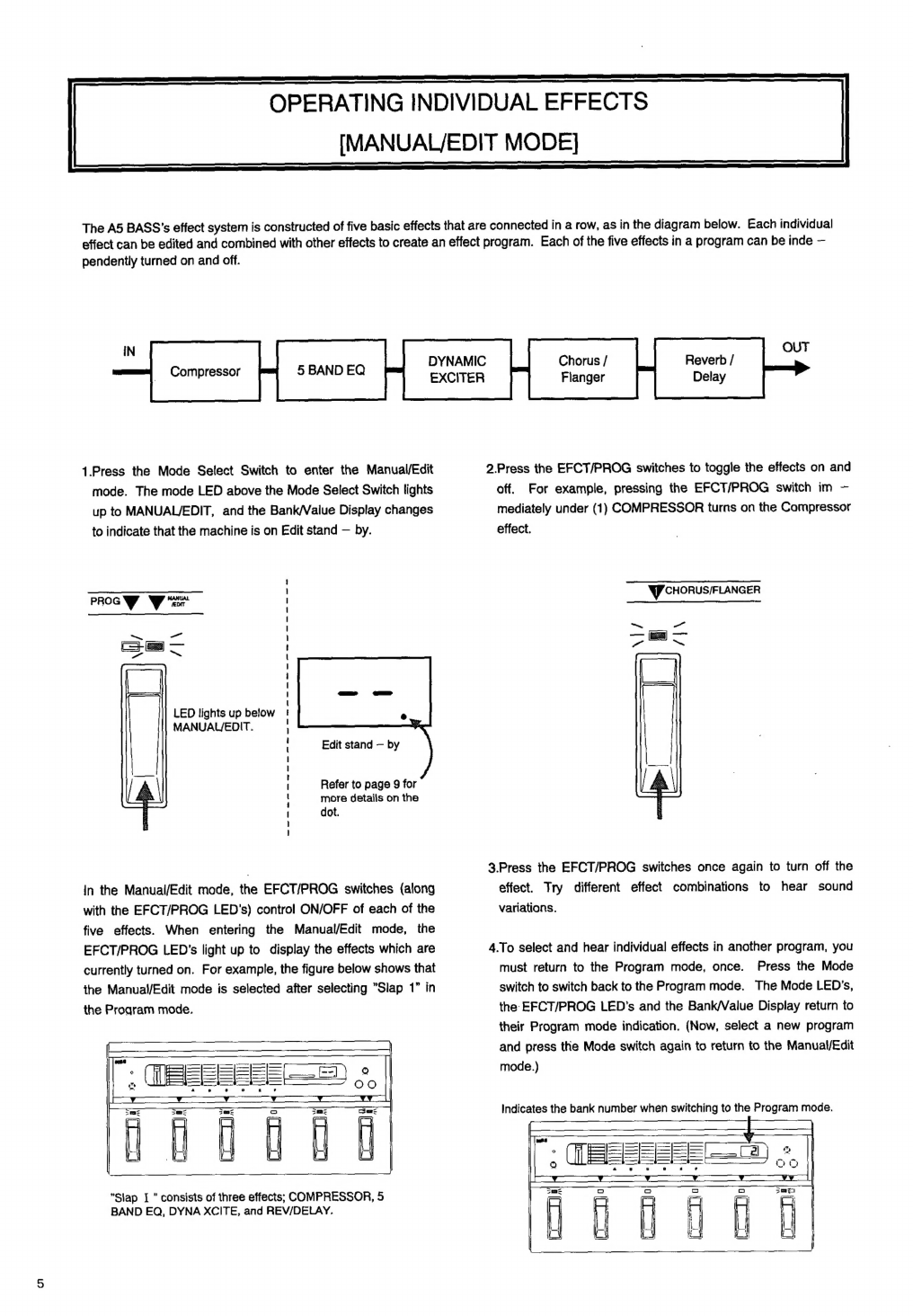
The
A5
BASS's
effect
system
is
constructed
of
five
basic
effects
that
are
connected
in
a
row,
as
in
the
diagram
below.
Each
individual
effect
can
be
edited
and
combined
with
other
effects
to
create
an
effect
program.
Each
of
the
five
effects
in
a
program
can
be
inde
—
pendently
turned
on
and
off.
Compressor
5
BAND
EQ
1.Press
the
Mode
Select
Switch
to
enter
the
Manual/Edit
mode.
The
mode
LED
above
the
Mode
Select
Switch
lights
up
to
MANUAL/EDIT,
and
the
Bank/Value
Display
changes
to
indicate
that
the
machine
is
on
Edit
stand
—
by.
PROGW
YW“
LED
lights
up
below
MANUAL/EDIT.
Edit
stand
—
by
Refer
to
page
9
for
more
details
on
the
dot.
vee
w
—
a
meee
eee
ee
eee
ei
ee
In
the
Manual/Edit
mode,
the
EFCT/PROG
switches
(along
with
the
EFCT/PROG
LED's)
control
ON/OFF
of
each
of
the
five
effects.
When
entering
the
Manual/Edit
mode,
the
EFCT/PROG
LED's
light
up
to
display
the
effects
which
are
currently
turned
on.
For
example,
the
figure
below
shows
that
the
Manual/Edit
mode
is
selected
after
selecting
"Slap
1”
in
the
Program
mode.
IE
-
(BEE
"Slap
I”
consists
of
three
effects;
COMPRESSOR,
5
BAND
EQ,
DYNA
XCITE,
and
REV/DELAY.
DYNAMIC
EXCITER
OUT
Chorus
/
Flanger
Reverb
/
Delay
2.Press
the
EFCT/PROG
switches
to
toggle
the
effects
on
and
off.
For
example,
pressing
the
EFCT/PROG
switch
im
—
mediately
under
(1)
COMPRESSOR
turns
on
the
Compressor
effect.
WY
CHORUS/FLANGER
3.Press
the
EFCT/PROG
switches
once
again
to
turn
off
the
effect.
Try
different
effect
combinations
to
hear
sound
variations.
4.To
select
and
hear
individual
effects
in
another
program,
you
must
return
to
the
Program
mode,
once.
Press
the
Mode
switch
to
switch
back
to
the
Program
mode.
The
Mode
LED’s,
the
EFCT/PROG
LED's
and
the
Bank/Value
Display
return
to
their
Program
mode
indication.
(Now,
select
a
new
program
and
press
the
Mode
switch
again
to
return
to
the
Manual/Edit
mode.)
Indicates
the
bank
number
when
switching
to
the
Program
mode.
CREATING
ORIGINAL
PROGRAMS
[Manual/Edit
Mode]
About
“Parameters”
and
"Editing’”
Changing
the
settings
of
individual
effects
such
as
the
balance
between
direct
sound
and
effect
output
is
called
“editing”.
“Parameters”
are
the
specific
settings
inside
each
effect
with
values
that
are
changeable
for
“editing”.
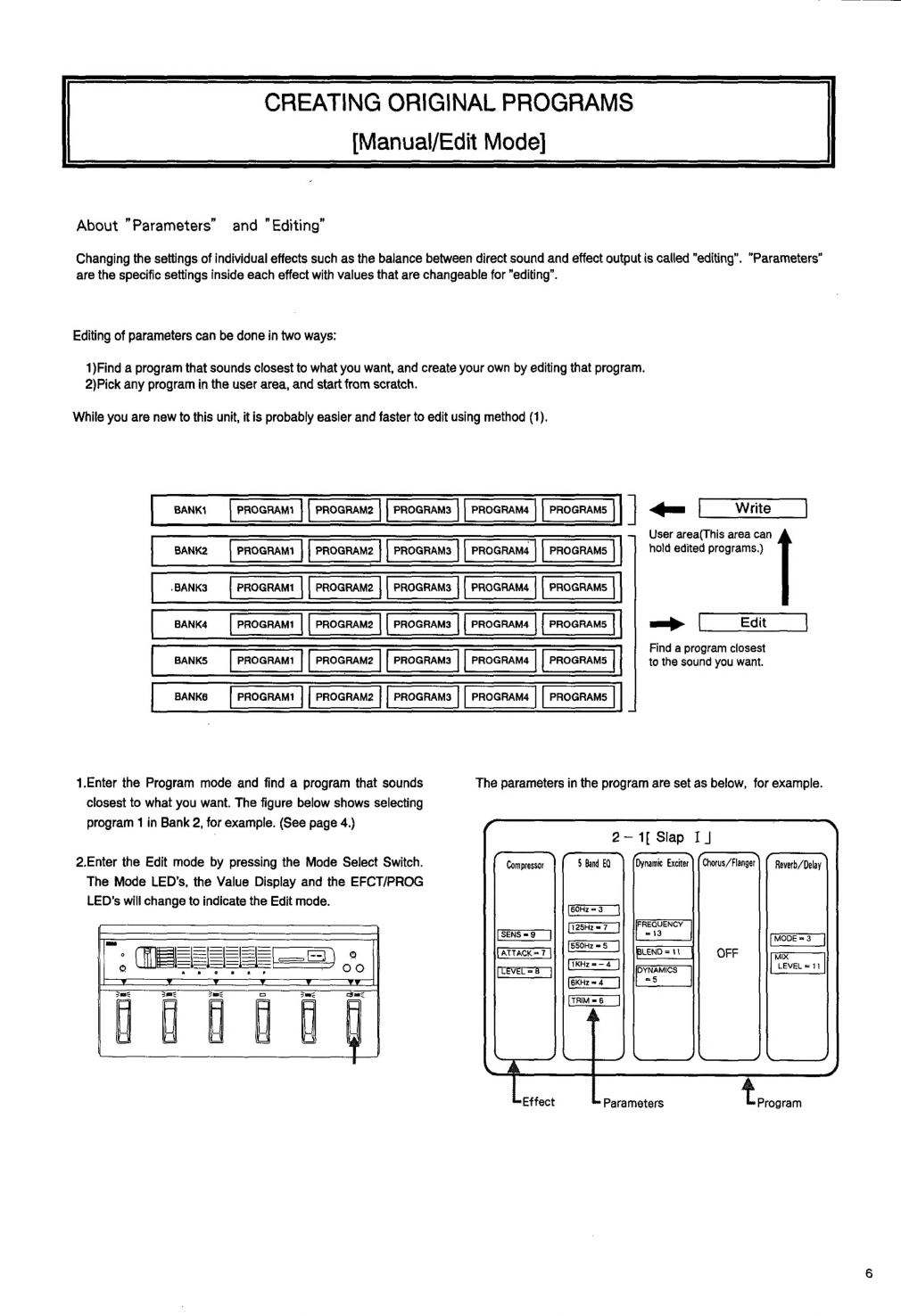
Editing
of
parameters
can
be
done
in
two
ways:
1)Find
a
program
that
sounds
closest
to
what
you
want,
and
create
your
own
by
editing
that
program.
2)Pick
any
program
in
the
user
area,
and
start
from
scratch.
While
you
are
new
to
this
unit,
itis
probably
easier
and
faster
to
edit
using
method
(1).
BANKI
|
PROGRAM!
|
|
PROGRAM2
|
|
PROGRAMS
|
|
PROGRAMA
|
|
PROGRAMS
|
Gum
Write
User
area(This
area
can
BANK2
PROGRAM?
||
PROGRAM2
||
PROGRAMS
||
PROGRAMA
|
|
PROGRAMS
hold
edited
programs.)
.BANK3
|
PROGRAM1
|
|
PROGRAM2
||
PROGRAM3
||
PROGRAMA
|
|
PROGRAMS
BANK4
|
PROGRAMI
|
|
PROGRAM2
=
Find
a
program
closest
BANKS
|
PROGRAMI
||
PROGRAM2
PROGRAMA
||
PROGRAMS
|
{
|
to
the
sound
you
want.
BANK6
|
PROGRAMI
||
PROGRAM2
||
PROGRAMS
|
|
PROGRAM4
|
|
PROGRAMS
1.Enter
the
Program
mode
and
find
a
program
that
sounds
The
parameters
in
the
program
are
set
as
below,
for
example.
closest
to
what
you
want.
The
figure
below
shows
selecting
program
1
in
Bank
2,
for
example.
(See
page
4.)
|
2—
1[
Slap
IJ
2.Enter
the
Edit
mode
by
pressing
the
Mode
Select
Switch.
Compressor
5
Band
EQ
Dynamic
Exciter
|
|
Chorus/
Flanger
|
{
Reverb
/Delay
The
Mode
LED’s,
the
Value
Display
and
the
EFCT/PROG
LED’s
will
change
to
indicate
the
Edit
mode.
FREQUENCY
=
=
DYNAMICS
LEVEL
=
11
=5
zmz
Suez
7
mz
7m
i
——)
addig
t
Program
Effect
Parameters
6.
Repeat
the
same
procedures
for
changing
other
parameters.
(Each
individual
parameters
are
explained
on
pages
10
—
12.
See
the
attached
"Effect
Parameter
List”
for
the
parameter
values
in
each
preset
program.)
3.
Slide
the
Bank/Effect
selector
to
the
effect
you
wish
to
edit.
The
figure
below
shows
selecting
the
"DYNA
XCITE”
Dynamic
Exciter),for
example.
1
[COMPRESSOR
5
BAND
EQ
DYNA
XCITE
CHORUS/FL
REV/DELAY
UTILITY
NOTE
:
Itis
possible
to
edit
the
parameters
of
an
effect
which
is
turned
off.
Make
sure
that
the
Bank/Effect
selector
is
in
the
position
of
the
effect
you
wish
to
edit.
%
To
edit
other
programs,
switch
back
to
the
Program
mode
and
start
the
procedures
again.
If
you
wish
to
save
the
edited
program,
execute
the”Program
Write”
operation.
(See
page
8
for
details.)
4.Find
the
parameter
you
wish
to
edit
from
the
parameter
names
on
the
front
pane!.
Moving
the
Slider
to
the
left
of
the
NOTE
1
:
A
currently
edited
program
will
return
unaltered
to
its
parameter
(A
—
£)
directly
below
it.
To
change
the
“FREQ”
original
program
settings
if
you
select
another
parameter
of
"DYNA
XCITE”
for
example,
read
to
the
right
program
without
writing
it
to
the
memory.
Original
from
"DYNA
XCITE”
to
find
"FREQ,
then
turn
the
programs
are
safe
from
being
erased
despite
any
Parameter
Editor
”A”
to
set
the
desired
sound.
number
of
edits,
as
long
as
the
write
opearation
is
not
performed.
ee
NOTE
2
:
When
entering
the
Program
mode
from
the
Edit
SPREE
mode,
the
position
of
the
Bank/Effect
selector
may
differ
from
the
bank
number
displayed
in
the
Bank/Value
display.
This
is
because
the
Bank/Effect
selector
is
in
the
same
position
as
the
last
effect
edited
in
the
Edit
mode.
When
selecting
a
program
in
a
different
bank,
make
sure
you
select
a
new
bank
with
the
Bank/Effect
selector,
then
select
programs
with
the
EFCT/PROG
switches.
(The
current
bank
>
5.
Turning
the
Parameter
Editor
changes
the
parameter
values
on
the
Value
Display.
(A
dot
next
to
a
parameter
value
number
indicates
the
current
programmed
value.)
being
played
in
the
PROG
Mode
is
shown
in
the
Bank/Value
display,
with
a
dot
to
the
right.
If
a
new
bank
is
selected,
with
the
Bank/Effect
selector,
the
current
bank
does
not
actually
switch
until
a
program
has
been
selected.
At
that
time,
the
new
bank
is
Refer
to
page
entered
and
the
dot
is
shown
in
the
display.)
9
for
more
details
on
the
dot.
UTILITY
The
Utility
mode
handles
parameters
relating
to
each
program
as
a
whole.
This
mode
allows
you
to
control
the
NR
LEVEL
(Noise
Reduction
Threshold
Level)
and
the
MASTER
(Master
Volume)
of
each
program.
(See
page
12
for
detailed
explanation
of
each
parameter.)
Control
procedures
are
the
same
as
the
editing
procedures
in
the
Edit
mode.
COMPRESSOR
5
BAND
EQ
DYNA
XCITE
CHORUS/FL
REV/DELAY
UTILITY
kara
m
Tt
SAVING
EFFECTS
[PROGRAM
WRITE]
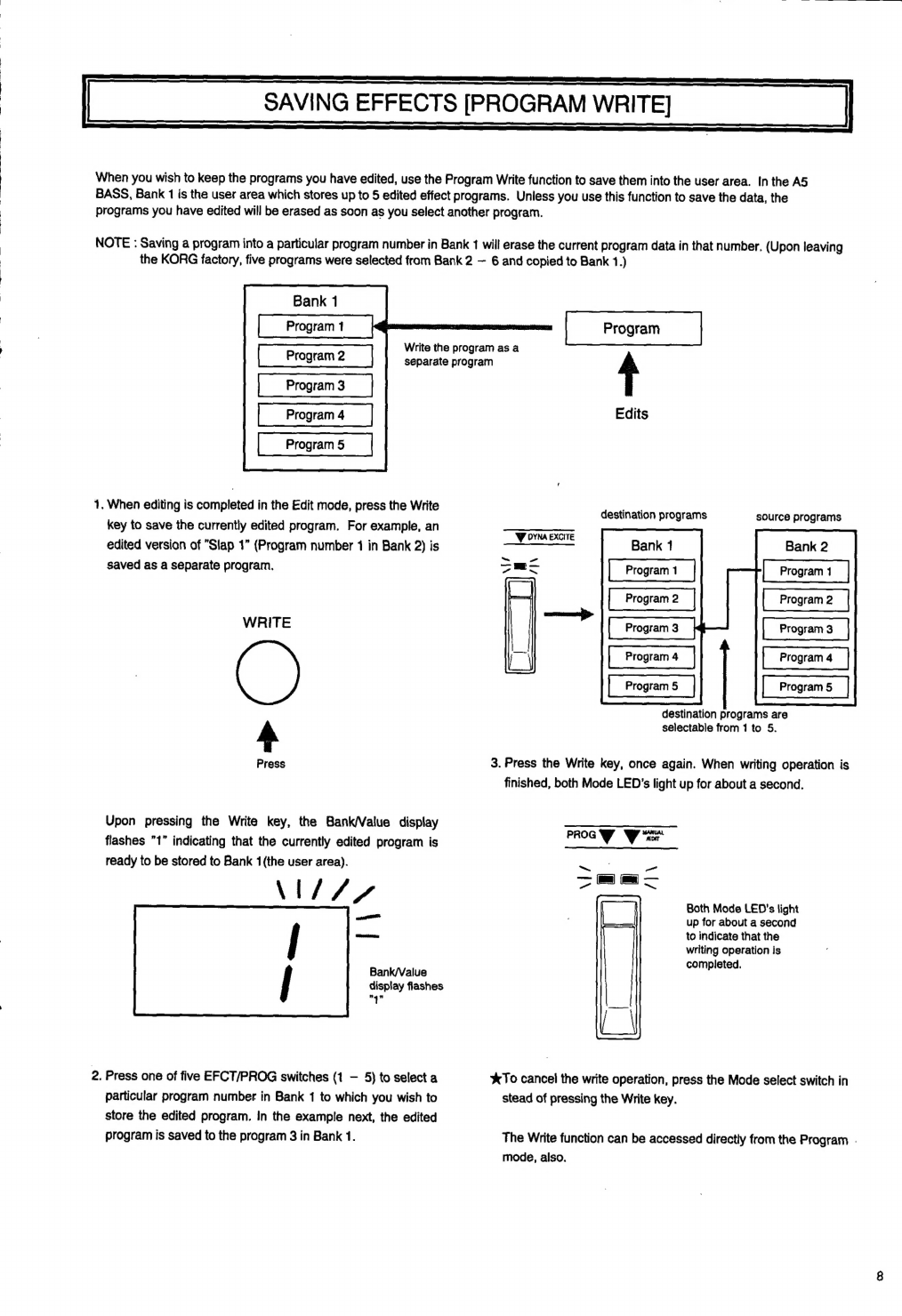
When
you
wish
to
keep
the
programs
you
have
edited,
use
the
Program
Write
function
to
save
them
into
the
user
area.
In
the
A5
BASS,
Bank
1
is
the
user
area
which
stores
up
to
5
edited
effect
programs.
Unless
you
use
this
function
to
save
the
data,
the
programs
you
have
edited
will
be
erased
as
soon
as
you
select
another
program.
NOTE
:
Saving
a
program
into
a
particular
program
number
in
Bank
1
will
erase
the
current
program
data
in
that
number.
(Upon
leaving
the
KORG
factory,
five
programs
were
selected
from
Bank
2
—
6
and
copied
to
Bank
1.)
Program
Write
the
program
as
a
separate
program
A
Edits
.
When
editing
is
completed
in
the
Edit
mode,
press
the
Write
key
to
save
the
currently
edited
program.
For
example,
an
edited
version
of
"Slap
1”
(Program
number
1
in
Bank
2)
is
saved
as
a
separate
program.
ouch
destination
programs
source
programs
W
DYNA
EXCITE
Bank
1
Bank
2
WRITE
destination
programs
are
à
selectable
from
1
to
5.
Press
3.
Press
the
Write
key,
once
again.
When
writing
operation
is
finished,
both
Mode
LED's
light
up
for
about
a
second.
Upon
pressing
the
Write
key,
the
Bank/Value
display
r
flashes
”1”
indicating
that
the
currently
edited
program
is
x
may
AA
eee
ready
to
be
stored
to
Bank
1(the
user
area).
\I/S>
pa
|
Both
Mode
LED’s
light
up
for
about
a
second
senna
to
indicate
that
the
writing
operation
is
completed.
Bank/Value
display
flashes
"q"
2.
Press
one
of
five
EFCT/PROG
switches
(1
—
5)
to
select
a
%*To
cancel
the
write
operation,
press
the
Mode
select
switch
in
particular
program
number
in
Bank
1
to
which
you
wish
to
stead
of
pressing
the
Write
key.
store
the
edited
program.
In
the
example
next,
the
edited
program
is
saved
to
the
program
3
in
Bank
1.
The
Write
function
can
be
accessed
directly
from
the
Program
~-
mode,
also.