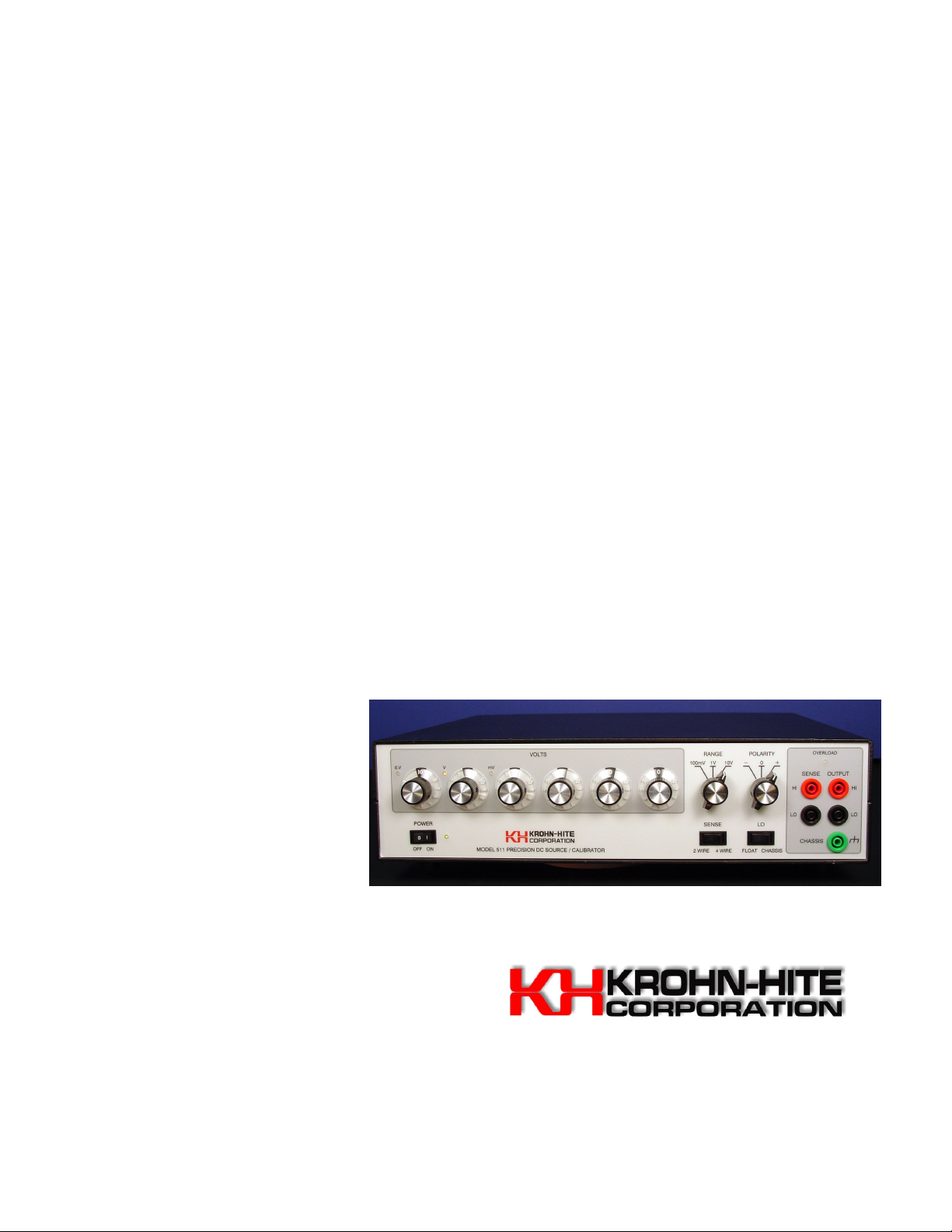
Model 511
Operating Manual
1-2
1-3 Safety Information
The Model 511 has been designed, tested and supplied in a safe condition. The following
general safety precautions must be observed during all phases of operation, service, and
repair. Failure to comply with these precautions or with specific warnings elsewhere in
this manual violates safety standards of design, manufacture and intended use of this
instrument. Krohn-Hite assumes no liability for the customer's failure to comply with
these requirements.
This manual contains information and warnings that must be observed to keep the
instrument in a safe condition and ensure safe operation. Operation or service in
conditions or in a manner other than specified could compromise safety. For the correct
and safe use of this instrument, operating and service personnel must follow generally
accepted safety procedures.
To avoid injury or fire hazard, do not switch on the instrument if it is damaged or
suspected to be faulty. Do not use the instrument in damp, wet, condensing, dusty or
explosive gas environments.
Whenever it is likely that safety protection has been impaired, make the instrument
inoperative and secure against any unintended operation, and then inform qualified
personnel. Safety protection is likely to be impaired if, for example, the instrument
shows visible damage, or fails to operate normally.
Ground the Instrument
To minimize shock hazard, the instrument chassis and cabinet must be connected to an
electrical ground. Any interruption of the protective ground conductor inside or outside
the instrument is likely to make the instrument dangerous. Intentional interruption is
prohibited.
Do Not Operate In an Explosive Atmosphere
Do not operate the instrument in the presence of flammable gases or fumes. Operation of
any electrical instrument in such an environment constitutes a definite safety hazard.
Keep Away From Live Circuits
Operating personnel must not remove instrument covers. Qualified maintenance
personnel must make component replacement and internal adjustments. Under certain
conditions, dangerous voltages may exist. To avoid injuries, always disconnect input
voltages before removing the covers. Use caution when working with voltages above 30
Vac rms, 42 V peak, or 60 Vdc. These voltages pose a shock hazard A good safety
practice is to expect that hazardous voltage is present in any unknown circuit before
measuring.