8
5
Slice Thickness Section
Slice Thickness Section
L1=T/tan(15°+α) ……………(1)
L2=T/tan(15°−α) ……………(2)
L1−L2
L1+L2= =
=
tan(15°+α)−tan(15°−α)
tan(15°+α)+tan(15°−α)
sin{(15°+α)−(15°−α)}
sin{(15°+α)+(15°−α)}
sin2α
sin30°
……………(3)
How to Use
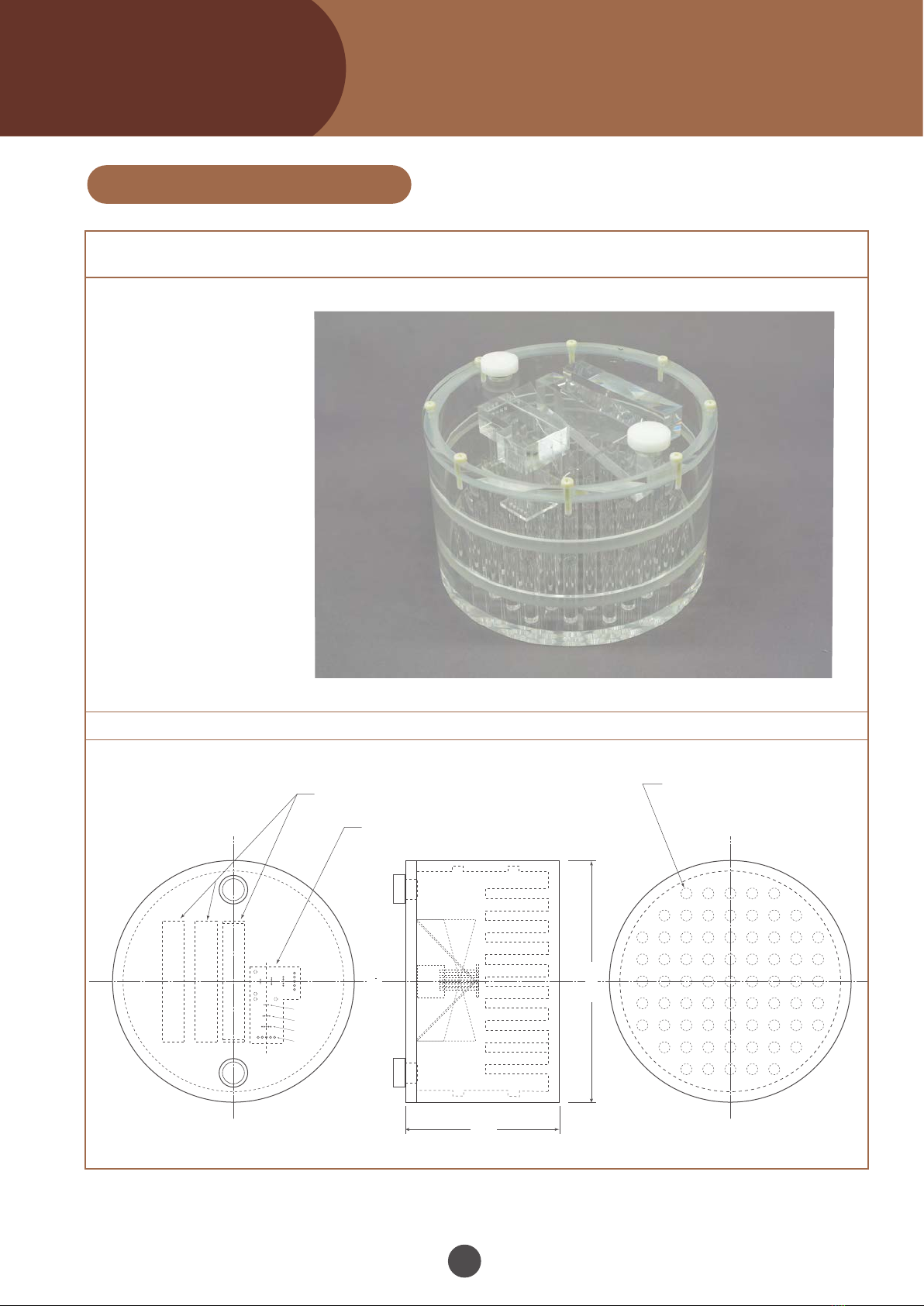
The two wedge shaped planks in this section are to measure a slice thicknesses of
10mm or less. Both planks are of 15 degrees inclination angle and 20mm thickness.
Scan the section with the maximum matrix number, in the conditions so that the TR
represents more than three times T1.
Using the multi-slice method, make the measurements on an image taken from the
center.
In the image, planks appear as black squares. Number them as first and second.
Place the ROI at the center, along the central line of the first plank, and calculate
the signal intensity of each pixel In.
n: pixel number
Obtain the slice profile by plotting the values of Dn obtained through the above
formula along the pixel distribution.
Calculate the FWHM (full width at half maximum) of the earned slice profile (L1). In
this case FWHM indicates the length of the line connecting the two points in which
Dn is the half of the maximum value of change.
Repeat the same procedure with the second plank to calculate L2.
When L1 is equal to L2, the calculation for the slice thickness T is: T=L1・tan15゜
However, L1 and L2 usually vary because of measurement errors due to the
rotation of the X, Y or Z axis during the setting of the phantom, or during the
setting of the slice section.
Therefore, the below correction is necessary:
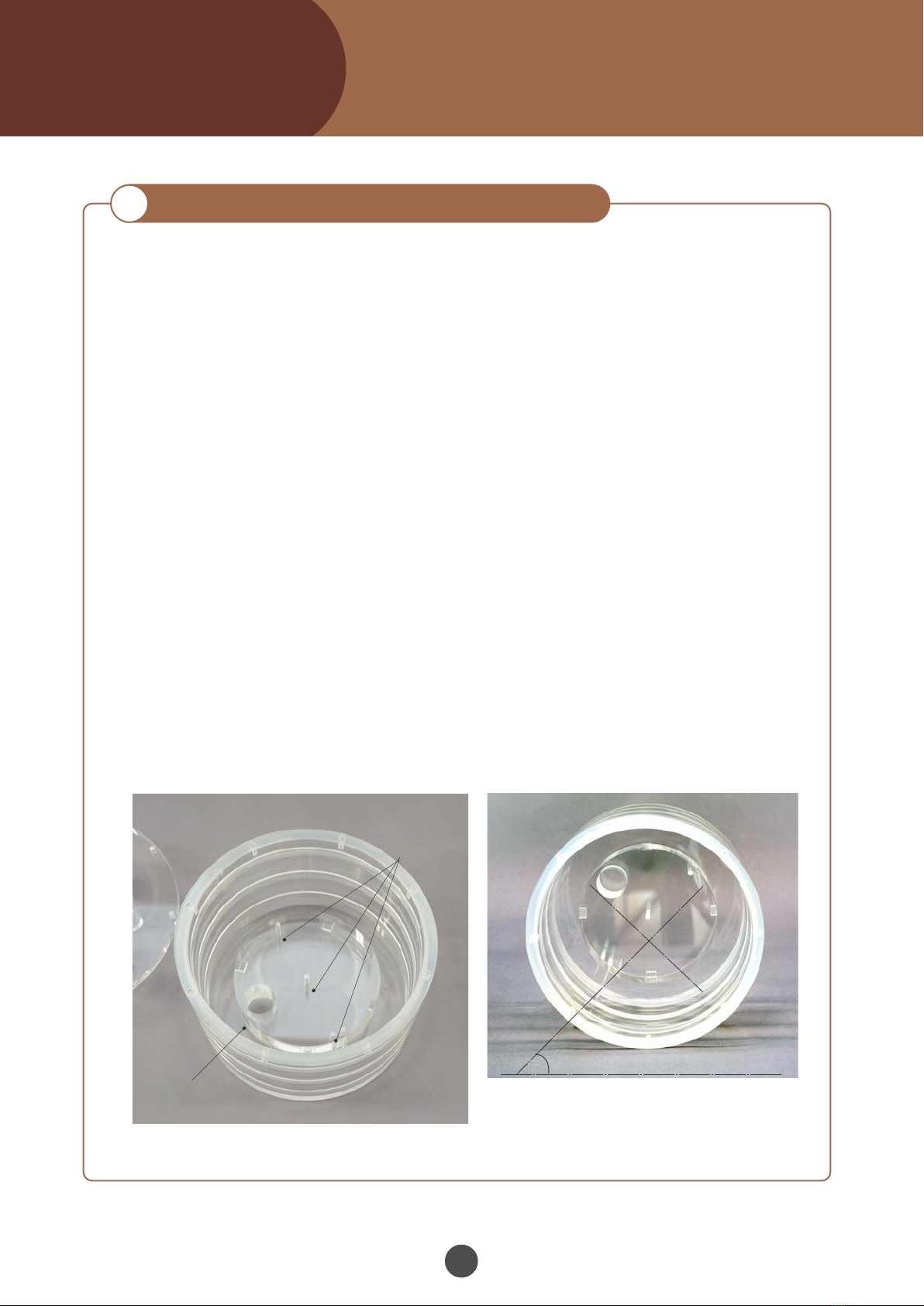
Assuming that L1〈 L2 due to a rotation of the angle α around the Y axis, the angle
made up by the first plank and the slice side is:
15゜+ α
The angle made up by the second plank and the slice side is:
15゜- α
The slice thickness T is calculated by using the values of L1,L2 and the above
mentioned rotation error α.
By substituting the α calculated by (3) in the formula (1) or (2) it is possible
to calculate the right slice thickness T.
In: signal pixel intensity of n pixel