TIPS FOR USING THE ALLEVACHILL
• We recommend using the ice tub outdoors near a suitable drainage location
and out of direct sunlight. Use only on flat ground, preferably grass, or use
over a tarp to protect the bottom of the tub from rocks or sticks that could
puncture it. Do not use over concrete, asphalt, hardscaping, rocks, gravel,
or other hard or hot surfaces.
• If using indoors, set up the tub on a flat, sturdy floor, near a sink, drain, or
bathtub. We strongly recommend only using the ice tub over waterproof or
sealed flooring.
• Shower or bathe with soap and water before use to keep your tub and
water clean.
• You can take cold showers in the days before beginning cold immersion
therapy to help prepare your body. Try to extend your time in the shower by
30 seconds to a minute every day.
• Wear a swimsuit, swim shorts, or other comfortable, light clothing.
• Get into the tub as slowly as you need to. You can put some water on your
chest and the back of your neck to help adjust to the cold water.
• You may find yourself gasping for breath or breathing rapidly when you first
get into the ice tub. Focus on breathing slowly and deeply.
• If you begin to feel uncomfortable, get out of the ice tub. If you want to
try again, make sure to warm up first.
• You can sit or kneel in the tub—whichever is most comfortable.
• Start with 2–3 minutes and slowly increase your session time to
5–10 minutes as your body gets used to using the ice tub. Always listen to
your body and never push beyond what your body can handle.
• Never use the ice tub for longer than 10–15 minutes to avoid hypothermia
and frostbite.
• Get out of the ice tub as soon as you start to shiver or shake.
• Place a suitable thermometer directly into the water to ensure optimal
temperature before getting into the tub, and adjust the temperature of the
water as needed.
• We recommend starting with room-temperature water (~75–80 °F). You
can reduce the water temperature by 1 or 2 degrees each time you use the
ice tub, over time working your way to 55–65 °F. Never use an ice bath with
a temperature lower than 53 °F.
• After your ice tub session, wait a few minutes before showering or bathing.
• Slowly increase the water temperature of your shower/bath. A rapid
temperature change could shock your system and cause you to pass out.
• Tips for keeping your water cool:
• Set up your ice tub outside, in a shady area. You will find that overnight
temperatures will help cool your ice tub each night.
• You may add ice cubes or blocks, as needed.
• You may use Epsom salts for soaking; however, be sure to clean the ice tub
after use to remove any residue.
• Do NOT add chlorine or bromine to the water as these chemicals will
damage or degrade the tub materials and void your warranty.
• Do not add soap, oil, bath salts, or other products to the tub water.
• Do not bring glassware in or near the ice tub to avoid damaging the tub.
• Do not bring electronic devices in the tub with you, such as a smartphone,
tablet, or earbuds, to avoid damaging them in the water.
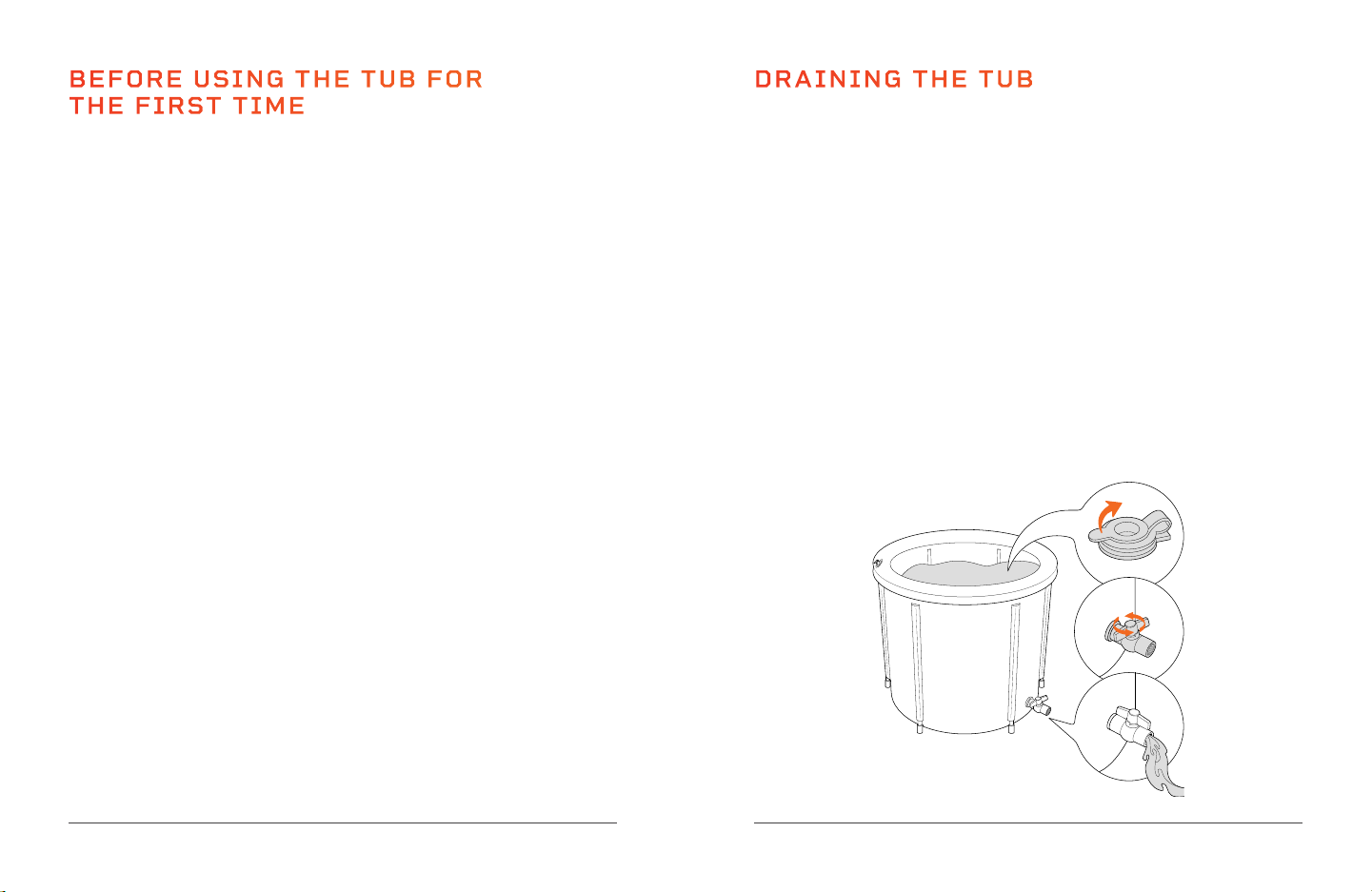
• Always close the drain pipe and drain valve after draining the ice tub.
Double-check that both are properly closed before filling the tub with
water.
• Always cover the tub with the lid when not in use to keep your water clean
and keep out bugs, dirt, and debris.
• Drain the tub and wash it with warm water and mild soap once a week.
• Store the tub if you won’t be using it for a long time.
WARNING
• Never leave children unattended near the product.
• Never use for longer the 10–15 minutes to avoid hypothermia.
• Get out of the tub and move to a warm location at the first sign of
discomfort or if you experience any of the following, shivering or
shaking, rapid breathing, clumsiness or lack of coordination, difficulty
concentrating, sleepiness, pale skin color, or sense of discomfort of pain.
Drink a warm beverage and wrap yourself in a blanket. Seek medical
attention if your symptoms worsen or do not improve. Consult with your
physician before using the product again.
• If someone in your household experiences any of the following
symptoms of moderate to severe hypothermia, help them exit the tub
and move to a warm location if safe to do so: slurred speech, confusion,
body temperature below 96 °F, dilated pupils, slow shallow breathing,
absence of shivering/shaking, drowsiness or fatigue, slow reflexes,
or loss of consciousness. Hypothermia is a medical emergency; seek
immediate medical attention.
Wellness Recovery Collection 1514 AllevaChill User Manual Lifepro