Configuring the UHADO-16 UHADO-16 User Guide 10
Once the driver is installed and the UHADO-16 is ready, it can receive configuration
data. Click LogTag - Configure; LogTag® Analyzer will scan all USB ports and
display the configuration options for connected UHADO-16‘s. Although you can
configure many devices at the same time, it is practical to limit the number of
devices to about 10, using a powered USB hub. It is not possible to configure different
models at the same time.
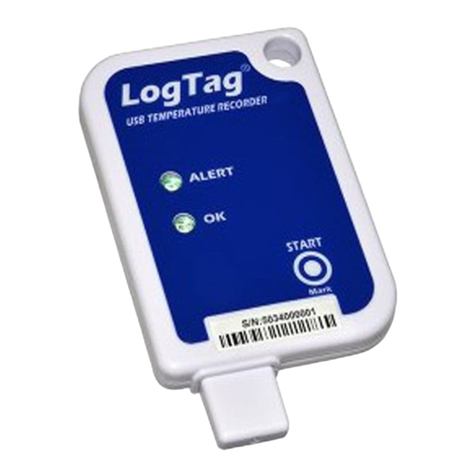
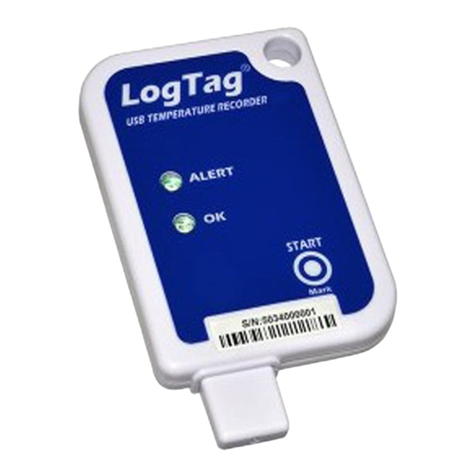
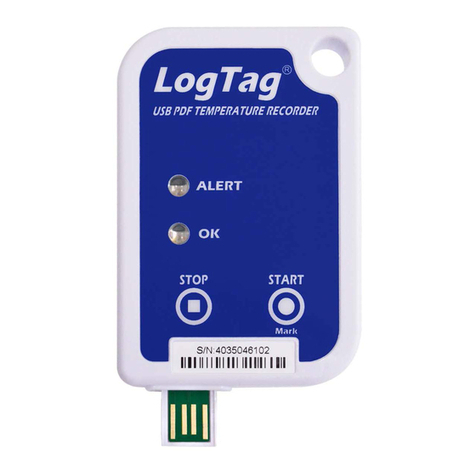
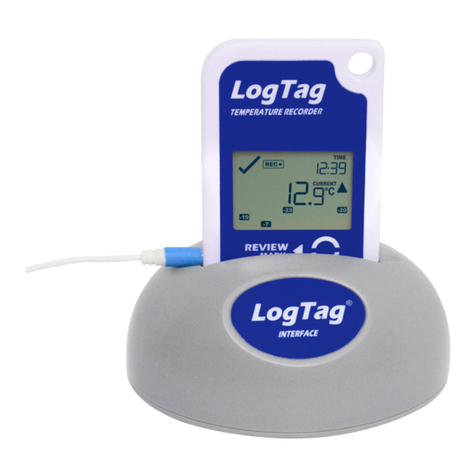
lUsing a standard USB interface: Insert the UHADO-16 into the interface, contacts
towards the rear. You can now use the UHADO-16 like any other logger with the 3
contact pins at the rear, both for configuration and for downloading data.
Standard Configuration Options
The standard configuration options are very similar to those of other LogTag® logger
products and include settings such as User ID, start method, pre-start recording,
logging interval and duration, start delay, and password.
For detailed information about each parameter please read the section about Configuring a
LogTag® for logging in LogTag® Analyzer’s User Guide or press F1 for help.
Temperature Alarm Configuration Options
LogTag® Analyzer allows up to 4 different alarm trigger conditions for temperature when
configuring a UHADO-16 for recording.
Each alarm trigger condition consists of a threshold temperature value, an activation type
(which can be instant, consecutive or accumulative4) and a delay time, if it is not an
instant alarm.
If an alarm trigger condition requires readings to exceed an upper threshold temperature it
is called an
upper alarm
. If an alarm trigger condition requires readings to go below lower
thresholds it is called a
lower alarm
.
An alarm event is generated, when either of the entered alarm conditions is triggered.
4
lInstant = one temperature reading is above (below) the threshold
lConsecutive = temperature readings are above (below) the threshold for the time defined in the activation delay without
interruption
lAccumulative = temperature readings are above (below) the threshold for the total time defined in the activation delay
time, but may not necessarily be sequential.