4 5
4. Now re-center the object on the crosshairs as you did in Step 1, then repeat
Steps 2 and 3.
5. Repeat this procedure as needed until the star or object does not rotate off-
center when the mount is rotated in R.A. The polar axis finder scope is then
ready to use for polar alignment. When not in use, replace the plastic cover
over the polar scope (if your mount has such a cover) to prevent it from get-
ting bumped out of alignment.
Polar Alignment Using the Polar Scope
To polar-align the mount using the polar axis finder scope, follow these steps:
1. Move the tripod so the telescope tube and right ascension axis point roughly
at Polaris. If you cannot see Polaris directly from your observing site, consult
a compass and rotate the tripod so the telescope points north.
2. Remove the cap on the front opening of the equatorial mount. Now, sight
Polaris in the polar axis finder scope. Polaris will probably be somewhere
within the field of view. If not, move the tripod left-to-right, and adjust the
latitude up and down until Polaris appears the field of view. Polaris will be the
brightest star in its immediate vicinity.
3. Note the constellation Cassiopeia and the Big Dipper in the reticle of the
polar axis finder scope. They do not appear in scale, but they indicate the
general positions of Cassiopeia and the Big Dipper relative to the north
celestial pole. Rotate the reticle so the constellations depicted match their
current orientation in the sky when viewed with the naked eye. To do this,
release the R.A. lock lever and rotate the main telescope around the R.A.
axis until the reticle is oriented with sky. For larger optical tubes you may
need to remove the tube from the mount to prevent it from bumping into
the mount. Once the reticle is correctly oriented, use the R.A. lock lever to
secure the mount’s position.
4. Now use the mount’s azimuth adjustment knobs and the latitude adjustment
jackscrew to position Polaris inside the tiny circle marked “Polaris” on the
finder’s reticle. You must first loosen – very slightly only -- the knob under-
neath the equatorial mount on the center support shaft so that the mount
can rotate.
Once Polaris is properly positioned within the reticle, you are precisely polar
aligned. Retighten the knob underneath the equatorial mount. If you do not have
a clear view of Polaris from your observing site, you will not be able to use the
polar scope to precisely polar align the telescope.
NOTE: From this point on in your observing or imaging session, you should
not make any further adjustments to the azimuth or the latitude of the mount,
nor should you move the tripod. Doing so will undo the polar alignment. The
telescope should be moved only about its right ascension and declination axes.
Additional Note Regarding Focusing the Polar Scope
The polar axis finder scope is normally focused by simple rotation of the eyepiece
focus ring. However, if after adjusting the focus ring you find that the image of the
reticle is sharp but the stars are out of focus, then you must adjust the position of
the polar scope’s objective lens. To do this:
1. First remove the polar scope from the mount.
2. Look through it at a star (at night) or distant object at least 1/4 mile away
(during daylight). Use the eyepiece focus ring to bring the reticle into sharp
focus.
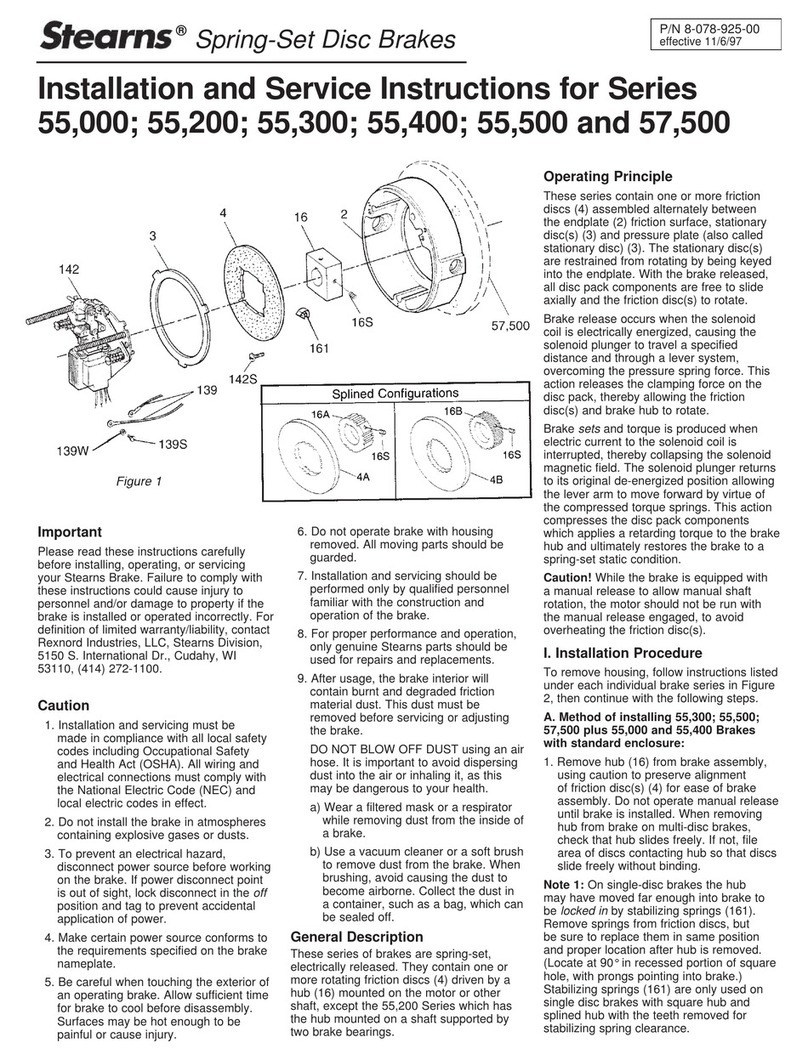
3. Now loosen the objective tube lock ring (see Figure 1) a turn or two by turn-
ing it counterclockwise. This will allow you to rotate the objective tube inward
or outward until “infinity” focus is achieved and the distant object appears
sharp. (You may have to loosen the lock ring even more in the process.)
Then just retighten the lock ring. Once the polar axis finder’s objective lens is
focused, it should not need to be adjusted again.
One-Year Limited Warranty
This Orion product is warranted against defects in materials or workmanship for a
period of one year from the date of purchase. This warranty is for the benefit of the
original retail purchaser only. During this warranty period Orion Telescopes & Binoculars
will repair or replace, at Orion’s option, any warranted instrument that proves to be
defective, provided it is returned postage paid. Proof of purchase (such as a copy of
the original receipt) is required. This warranty is only valid in the country of purchase.
This warranty does not apply if, in Orion’s judgment, the instrument has been abused,
mishandled, or modified, nor does it apply to normal wear and tear. This warranty gives
you specific legal rights. It is not intended to remove or restrict your other legal rights
under applicable local consumer law; your state or national statutory consumer rights
governing the sale of consumer goods remain fully applicable.
For further warranty information, please visit www.OrionTelescopes.com/warranty.
Orion Telescopes & Binoculars
Corporate Offices: 89 Hangar Way, Watsonville CA 95076 - USA
Customer Support: www.OrionTelescopes.com/contactus
Copyright © 2014 Orion Telescopes & Binoculars
All Rights Reserved. No part of this product instruction or any of its contents may
be reproduced, copied, modified or adapted, without the prior written consent of
Orion Telescopes & Binoculars.