ENGLISH8
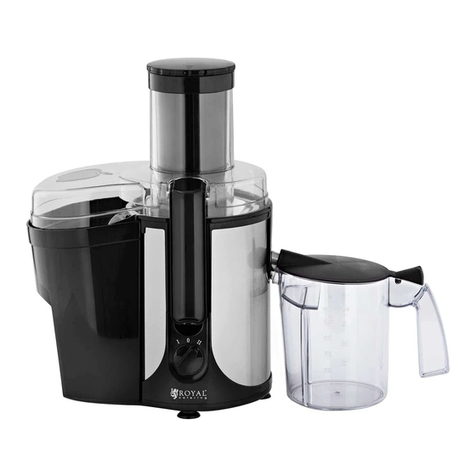
C3Switch the appliance on by turning the
control knob to setting 1 (low speed) or
2 (normal speed).
- Speed 1 is especially suitable for soft fruits and
vegetables such as watermelons, grapes,
tomatoes, cucumbers and raspberries.
- Speed 2 is suitable for all other kinds of fruits
and vegetables.
4Put the pre-cut pieces in the feeding tube
and gently press them down towards the
rotating filter by means of the pusher.
Do not exert too much pressure on the pusher,
as this could affect the quality of the end result
and it could even cause the filter to come to a
halt.
Never insert your fingers or an object into the
feeding tube.
5After you have processed all ingredients
and the juice flow has stopped, switch the
appliance off and wait until the filter has
stopped rotating.
6Pour the juice from the jug into the glass.
C◗The removable foam separator separates the
foam from the juice.
Tips
- Use fresh fruit and vegetables, as they contain
more juice. Pineapples, beetroots, celery stalks,
apples, cucumbers, carrots, spinach, melons,
tomatoes, pomegranates, oranges and grapes
are particularly suitable for processing in the
juice extractor.
- You don't have to remove thin peels or skins.
Only thick peels, e.g. those of oranges,
pineapples and uncooked beetroots, need to
be removed. Also remove the white pith of
citrus fruits because it has a bitter taste.
- If you want to juice fruits with stones, remove
the stone before juicing.
- Apple juice turns brown very quickly.You can
slow down this process by adding a few drops
of lemon juice.
- Fruits that contain starch, such as bananas,
papayas, avocados, figs and mangoes are not
suitable for processing in the juice extractor.
Use a food processor, blender or bar blender
to process these fruits.
- Leaves and leaf stalks of e.g. lettuce can also be
processed in the juice extractor.
- The juicer is not suitable for processing very
hard and/or fibrous/starchy fruits or vegetables
such as sugar cane.