Wall/Surface Mounting the Charger
As of January 2018, the DE-CH03 comes with mounting holes built in and screws for easy
wall/surface mounting. Choose a safe, cool, and dry location near a power outlet or extension cord,
but clear of other devices on the wall (make sure screws will not penetrate any wiring already in wall).
Using a phillips head screwdriver, screw the 2 included screws into the wall 5 and 1/8th of an inch
apart (1 screw above the other in a straight, vertical line). If center of bottom hole/screw is at the 0
mark on your ruler, then the top screw/hole will sit right between the 5 inch mark and 5 and 1/4th inch
mark. Do not screw them into the wall so far that the charger’s mounting holes cannot grab/sit
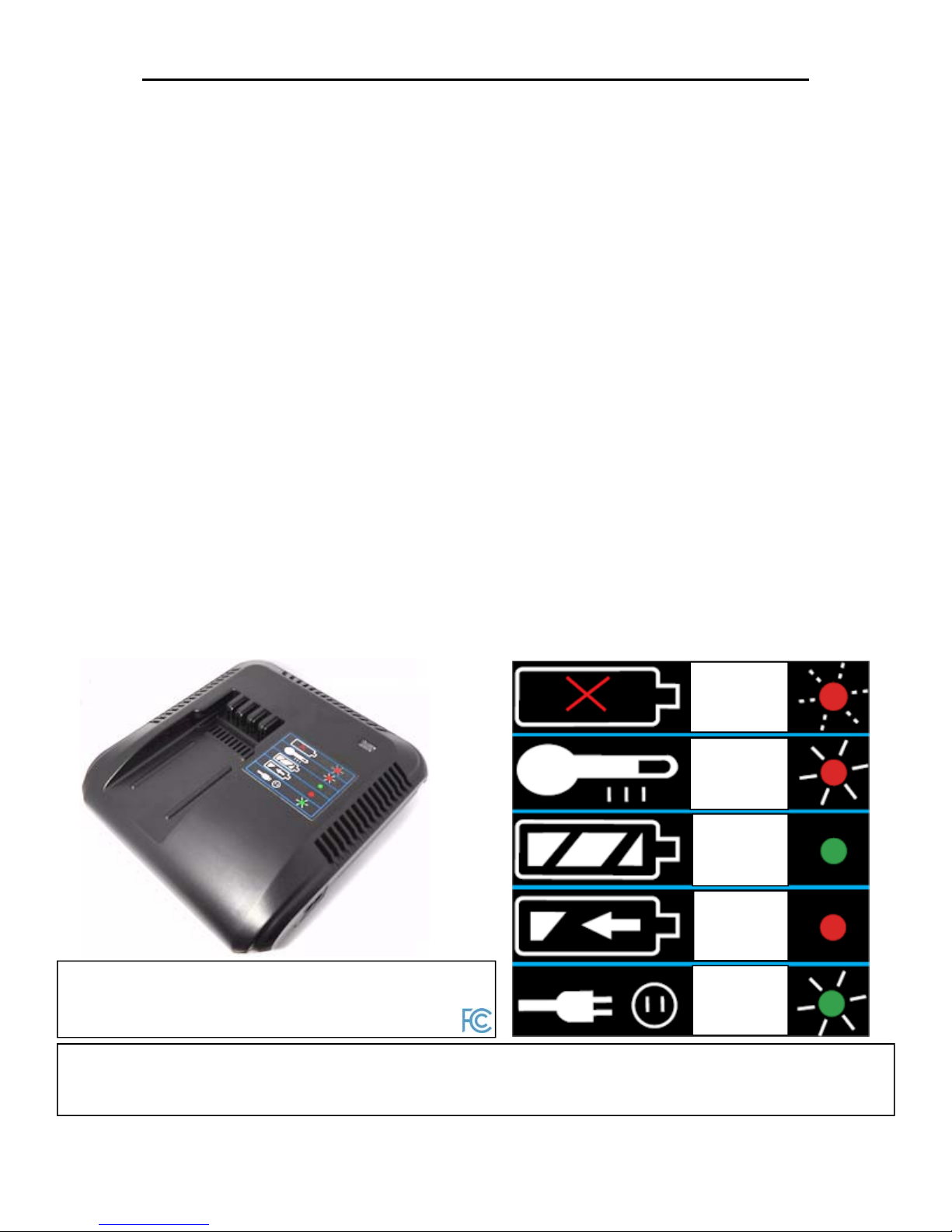
securely on the screw heads. Holding charger vertically so that the LED light is at lower left corner,
line up the charger’s built in mounting holes with screws on the wall, then let it sit securely on the
screwheads. This position allows you to slide the battery down onto the charger, then slide it up to
remove (hold charger with other hand while sliding up so that charger does not come off wall).
Charger Maintenance
This charger was designed to be powered down when not in use to extend the life of the
charger. There is no “off” button, so to power it down you will need to either unplug the charger from
the wall socket or shut off power to the socket/circuit that the charger’s cord is plugged into.
Battery Maintenance
Nickel based batteries (like Dewalt's NICD version and certain generics NICD/NIMH) self-discharge
even when not in use, so we recommend in general to top off the charge on NICD/NIMH batteries
about once a month (but in the case of EMS where you may need the max runtime at a moment's
notice for an emergency, then we recommend topping off the battery’s charge daily or as necessary).
When using a 24v DW0242 battery/replacement with this 24v charger replacement, topping off the
charge without fully discharging won't harm the battery, though deep cycling or fully discharging
before charging won't hurt the battery either. Cleaning the battery’s charging contacts may be
required when you notice dirt, dust, or residue buildup (use a Q tip or cotton swab with a small
amount of rubbing alcohol to wipe the metal contacts, then dry the contacts before using the battery
again).
Important Differences
This 24v charger replacement stops charging when it senses that all 20 cells of the battery are at
least 90% (or after about 80-120 minutes max). Though in the short term, you may miss out on that
extra 10% of performance, charging each cell to at least 100% would consistently bring some cells to
well over 100% which actually makes the battery break down (and need to be replaced) sooner. This
charger replacement (which only charges to about 90%), therefore helps you extend the overall life
span of the battery which saves you the most money in the long term on batteries. This charger will
only begin charging the battery again if the outlet loses and then regains power (or is unplugged from
the outlet and then replugged in) or if you remove and reinsert the battery into the charger. This is
different than the Dewalt charger and the Stryker SMRT charger.
Stryker Power Cot Users
Like the Dewalt brand original 24v battery/charger system that Stryker originally shipped with their
cots (before SMRT existed), this replacement system can yield about 5-10 lifts average per charge
(actual battery performance experienced by individual EMS services may differ greatly due to
variables including environmental factors, patient size, call frequency and ambulance cot condition).