7 │
6 - Installation and Commissioning
Installation must meet valid rules and may be done only by qualified staff.
Defects caused by improper installation, use or handling are not covered by warranty.
After the tank is installed and connected to an existing heating system, it is recommended to clean the entire heating
system using a suitable cleaning agent, e.g. MR-501/R.
Anti-corrosion protective liquid should be also used, e.g. MR-501/F.
6.1 - Connection to heat sources
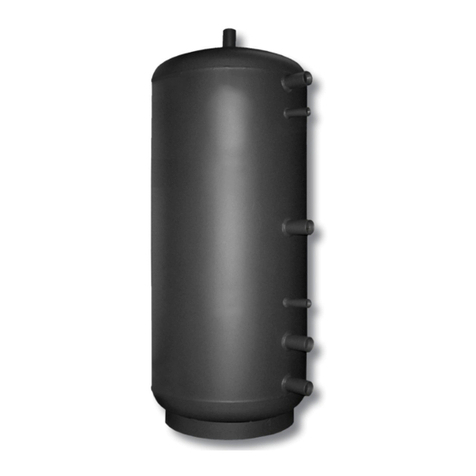
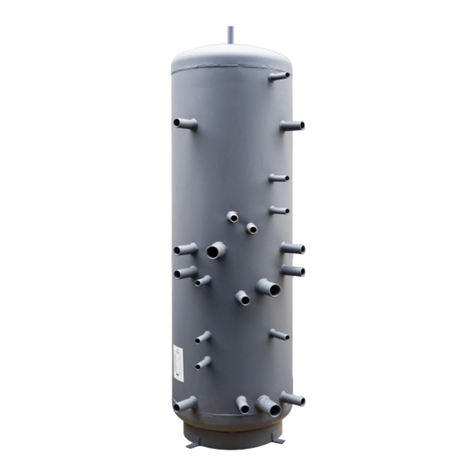
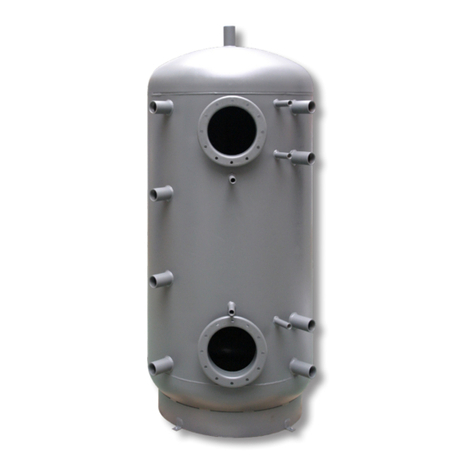
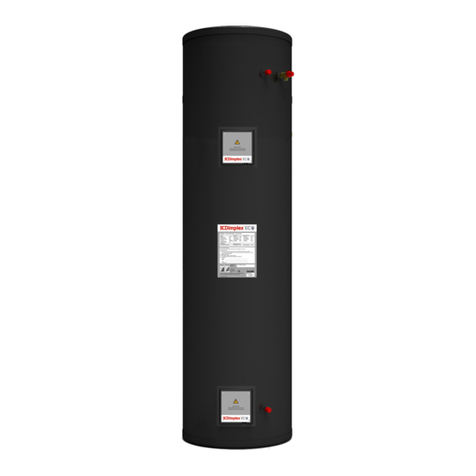
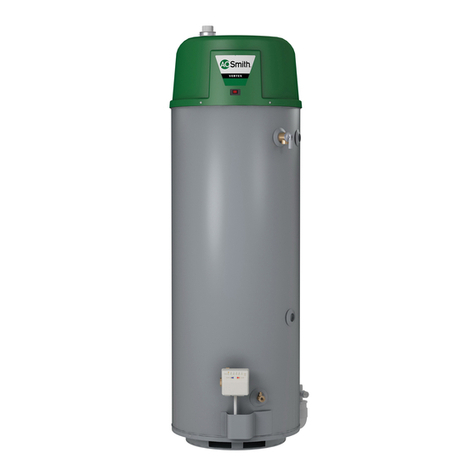
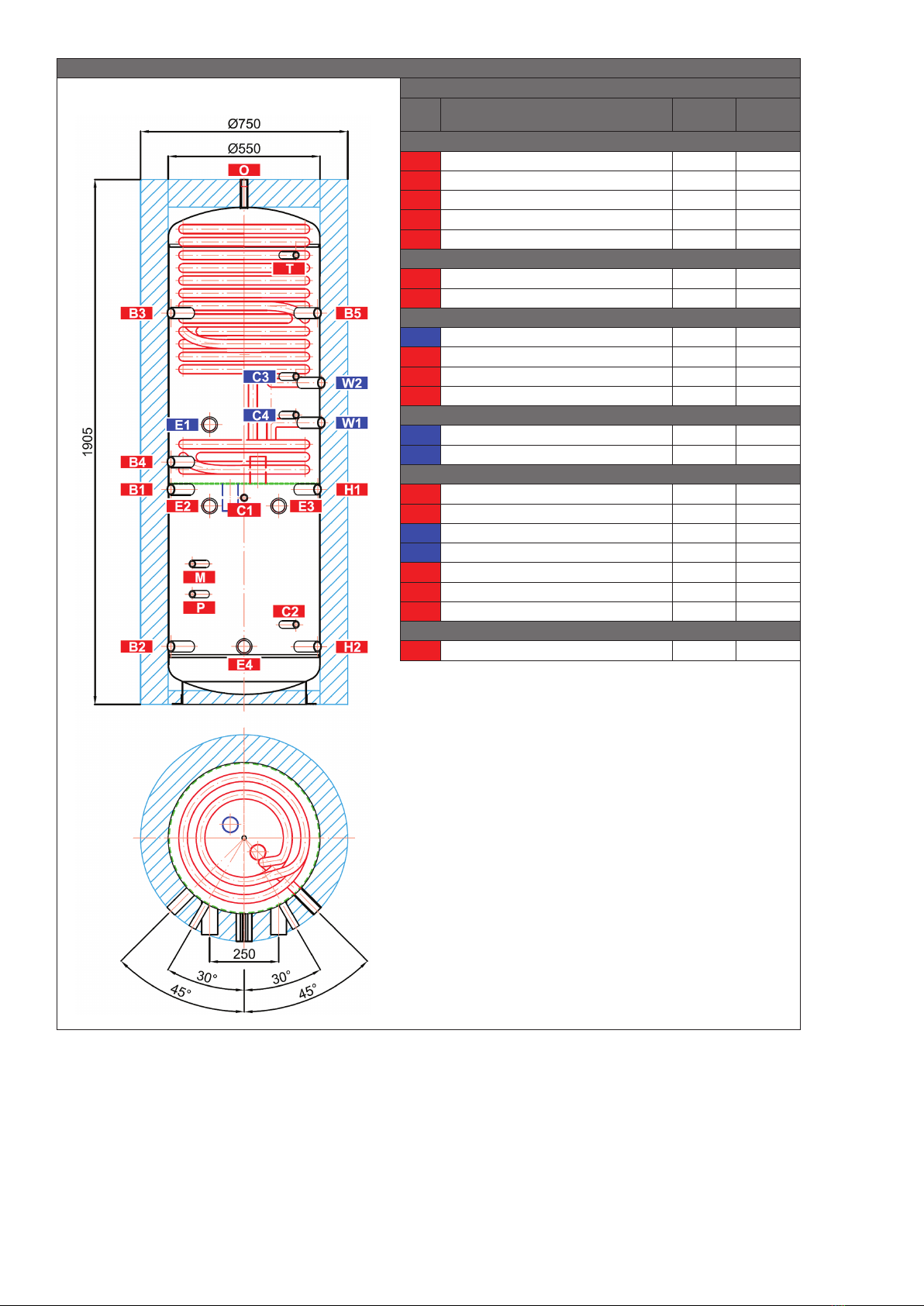
Place the tank on the floor, as close to your heat source as possible. Connect the heating circuits to inlets and outlets
respecting the thermal stratification in the tank. Install a drain valve at the lowest point of the tank.
Install an air vent valve at the highest point of the system. Insulate all the connection piping
6.2 - Installation of an el. heating element
The G 6/4“ side tappings are designed to accommodate electric heating rods. They can be connected either directly to
the mains (thermostat-equipped rods), or to a heating system controller. The installation may be done by qualified staff
only.
Warning: Electric heating elements shall be protected by a safety thermostat.
6.3 - Connection to water mains
DHW piping shall be done according to valid rules. Installation of a pressure reducing valve on the immersed tank inlet
is recommended. For water mains pressure above 6 bar a pressure reducing valve is necessary. To prevent water loss,
we recommend installing an expansion vessel at the cold water inlet with a minimum volume of 4% of the total volume
of water in the DHW piping, including heat exchangers, circulation pipes, etc. (usually 8 l). Should the water be too hard,
install a water softener before the tank. In case the water contains mechanical impurities, install a strainer.
6.4 - Commissioning
Ground the tank before commissioning.
The tank shall be filled up together with the heating system, respecting valid standards and rules. In order to minimize
corrosion, special additives for heating systems should be used. The quality of heating water depends on the quality of
filling water at commissioning, on the top-up water and on the frequency of topping up. This has a strong influence on the
lifetime of heating systems. Poor quality of heating water may cause problems like corrosion or incrustation, esp. on heat
transfer surfaces.
Quality of DHW shall meet the conditions shown in the Table of limit values for total dissolved solids in hot
water on this page.
Fill the heating circuits with the appropriate fluids and air-bleed the entire system. Check all connections for leaks
and verify the system pressure. Set the heating controller in compliance with the documentation and manufacturer’s
recommendations. Check regularly the proper function of all control and adjustment elements.
Table of limit values for total dissolved solids in hot water.
Description pH Total dissolved
solids (TDS)
Ca Chlorides Mg Na Fe
Max. value 6,5 - 9,5 600 mg/l 40 mg/l 100 mg/l 20 mg/l 200 mg/l 0,2 mg/l