x1000 kWh
3600 Imp/KWh
VON IREV
4.2.1.3 Current Transformer Primary Value
The nominal Full Scale Current that will be displayed as the Line currents. This screen enables the
user to display the Line currents inclusive of any transformer ratios, the values displayed represent
the Current in Amps.
Pressing the “ Up” key accepts the present value and rollbacks to menu selection screen
(See Section 4.2)
restricted, the value will wrap. Example: If primary value
of PT is set as 400kV (max value) then primary value of
Current is restricted to 1736A.
Pressing the “ Up” key will advance to the next less
significant digit. (* Denotes that decimal point will be
flashing).
Pressing the “ Down” key will enter the “Current
Transformer Primary Value Edit” mode. This will scroll the
value of the most significant digit from 0 through to 9,
unless the presently displayed Current Transformer
Primary Value together with the Potential Transformer
Primary Value results in a maximum power of greater
than 1000 MVA in which case the digit range will be
“ Up” key is pressed.
The “Maximum Power” restriction of 1000 MVA refers to 120% of nominal current and 120% of
nominal voltage, i.e, 694.4 MVA nominal power per phase.
When the least significant digit had been set, pressing the “ Up” key will advance to the
“Current Transformer Primary Value Confirmation” stage.
The minimum value allowed is 1, the value will be forced to 1 if the display contains zero when the
Current Transformer Primary Value Confirmation.
This screen will only appear following an edit of the
.
If the scaling is not correct, Pressing the “ Down” key
will return to the “ Edit
stage with the most significant digit highlighted (associated
decimal point flashing).
Current
Transformer Primary Value
Current Transformer Primary Value ”
Potential Transformer Secondary Value Confirmation
This screen will only appear following an edit of the
Potential Transformer Value.Secondary
If the scaling is not correct, pressing the “ Down”
key will return to the “Potential Transformer Secondary
Value Edit”
Pressing the “ Up” key sets the displayed value
and will advance to the current Transformer Primary
Value (See Section 4.2.1.3)
Note : the flashing decimal point indicates the cursor position, a steady decimal point will be present
to identify the scaling of the number until the cursor position coincides with the steady decimal point
position. At this stage the decimal point will flash.
When the least significant digit has been set pressing the “ Up” key will advance to the
“Potential Transformer secondary Value Confirmation” stage.
5
x1000 kWh
VON IREV
x1000 kWh
VON IREV
Enter Address, first digit entered, prompt for second digit
(* Denotes that decimal point will be flashing).
Use the “ Down” key to scroll the value of the second digit
Press the “ Up” key to advance to next digit.
Enter Address, second digit entered, prompt for third digit
(* Denotes that decimal point will be flashing).
Use the “ Down” key to scroll the value of the third digit
Enter Address for third digit .
Screen.
Press the “ Up” key to advance to Address confirmation
4.2.2.1 Address Setting : This screen applies to the RS 485 output only.
This screen allows the user to set RS485 parameter for instruments
Enter Address, prompt for first digit.
(* Denotes that decimal point will be flashing).
Press the “ Down” key to scroll the value of the first digit
Press the “ Up” key to advance to next digit.
The range of allowable address is 1 to 247 .
4.2.2 Communication Parameter Selection :
x1000 kWh
VON IREV
x1000 kWh
VON IREV
x1000 kWh
VON IREV
x1000 kWh
VON IREV
4.2.2.2 RS 485 Baud Rate :
This screen allows the user to set Baud Rate of RS 485 port.
The values displayed on screen are in kbaud ..
Pressing “ Up” key accepts the present value and
advance to the Parity Selection (See Section 4.2.2.3)
Pressing the “ Down” key will enter the “Baud Rate
Edit” mode and scroll the value through 2.4, 4.8, 9.6 , 19.2
and back to 2.4
Address confirmation Screen.
This Screen confirms the Address set by user .
Press the “ Up” key to advance to next Screen
“Rs485 Baud Rate” (See Section 4.2.2.2)
Pressing the “ Down” key will reenter the “Address
Edit” mode.
4.2.2.3 RS 485 Parity Selection :
This screen allows the user to set Parity & number of stop bits of RS 485 port.
Pressing “ Up” key accepts the present value and
advance to Menu selection (see section 4.2).
Pressing the “ Down” key will enter the “Parity & stop bit
Edit” mode and scroll the value through
odd : odd parity with one stop bit
no 1 : no parity with one stop bit
no 2 : no parity with two stop bit
E : even parity with one stop bit
Pressing the “ Up” key will set the value.
RS 485 Parity confirmation :
Pressing “ Down” key will be re-enter into Parity Edit mode .
Reset (None)
Pressing the “ Down” key will enter the “Reset
option” mode and scroll through Parameter
and wrapping back to None.
Pressing “ Up” key advances to menu
selection screen (see section 4.2)
RS 485 Baud Rate confirmation :
Pressing “ Down” key will be re-enter into the.
Pressing the “ Up” key will select the value and advances
to the Parity Selection (See Section 4.2.2.3).
Baud Rate Edit mode
3.2.3.1 Resetting Parameter
The following screens allow the users to reset the all Energy.
3.2.3 Reset Parameter Selection :
Pressing the “ Up” key jump back to the
menu selection screen (see section 4.2).
again will
x1000 kWh
VON IREV
x1000 kWh
VON IREV
x1000 kWh
VON IREV
x1000 kWh
VON IREV
x1000 kWh
VON IREV
x1000 kWh
VON IREV
x1000 kWh
VON IREV
x1000 kWh
VON IREV
Reset option select,
The user has scrolled through to the “E” Energy
value.
Pressing “ Up” key will select the value and
advance to the “Reset Energy Confirmation” Mode.
& resets energy.
Integrated Energy at the moment of resetting energy will
become zero.
Reset Energy Confirmation.
Pressing the “ Down” key will re-enter the “Reset
option” mode.
Pressing “ Up” key will jump back to the
menu selection screen (see section 4.2).
6
4.2.4. Relay output menu
4.2.4.1 Pulse Duration Selection:
This screen applies only to the Pulsed output mode of the relay
This screen allows the user to set Relay energisation time in milliseconds.
Pressing “ Up” key accepts the present value and
advance to pulse rate selection menu (see section 4.2.4.2).
Pulse Duration Edit.
Pressing the “ Down” key will enter the “Pulse Duration
Edit” mode and scroll the value through 60, 100, 200 and
wrapping back to 60.
Pressing the “ Up” key will select the value and advances
to “Pulse Duration Confirmation”.
x1000 kWh
VON IREV
4.2.4.2 Pulse Rate
This screen applies to the Relay Output option only. The screen allows user to set the energy
pulse rate divisor. Divisor values can be selected through 1,10,100,1000.
Pressing “ Up” key accepts the presents value
and advances to the “Menu Selection Screen”
(See section 4.2.4.).
Pressing the “ Down” key will enter the “Pulse rate divisor
Edit” mode and scroll the value through the values 1,10,100,
1000 wrapping back to 1.
Pressing the “ Up” key advances to the “Pulse rate
Divisor Confirmation” menu.
(See section 4.2.4)
Pulse Rate Divisor Confirmation.
This screen will only appear following an edit of the
Pulse rate divisor.
If the Pulse rate shown is not correct, pressing the
“ Down” key will return to the “Pulse rate divisor
Edit” stage by blanking the bottom line of the
display.
Pressing “ Up” key sets the displayed value and
will advance to the “Relay output Option Menu”.
Pressing “ Up” key set displayed value and
Pulse Duration Confirmation.
This screen will only appear following an edit of the
Pulse duration.
pressing the “ Down” key will re-enter the “Pulse
Duration Edit” mode.
Will advance to pulse rate selection menu
(See section 4.2.4.2)
x1000 kWh
VON IREV
x1000 kWh
VON IREV
x1000 kWh
VON IREV
* System power = CT(Primary) x PT(Primary)L-N
Pulse Duration 60 ms,100 ms or 200 ms
Divisor
1
10
100
1000
Pulse rate
Pulse System Power*
1per Whr
1per 10Whr
1per 100Whr
1 per 1000Whr
1per kWhr
1per 10kWhr
1per 100kWhr
1 per 1000kWhr
1per MWhr
1per 10MWhr
1per 100MWhr
1per 1000MWhr
Up to 3600W
Up to 3600W
Up to 3600W
Up to 3600W
Up to 3600kW
Up to 3600kW
Up to 3600kW
Up to 3600kW
Above 3600kW
Above 3600kW
Above 3600kW
Above 3600kW
TABLE 3 : Energy Pulse Rate Divisor
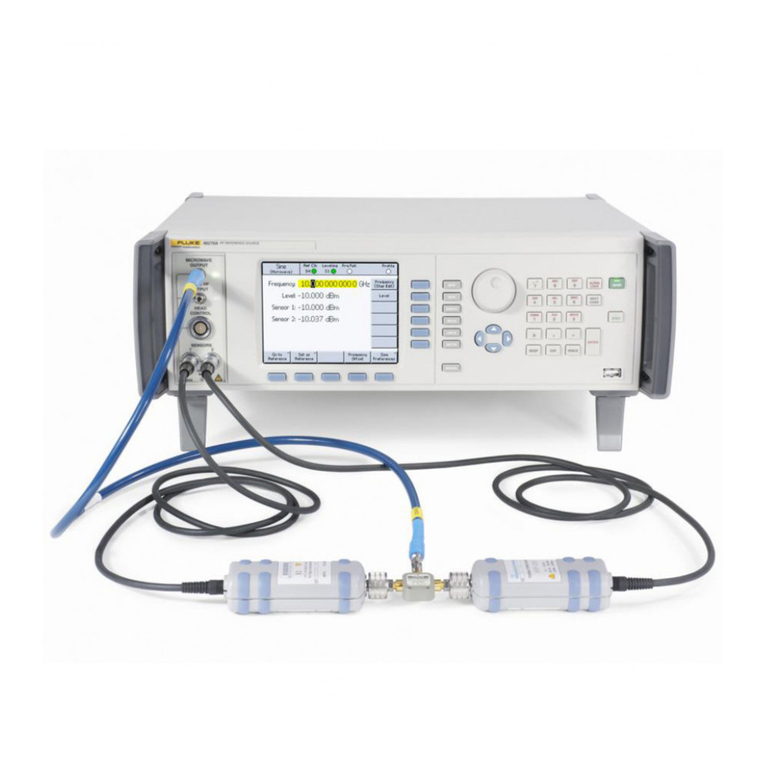
5. Relay output (Optional) :
5.1 Pulse Output :
Pulse output is the potential free, very fast acting relay contact which can be used to drive an external
mechanical counter for energy measurement.
Rish EM 3490 SS has one pulse output.
One normally open & one normally closed
Relay Contact
60ms , 100ms or 200ms
Pulse Duration
3600 Imp/KWh
3600 Imp/KWh
3600 Imp/KWh
3600 Imp/KWh
3600 Imp/KWh
3600 Imp/KWh
3600 Imp/KWh
3600 Imp/KWh
3600 Imp/KWh
3600 Imp/KWh
3600 Imp/KWh
3600 Imp/KWh
3600 Imp/KWh
3600 Imp/KWh
3600 Imp/KWh
3600 Imp/KWh
3600 Imp/KWh
3600 Imp/KWh
Pressing “ Up” key accepts the presents value
and advances to the “Energy digit Rollover(reset) count”menu
(See section 4.2.1.5).
Pressing “ Up” key sets the displayed value and
will advance to the “Energy digit reset count” menu.
4.2.1.4. Energy Display on modbus
Pressing the “ Down” key will enter the “Energy Display
On Modbus Edit” mode and scroll the value through the values
1,2 & 3 wrapping back to 1
1 : Energy In Wh
2 : Energy in KWh
3: Energy in MWh.
Pressing the “ Up” key advances to the “Energy Display
Energy Display On Modbus Confirmation.
This screen will only appear following an edit of the
Energy Display On Modbus.
This screen enable user to set energy in terms of Wh / KWh / MWh on RS 485 Output depending as per the
requirement.
Note : Default value is set to ‘1’ i.e. Energy on Modbus will be in
terms of Wh resp.
Pressing the “ Down” key will enter the “
On Modbus Edit” .
Energy Display
(See section 4.2.1.5)
Pressing the “ Up” key sets the displayed value and
selection screen (see section 4.2).
will rollbacks to menu
4.2.1.5 Energy Digit Rollover(reset) count :
This screen
which energy will rollback to zero depends upon setting of Wh,KWh,
& MWh.
enables user for setting maximum energy count after
Pressing the “ Down” key will enter the
count edit mode. This will scroll the value of reset count from
7 to 14 for Wh,from 7 to 12 for KWh & from 7 to 9 for MWh.
Energy digit reset
Pressing the “ Up” key sets the displayed value and
back to the system parameter selection (See Section 4.2.1)
will jump
Pressing “ Up key “ will advance to Energy digit reset count confirmation screen.
Pressing the “ Down” key will re-enter Energy digit Rollover(reset) count edit mode.
Ex. If energy is set Wh & It will set Energy digit
count to 10 then energy will reset after “9,999,999,999” & then will
rollback to zero
display on modbus
Note :
1) Default value is set to “14” i.e if energy count crosses14 digit
it will rollback to zero.
2) Energy displays on modbus is set to (2) & energy digit reset count is
set to 12.Energy screen on display will show “-------” i.e Energy
overflow.when energy crosses the 11 digit count.
3) Energy displays on modbus is set to (3) & energy digit reset count
is set to 9.Energy screen on display will show “-------” i.e Energy
overflow. when energy crosses the 8 digit count.
.
Pressing the “ Up” key sets the displayed value and
will advance to the “Energy Display on Modbus” menu.
(See section 4.2.1.4)
x1000 kWh
VON IREV
3600 Imp/KWh
x1000 kWh
VON IREV
3600 Imp/KWh
x1000 kWh
VON IREV
3600 Imp/KWh
x1000 kWh
3600 Imp/KWh
VON IREV
1. For Energy Output in Wh
Divisor
1
Pulse rate
Pulse System Power*
1 per KWhr
1 per 1000KWhr
1per 1000MWhr
Up to 3600W
Up to 3600kW
Above 3600kW
2. For Energy Output in KWh
Divisor
1
Pulse rate
Pulse System Power*
1per MWhr
1per 1000MWhr
1per 1000GWhr
Up to 3600W
Up to 3600kW
Above 3600kW
3. For Energy Output in MWh