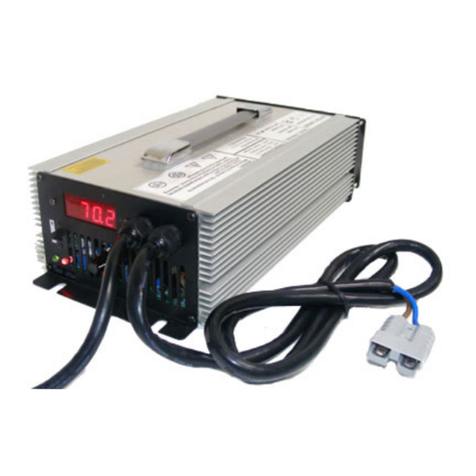
12V/24VHeavy-DutyBattery Charger
E&OE ©2017 Rossi 2
Safety
Safety messages are designed to alert you to possible dangers or hazards that could cause death, injury or
equipment or property damage if not understood or followed. Safety messages have the following symbols:
YouWILL be KILLED or
SERIOUSLY INJURED if you
do not follow instructions.
YouCAN be KILLED or
SERIOUSLY INJURED if you
do not follow instructions.
YouCAN be INJURED if you
do not follow instructions or
equipment damage may occur.
It is vital thatyouread and understand
this user manual before usingthe product,
including safety warnings, andany
assembly and operatinginstructions.
Keep the manual forfuturereference.
Safety precautions andrecommendations
detailed here must be fully understood
and followedtoreducetheriskof injury,
fire,explosion,electricalhazard,and/or
property damage.
Safety informationpresentedhereis
generic in nature –some advicemay not
be applicable to every product.Theterm
"equipment" refers totheproduct, be it
electricalmains powered,battery powered
orcombustion engine powered.
•Before Use-If youarenot familiar w ith
the safeoperation/handlingof the
equipment, or are in any way unsureof
any aspectof suitability or correctuse
for your application,youshould
complete training conductedby a
personor organizationqualified in safe
useand operationof this equipment,
including fuel/electricalhandling and
safety.
•Do NOT operatethe equipment in
flammable or explosiveenvironments,
suchas in the presenceof flammable
liquids, gases or dust. The equipment
may createsparks or heatthat may
ignite flammable substances.
•Keep clearof moving parts.
•Equipment may be a potential sourceof
electric shockor injury if misused.
•Do NOT operatethe equipment if it is
damaged, malfunctioning or is in an
excessively wornstate.
•Do NOT allow others tousethe
equipment unless they havereadthis
manual and areadequately trained.
•Keep packaging awayfromchildren-
risk of suffocation!Operators mustuse
the equipment correctly.Whenusing
the equipment, consider conditions and
pay due careto persons andproperty.
GeneralWorkAreaSafety
•Work areasshouldbe cleanand wellit.
•Do notoperate theequipment if
bystanders,animals etc are within
operatingrange of theequipment or the
general workarea.
•If devices are providedfor connecting
dustextraction/collection facilities,
ensuretheseareconnectedandused
properly.Dustcollection canreduce
dust-relatedhazards.
GeneralPersonalSafety
•Wear appropriateprotectiveequipment
w henoperating,servicing,or whenin
the operatingarea of theequipment to
help protectfromeyeand earinjury,
poisoning, burns,cuttingandcrush
injuries. Protectiveequipment suchas
safety goggles, respirators,non-slip
safety footwear, hardhat,hearing
protectionetc should be usedfor
appropriateequipment / conditions.
Other people nearby shouldalsowear
appropriatepersonalprotective
equipment. Do not wear loose clothing
or jew ellery,w hichcanbecaughtin
moving parts.Keep hair andclothing
away fromtheequipment.
•Stay alert and use common sense
whenoperatingtheequipment. Do not
over-reach.Always maintain secure
footingand balance.
•Do notuse theequipment if tired or
under the influence of drugs, alcoholor
medication.
•This equipment is notintended for use
by persons withreducedphysical,
sensory or mental capabilities.
GeneralFuel Safety
•Petrol/fuel/gasoline is extremely
flammable –keep clearof naked flames
or other ignition sources.
•Do notspill fuel.If youspill fuel,wipeit
off theequipment immediately –if fuel
gets on your clothing,changeclothing.
•Do NOT smoke near fuelor w hen
refuelling.
•Always shutoff theenginebefore
refuelling.
•Do NOT refuela hotengine.
•Open the fuelcapcarefully toallow any
pressurebuild-upin thetank torelease
slowly.
•Always refuelinw ellventilatedareas.
•Always checkfor fuelleakage.If fuel
leakage is found,donot startorrun the
engine until all leaks arefixed.
GeneralCarbon-MonoxideSafety
•Using a combustion engine indoors
CANKILL IN MINUTES. Engine
exhaustcontains carbon-monoxide–a
poisonyou cannotsmell or see.
•Use combustionengines OUTSIDE
only, andfar away fromw indows, doors
and vents.
General Equipment Use and Care
•The equipment is designedfor
domestic useonly.
•Handle the equipment safely and
carefully.
•Beforeuse,inspecttheequipment for
misalignment or binding of moving
parts,loosecomponents,damage or
any other condition that may affect its
operation.If damaged, havethe
equipment repairedby an authorised
service centre or technicianbefore use.
•Prevent unintentional startingof the
equipment - ensureequipment and
power switchesare in theOFF position
before connectingor moving
equipment. Do not carry equipment
withhands or fingers touchingany
controls. Remove any tools or other
items that are nota part of the
equipment fromit beforestartingor
switchingon.
•Do notforcetheequipment. Use the
correctequipmentfor your application.
Equipment willperformbetter and be
safer whenusedwithin its designand
usageparameters.
•Use the equipment andaccessories
etc.in accordancewiththese
instructions,consideringworking
conditionsand the worktobe
performed.Using the equipment for
operations differentfromthose
intended couldresultin hazardous
situations.
•Always keepequipment components
(engines,hoses,handles,controls,
frames, housings,guards etc) and
accessories(cuttingtools,nozzles,bits
etc) properly maintained. Keep the
equipment cleanand, where
applicable, properly lubricated.
•Storethe equipment out of reachof
childrenor untrainedpersons.To avoid
burns or firehazards, letthe equipment
cool completely beforetransportingor
storing.Never place or storethe
equipment near flammable materials,
combustible gases or liquids etc.
•The equipment is not weather-proof,
and shouldnot be storedin direct
sunlight, at high ambient temperatures
orlocations thatare damp or humid.
•Do notclean equipment withsolvents,
flammable liquids or harshabrasives.
•For specific equipmentsafety useand
care,seeEquipment Safety.