Theft detectors and metal screening devices. Certain types of antitheft devices, such as those
used at entrances or exits of department stores, libraries, and other public establishments, and
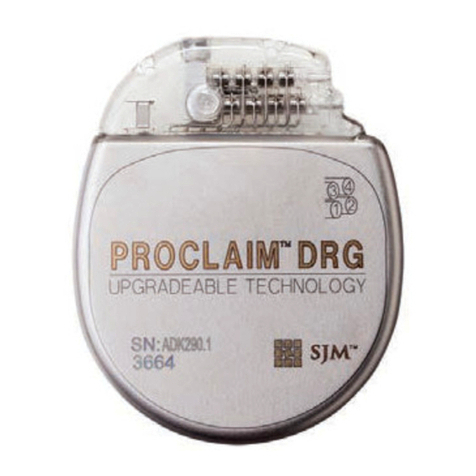
airport security screening devices may affect stimulation. Patients who are implanted with
nonadjacent multiple leads and patients who are sensitive to low stimulation thresholds may
experience a momentary increase in their perceived stimulation, which has been described by
some patients as uncomfortable or jolting. Patients should use caution when approaching such a
device and should request assistance to bypass the device. If they must proceed through the
device, patients should turn off the IPG and proceed with caution, being sure to move through the
detector quickly.
Device components. The use of components that are not approved by St. Jude Medical with this
system may result in damage to the system and increased risk to the patient.
Device modification. To avoid damaging internal components or injuring a patient, do not modify
the lead in any way, such as by cutting it or altering its shape.
The following precautions apply to these components.
Physician training. Implanting physicians should be experienced in the diagnosis and treatment
of chronic pain syndromes and should have undergone sufficient surgical and device implantation
training.
Infection. It is important to follow proper infection control procedures. Infections related to system
implantation might require that the device be explanted.
Implantation of multiple leads. If multiple leads are implanted, the leads should be routed to the
IPG in adjacent tunnels. Nonadjacent leads have the possibility of creating a conduit for stray
electromagnetic energy that could cause unwanted stimulation in the patient.
Sterilization and Storage
Single-use device. The implanted components of this neurostimulation system are intended for a
single use only. The components of this kit have been sterilized using ethylene oxide (EtO) gas
and are supplied in packaging permitting direct introduction into the sterile field. Do not resterilize
or reimplant an explanted system for any reason because of risk of infection and device
malfunction.
Exposure to liquids. System components should be stored where they will not be exposed to
liquids or excessive moisture, which can damage the seal integrity of the package materials.
Handling and Implementation
Expiration date. An expiration date (or "use before" date) is printed on the packaging. Do not use
a component if the use-before date has expired.
Care and handling of components. Use extreme care when handling system components prior to
implantation. Excessive heat, excessive traction, excessive bending, or the use of sharp
instruments may damage and cause failure of the components.
Package and component damage. Do not implant a device if the sterile package or components
show signs of damage, the sterile seal is ruptured, or if contamination is suspected for any reason.
Return it to St. Jude Medical for evaluation.
Exposure to body fluids or saline. Exposure of the internal metal (i.e., contacts on the lead, the
IPG, or extension) to body fluids or saline can cause corrosion and affect stimulation. If this
occurs, clean with sterile deionized water or sterile water for irrigation and dry completely prior to
lead connection and implantation.
2