ST UM2966 User manual

Introduction
The ASTRA platform (STEVAL-ASTRA1B) is a development kit and reference design that simplifies prototyping, testing and
evaluating advanced asset tracking applications such as livestock monitoring, fleet management, and logistics.
The kit consists of four boards (not available for separate sale): STEVAL-ASTRA1 (main board), STEVAL-ASTRA1SB (system
on board), STEVAL-ASTRA1BC (expansion board) and STEVAL-ASTRA1NA (flexible NFC antenna).
It comes with comprehensive software, firmware libraries, tools, battery, and plastic case. Thanks to its modular and optimized
design, it simplifies the development of tracking and monitoring innovative solutions.
The STEVAL-ASTRA1B is built around the STM32WB5MMG module and the STM32WL55JC SoC for short and long range
connectivity (BLE, LoRa, and 2.4 GHz and sub 1-GHz proprietary protocols). ST25DV64K for NFC connectivity is also available.
The on-board STSAFE-A110 enhances security features.
The kit embeds a complete set of environmental and motion sensors (LIS2DTW12, LSM6DSO32X, HTS221, STTS22H,
LPS22HH). Moreover, the Teseo-LIV3F GNSS module provides outdoor positioning.
The power management, built around ST1PS02 and STBC03, is optimized for long battery life.
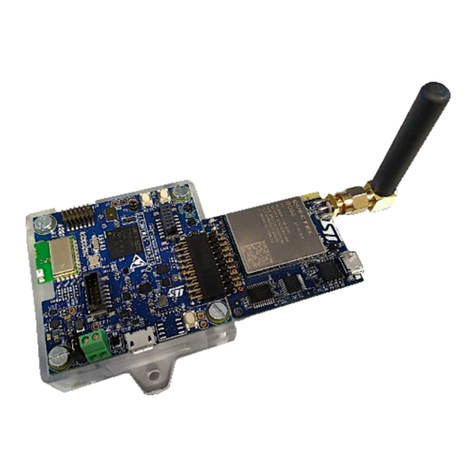
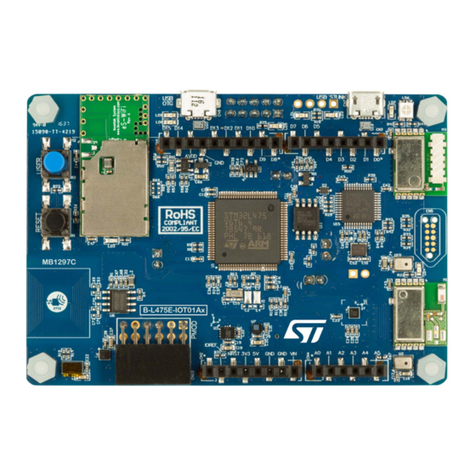
Figure 1. STEVAL-ASTRA1B development kit
Getting started with the STEVAL-ASTRA1B multiconnectivity asset tracking
reference design based on STM32WB5MMG and STM32WL55JC
UM2966
User manual
UM2966 - Rev 1 - February 2022
For further information contact your local STMicroelectronics sales office. www.st.com

1Getting started
1.1 Precautions for use
Danger: Charge the STEVAL-ASTRA1B with a DC 5 V–500 mA USB charger at an ambient
temperature between 5°C to 35°C. Do not use a USB charger without short-circuit
protection to prevent fire hazard.
Use the STEVAL-ASTRA1B at the recommended working temperature range and store
it according to the permitted storage conditions (see Table 1). Never expose the kit to
excessive heat such as direct sunlight, fire, or heating equipment.
Use only the battery provided with the kit, the replacement of the battery with an incorrect
type might invalidate the safeguards.
LiPo batteries can be damaged and even explode if they are short-circuited or overcharged
or improperly used (mechanical crushes, hot oven, or battery cutting).
Table 1. Precautions for use
Parameter Range
Operating temperature 10°C to 35°C
Charging temperature 10°C to 35°C
Humidity From 50% to 80%
Operating altitude Up to 2000 m
1.2 Features
• Ultra-low-power and multiconnectivity asset tracking platform
•Two wireless SoCs:
–STM32WB5MMG 2.4 GHz wireless dual core SoC module as main application processor, which
supports Bluetooth® Low Energy 5.0
–STM32WL55JC sub 1-GHz wireless dual core SoC, which supports multimodulation (LoRa and GFSK)
•ST25DV64K for NFC connectivity
•Teseo-LIV3F GNSS module with simultaneous multiconstellation
• Environmental and motion sensors: STTS22H, LPS22HH, HTS221, LIS2DTW12, and LSM6DSO32X
•STSAFE-A110 secure element
• Battery-operated solution with smart power management architecture (ST1PS02, STBC03, and TCPP01-
M12)
•FP-ATR-ASTRA1 function pack compatible with STM32CubeMX, which can be downloaded from and
installed directly into STM32CubeMX
• End-to-end proof of concept ecosystem mobile app and cloud dashboard:
–DSH-ASSETRACKING web cloud dashboard
–STAssetTracking mobile app available on Google Play and App store
• 480 mAh LiPo battery
• Plastic case
• SMA antenna
• NFC antenna
• Operating conditions: +5 to 35°C
1.3 Kit components
The STEVAL-ASTRA1B is a development kit consists of three boards and a flexible NFC antenna (none of them
available for separate sale):
UM2966
Getting started
UM2966 - Rev 1 page 2/86

• the STEVAL-ASTRA1SB system on board (with STEVAL$ASTRA1SBA finished good and AB0037 code
printed on the PCB);
•the STEVAL-ASTRA1 main board (with STEVAL$ASTRA1A finished good and AB0038 code printed on the
PCB);
• the STEVAL-ASTRA1BC expansion board (with STEVAL$ASTRA1BCA finished good and AB0058 code
printed on the PCB);
• the STEVAL-ASTRA1NA flexible NFC antenna (with STEVAL$ASTRA1NAA finished good and AB0077
code printed on the PCB).
Moreover, the kit includes, only for evaluation purposes, a plastic case to host the boards and the LiPo battery
included.
The figure below shows how the boards are mechanically connected to each other:
• the STEVAL-ASTRA1SB system on board is soldered on top of the main board;
• the STEVAL-ASTRA1BC expansion board is connected to the main board through the 34-pin expansion
connector;
• the STEVAL-ASTRA1NA flexible NFC antenna is connected to the main board via an FPC connector.
Figure 2. STEVAL-ASTRA1B components and assembly
1.3.1 STEVAL-ASTRA1SB system on board
1.3.1.1 Architecture and pinout
The system on board hosts long and short-range connectivity as well as security functionalities. Moreover, it
embeds part of the power management circuitry.
UM2966
Kit components
UM2966 - Rev 1 page 3/86

Figure 3. Block diagram of the STEVAL-ASTRA1SB system on board
This board main components are:
•The STM32WB5MMG (AB0037.U902) ultra-low-power, small-form factor, certified 2.4 GHz wireless module.
It integrates the high performance STM32WB dual core Arm® Cortex® M4/M0+, crystals, and the chip
antenna together with the matching network. The module implements a Bluetooth Low Energy stack,
but it can also support Zigbee, Open Thread and other 2.4 GHz proprietary protocols. As an application
processor, it exposes its main peripherals for application purposes and also acts as AT master towards the
STM32WL55JC.
• The STM32WL55JC (AB0037.U903) long-range wireless and ultra-low-power system-on-chip. It is a dual
core Arm® Cortex®-M4/M0+ that supports sub 1-GHz multimodulation, such as LoRa, GFSK, and others.
By default, the STM32WL55JC plays the role of network processor running the LoRaWAN modem AT
slave firmware. It is connected to the STM32WB5MMG through the LPUART interface together with wake-
up, reset, and interrupt signals. The STM32WL55JC drives the sub-GHz RF front end, acting on high
power, low power, and LNA networks. In this STEVAL-ASTRA1B version, the RF front end is tuned at
high frequency bands (868/915/920 MHz). Low frequencies bands can be achieved with a BOM change
of the STM32WL55JC RF network. By default, the sub-GHz antenna is connected to a SMA connector
(AB0037.J935) but you can optionally solder a micro-FL connector (AB0037.J936).
• The STSAFE-A110 (AB0037.U901) secure element hooked to the STM32WB5MMG for authentication and
secure data management services. It consists of a full turnkey solution for IoT, with a secure operating
system, running on the latest generation of secure microcontrollers.
• The ST1PS02CQTR (AB0037.U900) nano-quiescent synchronous step-down converter. It manages power
and can provide up to 400 mA regulated output current. You can select the output voltage via firmware (see
Section 1.3.1.2 ).
The figure below shows the main component placement on the system on board.
The PCB size is about 34 mm x 28 mm. It consists of six layers optimized for RF performance. The edge and
the bottom side of the PCB include several pads. The main peripherals and functionalities are exposed on the 56
edge pins and completed by the 110 pins on the bottom side.
UM2966
Kit components
UM2966 - Rev 1 page 4/86

Figure 4. System on board - main component placement and pinout
The flexible architecture allows moving some functionalities from the STM32WB5MMG to the STM32WL55JC
microcontroller. You can reach this goal by acting on the 30 solder jumpers (AB0037.J900 to AB0037.J929),
which are placed on the top side of the system on board, close to the edge of the PCB. You can use a 0 ohm
(0402 package) resistor or a tiny solder drop to close the jumpers, thus creating a shortcut between the selected
STM32WB5MMG and STM32WL55JC pins.
Figure 5. Solder jumpers for remapping
UM2966
Kit components
UM2966 - Rev 1 page 5/86

Table 2. System on board - edge pinout
Pin Function
E1 GND
E2 WL_RESET
E3 WL_PA14 SWCLK
E4 WL_PA13 SWDIO
E5 WL_VDD
E6 WB_PE0
E7 WB_PD9
E8 WB_PC7
E9 WB_PD11
E10 WB_PA3
E11 WB_PA2
E12 WB_PC5
E13 WB_PA0
E14 WB_PA1
E15 WB_PA15
E16 WB_PD15
E17 WB_PA5
E18 WB_PA4
E19 WB_PA6
E20 WB_PB5
E21 WB_PC1
E22 V_REG_EN
E23 WB_PB9
E24 WB_PB8
E25 WB_PC11
E26 WB_PB6
E27 WB_PB7
E28 WB_PE3
E29 WB_PC4
E30 WB_PD4
E31 WB_PD5
E32 WB_PA7
E33 WB_PD7
E34 WB_PD3
E35 WB_PB10
E36 GND
E37 WB_VDD_USB
E38 WB_PA12
E39 WB_PA11
E40 WB_PC13
UM2966
Kit components
UM2966 - Rev 1 page 6/86

Pin Function
E41 WB_PD12
E42 WB_PD14
E43 WL_PA10
E44 WL_PA9
E45 WL_PB14
E46 WL_PB13
E47 WB_PB11 STSAFE_SDA
E48 WB_PC0 STSAFE_SCL
E49 WB_VDD
E50 WB_PA13 SWDIO
E51 WB_PA14 SWCLK
E52 WB_RESET
E53 V_REG_2
E54 V_REG
E55 V_UNREG
E56 GND
The bottom side of the system on board embeds 110 pins. Some of them form two extended debug connector
footprints. Each footprint is connected to a microcontroller (see Figure 6).
The supported connectors are: SAMTEC FTSH-107-01-F-DV-K-P-TR (STLINK-V3MINI receptacle) and SAMTEC
FTSH-111-01-L-DV-K-P-TR (neither of this connector is included in the kit). The remaining 62 pins support minor
features of the two microcontrollers.
Table 3. System on board - bottom pinout (from B1 to B68)
Pin Function
B1 WB_PD0
B2 WB_PD2
B3 WB_PD8
B4 WB_PH0
B5 WB_PD10
B6 WB_PB1
B7 WB_PH1
B8 WB_PD13
B9 WB_PC12
B10 WB_PE1 POWER GOOD
B11 WB_PB15
B12 WL_PA3
B13 WL_PA2
B14 WL_PA1
B15 WL_PB2
B16 WL_PA11
B17 WB_PD1
UM2966
Kit components
UM2966 - Rev 1 page 7/86

Pin Function
B18 WB_PB0
B19 WB_PC6
B20 WB_PA8
B21 WL_PA15
B22 WL_PA12
B23 WB_PB12
B24 WB_PD6
B25 Not connected
B26 WB_PA13 SWDIO
B27 WB_PA14 SWCLK
B28 WB_PB3
B29 WB_PA15
B30 WB_RESET
B31 WB_PA9
B32 WB_PB4
B33 WB_PB2
B34 WB_PB13
B35 WB_PE2
B36 Not connected
B37 WB_VDD
B38 WB_GND
B39 WB_GND
B40 WB_PA14
B41 WB_GND
B42 WB_PA10
B43 WB_PB3
B44 WB_PC3
B45 Not connected
B46 Not connected
B47 Not connected
B48 WB_PB14
B49 WL_PC1
B50 WL_PC6
B51 WL_PC0
B52 WL_PB10
B53 WL_PA7
B54 WL_PA6
B55 WL_PA4
B56 Not connected
B57 Not connected
B58 Not connected
UM2966
Kit components
UM2966 - Rev 1 page 8/86

Pin Function
B59 Not connected
B60 WL_PC3
B61 WL_PC4
B62 WL_PC5
B63 WL_PB11
B64 WL_PA5
B65 WL_PB0
B66 WB_PC2
B67 WL_PA9
B68 WL_PA10
Table 4. System on board - bottom pinout (from B69 to B110)
Pin Function
B69 Not connected
B70 WL_PA13 SWDIO
B71 WL_PA14 SWCLK
B72 WL_PB3
B73 WL_PA15
B74 WL_RESET
B75 WL_PB6
B76 WL_PB4
B77 WL_PB5
B78 WL_PA8
B79 WL_PC2
B80 Not connected
B81 WL_VDD
B82 WL_GND
B83 WL_GND
B84 WL_PA14
B85 WL_GND
B86 WL_PB7
B87 WL_PB3
B88 WL_PB4
B89 Not connected
B90 Not connected
B91 Not connected
B92 Not connected
B93 Not connected
B94 WL_PB15
B95 WL_VDD
B96 WL_PH3
UM2966
Kit components
UM2966 - Rev 1 page 9/86

Pin Function
B97 WB_GND
B98 WB_VDD
B99 WB_PD13 D0_1_2
B100 WB_PE4
B101 WL_PA0
B102 WL_PB1
B103 WL_PB4
B104 WL_PB9
B105 WL_PB8
B106 WL_PC13
B107 WL_PB12
B108 WB_VDD
B109 WB_PH3
B110 WL_GND
Figure 6. Extended debug footprints and supported connectors
1.3.1.2 Power management
The ST1PS02CQTR step-down converter on the system on board is part of the power management circuit.
It generates the power domains (V_REG and V_REG_1) that translate the input voltage (V_UNREG). The
V_REG_EN signals, which come from the power switch on the main board, enable the step-down converter.
At startup the output voltages (V_REG and V_REG_1) are set at 2.5 V. By acting on the D0_1_2 signal, it is
possible to switch to 3.3 V. POWER GOOD reports when the output voltage target is reached.
The STM32WB5MMG microcontroller activates the second energy domain (V_REG_2) acting on the
VOUT2_CTRL signal.
The following figure shows the power management block diagram of the system on board. It also shows the edge
and bottom pins that allow accessing the signals.
UM2966
Kit components
UM2966 - Rev 1 page 10/86
This manual suits for next models
1
Table of contents
Other ST Microcontroller manuals
Popular Microcontroller manuals by other brands
AMS
AMS AS7261 Demo Kit user guide

Novatek
Novatek NT6861 manual
Espressif Systems
Espressif Systems ESP8266 SDK AT Instruction Set
Nuvoton
Nuvoton ISD61S00 ChipCorder Design guide
STMicrolectronics
STMicrolectronics ST7 Assembler Linker user manual
Texas Instruments
Texas Instruments Chipcon CC2420DK user manual
Texas Instruments
Texas Instruments TMS320F2837 D Series Workshop Guide and Lab Manual
CYPRES
CYPRES CY14NVSRAMKIT-001 user guide
Texas Instruments
Texas Instruments INA-DUAL-2AMP-EVM user guide
Espressif Systems
Espressif Systems ESP8266EX Programming guide
Abov
Abov AC33M8128L user manual
Laird
Laird BL654PA user guide