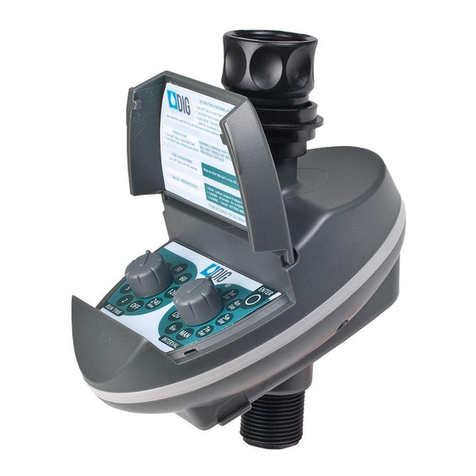
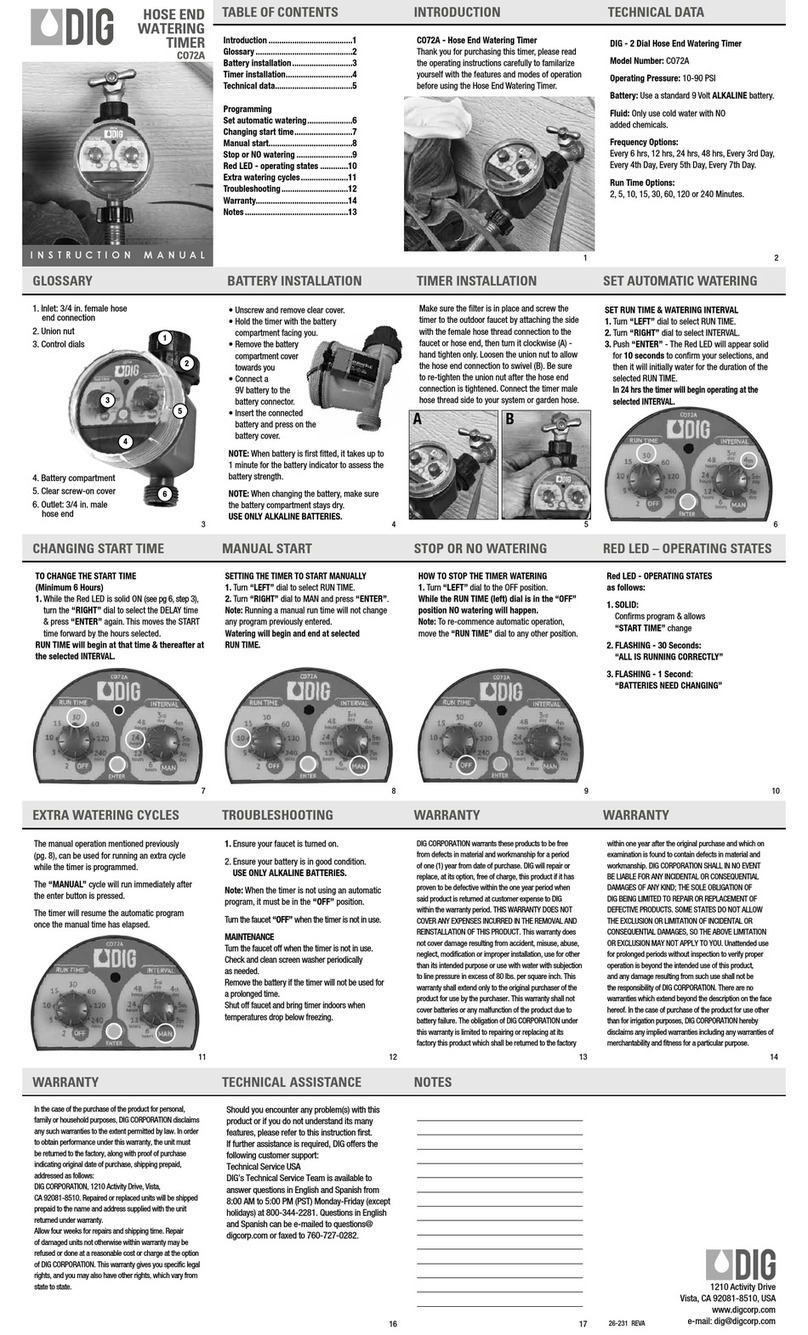
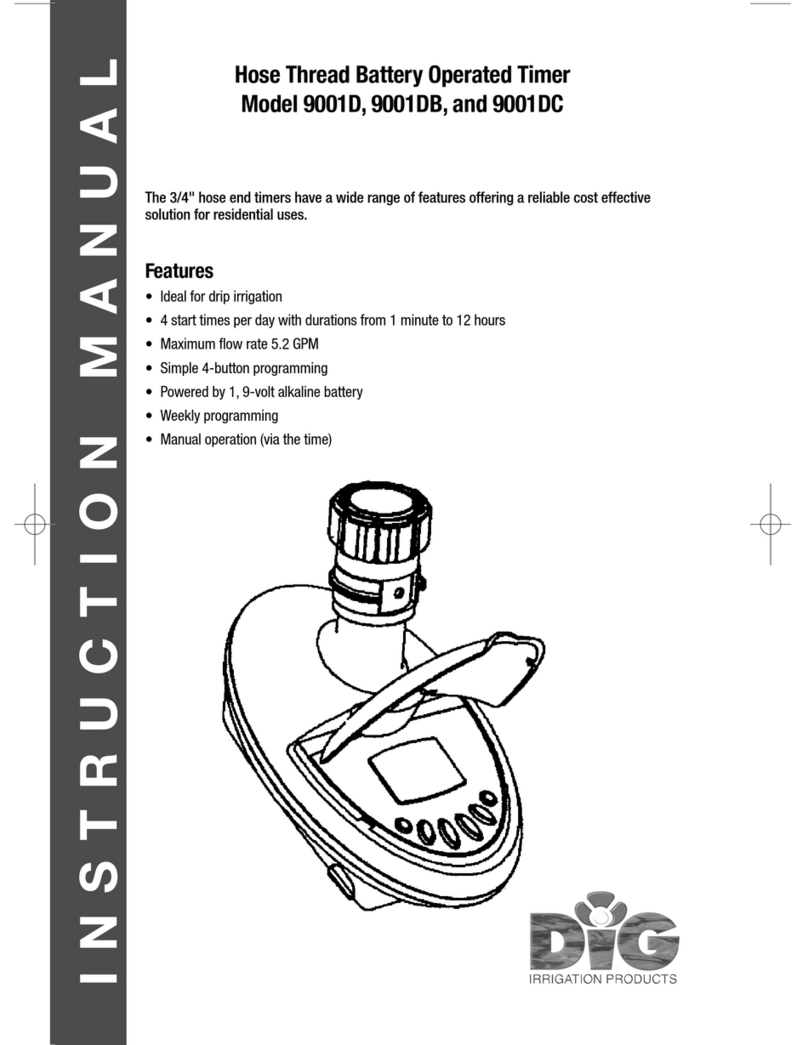
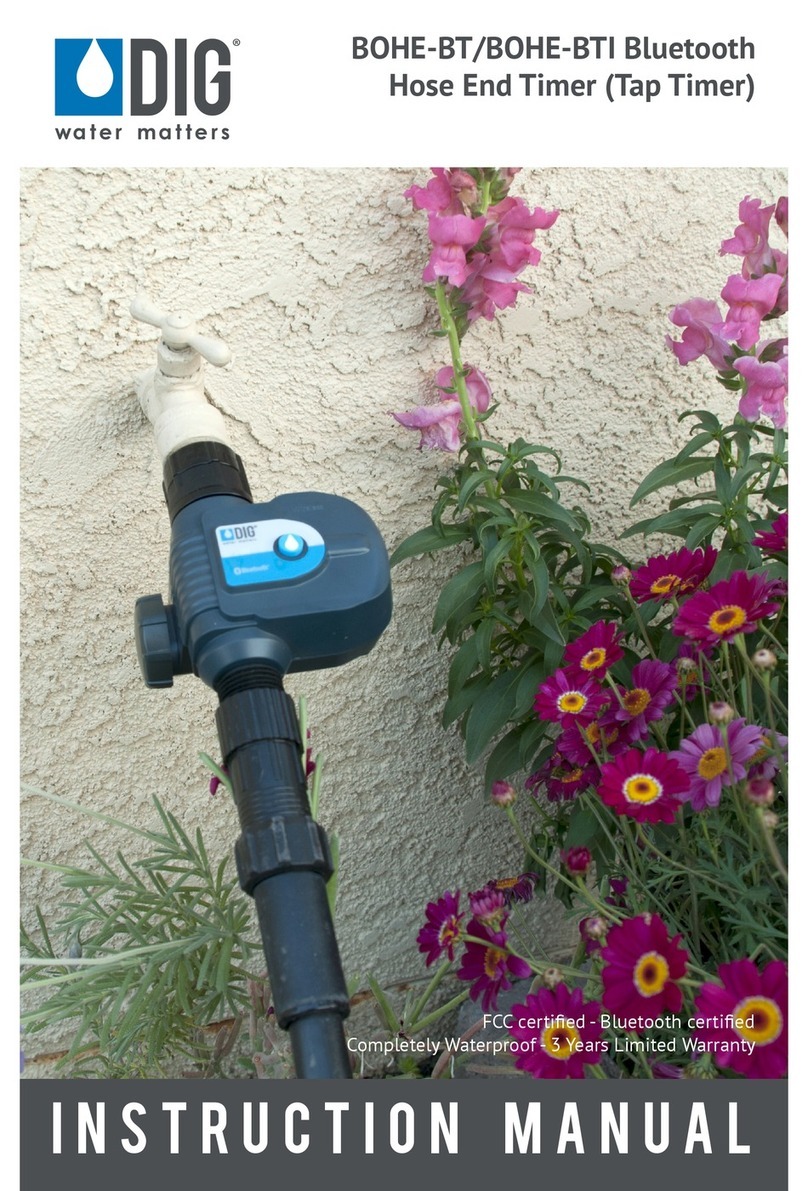
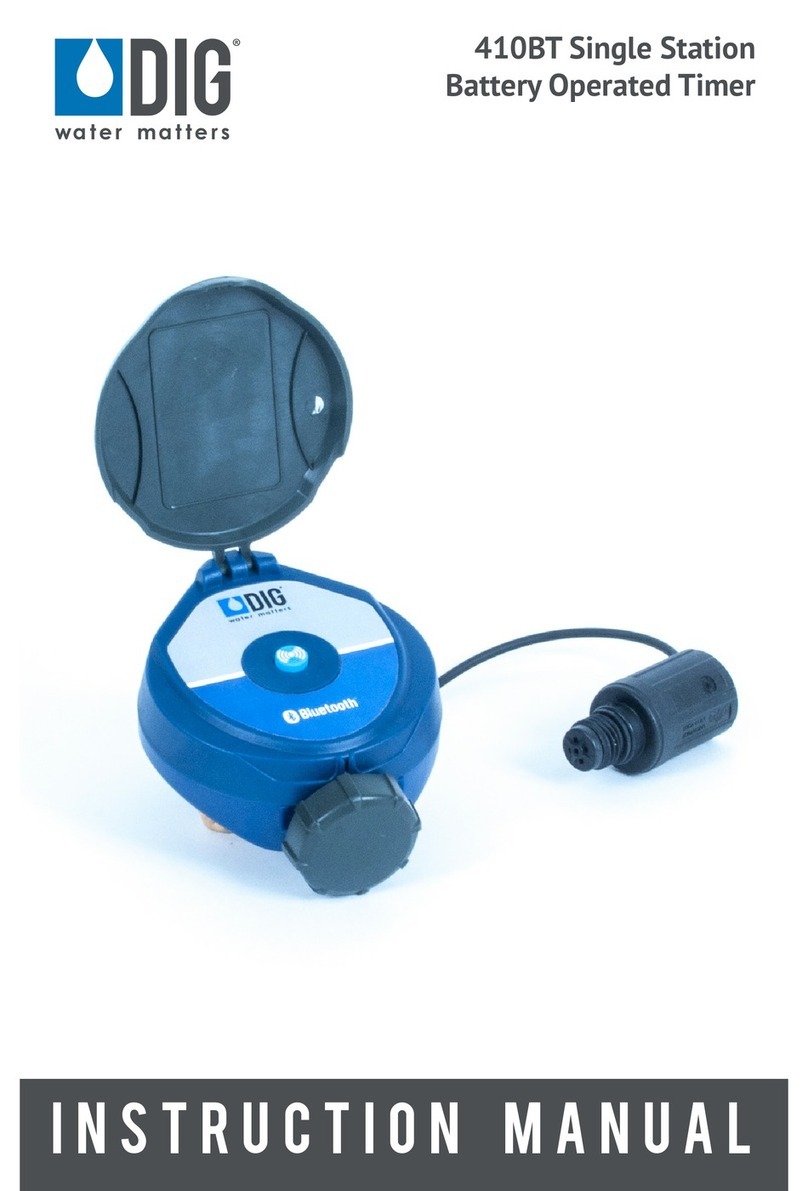
DIG BTC-ASV User manual

INSTRUCTION MANUAL
BTC-ASV Bluetooth®
Battery Powered Irrigation Timer
FCC certied | Bluetooth® certied | Waterproof | 3-year Limited Warranty

2
1. INTRODUCTION
Thank you for purchasing DIG’s BTC-ASV Single Station Battery
Operated Timer. This manual describes how to get the BTC-ASV series
timer up and running quickly. After reading this manual and becoming
familiar with the basic functionality of the timer, use the manual as a
reference for less common tasks in the future.
2. ABOUT THE BTC-ASV BATTERY OPERATED TIMER
The BTC-ASV series irrigation timer employs the latest in Bluetooth®
technology using the free DIG BTT app for Android™ or iPhone®. The
BTC-ASV is available as a single station battery operated timer and is
powered by two AA batteries that can last up to one year using name
brand alkaline batteries. The timer is enclosed in a compact, waterproof
housing to protect it from degradation.
3. INSTALLING THE BATTERIES
1. Open the battery compartment cap
by turning it counterclockwise.
2. Install two fresh, brand name, AA
alkaline batteries (not included)
and note the proper direction of the
positive and negative orientation on
the underside of the timer.
3. Insert and screw the battery
cap clockwise. Make sure to
securely tighten the cover rmly
by hand only.
The timer will now appear on
the smartphone app and is ready to
be connected to and programmed.

3
4. ANTI-SIPHON VALVE COMPONENT IDENTIFICATION
Anti-siphon cap
Lid
FCC label
One button
for manual
run and reset
Battery
compartment cap
Solenoid
3/4 in. Pipe thread outlet
Manual ow control
External
bleed screw
3/4 in. Pipe
thread inlet
Anti-siphon valve

4
5. ANTI-SIPHON VALVE INSTALLATION
The BTC-ASV can be installed directly to PVC pipe with two PVC male
adapters (not included). Inlet 3⁄4 in. FNPT, outlet 3⁄4 in. FNPT.
Rated operating pressure: 10 to 125 PSI
Recommended operating pressure: 10 to 80 PSI
NOTE: The BTC-ASV must be installed at least 6 in. higher than the
highest sprinkler head on the system or back-drainage may occur.
Additional control valves must not be installed downstream of the
anti-siphon valve. The valve must not be operated continuously for
more than 12 hours in any 24-hour period. Consult local codes for
specic details.
1. Flush main line until water runs clear before installation.
2. Shut off main water supply.
3. Install the anti-siphon valve directly to PVC pipe using 3⁄4 in. PVC
male adapters (Figure 5a and 5b) or use 3/4 in. schedule 80 nipple.
The arrow on valve body indicates direction of water ow.
NOTE: Wrap all ttings with Teon tape. Do not use pipe cement on
the valve as this will damage the valve and void the warranty. Make
sure when wrapping ttings with Teon tape that no excess gets into
the internal assembly. Tighten the ttings with a wrench, but do not
over tighten.
4. Turn the main water supply on and pressurize the system.
5. To test the BTC-ASV, press the button on the unit. A click will be
heard, indicating the valve is open. Check that the system is
operating correctly and press the button again to turn it off.
A second click will be heard indicating that the valve closed.
6. The unit is now ready to be programmed.

5
Figure 5a
WATER
FLOW
Figure 5b
3/4 in. male adapters
(not included)

6
APP SCREENS OVERVIEW
The DIG BTT app automatically scans for nearby timers and controllers
after installation. Any DIG Bluetooth® timers and controllers within
50 ft. (15 meters) line of sight will appear on screen.
• Your new timer will appear as the BT Controller. Its
default image, status (watering -on- or not watering -off-),
connection strength, and battery life will appear alongside it.
• Tap on the controller to connect to it and start programming.
You can access Connection History and Contact Us through the
information icon in the top right corner of the screen.
• The Connection History allows you to see every controller and
timer connected to from this phone or tablet. It stores the data
it last received from each timer, but no editing can be done.
Deleting an entry will remove all the saved data for that unit.
Any passwords and/or pictures need to be reentered. To delete
an entry, tap it and select the trash icon.

7
Information icon
Default image
Controller (timer)
name
Last run
information
Battery life
Connection
strength
Indicates if
timer is
currently
runnning
or not

8
HOME SCREEN
Once connected, the Home screen will appear. This screen has
everything needed to program the timer.
By default, the timer’s Program is off. To turn it on, push the switch
under the “Program” area. It will turn green and the Program area will
light up indicating that the program is active and can now be modied.
The timer is now ready to be programmed. Simply select the schedule
(weekly, even/odd, or cyclical), set your start date or days, add times,
and set a duration. The timer is updated immediately each time a
button is tapped.

9
Schedule
Overview:
Shows a chart
with current
program run
times. Red
lines indicate
that there is
an overlapping
start time
Activate or
deactivate
the program
Program
schedule
Weekly days
settings
Up to ve start
times. Select an
existing start
time to edit/
delete.
Red start times
are overlapping
and will not run
Run time for
valve
Home
(current page)
Controller
settings
Manual run
Picture of
timer

10
CONTROLLER (TIMER)SETTINGS
The controller’s Settings screen contains everything else needed to
fully control your irrigation system. It can be reached by selecting the
Controller Settings button on the bottom of the screen. On this
screen you can turn on or off the entire system through the System
Active switch, add a rain delay to shut off the timer for a limited time,
budget each month to modify the watering duration based on the
season, set specic dates on which the timer should not run, and view
12-month history of the timer.
Use the settings menu to rename the timer to something memorable
and upload a picture for easy and fast recognition for future viewing.
Set a password to prevent unallowed users from connecting to your
timer. The password is saved to the phone so it will (almost) never have
to be entered again (unless it’s changed or when connecting to the
timer with a new phone).
Table of contents
Other DIG Timer manuals