Care and cleaning, ge.com
Cleaning the Outside
IMPORTANT:Unplug the wine chiller
before cleaning.
Keep the outside clean. The cabinet
can be washed with mild soap and water.
Clean with a damp cloth. Never use
abrasive scouring powders.
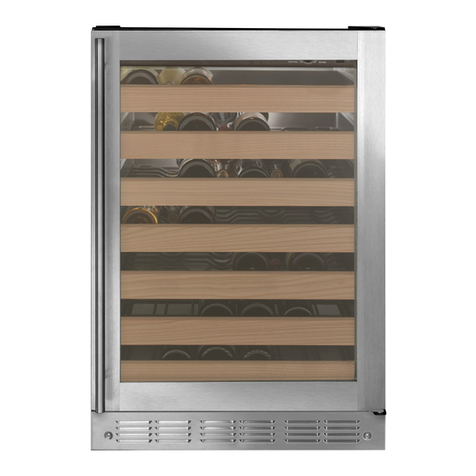
Use a glass cleaner or mild soap and water
and a soft cloth to clean the glass door.
Do not use any abrasive powders.
Do not wipe the wine chiller with a soiled
dishcloth or towe!. Thesemay leave a
residue that can erode the paint. Do not use
scouring pads, powdered cleaners, bleach
or cleaners containing bleach because these
products can scratch and weaken the paint
finish.
Protect the paint finish. The finish
on the outside of the wine chiller is
a high-quality, baked-on paint finish.
With proper care, it will stay new-looking
and rust-free for years. Apply a coat
of kitchen/appliance wax when the wine
chiller is new, and then at least twice
a year.
Cleaning the Inside
IMPORTANT:Unplug the wine chiller
before cleaning.
Toclean the inner liner and racks, use
a warm water and baking soda solution-
about one tablespoon (15 ml) of baking
soda to a quart (1 liter) of water. This both
cleans and neutralizes odors. Clean with
a damp cloth.
The vinyl door gasket may be cleaned
with mild soap and water or a baking soda
solution.
Do not use detergents, scouring powders,
sprag cleaners or other harsh chemicals
to clean the interior
To avoid water stains on the wood
shelves, clean up and drg ang liquid spills
immediatelg.
Defrosting
Defrost whenever frost on the inside
surfaces of the storage area becomes J/8"
(5 mm) thick. Never use aheater of any
kind, scraper or sharp instrument to
remove frost as it mug damage
the wine chiller
To defrost, unplug the wine chiller. Remove
the contents and wipe inside surfaces and
racks with a clean towel. If frost does not
come off easily, allow the frost to melt
somewhat and wipe off.
After defrosting, make sure inside
surfaces are dry; then return the contents
to the wine chiller and set the temperature
control to the desired setting.
NOTE:The drain pan above the compressor
may be full following defrost. Check
to make sure no water spills when
moving the unit.