Max Machinery, Inc. 29X Frequency User Manual © Copyright 2015 Rev. 002Q1 3
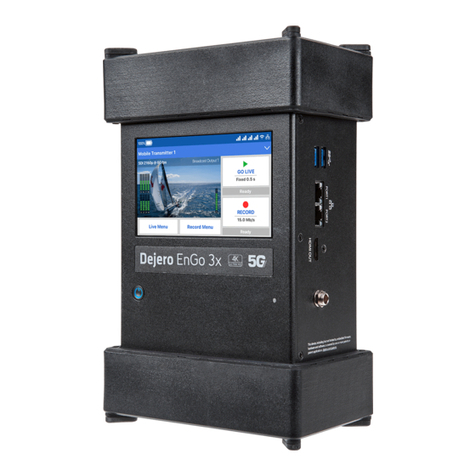
The Max frequency transmitters are designed to work with the
entire family of Max Flow Meters to provide extremely precise
ow measurement in a cost effective package. Different options
for electrical connections and temperature ranges cover a wide
range of application environments – from the laboratory to harsh
industrial processes.
This latest generation of transmitters use modern sensor
technology coupled with advanced signal processing to deliver
new levels of performance and reliability. Hall sensors are used to
detect the position of a driven magnet inside a Max Flow Meter.
Changes in position are tracked by a microprocessor, which
generates an output frequency proportional to the ow rate. Advanced signal processing provides both ne
angular resolution (0.36 degrees rotation per pulse) and rapid response (output updated every one ms).
These transmitters are typically mated to a mechanical ow meter, congured, and calibrated at the factory
as a matched set. This ensures accuracy and allows quick setup in the eld. For eld installations where the
transmitter has not been setup with a meter at the factory, an optional serial interface kit provides full access
to all conguration options and parameters.
Transmitter Features
High resolution measurement - Congured output resolution of 1 to 1000 pulses per revolution.
Linearization of up to 16 points to fully describe the ow meter’s output curve and achieve the highest
system linearity over the meter’s entire operating range.
Compensation Algorithm – Compensates for variations in Hall sensor and ow meter characteristics to
provide a stable, undamped output frequency that accurately represents the instantaneous ow rate. This
feature is factory set when the meter and transmitter are mated together. If the transmitter is changed, the
compensation can be performed via a button on the PCA.
Anti-Dither Pulse Buffer - Prevents undesired reverse pulses which can occur at very low ow rates in the
presence of vibration or hydraulic noise. If the meter reverses direction and then resumes forward rotation,
the pulse count will represent only the total forward ow. Reverse ow exceeding the pulse buffer setting will
result in an output frequency proportional to reverse ow rate. The buffer quantity can be set from 1% to
100% of a revolution.
Ex Proof Model 295
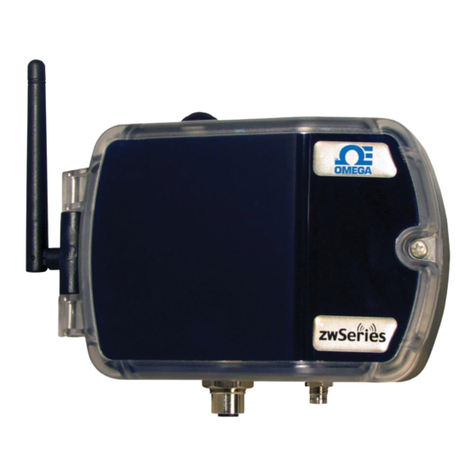
Model 295
Model 296
General Description