manuals.online logo
Brands
  1. Home
  2. •
  3. Brands
  4. •
  5. Milwaukee
  6. •
  7. Measuring Instrument
  8. •
  9. Milwaukee MI407 User manual

Milwaukee MI407 User manual

Other Milwaukee Measuring Instrument manuals

Milwaukee Mi170 User manual

Milwaukee

Milwaukee Mi170 User manual

Milwaukee MI455 User manual

Milwaukee

Milwaukee MI455 User manual

Milwaukee REDLITHIUM L4 3PL User manual

Milwaukee

Milwaukee REDLITHIUM L4 3PL User manual

Milwaukee MW102 User manual

Milwaukee

Milwaukee MW102 User manual

Milwaukee MI406 User manual

Milwaukee

Milwaukee MI406 User manual

Milwaukee SM500 User manual

Milwaukee

Milwaukee SM500 User manual

Milwaukee MI 405 User manual

Milwaukee

Milwaukee MI 405 User manual

Milwaukee C65 User manual

Milwaukee

Milwaukee C65 User manual

Milwaukee SM801 User manual

Milwaukee

Milwaukee SM801 User manual

Milwaukee MI 404 User manual

Milwaukee

Milwaukee MI 404 User manual

Milwaukee SMS510 User manual

Milwaukee

Milwaukee SMS510 User manual

Milwaukee 2217-40 User manual

Milwaukee

Milwaukee 2217-40 User manual

Milwaukee CALIBRATION 2238-20 Operating instructions

Milwaukee

Milwaukee CALIBRATION 2238-20 Operating instructions

Milwaukee 2231-20 User manual

Milwaukee

Milwaukee 2231-20 User manual

Milwaukee MC310 User manual

Milwaukee

Milwaukee MC310 User manual

Milwaukee L4 CLL User manual

Milwaukee

Milwaukee L4 CLL User manual

Milwaukee SM101 User manual

Milwaukee

Milwaukee SM101 User manual

Milwaukee pH51 User manual

Milwaukee

Milwaukee pH51 User manual

Milwaukee 2205-20 User manual

Milwaukee

Milwaukee 2205-20 User manual

Milwaukee MW150 User manual

Milwaukee

Milwaukee MW150 User manual

Milwaukee MW12 User manual

Milwaukee

Milwaukee MW12 User manual

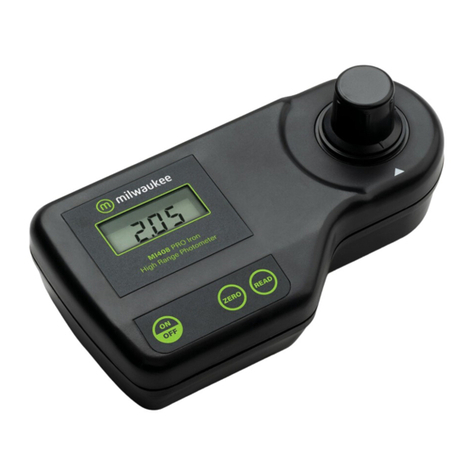
Milwaukee MI408 User manual

Milwaukee

Milwaukee MI408 User manual

Milwaukee MW 14 User manual

Milwaukee

Milwaukee MW 14 User manual

Milwaukee L4 CLLP User manual

Milwaukee

Milwaukee L4 CLLP User manual

Popular Measuring Instrument manuals by other brands

Suaoki D40 user manual

Suaoki

Suaoki D40 user manual

Elster BK-G1.6 operating instructions

Elster

Elster BK-G1.6 operating instructions

Endress+Hauser Deltabar FMD71 technical information

Endress+Hauser

Endress+Hauser Deltabar FMD71 technical information

Duratool D03128 manual

Duratool

Duratool D03128 manual

Vega VEGAPULS 65 Quick setup guide

Vega

Vega VEGAPULS 65 Quick setup guide

Tonghui TH2618B Operation manual

Tonghui

Tonghui TH2618B Operation manual

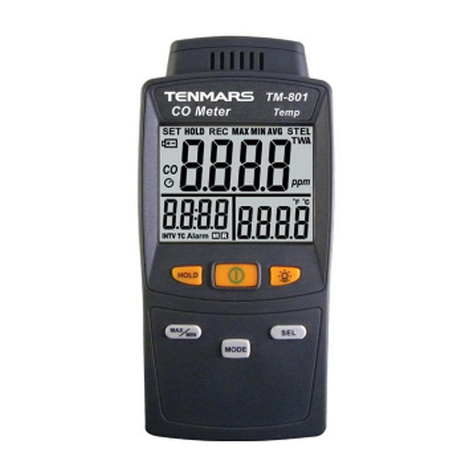
Tenmars TM-801 user manual

Tenmars

Tenmars TM-801 user manual

MSR 145 user manual

MSR

MSR 145 user manual

TPS WP-82 manual

TPS

TPS WP-82 manual

PCB Piezotronics 003C30 Installation and operating manual

PCB Piezotronics

PCB Piezotronics 003C30 Installation and operating manual

Tenma 72-10465 manual

Tenma

Tenma 72-10465 manual

Endress+Hauser Proline Promag 50 Brief operating instructions

Endress+Hauser

Endress+Hauser Proline Promag 50 Brief operating instructions

Siemens SITRANS F Coriolis FCT030 Function manual

Siemens

Siemens SITRANS F Coriolis FCT030 Function manual

KLINGER CMF V Series instruction manual

KLINGER

KLINGER CMF V Series instruction manual

Keysight M8290A Getting started guide

Keysight

Keysight M8290A Getting started guide

Acterna MS1400 Operation manual

Acterna

Acterna MS1400 Operation manual

R&S ZPH manual

R&S

R&S ZPH manual

Datacolor ColorReader DC10-2 user guide

Datacolor

Datacolor ColorReader DC10-2 user guide

manuals.online logo
manuals.online logoBrands
  • About & Mission
  • Contact us
  • Privacy Policy
  • Terms and Conditions

Copyright 2025 Manuals.Online. All Rights Reserved.

USER MANUAL
MI407
PRO Ammonia
Low Range Photometer
milwaukeeinstruments.com (USA & CAN)
milwaukeeinst.com
y“ZErO”, a zero reading was not
taken. Follow the instruction in
the measurement procedure for
zeroing the meter.
yUnder range. A blinking “0.00”
indicates that the sample
absorbs less light than the zero
reference. Check the procedure
and make sure you use the same
cuvet for reference (zero) and
measurement.
yA flashing value of the maximum
concentration indicates an over
range condition. The concentration
of the sample is beyond the
programmed range: dilute the
sample and re-run the test.
BATTERY REPLACEMENT
Battery replacement must only take place in a non-
hazardous environment.
Simply rotate the battery cover on the back of the meter.
Detach the battery from the terminals and attach a fresh
9V battery while paying attention to the correct polarity.
Insert the battery and replace the cover.
ACCESSORIES
MI507-100 Ammonia LR Reagent (100 tests)
MI0001 Glass cuvets (2 pcs)
MI0002 Caps for cuvets (2 pcs)
MI0003 Stoppers for cuvets (2 pcs)
MI0004 Tissue for wipping cuvets (4 pcs)
MI0005 9V battery (1 pc)
CERTIFICATION
Milwaukee Instruments conform to the CE
European Directives.
Disposal of Electrical & Electronic
Equipment. Do not treat this product as
household waste. Hand it over to the
appropriate collection point for the recycling of electrical
and electronic equipment.
Disposal of waste batteries. This product
contains batteries. Do not dispose of them
with other household waste. Hand them
over to the appropriate collection point for recycling.
Please note: proper product and battery disposal
prevents potential negative consequences for human
health and the environment. For detailed information,
contact your local household waste disposal service or
go to www.milwaukeeinstruments.com (USA & CAN)
or www.milwaukeeinst.com.
RECOMMENDATION
Before using this product, make sure it is entirely suitable
for your specific application and for the environment in
which it is used. Any modification introduced by the user
to the supplied equipment may compromise the meter’s
performance. For your and the meter’s safety do not use
or store the meter in hazardous environment. To avoid
damage or burn, do not perform any measurement in
microwave ovens.
WARRANTY
These instruments are warranted against defects in
materials and manufacturing for a period of 2years from
the date of purchase. This warranty is limited to repair or
free of charge replacement if the instrument cannot be
repaired. Damage due to accidents, misuse, tampering
or lack of prescribed maintenance is not covered by
warranty. If service is required, contact your local
Milwaukee Instruments Technical Service. If the repair is
not covered by the warranty, you will be notified of the
charges incurred. When shipping any meter, make sure it
is properly packaged for complete protection.
ISTMI407 07/20-1
SATISFACTION
GUARANTEED
MI407 PRO Ammonia
Low Range Photometer
Dear Customer,
Thank you for choosing a Milwaukee Instruments
product. This manual will provide you with the necessary
information for the correct use of the instrument. Please
read it carefully before using the meter.
SPECIFICATIONS
Range 0.00 to 3.00 mg/L (NH3 - N)
Resolution 0.01 mg/L
Precision ±0.09 mg/L @1.50 mg/L
Light Source Blue LED 466 nm
Light Detector Silicon Photocell and 466 nm narrow
band interference filter
Method Adaptation of Nessler method
Environment 0 to 50 °C (32 to 122 °F)
100% RH max
Battery Type 9 volt (1 pc)
Auto-Shut o After 10’ of non-use
Dimensions 192 x 104 x 52 mm
(7.5 x 4.1 x 2”)
Weight 380 g
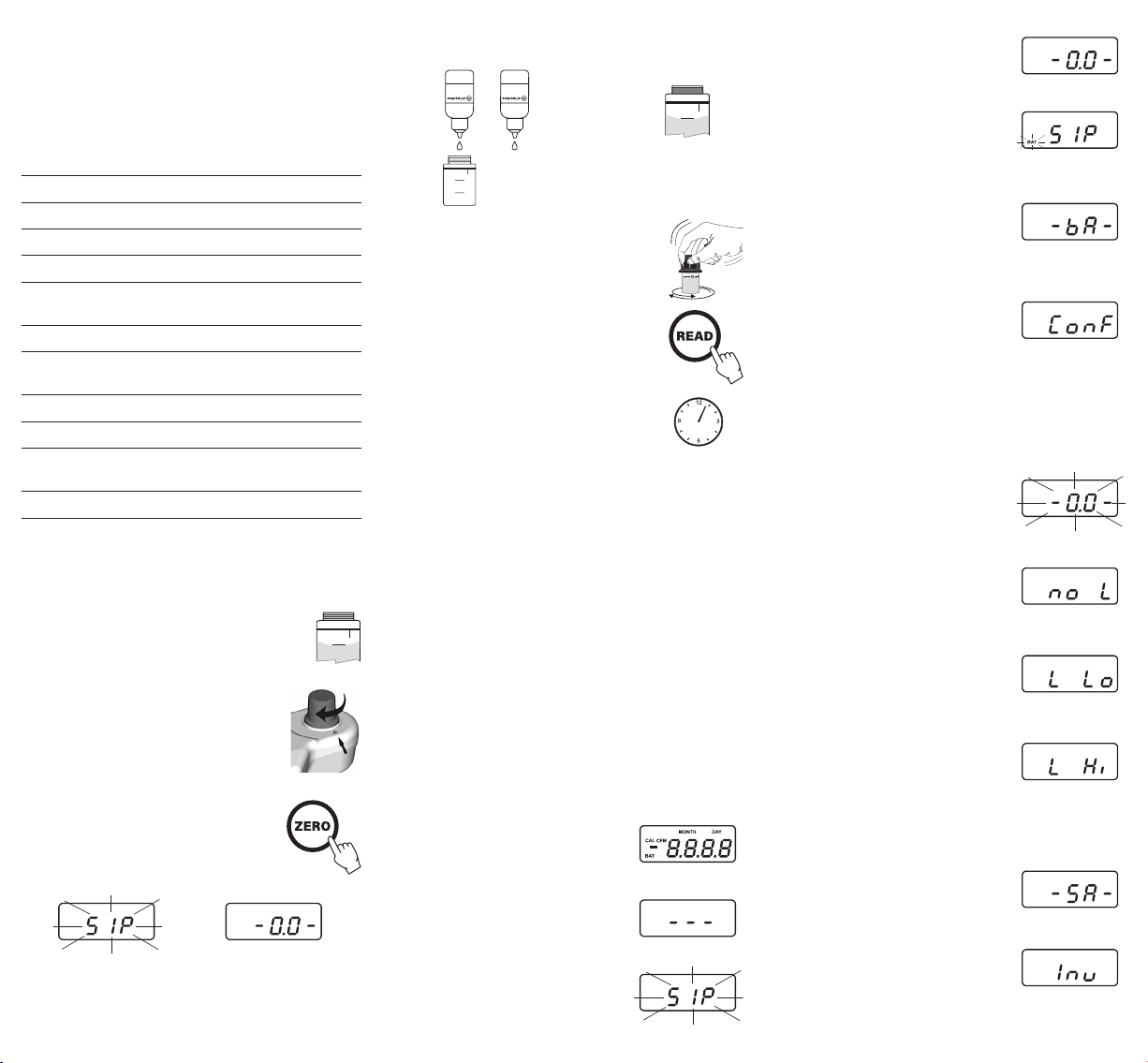
MEASUREMENT PROCEDURE
1. Turn the meter on by pressing ON/OFF.
2. When the LCD displays “- - -”, the
meter is ready.
3. Fill the cuvet with 10 mL of sample, up
to the mark, and replace the cap.
4. Place the cuvet into the holder and
ensure that the notch on the cap is
positioned securely into the groove.
5. Press ZERO and “SIP” will blink on the
display.
6. After a few seconds the display will
show “-0.0-”. The meter is now zeroed
and ready for measurement.
7. Remove the cuvet. Open it.
▶
8. Add 4 drops of NH3-1 (10 drops in case of seawater
analysis) and swirl gently.
9. Add 4 drops of NH3-2 (10 drops in case of seawater
analysis). Replace the cap and swirl gently.
▶10 mL ▶
NH3 1NH3 2
x 4 x 4
+
10. Immediately reinsert the cuvet into
the holder and ensure that the notch
on the cap is positioned securely into
the groove.
11. Press and hold READ for 3 seconds
and the display will show the
countdown prior to the measurement.
Alternatively, wait for 3 minutes and
30 seconds and just press READ. In
both cases “SIP” will blink during
measurement.
12. The instrument directly displays the concentration in
mg/L of ammonia nitrogen (NH3-N).
13. To convert the reading to mg/L of ammonia (NH3),
multiply by a factor of 1.216.
Interferences
yChloramines, various aliphatic and aromatic
amines, glycine, (positive error). To eliminate these
interferences distillation is required.
yAldehydes, alcohols (e.g. ethanol) or acetone (negative
error). To eliminate these interferences distillation is
required.
ySulfide (S2-): may cause turbidity.
yHardness above 1 g/L as Calcium Carbonate (CaCO3).
GUIDE TO DISPLAY CODES
This prompt appears for 1 second
each time the instrument is turned
on.
The dashes “- - -” indicates that the
meter is in a ready state and zeroing
can be performed.
Sampling In Progress. Flashing “SIP”
prompt appears each time the meter
is performing a measurement.
3’30”
“-0.0-”, the meter is in a zeroed state
and measurement can be performed.
The blinking “BAT” indicates that the
battery voltage is getting low and the
battery needs to be replaced.
“-bA-”, the battery is dead and must
be replaced. Once this indication
is displayed, the meter will lock up.
Change the battery and restart the
meter.
“Conf”, the meter has lost its
configuration. Contact your dealer
or the nearest Milwaukee Customer
Service Center.
ERROR MESSAGES
On zero reading
yBlinking “-0.0-” indicates that the
zeroing procedure failed due to a
low signal-to-noise ratio. In this
case press ZERO again.
y“no L”, the instrument can not
adjust the light level. Please check
that the sample does not contain
any debris.
y“L Lo”, there is not enough light to
perform a measurement. Please
check the preparation of the zero
cuvet.
y“L Hi”, there is too much light to
perform a measurement. Please
check the preparation of the zero
cuvet.
On sample reading
y“-SA-”, there is too much light for
the sample measurement. Please
check if the right sample cuvet is
inserted.
y“Inv”, the sample and the zero
cuvet are inverted.
10 ml
▶