7
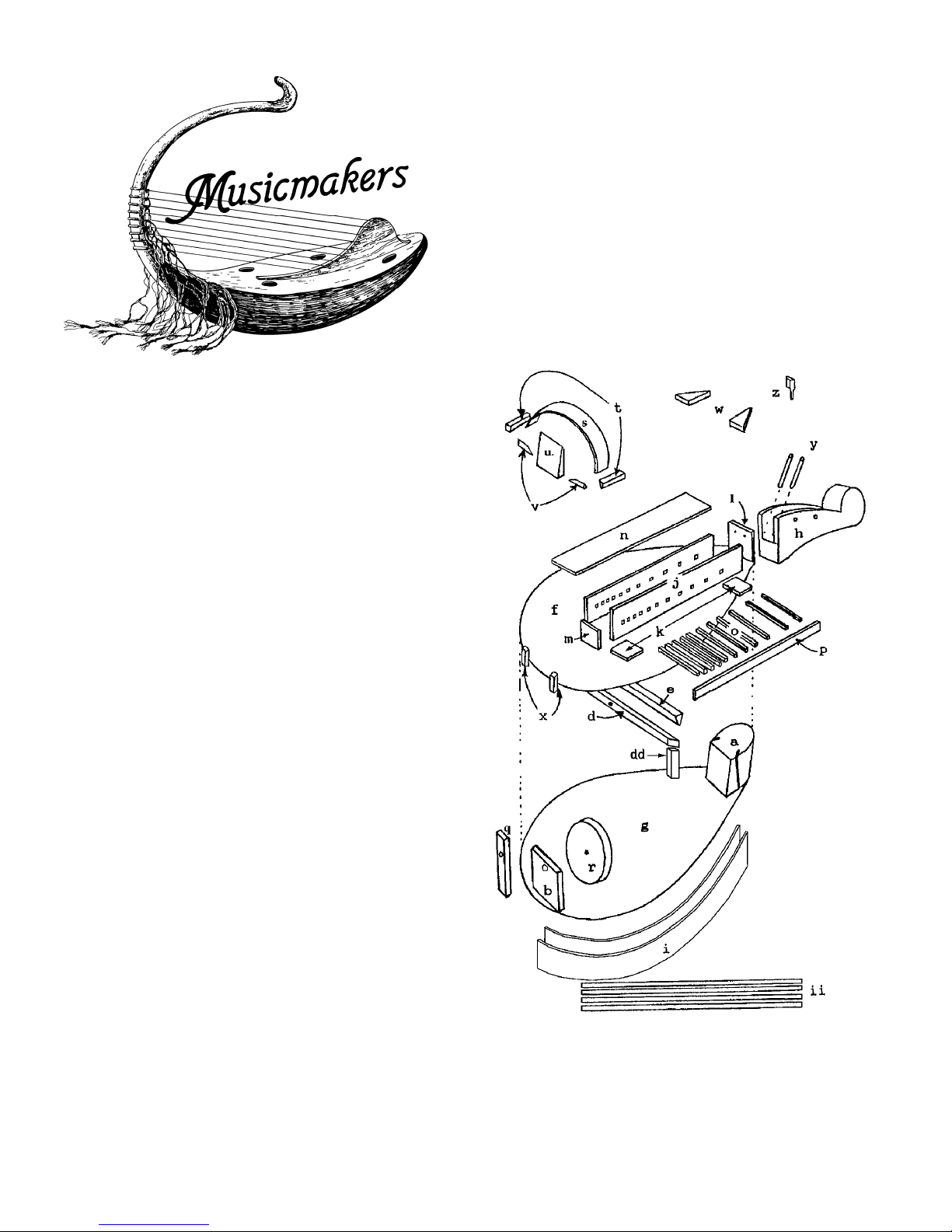
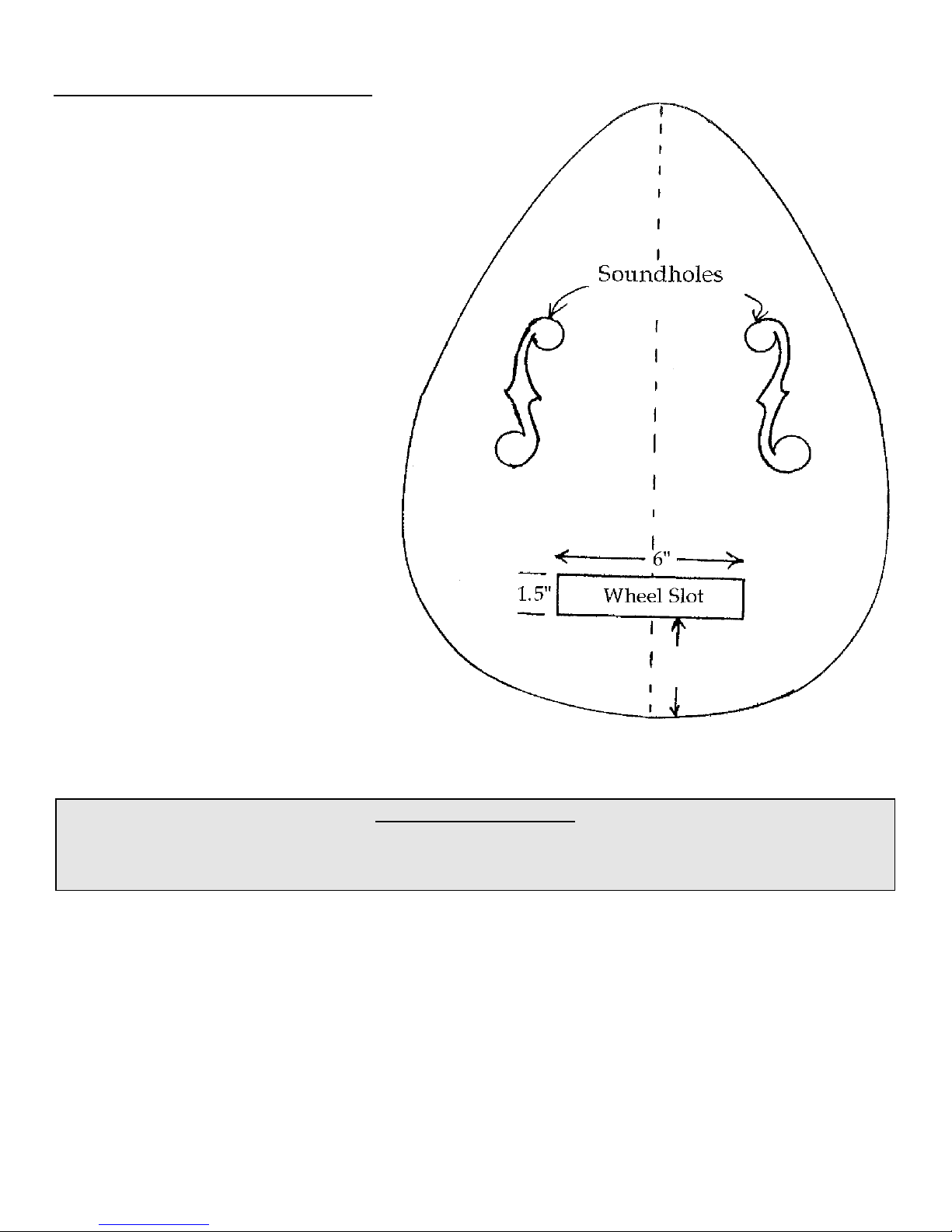
______13. Position the PREDRILLED INNER BRACE inside the SOUNDBOARD, just 1/8" from the
edge of the wheel slot, as shown.
Before gluing, taper the ends of the NYLON BUSHING and insert it
through the TAIL BLOCK and into the INNER BRACE. Then insert the
AXLE into the BUSHING, making sure that you can turn it easily with
your fingers. Glue the INNER BRACE to the SOUNDBOARD, about 1/8”
from the wheel opening, making sure the AXLE remains easy to turn. Use
weights or clamps to hold the brace until the glue dries.
______13a. Glue the
TRIANGLE INNER BRACE
along the other side of the wheel slot, 1/8"
away from the edge of the hole.
______14. This is a good time to secure the
NYLON BUSHING in place so it doesn’t slide
or turn when you play the instrument. Leave
1/8” of the BUSHING showing in the WHEEL
OPENING, as shown. The excess length
should stick out at the tail end. Put some
epoxy glue or Superglue on the BUSHING at
the inside edges of the BRACE and the TAIL
to secure it in this position, keeping the glue
away from the outside of the instrument.
Add the two SUPPORT BLOCKS over the
ends of the PREDRILLED BRACE, gluing them onto the ends of the brace and to the inside of the
SIDES, as shown. This anchors the BRACE securely at the ends and helps reduce unwanted
overtones in the melody strings. Clamp them to the sides until dry.
THE BACK
15. Check the fit of the BACK to the soundchamber. When satisfied, glue the BACK to the
soundchamber, spreading glue all the way around the circumference, including the HEEL and TAIL
blocks. Use weights or clamps to hold the parts firmly together until the glue dries.
16. Now is a good time to trim off the excess SOUNDBOARD and BACK to match the SIDES.
A router with a flush-cutting bit makes short work of this step, but you can also accomplish it by
hand with a rasp or some coarse sandpaper wrapped around a wood block. You may, if you wish,
leave a small lip of wood overhanging the sides.
In either case, it is important to clean off any excess glue that squeezed out along the joints. Glue
blobs, smudges, and drips may be difficult to see now, but they will show up on the finished
instrument like spinach in your teeth, so it is best to take care of these things as you go along. We
like to clean away excess glue before it gets rock-hard, using a sharp chisel or knife to peel it off the
wood.