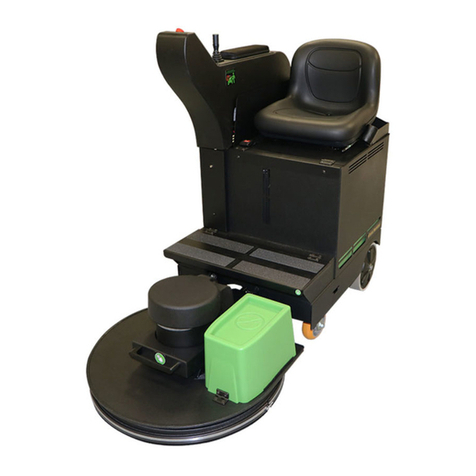
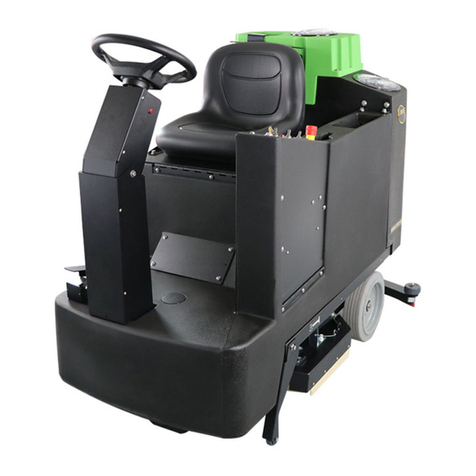
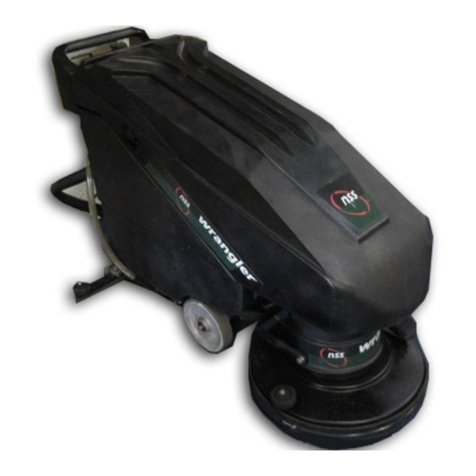
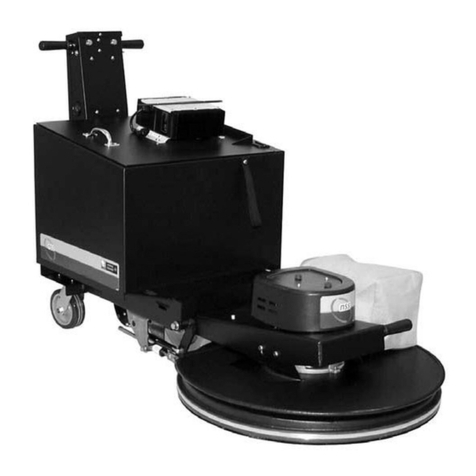
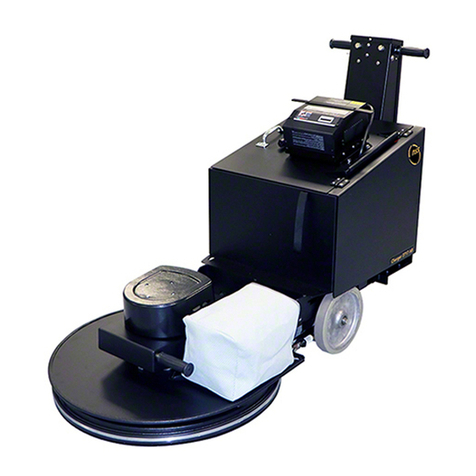
Applications
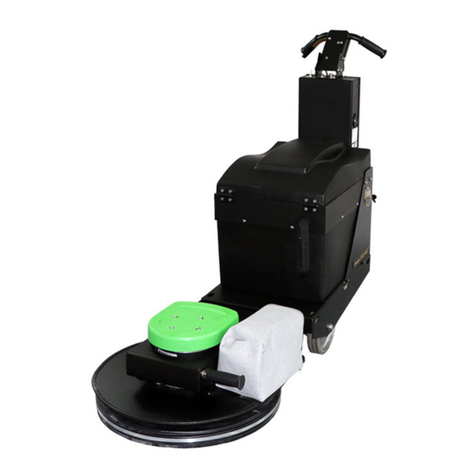
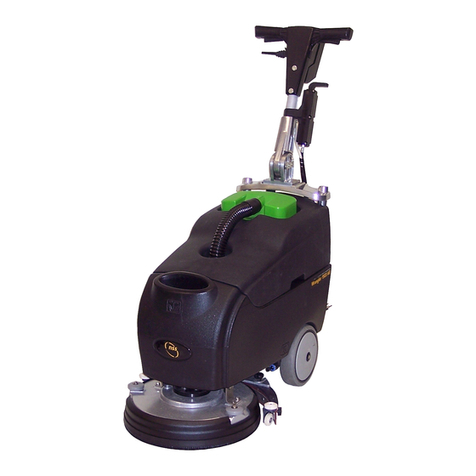
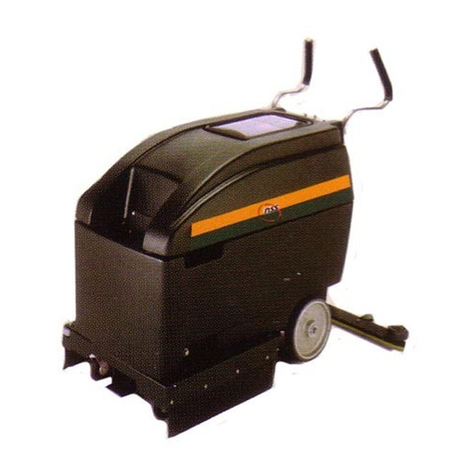
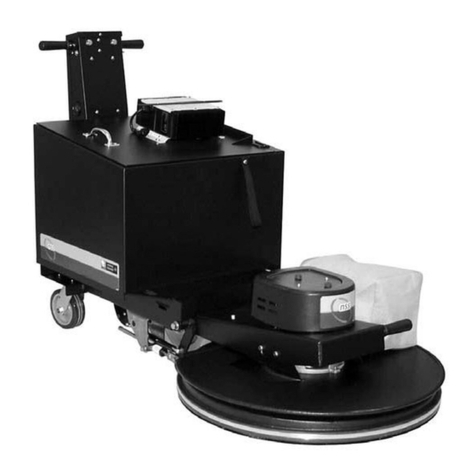
Operations you can perform with these machines:
High speed buffing/polishing
Spray buffing
Use any thick pad of any type
Damp stripping
Operations you cannot perform with these machines:
Wet scrubbing (flooded floor)
Carpet shampooing
Operating with weights added
Utilize more aggressive pads, such as the NSS “Blue”
pad to help remove scuffing and surface soiling.
Important Tips for Buffing
Floor Pads – Polishing
The selection of which floor pad to use is contingent
upon several factors, including hardness of the floor
finish being used, the color of the floor tile (light or dark)
and the general frequency of dust mopping, wet
cleaning, and high speed buffing. Given these
variables, choosing the WRONG pad can lead to FAR
LESS than optimum results. For example, if a swirling
or smearing effect appears while buffing, the pad being
used is too abrasive or dirty. A new, clean pad or a
softer pad is necessary to attain a uniform level of high
gloss. If you are unsure as to which pad is correct for a
particular situation, consult your NSS distributor.
Floor Pads – Spray Buff/Restorer Products
When spray buffing or using a restorer or top-dressing
type material, the pad must be a more aggressive
material than, for instance, a white super speed polish
pad, to remove residue and haze left by the mopped-on
or sprayed-on material.
Cleaning Procedures
Spray Cleaning: Do not over use spray buffing or
spray cleaning. Many times, floors can be just polished
to achieve maximum results. Over-use of the spray buff
material and the failure to change pads when dirty can
limit the effectiveness. Spray clean only severely
marked, high traffic areas.
Restorers: Many floor treatments, when used as
directed, can clean, protect, and beautify tile floors.
When combined with a good foundation of finish and
regular maintenance, the luster can be maintained and
overall cleaning productivity improved. Floor treatment
is sprayed or mopped on and then buffed. All
treatments tested by NSS have responded best to high
speed buffing as compared to slower speed machines.
Damp Stripping: (Non-Dust Control versions only)
Wet or flood stripping should never be performed with
high-speed machines, as uncontrolled splattering will
result. Damp stripping of smaller constricted areas,
however, can be performed quite successfully. Use a
moderately abrasive floor pad and a strong solution of
neutral cleaner or a weak solution of non-ammoniated
stripper.
MAINTENANCE
Routine maintenance is critical to ensure proper
machine operation and cleaning performance.
Perform all maintenance procedures as follows:
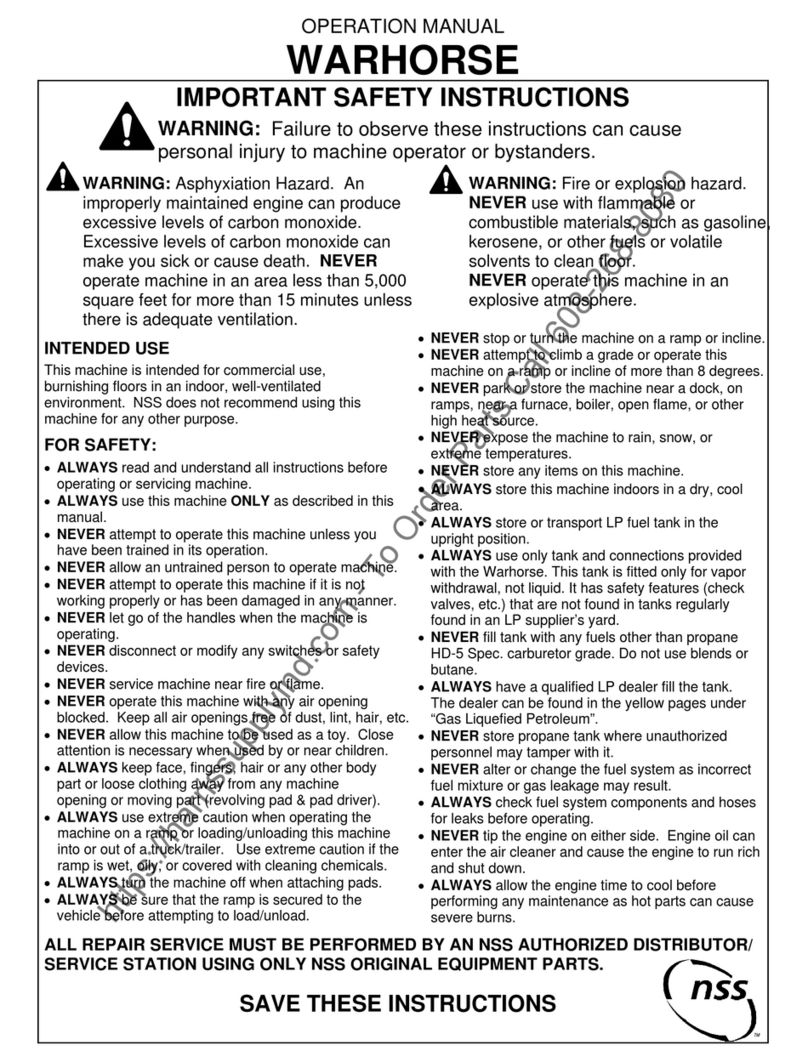
Always unplug machine before performing any
maintenance. See page 2 for warnings.
Daily Maintenance
Wipe off the entire machine with a clean cloth.
Check the cord for any breaks in the wire. Breaks
would most likely occur near the plug and near the
handle. Also check the ground pin for breakage. If
any breaks are found, the cord should be replaced
immediately.
Inspect the handle tube and handle clamp
mechanism for wear, damage, obstructions or any
build-up that may hinder easy movement of the
handle. If the handle will not move with the handle
lock in the up position, do not force movement.
Adjust as directed in the “Lock Lever Adjustment”
section or contact an NSS authorized service center.
Check the dead man switch and throttle levers for
proper action.
Monthly Maintenance
Check the wheels for wear or damage. Replace if
needed.
Apply a small amount of spray lubricant to the
axles. This will allow the wheels to roll freely.
Check for loose bolts that hold the motor and
gearbox to the base of the machine. Tighten if
needed.
Inspect the motor for accumulation of dirt in the
vents of the motor. If vents are blocked the motor
will over heat and fail. Clean out the dirt with a
vacuum or with forced air.
Check the Lock Lever to ensure it securely locks to
the handle tube. If the clamp force is insufficient to
keep the handle from moving, perform the Lock
Lever Adjustment as follows:
Loosen the two setscrews that hold the lock lever
bolt in position.
With the lock lever in a horizontal position, tighten
the bolt counterclockwise until the bolt is snug
against the tube clamp.
Tighten the setscrews and test the machine.
DO NOT OVER TIGHTEN.
Inspect and adjust belt tension, being careful not to
over-tighten the belt which will lead to motor
damage.
Yearly Maintenance
Disassemble the top of the motor to inspect the
brushes for wear. Brushes should be replaced
when they are worn to 3/8” length, typically after
1000 hours of use.
https://harrissupplyind.com-ToOrderPartsCall608-268-8080