EnglishDeutsch
 logo
Brands
  1. Home
  2. •
  3. Brands
  4. •
  5. Parker
  6. •
  7. Control Unit
  8. •
  9. Parker P6 Technical specifications

Parker P6 Technical specifications

This manual suits for next models

1

Other Parker Control Unit manuals

Parker PA Series Assembly instructions

Parker

Parker PA Series Assembly instructions

Parker D Series User manual

Parker

Parker D Series User manual

Parker PEV Service manual

Parker

Parker PEV Service manual

Parker C6 Series Installation and maintenance instructions

Parker

Parker C6 Series Installation and maintenance instructions

Parker TPQ Series User manual

Parker

Parker TPQ Series User manual

Parker S6N-DN User manual

Parker

Parker S6N-DN User manual

Parker HASV08R User manual

Parker

Parker HASV08R User manual

Parker S4A-DN Operating and installation instructions

Parker

Parker S4A-DN Operating and installation instructions

Parker CK5-DN User manual

Parker

Parker CK5-DN User manual

Parker 71215 User manual

Parker

Parker 71215 User manual

Parker Vansco User manual

Parker

Parker Vansco User manual

Parker D 1FC Series User manual

Parker

Parker D 1FC Series User manual

Parker D1VW -SC Series User manual

Parker

Parker D1VW -SC Series User manual

Parker CK-1 Guide

Parker

Parker CK-1 Guide

Parker PACHC Series User manual

Parker

Parker PACHC Series User manual

Parker 60VM4071 User manual

Parker

Parker 60VM4071 User manual

Parker S7A Service manual

Parker

Parker S7A Service manual

Parker PSSTACM12A Installation and maintenance instructions

Parker

Parker PSSTACM12A Installation and maintenance instructions

Parker PSSNACM12A Installation and maintenance instructions

Parker

Parker PSSNACM12A Installation and maintenance instructions

Parker D31DW*EE Series User manual

Parker

Parker D31DW*EE Series User manual

Parker IOTA ONE Series User manual

Parker

Parker IOTA ONE Series User manual

Parker DP-V1 User manual

Parker

Parker DP-V1 User manual

Parker P33 Quick setup guide

Parker

Parker P33 Quick setup guide

Parker Sporlan SD-114 User guide

Parker

Parker Sporlan SD-114 User guide

Popular Control Unit manuals by other brands

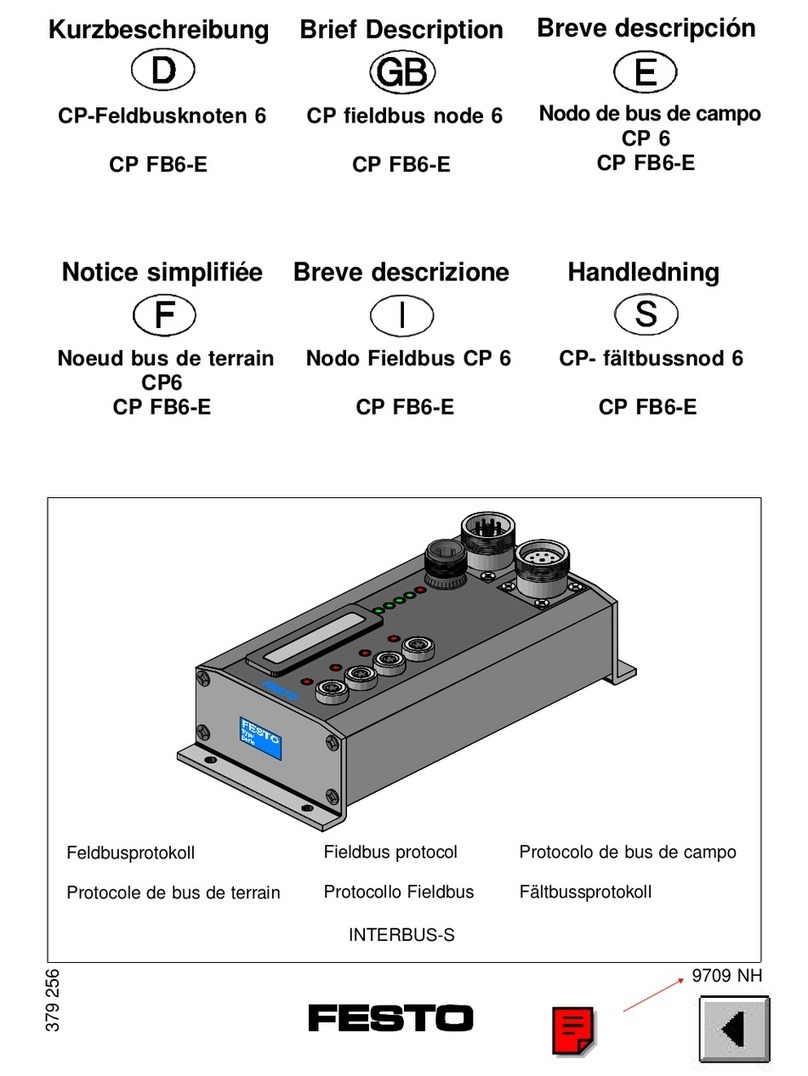
Festo Compact Performance CP-FB6-E Brief description

Festo

Festo Compact Performance CP-FB6-E Brief description

Elo TouchSystems DMS-SA19P-EXTME Quick installation guide

Elo TouchSystems

Elo TouchSystems DMS-SA19P-EXTME Quick installation guide

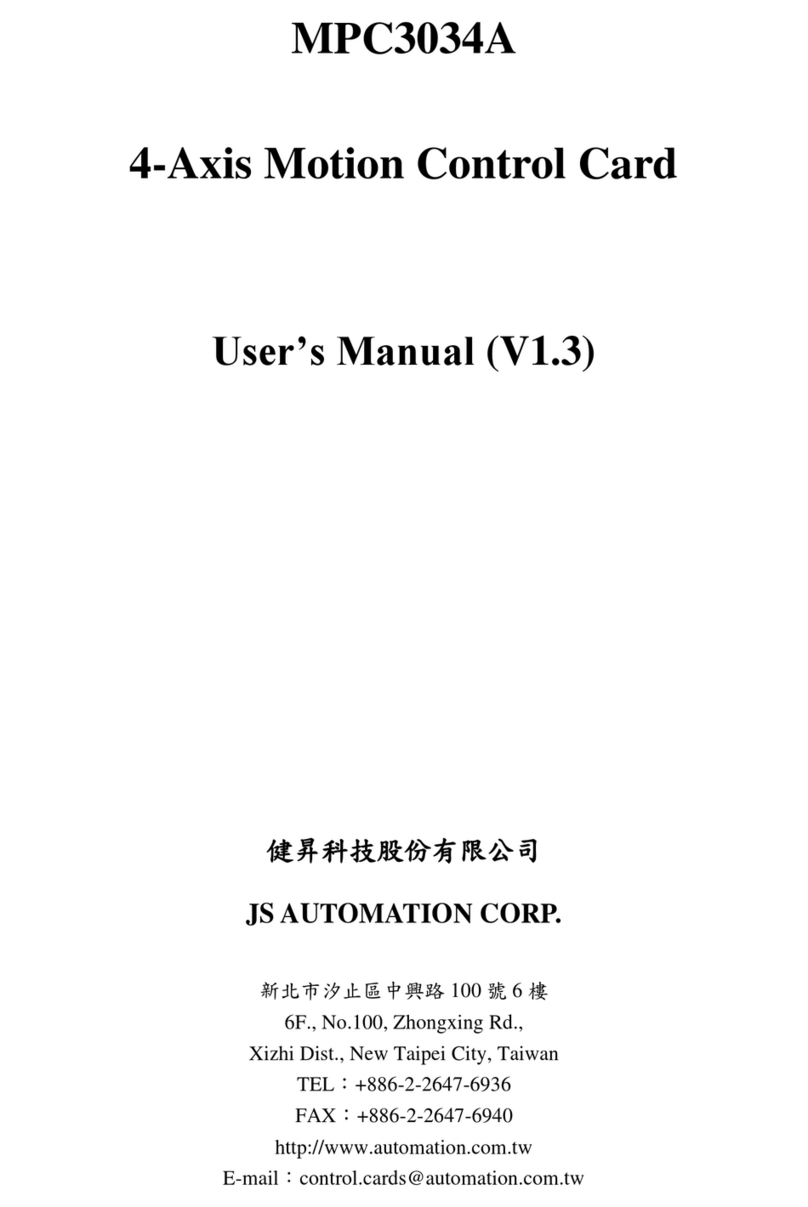
JS Automation MPC3034A user manual

JS Automation

JS Automation MPC3034A user manual

JAUDT SW GII 6406 Series Translation of the original operating instructions

JAUDT

JAUDT SW GII 6406 Series Translation of the original operating instructions

Spektrum Air Module System manual

Spektrum

Spektrum Air Module System manual

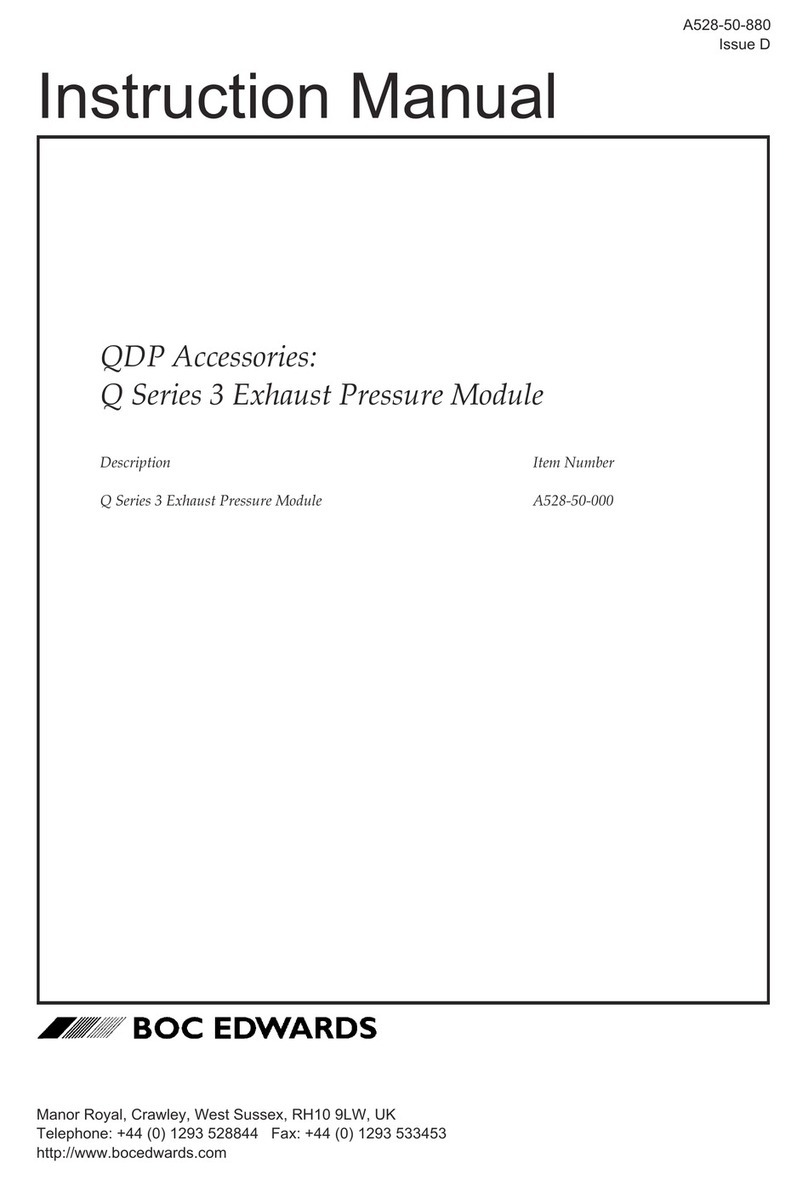
BOC Edwards Q Series instruction manual

BOC Edwards

BOC Edwards Q Series instruction manual

KHADAS BT Magic quick start

KHADAS

KHADAS BT Magic quick start

Etherma eNEXHO-IL Assembly and operating instructions

Etherma

Etherma eNEXHO-IL Assembly and operating instructions

PMFoundations Attenuverter Assembly guide

PMFoundations

PMFoundations Attenuverter Assembly guide

GEA VARIVENT Operating	 instruction

GEA

GEA VARIVENT Operating instruction

Walther Systemtechnik VMS-05 Assembly instructions

Walther Systemtechnik

Walther Systemtechnik VMS-05 Assembly instructions

Altronix LINQ8PD Installation and programming manual

Altronix

Altronix LINQ8PD Installation and programming manual

Eaton Powerware Series user guide

Eaton

Eaton Powerware Series user guide

WAGO 750-407/040-000 manual

WAGO

WAGO 750-407/040-000 manual

Sony CCU-590 Operation manual

Sony

Sony CCU-590 Operation manual

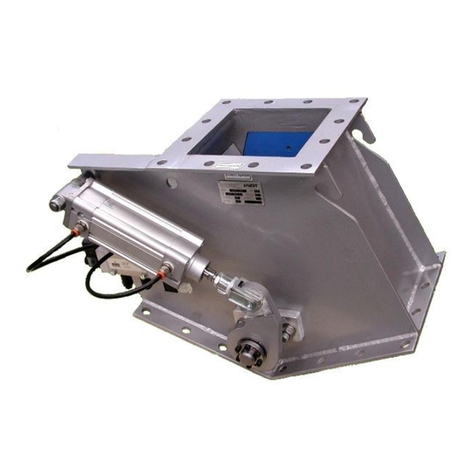
Graco 25D614 instructions

Graco

Graco 25D614 instructions

Task Force Tips YE-RF-900 Instructions for installation, safe operation and maintenance

Task Force Tips

Task Force Tips YE-RF-900 Instructions for installation, safe operation and maintenance

Shini SPV-U Series manual

Shini

Shini SPV-U Series manual

https://manuals.online logo
https://manuals.online logoBrands
  • About & Mission
  • Contact us
  • Privacy Policy
  • Terms and Conditions

Copyright 2026 Manuals.Online. All Rights Reserved.

SECTION 1: MANDATORY MAINTENANCE NOTES
THESE NOTES AND INSTRUCTIONS MUST BE
PRECISELY FOLLOWED FOR ANY MAINTENANCE OF
PARKER P-SERIES BELLOWS VALVES.
DISASSEMBLY OF BELLOWS VALVES:
1. WARNING: MAKE CERTAIN THE SYSTEM IN WHICH
THE VALVE IS INSTALLED IS DRAINED AND/OR
EXHAUSTED OF ALL PRESSURE BEFORE STARTING
V
ALVE REMOVAL OR DISASSEMBLY. FAILURE TO
DO SO CAN CAUSE DEATH, PERSONAL INJURY AND
PROPERTY DAMAGE.
2. Verify that the Bellows Valve Maintenance Kit being used
is appropriate for the Valve's size and service
requirements. Always contact your authorized Parke
r
representative if any questions arise.
REASSEMBLY OF BELLOWS VALVES:
1. Make certain all parts are free of dirt or othe
r
contamination before starting reassembly of the Valve.
2. Any instruction to lubricate any Valve component assumes
the End User will select a lubricant that is consistent with
the Valve's service requirements. Always contact you
r
authorized Parker representative if any questions arise.
Table I
Maximum Allowable Working Pressure and Temperature
Bellows Valve Model Max Allowable Working
Pressure and Temperature
Air Supply Pressure 50 - 150 psig
(0.3 MPa to 1.0 MPa)
Normally Open 600 psig at 70° F
(4.1 MPa at 21° C)
Normally Closed 200 psig at 70° F
(1.4 MPa at 21° C)
Double Acting 700 psig at 70° F
(4.8 MPa at 21° C)
PARKER
P6 and P8 Series Miniature Actuator
Bellows Valve
Maintenance Instructions
MI-132
Parker Hannifin Corporation
Veriflo Division
250 Canal Blvd.
Richmond, Ca 94804
Phone (510) 235-9590
Fax (510) 232-7396
Copyright 1995 Parker-Hannifin Corporation
All Rights Reserved
WARNING
FAILURE OR IMPROPER SELECTION OR IMPROPER
USE OF THE PRODUCTS AND/OR SYSTEMS
DESCRIBED HEREIN OR RELATED ITEMS CAN CAUSE
DEATH, PERSONAL INJURY AND PROPERTY DAMAGE.
This document and other information from Parker Hannifin
Corporation, its subsidiaries and authorized distributors
provide product and/or system options for furthe
r
investigation by users having technical expertise. It is
important that you analyze all aspects of your application
and review the information concerning the product o
r
system in the current product catalog. Due to the variety o
f
operating conditions and applications for these products o
r
systems, the user, through its own analysis and testing, is
solely responsible for making the final selection of the
products and systems and assuring that all performance,
safety and warning requirements of the application are met.
The products described herein, including without limitation,
product features, specifications, designs, availability and
pricing, are subject to change by Parker Hannifin
Corporation and its subsidiaries at any time without notice.
ALL PARKER VALVES MUST PASS A RIGID
OPERATIONAL AND LEAKAGE TEST BEFORE
LEAVING THE FACTORY. IT IS RECOMMENDED AFTER
A
NY REASSEMBLY, THE VALVE SHOULD BE TESTED
BY THE USER FOR OPERATION AND LEAKAGE. IF
THESE INSTRUCTIONS ARE NOT FULLY COMPLIED
WITH, THE REPAIRED PRODUCT MAY FAIL AND
CAUSE DAMAGE TO PROPERTY OR INJURY TO
PERSONS. PARKER HANNIFIN CANNOT ASSUME
RESPONSIBILITY FOR PERFORMANCE OF A
CUSTOMER SERVICED VALVE.
2C: BELLOWS SUB-ASSEMBLY REPLACEMENT
DISASSEMBLY
1. Remove the Air Operator Cap from the Actuator Body using a
3/16 inch hex socket wrench.
2. Remove the Piston by first removing the Snap Ring from the
upper portion of the stem.
3. Remove the Bonnet Sub-assembly by unthreading the Union
Nut with a 1 inch hex socket wrench.
4. Remove the Gasket from the Valve Body.
5. Remove the Stem Sub-assembly from the Bonnet Sub-
assembly.
6. Remove the O-ring/Bushing/Spring from the Stem Sub-
assembly.
7. Remove the Stem Tip Sub-assembly from the Stem Sub-
assembly by unthreading with a 7/16 inch hex socket wrench.
A screw driver slot on the stem can be used to prevent rotation
of the Stem Sub-assembly. Do not hold the Bellows or the
Bellows Ring to prevent damage to the Bellows.
REASSEMBLY
1. Engage the Stem Tip Sub-assembly into the new Stem Sub-
assembly to 1/8 turn past finger-tight or preferably torque to 15
In-lbs.(1.7 N-m). Rotate the Stem Tip Sub-assembly with a
7/16 inch hex socket wrench. A screw driver slot on the stem
can be used to prevent rotation of the Stem Sub-assembly.
Do not hold the Bellows or the Bellows Ring to prevent
damage to the Bellows.
2. Insert the Bushing and Spring over the Stem Sub-assembly.
3. Install the assembly of step 2 into the Bonnet Sub-assembly.
Exercise caution to prevent damage to the O-rings.
4. Place the new Gasket onto the Valve Body.
5. Lightly lubricate the Valve Body or Union Nut threads with an
appropriate lubricant, as consistent with the Valve's service
requirements.
6. Engage the Bonnet Sub-assembly onto the Valve Body finge
r
tight.
7. Insert the O-ring and Piston onto the Stem Sub-assembly and
secure the Piston with the Snap Ring.
8. Engage the Actuator Cap into the Actuator Body.
9. Preferably, pressurize the Bonnet Sub-assembly at the 10-32
UNF port in the Body to open the valve prior to the following
step.
10. Install the Bonnet Sub-assembly and torque the Union Nut to
50 Ft-lbs. (67 N-m) maximum.
FIGURE 1:
NORMALLY CLOSED VALVE
(P6 AND P8-12AC)
FIGURE 2:
NORMALLY CLOSED VALVE
(P6 AND P8-12AC)
SPRING
BUSHING
O-RING
ACTUATOR
CAP
STEM
SUB-ASSY
STEM TIP
SUB-ASSY
O-RING
SNAP RING
PISTON
O-RING
ACTUATOR
BODY
UNION
NUT
BONNET
VALVE
BODY
BUSHING &
RETAINING RING
GASKET O-RING
BONNET
SUB-ASSY
SECTION 2: NORMALLY CLOSED VALVE
(P6 and P8 -12AC)
For NORMALLY CLOSED VALVES (P6 & P8-12AC) refer to Figures 1 and 2.
2A:GASKET REPLACEMENT
DISASSEMBLY
1. Remove the Bonnet Sub-assembly by unthreading the Union Nut from the
Valve Body with a 1 inch hex socket wrench.
2. Remove the Gasket from the Valve Body.
REASSEMBLY
1. Place the new Gasket in the Valve Body.
2. Lightly lubricate the Body or Union Nut threads with an appropriate
lubricant, as consistent with the Valve's service requirements.
3. Preferably, pressurize the Bonnet Sub-assembly at the 10-32 UNF port in
the Actuator Body to open the valve for the following step.
4. Engage the Bonnet Sub-assembly onto the Valve Body and torque the
Union Nut to 50 Ft-lbs. (67 N-m) maximum.

2B: STEM TIP REPLACEMENT
DISASSEMBLY
1. Remove the Bonnet Sub-assembly by unthreading the Union Nut from the
Valve Body with a 1 inch hex socket wrench.
2. Remove the Stem Tip Sub-assembly from the Stem Sub-assembly by
unthreading with a 7/16 inch hex socket wrench. Insert a screw driver into
the 10-32 UNF port of the Actuator Cap to prevent rotation of the Stem
Sub-assembly. Do not hold the Bellows or the Bellows Ring to prevent
damage to the Bellows.
3. Remove the Gasket from the Valve Body.
REASSEMBLY
1. Engage the new Stem Tip Sub-assembly into the Stem Sub-assembly to
1/8 turn past finger-tight or preferably torque to 15 In-lbs. (1.7 N-m).
Rotate the Stem Tip Sub-assembly with a 7/16 inch hex socket wrench,
while securing the Stem Sub-assembly from rotation with a screw drive
r
inserted into the 10-32 UNF port in the Actuator Cap. Do not hold the
Bellows or the Bellows Ring to prevent damage to the Bellows.
2. Place the new Gasket in the Valve Body.
3. Lightly lubricate the Valve Body or Union Nut threads with an appropriate
lubricant, as consistent with the Valve's service requirements.
4. Preferably, pressurize the Bonnet Sub-assembly at the 10-32 UNF port in
the Actuator Body to open the valve for the following step.
5. Engage the Bonnet Sub-assembly onto the Valve Body and torque the
Union Nut to 50 Ft-lbs. (67 N-m) maximum.
WELDED PORT CONNECTIONS
A
lways consult your authorized Parker representative if questions arise.
Careful welding procedures are recommended and welding should be
performed by trained, qualified personnel. Socket weld ports require
the tube be inserted into the socket until bottomed against the stop.
The tube is then to be backed out approximately 1/16 of an inch and
then welded. This procedure will help in avoiding excessive static
stress on the weld.
It is recommended all Valves with socket weld or butt-weld ports be
disassembled prior to welding. The Upper Bonnet assembly is easily
removed from the Valve Body. To prevent potential damage to the
Valve Seat (if the Valve is not disassembled), place the Valve in the full
open position and properly purge with gas.
1. Loosen the Union Nut with a 1 inch hex wrench and unthread it
completely from the Valve Body. The Upper Bonnet Assembly is
easily removed from the body.
2. Remove the gasket from the Valve Body.
3. Perform the welding operation and then allow the Valve Body to
properly cool. The cooling process must proceed naturally in room
temperature air to help prevent metallurgical defects in either the
weld or the Valve Body. Always consult your authorized Parke
r
representative if questions arise.
WARNING: Do not damage the gasket or seat sealing
surface on the Valve Body.
4. Place the new Gasket in the Valve Body.
5. Reassemble the upper bonnet assembly to the Valve Body.
A
pply a small amount of lubricant, as consistent with the Valve's
service requirements, to the Valve Body threads. Always contact
your authorized Parker representative if questions arise.
6. Secure the Valve Body with a smooth-jawed wrench.
7. Torque the Union Nut to 50 Ft-lbs. (67 N-m) maximum.
V
ALVE CONNECTOR MAKE-UP INSTRUCTIONS
TUBE FITTING CONNECTIONS
1. Insert the tube into the Valve portuntil the tube bottoms out in
the Valve Body. Care should be exercised to insure the tube
is properly aligned with the Valve Body and port.
2. Normal make-up for port sizes 1 thru 3 (1/16 inch thru 3/16
inch) is 3/4 turn from finger tight. Normal make-up for por
t
sizes 4 thru 16 (1/4 inch thru 1 inch) is 1 1/4 turns from finge
r
tight.
PLEASE FOLLOW THE ABOVE DIRECTIONS FO
R
COUNTING THE NUMBER OF TURNS FOR PROPER
FITTING MAKE-UP. DO NOT MAKE-UP TUBE FITTINGS
BY TORQUE OR "FEEL". VARIABLES SUCH AS TUBING
A
ND FITTING TOLERANCES, TUBE WALL THICKNESS,
AND THE LUBRICITY OF NUT LUBRICANTS CAN
RESULT IN AN IMPROPERLY ASSEMBLED TUBE
FITTING CONNECTION.
ULTRASEAL CONNECTIONS
1. Insert the proper O-ring into the UltraSeal fitting's O-ring
groove. Position the UltraSeal gland sealing face against the
O-ring, and then advance the nut to a finger-tight position.
2. A positive seal is obtained by advancing the nut no less than
1/4 turn from the finger-tight position. Proper UltraSeal make-
up is achieved when a sharp rise in required application
torque occurs, which indicates proper seal face contact and
O-ring seal compression into the UltraSeal groove.
VACUSEAL CONNECTIONS
1.
A
positive seal isobtained by advancing the nut 1/8 turn from
the finger-tight position.
2. A new gasket shouldbe installedupon each fitting re-make to
insure s
y
stem pressure inte
g
rit
y
.
FIGURE 5:
DOUBLE ACTING VALVE
(P6 AND P8-12AD)
FIGURE 3:
NORMALLY OPEN VALVE
(P6 AND P8-12AO)
FIGURE 4:
NORMALLY OPEN VALVE
(P6 AND P8-12AO)
SNAP RING
BUSHING AND
RETAINING RING
SPRING
BUSHING
O-RING
ACTUATOR
CAP
STEM
SUB-ASSY
STEM TIP
SUB-ASSY
O-RING
PISTON
O-RING
ACTUATOR
BODY
UNION
NUT
BONNET
SUB-ASSY
GASKET O-RING
BONNET
VALVE
BODY
SECTION 3: NORMALLY OPEN & DOUBLE ACTING
VALVES (P6 and P8 -12AO & 12AD)
3A:GASKET REPLACEMENT
For NORMALLY OPEN VALVES (P6 & P8-12AO) refer to Figures 3 and 4.
For DOUBLE ACTING VALVES (P6 & P8-12AD) refer to Figures 5 and 6.
DISASSEMBLY
1. Remove the Bonnet Sub-assembly by unthreading the Union Nut from
the Valve Body with a 1 inch hex socket wrench.
2. Remove the Gasket from the Valve Body.
REASSEMBLY
1. Place the new Gasket in the Valve Body.
2. Lightly lubricate the Body or Union Nut threads with an appropriate
lubricant, as consistent with the Valve's service requirements.
3. Engage the Bonnet Sub-assembly onto the Valve Body and torque the
Union Nut to 50 Ft-lbs. (67 N-m) maximum.

3B: STEM TIP REPLACEMENT
DISASSEMBLY
1. Remove the Bonnet Sub-assembly by unthreading the Union Nut from
the Valve Body with a 1 inch hex socket wrench.
2. Remove the Stem Tip Sub-assembly from the Stem Sub-assembly by
unthreading with a 7/16 inch hex socket wrench. Insert a screw drive
r
into the 10-32 UNF port of the Actuator Cap to prevent rotation of the
Stem Sub-assembly. Do not hold the Bellows or the Bellows Ring to
prevent damage to the Bellows.
3. Remove the Gasket from the Valve Body.
REASSEMBLY
1. Engage the new Stem Tip Sub-assembly into the Stem Sub-assembl
y
to 1/8 turn past finger-tight or preferably torque to 15 In-lbs. (1.7 N-m).
Rotate the Stem Tip Sub-assembly with a 7/16 inch hex socket wrench,
while securing the Stem Sub-assembly from rotation with a screw drive
r
inserted into the 10-32 UNF port in the Actuator Cap. Do not hold the
Bellows or the Bellows Ring to prevent damage to the Bellows.
2. Place the new Gasket in the Valve Body.
3. Lightly lubricate the Valve Body or Union Nut threads with an
appropriate lubricant, as consistent with the Valve's service
requirements.
4. Engage the Bonnet Sub-assembly onto the Valve Body and torque the
Union Nut to 50 Ft-lbs. (67 N-m) maximum.
3C: BELLOWS SUB-ASSEMBLY REPLACEMENT
DISASSEMBLY
1. Remove the Air Operator Cap from the Actuator Body using a
3/16 inch hex socket wrench.
CAUTION: EXERCISE CARE TO AVOID INJURY AND DAMAGE
FROM THE COMPRESSED SPRING UNDER THE PISTON.
2. Remove the Piston and Spring (12AO only) by first removing the
Snap Ring from the Stem Sub-assembly while stabilizing the
piston.
3. Remove the Bonnet Sub-assembly by unthreading the Union Nut
with a 1 inch hex socket wrench.
4. Remove the Gasket from the Valve Body.
5. Remove the Stem Sub-assembly from the Bonnet Sub-assembly.
6. Remove the Bushing and O-ring from the Stem Sub-assembly.
7. Remove the Stem Tip Sub-assembly from the Stem Sub-
assembly by unthreading with a 7/16 inch hex socket wrench. A
screw driver slot on the stem can be used to prevent rotation o
f
the Stem Sub-assembly. Do not hold the Bellows or the Bellows
Ring to prevent damage to the Bellows.
REASSEMBLY
1. Engage the Stem Tip Sub-assembly into the new Stem Sub-
assembly to 1/8 turn past finger-tight or preferably torque to 15 In-
lbs.(1.7 N-m). Rotate the Stem Tip Sub-assembly with a 7/16
inch hex socket wrench. A screw driver slot on the stem can be
used to prevent rotation of the Stem Sub-assembly. Do not hold
the Bellows or the Bellows Ring to prevent damage to the
Bellows.
2. Insert the Bushing and Spring over the Stem Sub-assembly.
3. Install the assembly of step 2 into the Bonnet Sub-assembly.
CAUTION:Exercise caution to prevent damage to the O-rings.
4. Place the new Gasket onto the Valve Body.
5. Lightly lubricate the Valve Body or Union Nut threads with an
appropriate lubricant, as consistent with the Valve's service
requirements.
6. Engage the Bonnet Sub-assembly onto the Valve Body finge
r
tight.
CAUTION: EXERCISE CARE TO AVOID INJURY AND DAMAGE
FROM THE COMPRESSED SPRING UNDER THE PISTON.
7. Insert the O-ring, Spring (12AO only) and Piston onto the Stem
Sub-assembly and secure the Piston with the Snap Ring.
8. Engage the Actuator Cap into the Actuator Body.
9. Install the Bonnet Sub-assembly and torque the Union Nut to 50
Ft-lbs. (67 N-m) maximum.
FIGURE 6:
DOUBLE ACTING VALVE
(P6 AND P8-12AD)
BUSHING
O-RING
ACTUATOR
CAP
STEM
SUB-ASSY
STEM TIP
SUB-ASSY
O-RING
SNAP RING
PISTON
O-RING
ACTUATOR
BODY
UNION
NUT
BONNET
VALVE
BODY
BUSHING &
RETAINING RING
GASKET O-RING
BONNET
SUB-ASSY