3
SPECIAL NOTES
WARNING/CAUTION notices as used in this manual apply to hazards or unsafe practices which could
result in personal injury or property damage.
NOTICE: THE INFORMATION CONTAINED IN THIS DOCUMENT IS SUBJECT TO CHANGE WITHOUT NOTICE.
WHEELCHAIR USER
As a manufacturer of wheelchairs, PDG endeavors to supply wheelchairs to meet many needs of the
end user. However, final selection of the type of wheelchair to be used by an individual rests solely with
the user and his/her health care professional capable of making such a selection.
WHEELCHAIR TIE-DOWN RESTRAINTS AND SEAT RESTRAINTS
PDG recommends that wheelchair users NOT be transported in vehicles of any kind while in wheelchairs.
As of this date, Transport Canada, and the Department of Transportation has not approved any tie-down
systems for transportation of a user in a moving vehicle of any type while in a wheelchair.
It is PDG’s position that users of wheelchairs should be transferred into appropriate seating in vehicles for
transportation and that use be made of the restraints made available by the auto industry. PDG can not
and does not recommend any specific wheelchair transportation systems.
REGARDING RESTRAINTS - SEAT BELTS - IT IS THE OBLIGATION OF THE HME DEALER, THERAPISTS AND OTHER
HEALTH CARE PROFESSIONALS TO DETERMINE IF A SEATING RESTRAINT IS REQUIRED TO ENSURE THE SAFE
OPERATION OF THIS EQUIPMENT BY THE USER. SERIOUS INJURY CAN OCCUR IN THE EVENT OF A FALL FROM
A WHEELCHAIR.
SAFETY SUMMARY
OPERATING INFORMATION
WARNING
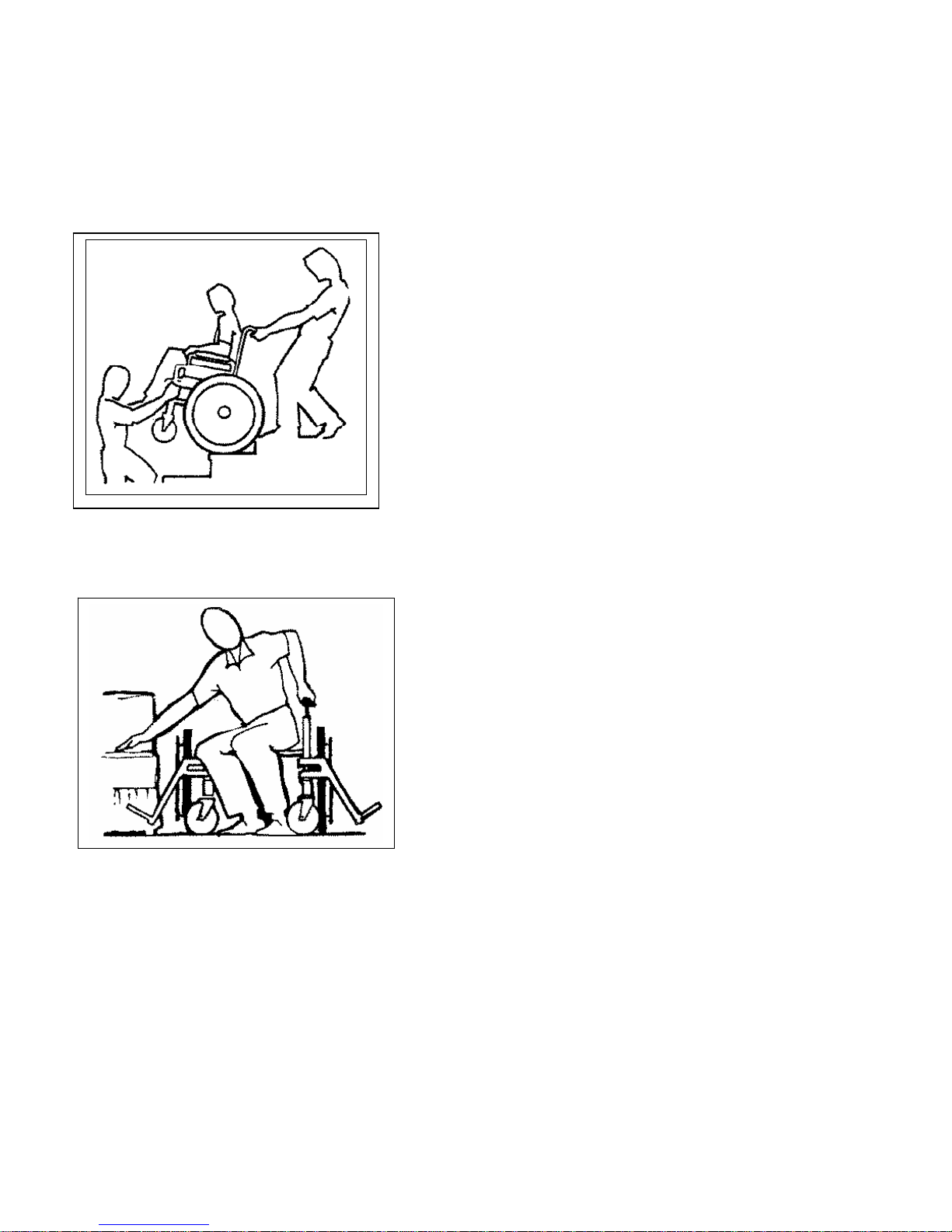
To determine and establish particular safety limits, practice bending, reaching and transferring activities
in several combinations in the presence of a qualified health professional BEFORE attempting active use
of the wheelchair.
DO NOT attempt to reach objects if you have to move forward in the seat.
DO NOT attempt to reach objects if you have to pick them up from the floor by reaching down between
your knees.
DO NOT lean over the top of the back upholstery to reach objects from behind as this may cause the
wheel chair to tip over.
DO NOT shift your weight or sitting position toward the direction you are reaching as the wheelchair may
tip over.
DO NOT tilt the wheelchair without assistance.
DO NOT use an escalator to move a wheelchair between floors. Serious bodily injury may occur.
DO NOT attempt to stop a moving wheelchair with the wheel locks. WHEEL LOCKS ARE NOT BRAKES.
Before attempting to transfer in or out of the wheelchair, every precaution should be taken to reduce the
gap distance. Turn both casters toward the object you are transferring onto. When transferring to and
from the wheelchair, ALWAYS ENGAGE BOTH WHEEL LOCKS.
DO NOT operate on roads, streets or highways.
DO NOT climb, go up or down ramps or traverse slopes greater than 9°.
DO NOT attempt to move up or down an incline with a water, ice or oil film.
DO NOT attempt to ride over curbs or obstacles. Doing so may cause your wheelchair to turn over and
cause bodily harm or damage to the wheelchair.
DO NOT use unauthorized parts, accessories, or adapters other than those authorized by PDG.
DO NOT attempt to lift wheelchair by any removable (detachable) parts.