manuals.online logo
Brands
  1. Home
  2. •
  3. Brands
  4. •
  5. PFB
  6. •
  7. Safety Equipment
  8. •
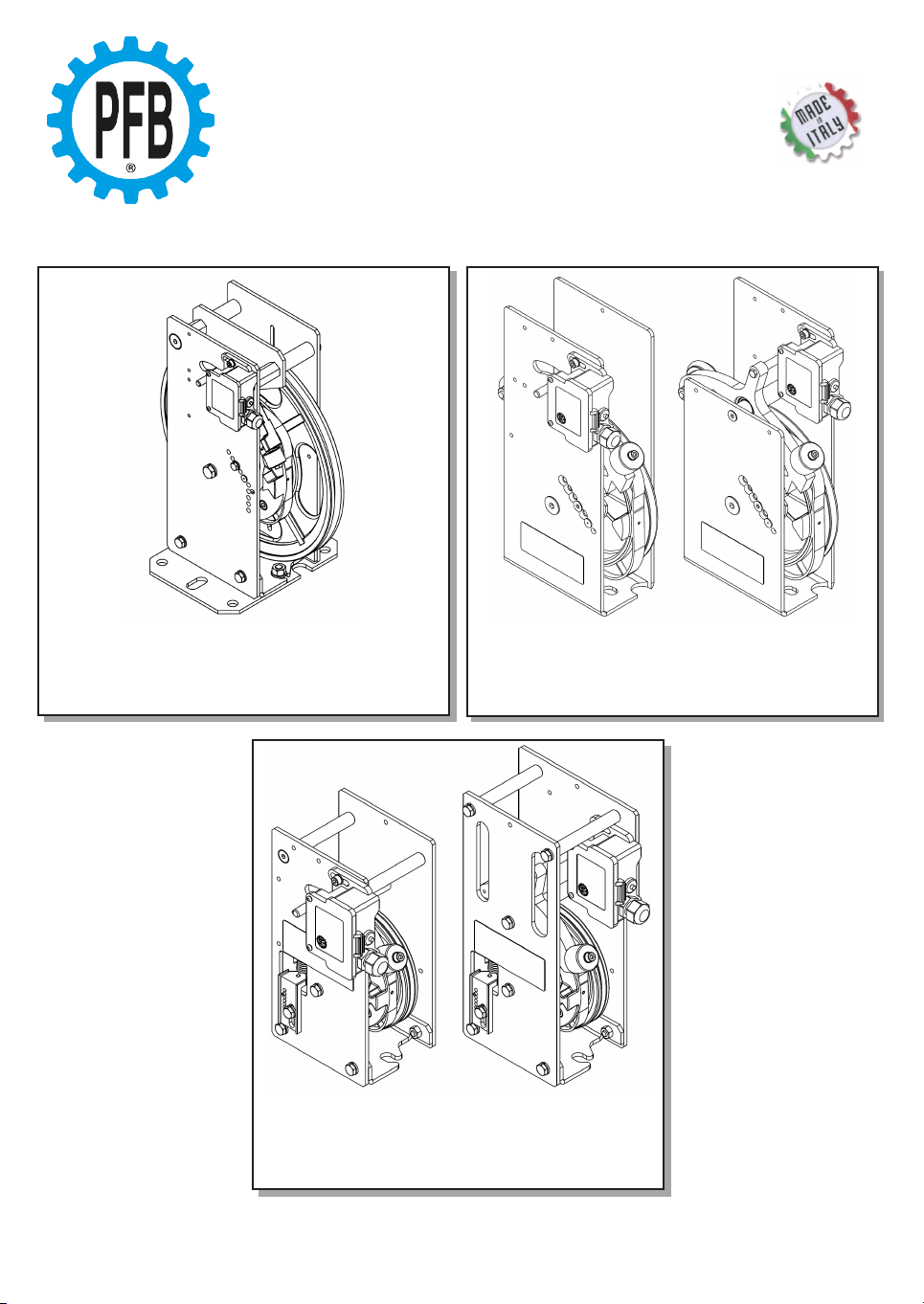
  9. PFB LK200 Specification sheet

PFB LK200 Specification sheet

This manual suits for next models

6

Other PFB Safety Equipment manuals

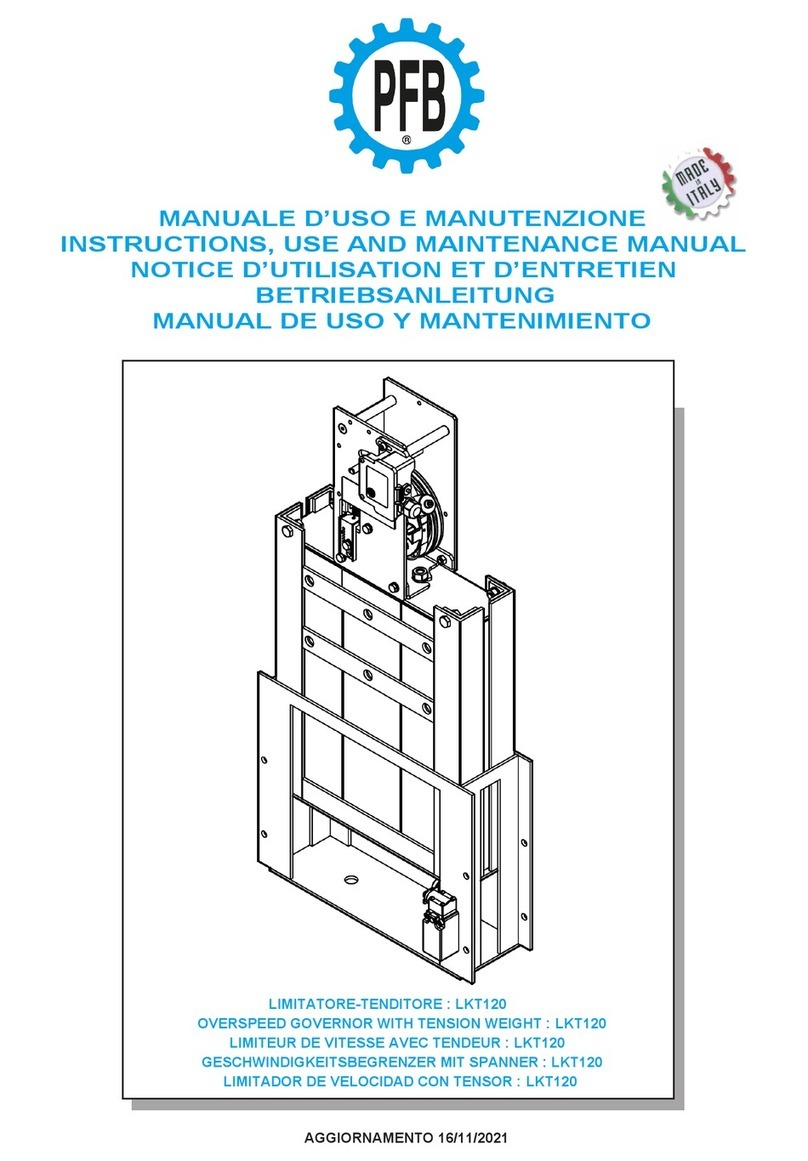
PFB LKT120 Specification sheet

PFB

PFB LKT120 Specification sheet

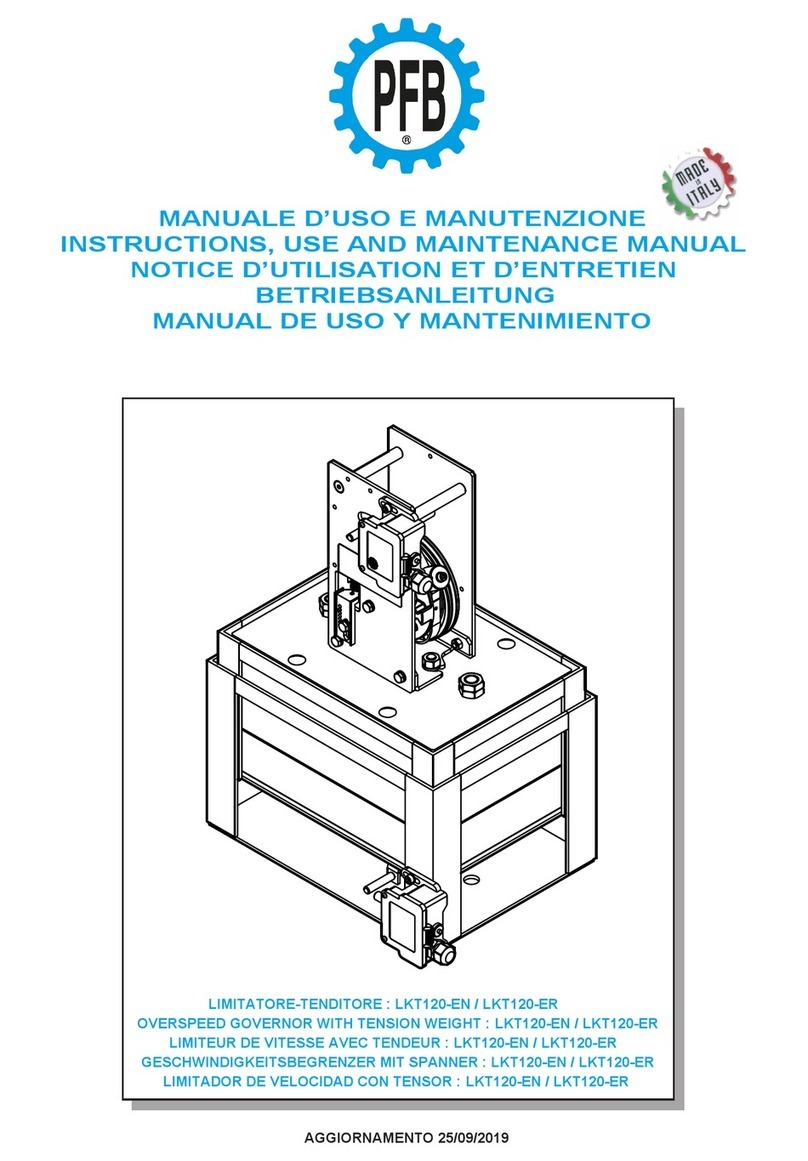
PFB LKT120-EN Specification sheet

PFB

PFB LKT120-EN Specification sheet

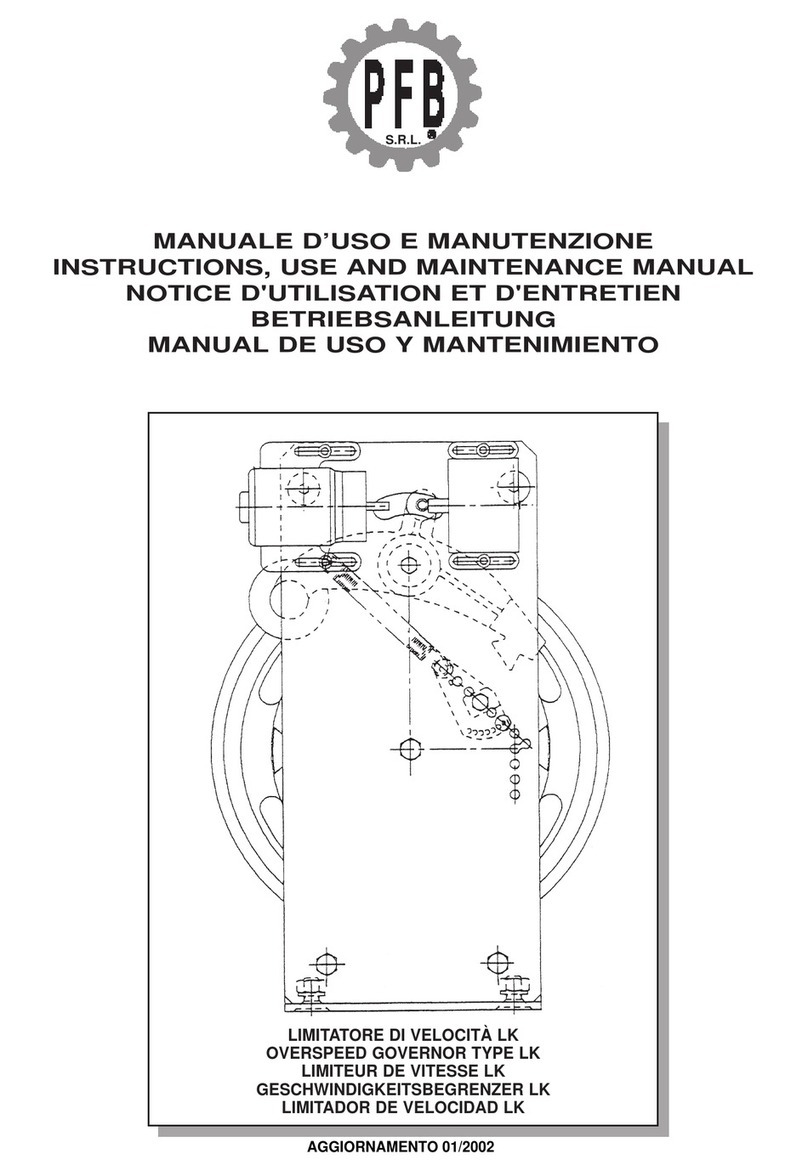
PFB LK Specification sheet

PFB

PFB LK Specification sheet

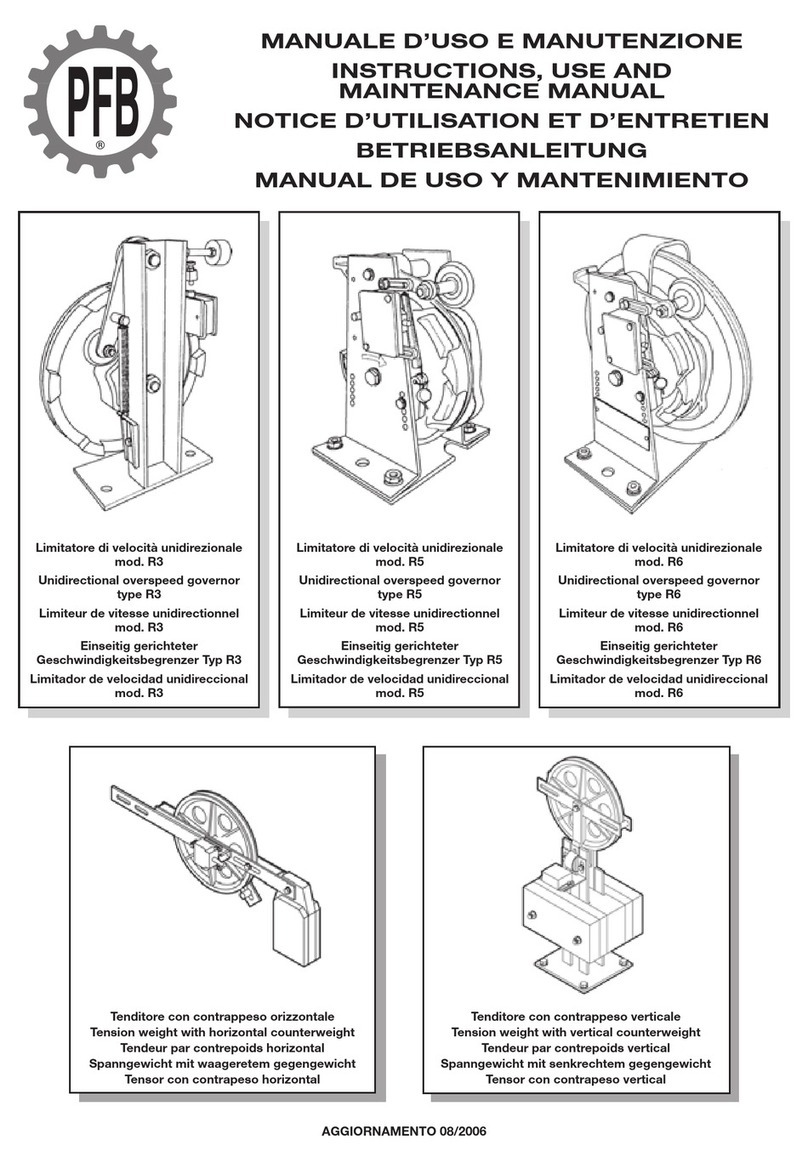
PFB R3 Specification sheet

PFB

PFB R3 Specification sheet

Popular Safety Equipment manuals by other brands

Lanex PB-20 instruction manual

Lanex

Lanex PB-20 instruction manual

SKYLOTEC ANCHOR ROPES Instructions for use

SKYLOTEC

SKYLOTEC ANCHOR ROPES Instructions for use

Besto Buoyancy Aid 50N Instructions for use

Besto

Besto Buoyancy Aid 50N Instructions for use

TEUFELBERGER NODUS Manufacturer's information and instructions for use

TEUFELBERGER

TEUFELBERGER NODUS Manufacturer's information and instructions for use

Troy Lee Designs Tbone Product owners manual

Troy Lee Designs

Troy Lee Designs Tbone Product owners manual

Innova Xtirpa Instruction and safety manual

Innova

Innova Xtirpa Instruction and safety manual

bolle SAFETY B810 quick start guide

bolle SAFETY

bolle SAFETY B810 quick start guide

SHENZHEN FANHAI SANJIANG ELECTRONICS A9060T instruction manual

SHENZHEN FANHAI SANJIANG ELECTRONICS

SHENZHEN FANHAI SANJIANG ELECTRONICS A9060T instruction manual

Hiltron security POWER8E Installation and use manual

Hiltron security

Hiltron security POWER8E Installation and use manual

Salewa MTN SPIKE user manual

Salewa

Salewa MTN SPIKE user manual

Hatco B-950P installation guide

Hatco

Hatco B-950P installation guide

Sitec TX MATIC operating manual

Sitec

Sitec TX MATIC operating manual

TEUFELBERGER GRIP 12 Manufacturer's information and instructions for use

TEUFELBERGER

TEUFELBERGER GRIP 12 Manufacturer's information and instructions for use

MSA PremAire System Operation and instructions

MSA

MSA PremAire System Operation and instructions

AMC 1022M Series instruction manual

AMC

AMC 1022M Series instruction manual

Trinity CASS S3 Assembly manual

Trinity

Trinity CASS S3 Assembly manual

CMC Helitack HotSeat quick guide

CMC

CMC Helitack HotSeat quick guide

ACM SAFETY D200 Instructions and warnings

ACM

ACM SAFETY D200 Instructions and warnings

manuals.online logo
manuals.online logoBrands
  • About & Mission
  • Contact us
  • Privacy Policy
  • Terms and Conditions

Copyright 2025 Manuals.Online. All Rights Reserved.

AGGIORNAMENTO 18/03/2021
MANUALE D’USO E MANUTENZIONE
INSTRUCTIONS, USE AND
MAINTENANCE MANUAL
NOTICE D’UTILISATION ET D’ENTRETIEN
BETRIEBSANLEITUNG
MANUAL DE USO Y MANTENIMIENTO
LIMITATORE DI VELOCITÀ LK120
OVERSPEED GOVERNOR TYPE LK120
LIMITEUR DE VITESSE LK120
GESCH INDIGKEITSBEGRENZER LK120
LIMITADOR DE VELOCIDAD LK120
LIMITATORE DI VELOCITÀ LX150-180
OVERSPEED GOVERNOR TYPE LX150-180
LIMITEUR DE VITESSE LX150-180
GESCH INDIGKEITSBEGRENZER LX150-180
LIMITADOR DE VELOCIDAD LX150-180
LIMITATORE DI VELOCITÀ LK200-250-300-315
OVERSPEED GOVERNOR TYPE LK200-250-300-315
LIMITEUR DE VITESSE LK200-250-300-315
GESCH INDIGKEITSBEGRENZER LK200-250-300-315
LIMITADOR DE VELOCIDAD LK200-250-300-315
2
ISTRUZIONI PER L’USO
INDICE PAGINA
1 INFORMAZIONI GENERALI PRIMA DELL’INIZIO DEL MONTAGGIO 5
1.1 Descrizione, modo di funzionamento 5
1.2 Responsabilità e garanzia 12
1.3 Misure precauzionali di sicurezza 12
1.4 Istruzioni di la oro sugli elementi strutturali di sicurezza 17
1.5 Preparazione del la oro 19
1.6 Targhetta del prodotto, contrassegno, identificazione 21
1.7 Fornitura complessi a 22
2 MONTAGGIO 23
2.1 Montaggio del limitatore di elocità 23
2.1.1 Montaggio in sala macchine - preparazione 23
2.2 Montaggio della fune del limitatore/tenditore con contrappeso 28
2.3 Installazione elettrica degli interruttori di sicurezza 38
3 OPERAZIONI DI MESSA A PUNTO 43
3.1 Limitatore di elocità 43
3.2 Tenditore con contrappeso 43
4 PROVA DI FUNZIONAMENTO 49
5 MANUTENZIONE, CONTROLLO E RIPARAZIONE 54
5.1 Manutenzione e controllo 54
5.2 Esecuzione delle riparazioni 54
6 DATI TECNICI 59
6.1 Limitatore di elocità LK120 59
6.5 Tenditore con contrappeso orizzontale/ erticale 63
OPERATING INSTRUCTIONS
INDEX PAGE
1 GENERAL INFORMATION BEFORE BEGINNING THE ASSEMBLY 6
1.1 Description, operation mode 6
1.2 Responsibility and guarantee 13
1.3 Safety precautions 13
1.4 Working instructions on safety structural elements 17
1.5 Pre-Operations 19
1.6 Type-plate, Test mark, identification 21
1.7 Constitution of supply 22
2 ASSEMBLY 24
2.1 Assembly of the o erspeed go ernor 24
2.1.1 Assembly in the engine room - preparation 24
2.2 Assembly of the rope of the o erspeed go ernor/tension weight with counterweight 30
2.3 Electric installation of the safety switches 39
3 SETTING UP OPERATIONS 44
3.1 O erspeed go ernor 44
3.2 Tension weight with counterweight 44
6.4 Limitatore di elocità LK200-250-300-315 62
6.2 Limitatore di elocità LX150 60
6.3 Limitatore di elocità LX180 61
3
4 OPERATION TESTING 50
5 MAINTENANCE, CONTROL AND REPAIR 55
5.1 Maintenance and control 55
5.2 Execution of repairs 55
6 TECHNICAL DATA 59
6.1 O erspeed go ernor type LK120 59
6.5 Tension weight with horizontal/ ertical counterweight 63
INSTRUCTIONS D’UTILISATION
SOMMAIRE PAGE
1 INFORMATIONS GÉNÉRALES AVANT DE COMMENCER LE MONTAGE 7
1.1 Description, mode de fonctionnement 7
1.2 Responsabilité et garantie 14
1.3 Mesures de précaution concernant la sécurité 14
1.4 Instructions de tra ail concernant les éléments structuraux de sécurité 18
1.5 Préparation du tra ail 20
1.6 Plaquette du produit, marque, identification 21
1.7 Fourniture d’ensemble 22
2 MONTAGE 25
2.1 Montage du limiteur de itesse 25
2.1.1 Montage en salle des machines - préparation 25
2.2 Montage du câble du limiteur/tendeur a ec contrepoids 32
2.3 Installation électrique des interrupteurs de sécurité 40
3 OPÉRATIONS DE MISE AU POINT 45
3.1 Limiteur de itesse 45
3.2 Tendeur par contrepoids 45
4 ESSAI DE FONCTIONNEMENT 51
5 ENTRETIEN, CONTRÔLE, RÉPARATION 56
5.1 Entretien et contrôle 56
5.2 Exécution des réparations 56
6 DONNÉES TECHNIQUES 59
6.1 Limiteur de itesse LK120 59
6.5 Tendeur par contrepoids horizontal/ ertical 63
BETRIEBSANLEITUNG
INHALTSVERZEICHNIS SEITE
1 ALLGEMEINES VOR MONTAGEBEGINN 8
1.1 Beschreibung, Funktionsweise 8
1.2 Haftung und Gewährleistung 15
1.3 Sicherheits orkehrungen 15
1.4 Hinweise zur Arbeit an Sicherheitsbauteilen 18
1.5 Arbeits orbereitung 20
1.6 Typenschild, Kennzeichnung, Identifizierung 21
1.7 Lieferumfang
22
6.4 O erspeed go ernor type LK200-250-300-315 62
6.4 Limiteur de itesse LK200-250-300-315 62
6.2 O erspeed go ernor type LX150 60
6.3 O erspeed go ernor type LX180 61
6.2 Limiteur de itesse LX150 60
6.3 Limiteur de itesse LX180 61
4
2 MONTAGE 26
2.1 Montage des Geschwindigkeitsbegrenzers 26
2.1.1 Montage im Triebwerksraum, Vorbereitung 26
2.2 Montage des Begrenzerseils/Spanngewichts 34
2.3 Elektrische Installation der Sicherheitsschalter 41
3 EINSTELLARBEITEN 46
3.1 Geschwindigkeitsbegrenzer 46
3.2 Spanngewicht 46
4 FUNKTIONSPRÜFUNG 52
5 ARTUNG, KONTROLLE UND REPARATUR 57
5.1 Wartung und Kontrolle 57
5.2 Ausführung on Reparaturen 57
6 TECHNISCHE DATEN 59
6.1 Geschwindigkeitsbegrenzer LK120 59
6.5 Spanngewicht mit waagerechtem/senkrechtem Gegengewicht 63
INSTRUCCIONES DE MONTAJE Y USO
ÍNDICE PÁGINA
1 GENERALIDADES PREVIAS AL MONTAJE 9
1.1 Descripción y modo de funcionamiento 9
1.2 Responsabilidad y garantía 16
1.3 Medidas pre enti as de seguridad 16
1.4 Instrucciones de trabajo sobre los elementos estructurales de seguridad 19
1.5 Operaciones pre ias a la instalación 20
1.6 Placa de datos del producto, marca e identificación 21
1.7 Equipamientos 22
2 MONTAJE 27
2.1 Montaje del limitador de elocidad 27
2.1.1 Montaje en la sala de máquinas - preparación 27
2.2 Montaje del cable del limitador/tensor con contrapeso 36
2.3 Instalación eléctrica de los interruptores de seguridad 42
3 OPERACIONES DE PUESTA A PUNTO 47
3.1 Limitador de elocidad 47
3.2 Tensor con contrapeso 47
4 PRUEBA DE FUNCIONAMIENTO 53
5 MANTENIMIENTO, COMPROBACIÓN Y REPARACIÓN 58
5.1 Mantenimiento y comprobación 58
5.2 Reparaciones 58
6 DATOS TÉCNICOS 59
6.1 Limitador de elocidad LK120 59
6.5 Tensor con contrapeso horizontal/ ertical 63
6.4 Geschwindigkeitsbegrenzer LK200-250-300-315 62
6.4 Limitador de elocidad LK200-250-300-315 62
6.2 Geschwindigkeitsbegrenzer LX150 60
6.3 Geschwindigkeitsbegrenzer LX180 61
6.2 Limitador de elocidad LX150 60
6.3 Limitador de elocidad LX180 61
8
1 INFORMAZIONI GENERALI PRIMA DELL’INIZIO DEL MONTAGGIO
1.1 DESCRIZIONE, MODO DI FUNZIONAMENTO
Il limitatore di elocità è un dispositi o di sicurezza che iene messo in funzione in caso di superamento della
elocità ammessa della cabina dell’ascensore.
Nel caso in cui la cabina dell’ascensore, durante la corsa in salita o in discesa, superi la sua elocità nominale
ammessa fino al raggiungimento della elocità di inter ento, il limitatore di elocità si innesta e fa scattare,
sulla fune del limitatore, un dispositi o frenante, più precisamente il paracadute, che è posizionato sulla
cabina dell’ascensore. La cabina si arresta e iene trattenuta dalle guide.
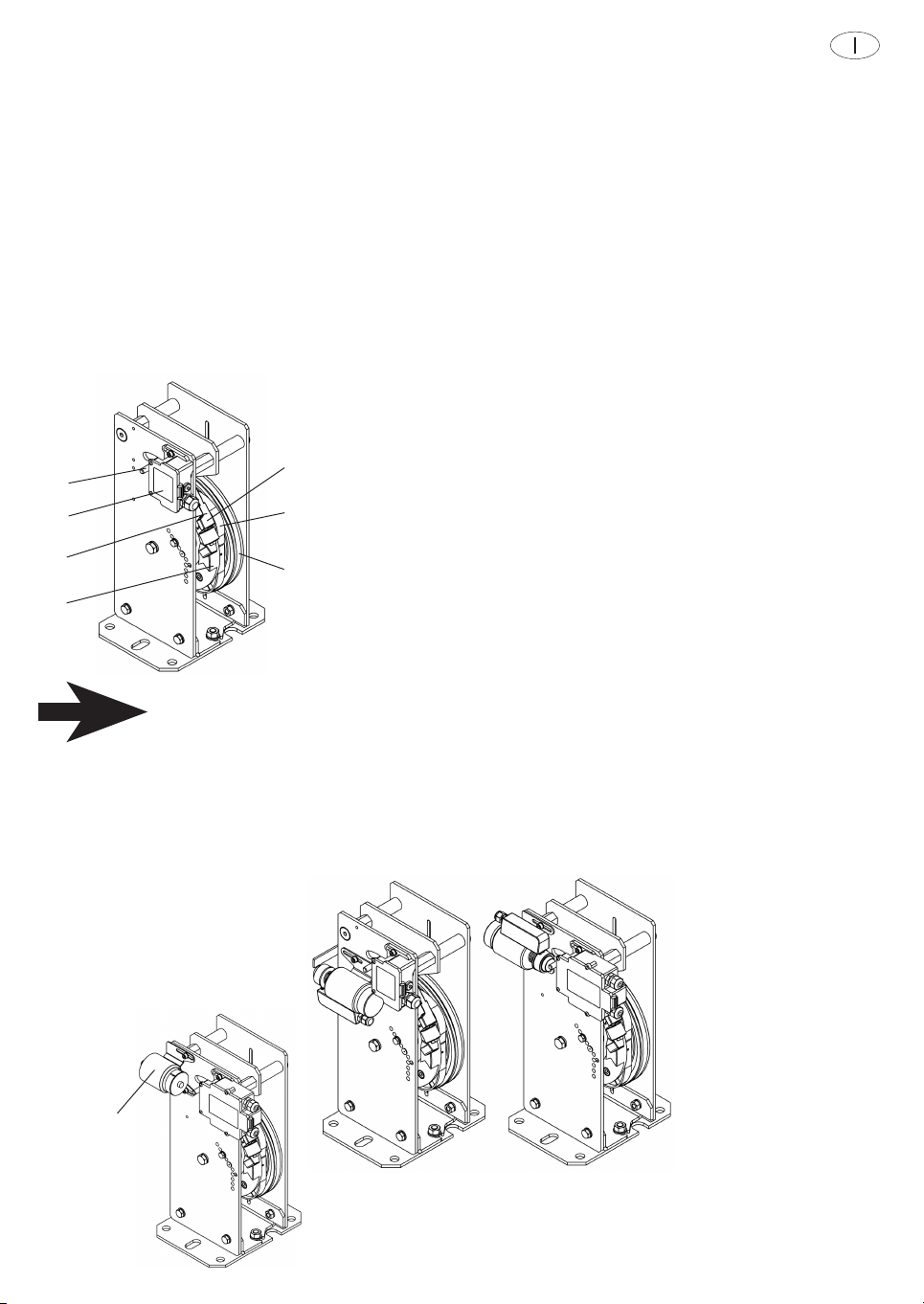
Lo stesso limitatore di elocità (Fig. 1) è costituito da una puleggia con:
• Ruota del limitatore (1) con gola trapezoidale con scarico, per alloggiare la fune del limitatore;
• Gola di pro a per test di funzionamento;
• Corona a camme (2);
• Eccentrico di arresto (3).
La fune, bloccata sulla tiranteria di innesto del paracadute e tenuta tesa da un peso, aziona la ruota del
limitatore (1) tramite la pressione della fune nella gola trapezoidale con scarico.
Oltre alla gola trapezoidale, iene inoltre montata, sulla ruota del limitatore,
una corona a camma (2) con eccentrico di arresto (3). Detta corona fa
funzionare il pendolo (4) per mezzo di una carrucola montata su di un
cuscinetto a sfera, con moto oscillatorio erso l’alto e erso il basso.
Il pendolo iene tirato alla corona a camme tramite una molla di trazione
precaricata, corrispondente alla elocità di inter ento pre ista.
Con il raggiungimento della elocità di inter ento, l’ampiezza del pendolo
di enta così grande, che l’innesto a denti frontali oscillante (5) incontra la
guida periferica dell’eccentrico di arresto e i iene bloccata da una camma.
Un perno d’acciaio (6) applicato sul pendolo aziona, prima del bloccaggio
meccanico del pendolo, l’interruttore di sicurezza (7). In tal modo, si
interrompe la corrente di comando dell’impianto.
I limitatori di elocità possono anche essere forniti con comando a distanza.
In caso di montaggio nel pozzo dell’ascensore, il limitatore di elocità de e essere dotato di
comando a distanza, oppure de e essere facilmente accessibile dall’esterno
(ad es. tramite una porticina di manutenzione).
Per mezzo di un tasto, il comando a distanza (fig.2, pos.8) pro oca l’innesto del pendolo su percorso
elettromagnetico nella scatola dell’interruttore stesso.
I limitatori di elocità dotati di comando a distanza facilitano i controlli di funzionamento.
I limitatori di elocità possiedono l’omologazione in conformità alla Diretti a per ascensori 2014/33/UE, con i
seguenti numeri della pro a di omologazione EU:
• LK 120 : TÜV EU-OG 280
• LX 150 : TÜV EU-OG 295/1
• LX 180 : TÜV EU-OG 296
• LK 200 : TÜV EU-OG 182
• LK 250 : TÜV EU-OG 183
• LK 300 : TÜV EU-OG 184
• LK 315 : TÜV EU-OG 186
5
6
7
4
3
5
2
1
Fig. 1
In caso di utilizzo su
nuo i impianti in
conformità a quanto
richiesto dalla normati a
Europea per il mo imento
incontrollato di cabina, il
limitatore può essere
fornito completo di un
dispositi o elettro-
magnete in combinazione
con il relati o
alimentatore o senza; per
il funzionamento e
l’utilizzo dei dispositi i di
cui sopra si de e fare
riferimento allo specifico
libretto d’uso e
manutenzione fornito
separatamente.
Fig. 2
Limitatore
di elocità
con
comando a
distanza
Fig. 3
Limitatore di elocità
con dispositi o per
mo imento incontrollato
di cabina
Fig. 3

6
7
4
3
5
2
1
8
6
1 GENERAL INFORMATION BEFORE BEGINNING THE ASSEMBLY
1.1 DESCRIPTION, OPERATION MODE
The o erspeed go ernor is a safety de ice which turns on when the allowed speed of the ele ator car is
exceeded.
If the ele ator car, during its upward/downward run, exceeds its nominal permissible speed, until the tripping
speed is reached, the o erspeed go ernor turns on and, in turn, releases – on the o erspeed go ernor rope – a
brake mechanism, more precisely the safety gear on the ele ator car. The ele ator car stops and is kept back
by the guides.
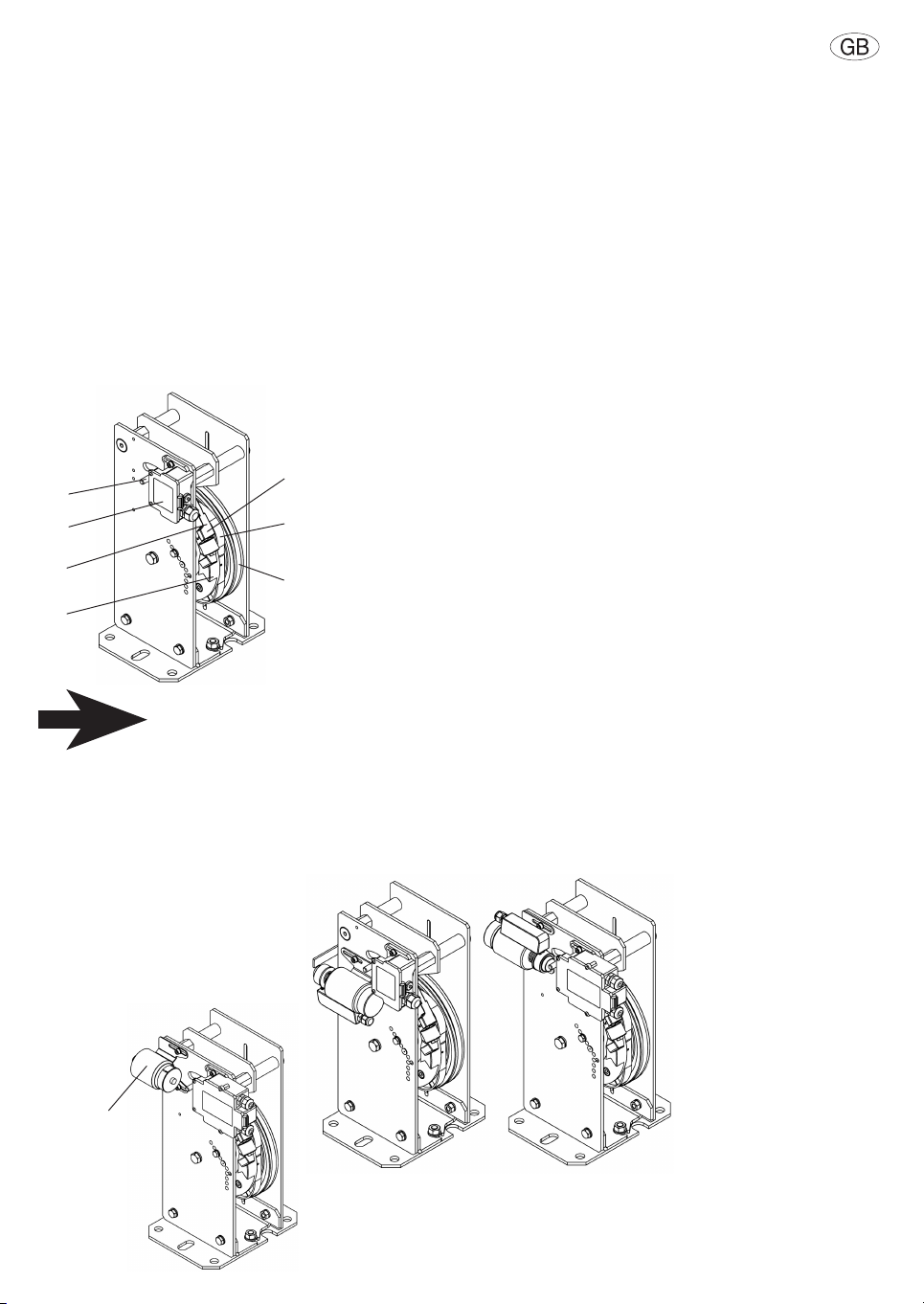
The same o erspeed go ernor (fig. 1) is made up of pulley with:
• go ernor wheel (1) with trapezoidal undercut groo e, to house the o erspeed go ernor rope;
• test groo es for operation tests;
• cam rim (2);
• eccentric stop (3).
The rope, secured to the clamp of the safety gear and stretched by a weight, operates the go ernor wheel (1)
through the pressure of the rope in the trapezoidal undercut groo e.
Beside the trapezoidal groo e, a cam rim (2) with eccentric stop (3) is also mounted on the go ernor wheel.
Such rim allows the pendulum (4) to operate with an upward/downward
oscillating motion, by means of a pulley mounted on a ball bearing.
The pendulum is drawn to the cam rim by a preloaded tension spring,
corresponding to the scheduled tripping speed.
By reaching the tripping speed, the swing of the pendulum becomes so
extended, that the oscillating dog clutch (5) meets the peripheral guide of
the eccentric stop, where it is clamped by a cam.
A steel pin (6) applied on the pendulum operates the safety switch (7)
before the mechanical clamping of the pendulum. Through it, the control
power of the plant is switched off.
The o erspeed go ernors can also be deli ered with remote control.
Should the assembly be carried out in the ele ator shaft, the o erspeed go ernor must be
supplied with remote control or it must be easily accessible from the outside
(e.g. through a maintenance door).
By means of a key, the remote control (fig.2, pos.8) causes the insertion of the pendulum on the
electromagnetic way in the safety switch box.
O erspeed go ernors fitted with remote control make the operation controls easy.
O erspeed go ernors are pro ided with the homologation according to the rules and regulations for ele ators
2014/33/EU, with the following EU-type-appro al test numbers:
• LK 120 : TÜV EU-OG 280
• LX 150 : TÜV EU-OG 295/1
• LX 180 : TÜV EU-OG 296
• LK 200 : TÜV EU-OG 182
• LK 250 : TÜV EU-OG 183
• LK 300 : TÜV EU-OG 184
• LK 315 : TÜV EU-OG 186
Fig. 1
On the use in new
facilities in accordance
with the requirements of
European standard for
the uncontrolled
mo ement of the cab, the
o erspeed go ernor can
be supplied complete
with a solenoid de ice in
combination with its
feeder or without; for the
operation and the use of
the abo e de ices please
refer to the specific
maintenance manual
pro ided separately.
Fig. 3
O erspeed go ernor
with uncontrolled car
mo ement de ice
Fig. 2
O erspeed
go ernor
with remote
control
8
6
7
4
3
5
2
1
1 INFORMATIONS GÉNÉRALES AVANT DE COMMENCER LE MONTAGE
1.1 DESCRIPTION, MODE DE FONCTIONNEMENT
Le limiteur de itesse est un dispositif de sécurité qui est mis en fonction en cas de dépassement de la itesse
autorisée dans la cabine de l’ascenseur.
Au cas où la cabine de l’ascenseur, au cours de la course de montée ou de descente, dépasserait sa itesse
nominale autorisée (jusqu’à atteindre la itesse d’inter ention), le limiteur se connecte et fait déclencher, sur
le câble du limiteur, un dispositif de freinage nommé parachute, qui est positionné sur la cabine de
l’ascenseur. La cabine s’arrête et est retenue par les glissières.
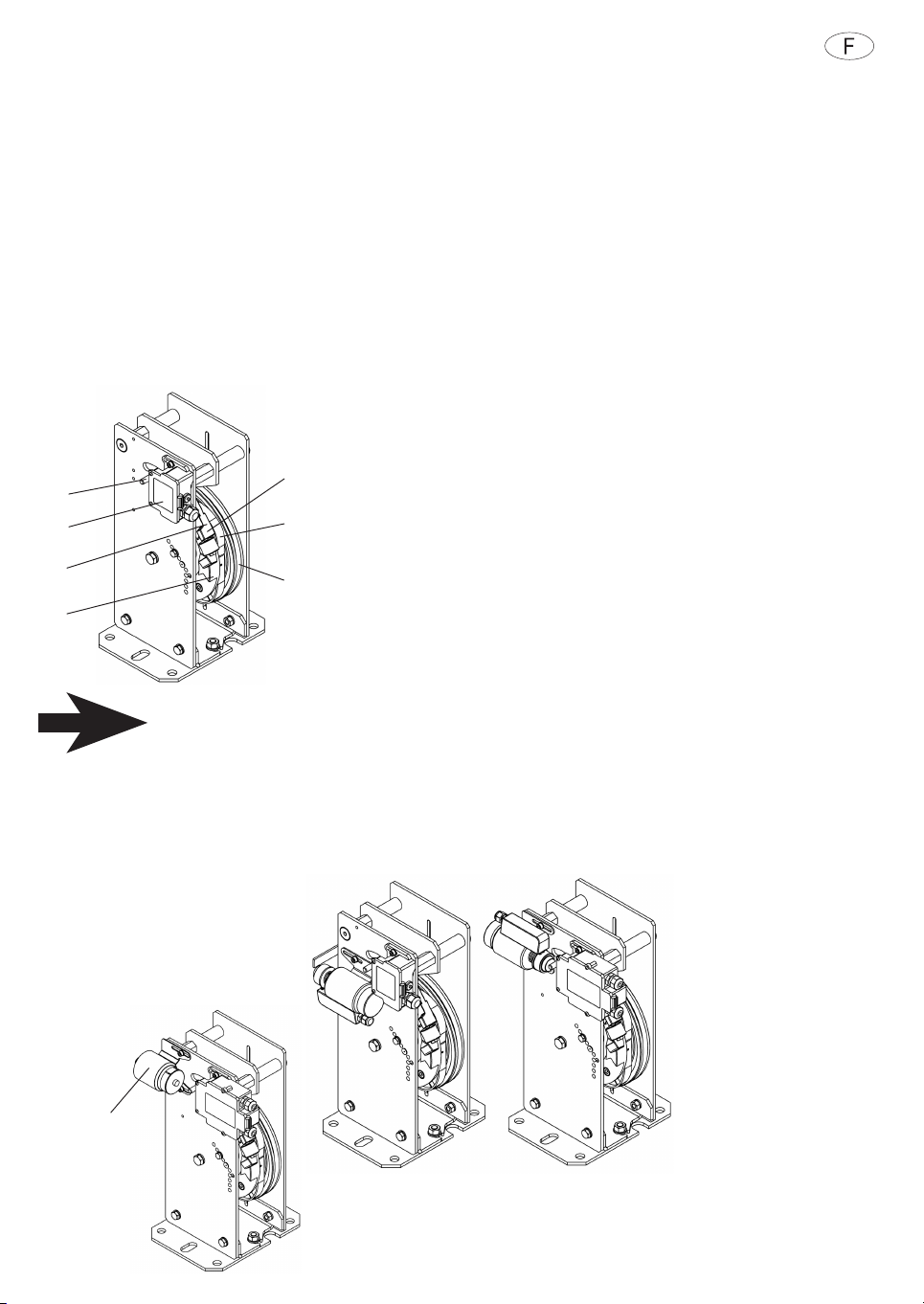
Le limiteur de itesse (Fig. 1) se compose d’une poulie dotée de:
• roue du limiteur (1) a ec gorge trapézoïdale dotée de déchargement pour loger le câble du limiteur;
• gorge d’essai pour test de fonctionnement;
• couronne à cames (2);
• excentrique d’arrêt (3).
Le câble, bloqué sur les tirants d’embrayage du parachute et tendu par un poids, actionne la roue du limiteur
(1) par sa pression sur la gorge trapézoïdale dotée de sortie d’é acuation.
Outre la gorge trapézoïdale, une couronne à cames (2) a ec excentrique
d’arrêt (3) est aussi montée sur la roue du limiteur. Cette couronne fait
fonctionner le pendule (4) par l’intermédiaire d’une poulie montée sur un
roulement à billes (a ec mou ement oscillatoire ers le haut et ers le bas).
Le pendule est tiré ers la couronne à cames par un ressort de traction
préchargé, qui correspond à la itesse d’inter ention pré ue.
Une fois la itesse d’inter ention atteinte, l’ampleur du pendule de ient
tellement grande que l’accouplement à crabots frontaux oscillant (5)
rencontre la glissière périphérique de l’excentrique d’arrêt et est bloquée
dans cette position par une came.
Un pi ot en acier (6) appliqué sur le pendule actionne l’interrupteur de
sécurité (7) a ant le blocage mécanique du pendule. De cette façon, le
courant de commande de l’installation est coupé.
Les limiteurs de itesse peu ent être également fournis a ec commande à
distance.
En cas de montage dans le puits de l’ascenseur, le limiteur de itesse doit être doté de
commande à distance ou bien il doit être aisément accessible de l’extérieur
(par ex.: par une petite trappe d’entretien).
Par la pression d’une touche, la commande à distance (Fig.2, Pos.8) produit l’enclenchement du pendule sur le
parcours électromagnétique dans le carter de l’interrupteur même.
Les limiteurs de itesse dotés de commande à distance rendent les contrôles de fonctionnement plus faciles.
Les limiteurs de itesse sont pour u de l’homologation en conformité a ec la Directi e 2014/33/UE en matière
d’ascenseurs, portant les numéros d’essai d’homologation EU sui ants:
• LK 120 : TÜV EU-OG 280
• LX 150 : TÜV EU-OG 295/1
• LX 180 : TÜV EU-OG 296
• LK 200 : TÜV EU-OG 182
• LK 250 : TÜV EU-OG 183
• LK 300 : TÜV EU-OG 184
• LK 315 : TÜV EU-OG 186
7
Fig. 1
Fig. 2
Limiteur de
itesse
a ec
commande
à distance
En cas d’utilisation sur
nou elles installations en
conformité a ec les
exigences de la norme
européenne pour les
mou ements incontrôlés
de la cabine, le limiteur
peut être li ré a ec un
dispositif électro en
combinaison a ec son
dispositif d’alimentation ou
sans, pour le
fonctionnement et
l’utilisation des dispositifs
ci-dessus s’il ous plaît se
référer au manuel
d’entretien spécifique,
fourni séparément.
Fig. 3
Limiteur de itesse
a ec dispositif pour
mou ement
incontrôlé de la
cabine
8
6
7
4
3
5
2
1
8
1 ALLGEMEINES VOR MONTAGEBEGINN
1.1 BESCHREIBUNG, FUNKTIONS EISE
Der Geschwindigkeitsbegrenzer ist eine Sicherheitseinrichtung, die bei Überschreiten der zulässigen
Fahrkorbgeschwindigkeit zum Einsatz kommt.
Überschreitet der Fahrkorb während der Auf-oder Abwärtsfahrt seine zulässige Nenngeschwindigkeit bis zum
Erreichen der Auslösegeschwindigkeit, dann rückt der Geschwindigkeitsbegrenzer ein und löst über das
Begrenzerseil eine e entuell orhandene aufwärtswirkende Bremseinrichtung bzw. die Fang orrichtung am
Fahrkorb aus. Der Fahrkorb wird zum Stillstand gebracht und an den Führungsschienen festgehalten.
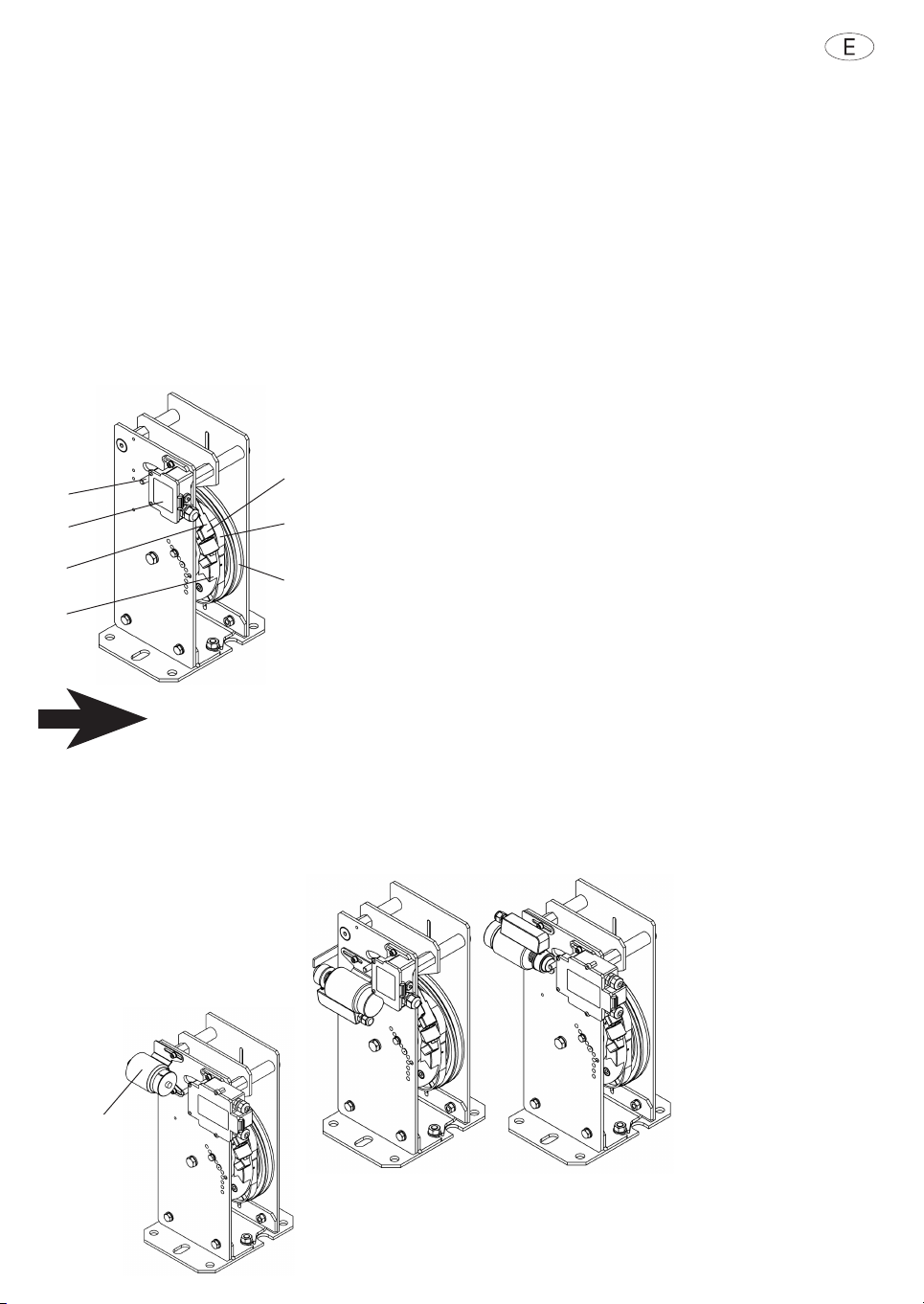
Der Geschwindigkeitsbegrenzer (Abb. 1) selbst besteht aus einer Begrenzerscheibe mit:
• Reglerrad (1) mit unterschnittener Keilrille zur Aufnahme des Begrenzerseils;
• Prüfrille für Testläufe;
• Kur enkranz (2);
• Sperrnocken (3).
Das am Einrückgestänge der Fang orrichtung befestigte und durch ein Gewicht gespannte Seil treibt das
Reglerrad (1) über die Seilpressung in der unterschnittenen Keilrille an.
Neber der Keilrille ist am Reglerrad außerdem ein Kur enkranz (2) mit Sperrnocken (3) angebracht.
Dieser Kur enkranz bringt das Fangpendel (4) über eine kugelgelagerte
Rolle in aufund abschwingende Bewegung.
Das Fangpendel wird über eine, entsprechend der orgesehenen
Auslösegeschwindigkeit, orgespannte Zugfeder an den Kur enkranz
gezogen.
Beim Erreichen der Auslösegeschwindigkeit wird der Ausschlang des
Pendels so groß, daß die Pendelklaue (5) in die Umfangsbahn der
Sperrnocken gerät und dort on einer Nocke festgeklemmt wird.
Ein am Fangpendel angebrachter Stahlbolzen (6) betätigt or der
mechanischen Klemmung des Pendels den Sicherheitsschalter (7). Dadurch
wird der Steuerstrom der Anlage unterbrochen.
Die Geschwindigkeitsbegrenzer werden auch mit Fernauslösung geliefert.
Bei Schachtmontage muß der Geschwindigkeitsbegrenzer mit Fernauslösung ausgerüstet
oder on außen leicht zugänglich sein (z.B. durch eine Wartungstür).
Die Fernauslösung (Abb.2, Pos.8) bewirkt per Taster das Einrücken des Fangpendels auf
elektromagnetischem Weg im Gehäuse des Sicherheitsschalters.
Geschwindigkeitsbegrenzer mit Fernauslösung erleichtem Funktionsprufüngen.
Die Geschwindigkeitsbegrenzer besitzen die Zulassung nach AufzR 2014/33/EU mit folgendem EU-
Baumusterprüfungsnummern:
• LK 120 : TÜV EU-OG 280
• LX 150 : TÜV EU-OG 295/1
• LX 180 : TÜV EU-OG 296
• LK 200 : TÜV EU-OG 182
• LK 250 : TÜV EU-OG 183
• LK 300 : TÜV EU-OG 184
• LK 315 : TÜV EU-OG 186
Fig. 1
Bei Einsatz in neuen
Anlagen in
Übereinstimmung mit den
Anforderungen der
europäischen Norm für die
unkontrollierte Bewegung
der Kabine kann der
Begrenzer komplett mit
einer Magnetspule in
Kombination mit seiner
Strom ersorger oder ohne
geliefert werden, für die
Bedienung und die
Verwendung der oben
genannten Geräte
beziehen Sie sich auf die
spezifische
Wartungsanleitung, die
separat zur Verfügung
gestellt werden.
Abb. 3
Geschwindigkeitsbegrenzer
mit Vorrichtung für
unkontrollierte Bewegungen
der Kabine - A3
Abb. 2
Geschwindigkeitsbegrenzer mit Fernauslösung
8
6
7
4
3
5
2
1
9
1 GENERALIDADES PREVIAS AL MONTAJE
1.1 DESCRIPCIÓN Y MODO DE FUNCIONAMIENTO
El limitador de elocidad es un dispositi o de seguridad que se pone en funcionamiento si la cabina del
ascensor supera el límite de elocidad permitido.
Si, durante el desplazamiento en sentido ascendente o descendente, la cabina del ascensor supera la
elocidad nominal permitida y alcanza la elocidad de inter ención, el limitador de elocidad se acti ará y
accionará un dispositi o de freno en el cable del limitador, concretamente el paracaídas situado en la cabina
del ascensor. La cabina se bloqueará automáticamente sobre sus guías.
El limitador de elocidad (fig. 1) está formado por una polea con:
• rueda del limitador (1) con acanaladura trapezoidal con descarga, para alojar el cable del limitador;
• acanaladura de prueba para comprobar el funcionamiento;
• corona de le as (2);
• excéntrica de bloqueo (3).
El cable, sujeto al arillaje de accionamiento del paracaídas y tensado por un contrapeso, acciona la rueda del
limitador (1) mediante la presión que ejerce en la acanaladura trapezoidal con descarga.
En la rueda del limitador, además de la acanaladura trapezoidal, se
encuentra una corona de le as (2) con una excéntrica de bloqueo (3). Esta
corona acciona el péndulo (4) mediante una polea montada en un cojinete
de bolas, con un mo imiento de oscilación de arriba a abajo.
El péndulo es empujado hacia la corona de le as mediante un muelle de
tracción precargado en función de la elocidad de inter ención pre ista.
Al alcanzar dicha elocidad de inter ención, el campo de oscilación del
péndulo aumenta de tal manera que el acoplamiento oscilante de dientes
delanteros rectos (5) entra en contacto con la guía periférica de la
excéntrica de bloqueo y una le a la bloquea.
Antes del bloqueo mecánico del péndulo, una perno de acero (6) que tiene
montado acciona el interruptor de seguridad (7). De esta manera
desconecta la corriente de la instalación.
Los limitadores de elocidad pueden estar equipados con mando a
distancia.
En caso de montaje en el hueco del ascensor, es necesario que el limitador de elocidad
esté dotado de mando a distancia, o bien esté situado ed un lugar fácilmente accesible
desde el exterior (p. ej. mediante una pequeña puerta de ser icio).
Mediante un pulsador, el mando a distancia (fig.2, pos.8) conecta el péndulo al circuito electromagnético de la
caja del proprio interruptor.
Los limitadores de elocidad equipados con mando a distancia facilitan el control del funcionamiento.
Los limitadores de elocidad están homologados de acuerdo con la Directi a para ascensores 2014/33/UE,
con los siguientes números de homologación EU:
• LK 120 : TÜV EU-OG 280
• LX 150 : TÜV EU-OG 295/1
• LX 180 : TÜV EU-OG 296
• LK 200 : TÜV EU-OG 182
• LK 250 : TÜV EU-OG 183
• LK 300 : TÜV EU-OG 184
• LK 315 : TÜV EU-OG 186
9
Fig. 1
Fig. 2
Limitador
de
elocidad
con mando
a distancia
En cuanto al uso en
nue as instalaciones de
acuerdo con los requisitos
de la norma europea para
el mo imiento
incontrolado de la cabina,
el limitador puede ser
suministrado completo
con un dispositi o de
solenoide en combinación
con su alimentador o sin
para la operación y el uso
de los dispositi os
anteriores, por fa or
consulte el manual de
mantenimiento específico,
suministrado por
separado.
Fig. 3
Limitador de elocidad
con dispositi o para
mo imiento incontrolado
de la cabina - A3
Il limitatore di elocità può essere fornito sia per il montaggio in sala macchine che per il montaggio
nella testata del ano di corsa.
DISPOSIZIONE IN SALA MACCHINE
The o erspeed go ernor can be supplied both for the assembly in the engine room and for the
assembly on the top of the ele ator shaft.
DISPOSITION IN THE ENGINE ROOM
Le limiteur de itesse peut être li ré pour le montage en salle des machines ainsi que pour le
montage dans la tête du compartiment de course.
DISPOSITION EN SALLE DES MACHINES
Der Geschwindigkeitsbegrenzer kann für die Montage im Triebwerksraum oder für die Montage im
Schachtkopf geliefert werden.
ANORDNUNG IM TRIEB ERKSRAUM
El limitador de elocidad puede equiparse tanto para el montaje en la sala de máquinas como para el
montaje en la cabeza del hueco de carrera.
DISPOSICIÓN EN SALA DE MÁQUINAS
10
Limitatore di elocità
O erspeed go ernor
Limiteur de itesse
Geschwindigkeitsbegrenzer
Limitador de elocidad
Capofune
Rope anchor
Cosse
Seilschloß
Extremo del cable
Fune del limitatore
Go ernor rope
Câble du limiteur
Begrenzerseil
Cable del limitador
Paracaduti
Safety gears
Parachutes
Fang orrichtungen
Paracaídas
Organo di comando
Control de ice
Organe de commande
Schaltkulisse
Mando