3 4
Pairing with a SmartphoneCharging the Speaker Microphone
2
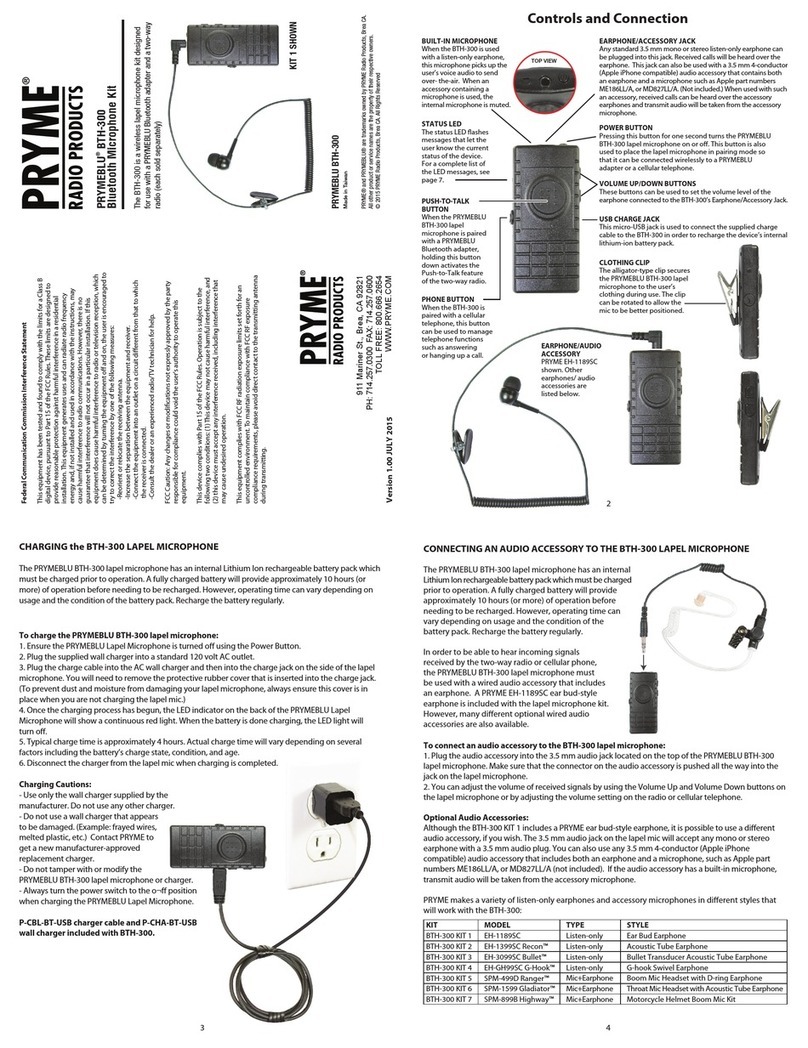
Controls and Connection
Federal Communication Commission Interference Statement
This equipment has been tested and found to comply with the limits for a Class B
digital device, pursuant to Part 15 of the FCC Rules. These limits are designed to
provide reasonable protection against harmful interference in a residential installation.
This equipment generates uses and can radiate radio frequency energy and, if not
installed and used in accordance with the instructions, may cause harmful interference
to radio communications. However, there is no guarantee that interference will not
occur in a particular installation. If this equipment does cause harmful interference to
radio or television reception, which can be determined by turning the equipment o
and on, the user is encouraged to try to correct the interference by one of the following
measures:
-Reorient or relocate the receiving antenna.
-Increase the separation between the equipment and receiver.
-Connect the equipment into an outlet on a circuit dierent from that to which the
receiver is connected.
-Consult the dealer or an experienced radio/TV technician for help.
FCC Caution: Any changes or modications not expressly approved by the party
responsible for compliance could void the user's authority to operate this equipment.
This device complies with Part 15 of the FCC Rules. Operation is subject to the
following two conditions: (1) This device may not cause harmful interference, and (2)
this device must accept any interference received, including interference that may
cause undesired operation.
This equipment complies with FCC RF radiation exposure limits set forth for an
uncontrolled environment. To maintain compliance with FCC RF exposure compliance
requirements, please avoid direct contact to the transmitting antenna during
transmitting.
RF Exposure Warning!
This device contains transmitters and receivers which emit Radio Frequency (RF)
energy. The device is designed to comply with the limits for exposure to RF energy set
by the Federal Communications Commission (FCC) of the United States, Industry
Canada (IC) of Canada, and the regulating entities of other countries.
If you are still concerned about exposure to RF energy,
you can further limit your exposure by limiting the
amount of time you use the equipment or by placing
more distance between your body and the device,
since exposure level drops o dramatically
with distance.
1.0Z September 2014
911 Mariner St., Brea, CA 92821
PH: 714.257.0300 FAX: 714.257.0600
TOLL FREE: 800.666.2654
WWW.PRYME.COM
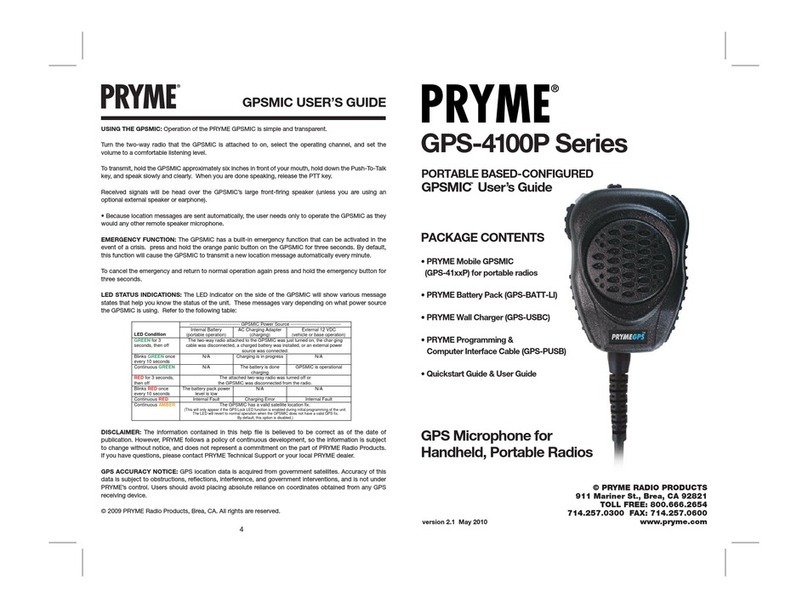
PRYMEBLU BTH-SPM100-ZD
Wireless Bluetooth Speaker Microphone
For use with Zello and other push-to-talk apps
on Android smart phones.
PRYME® and PRYMEBLU® are trademarks owned by PRYME Radio Products,
Brea CA. All other product or service names are the property of their respective owners.
© 2014 PRYME Radio Products, Brea CA. All Rights Reserved
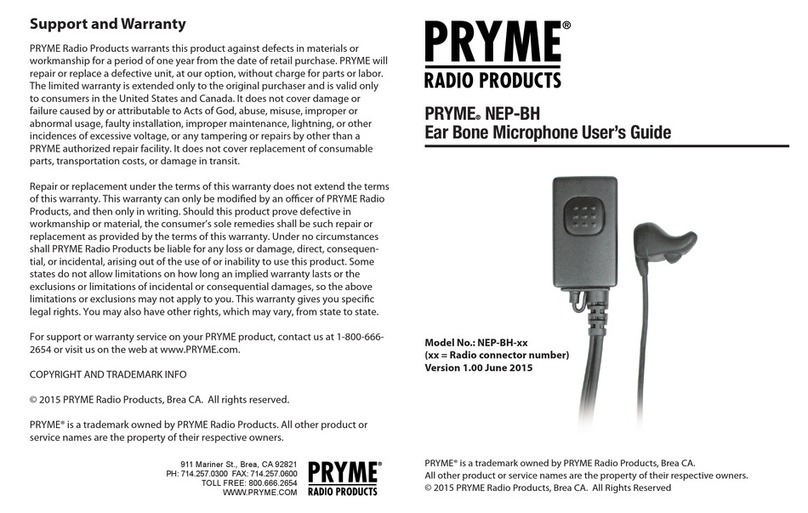
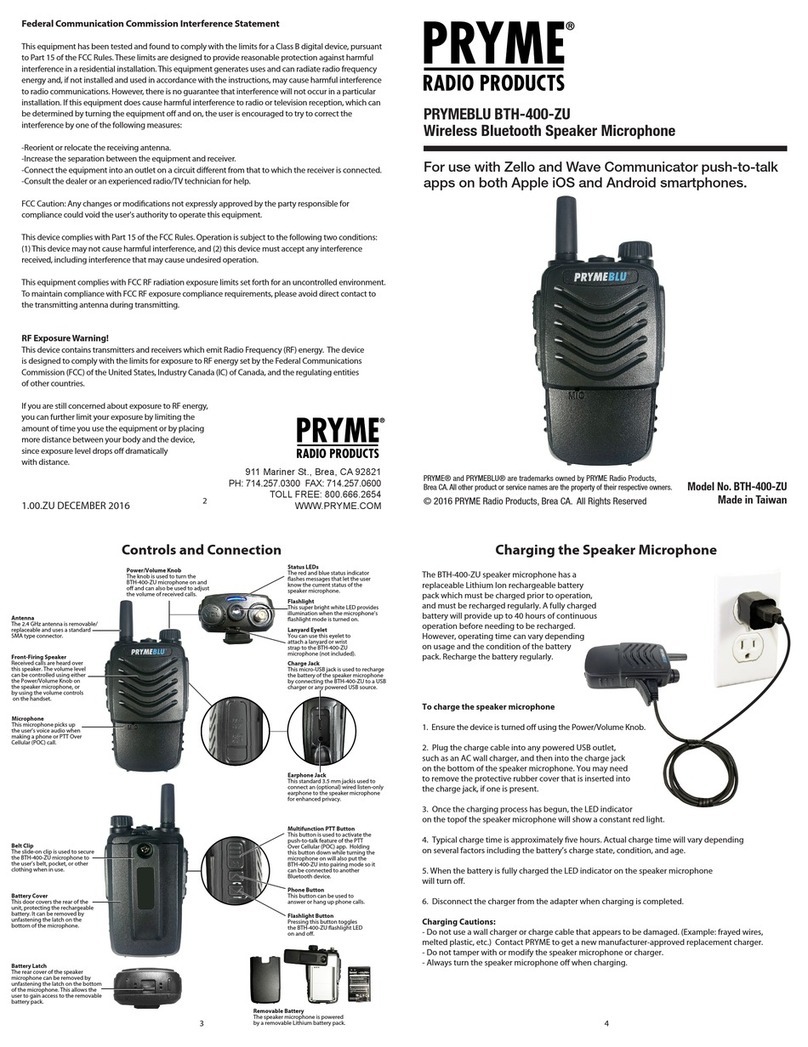
The BTH-SPM100-ZD speaker microphone is designed to work with smartphones running the Android
operating system. Prior to normal operation, the phone and speaker microphone must be paired together
using the following process:
1. Activate the pairing mode on the speaker microphone by holding down the multifunction button until
the status LED ashes BLUE-RED-BLUE-RED continuously in sequence.
2. On your phone, go to Settings > Bluetooth. Move the Bluetooth slider to turn the phone's Bluetooth
radio on.
3. Select “Search for Devices” from the phone’s Bluetooth menu. The phone will scan for nearby Bluetooth
devices and a list showing the names of nearby Bluetooth devices will be shown on the screen.
4. Choose “BTH-SPM100-ZD” from the list.
5. Keep the phone and speaker mic near each other and wait a few seconds. The devices will pair to each other.
Reconnecting a Previously Paired Speaker Microphone and Phone
Once the speaker microphone and phone have been successfully paired together, both devices will
remember that connection. They will reestablish their link whenever the speaker microphone and phone
are both powered on and in within range of each other, as long as the Bluetooth radio is enabled in the
phone. Re-establishing this connection can take 10-60 seconds.
In the event that the phone and speaker microphone do not automatically reestablish their link, simply
press the multifunction button on the BTH-SPM100-ZD to restore the connection.
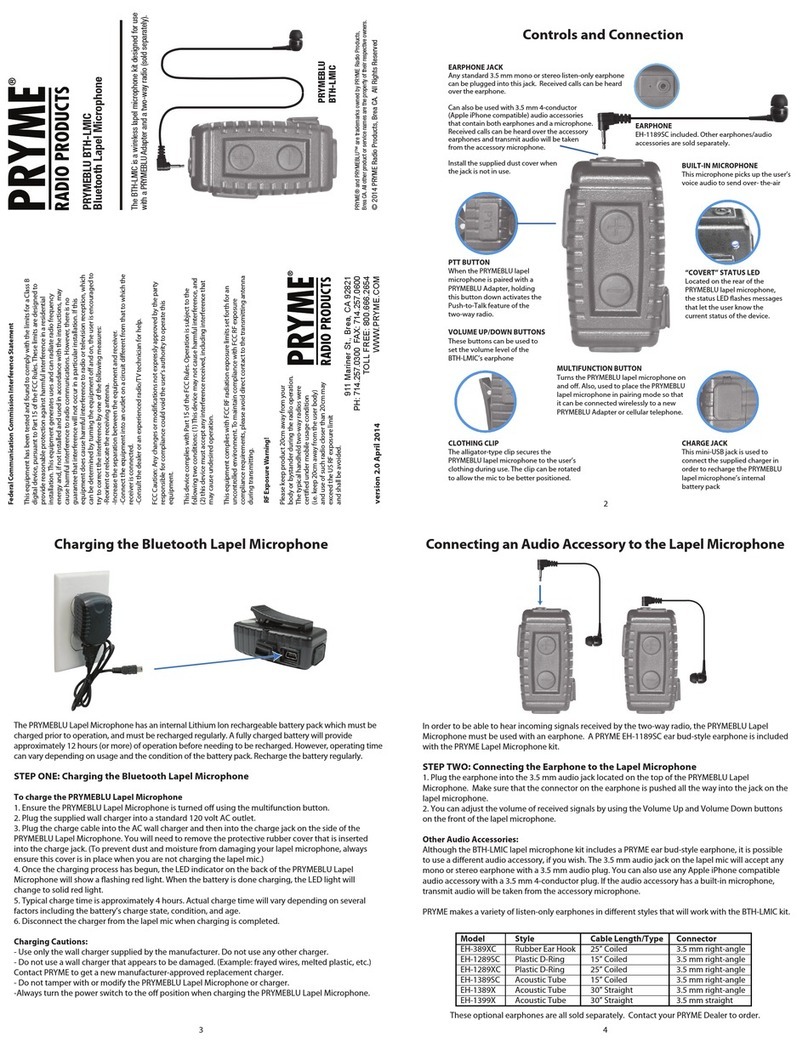
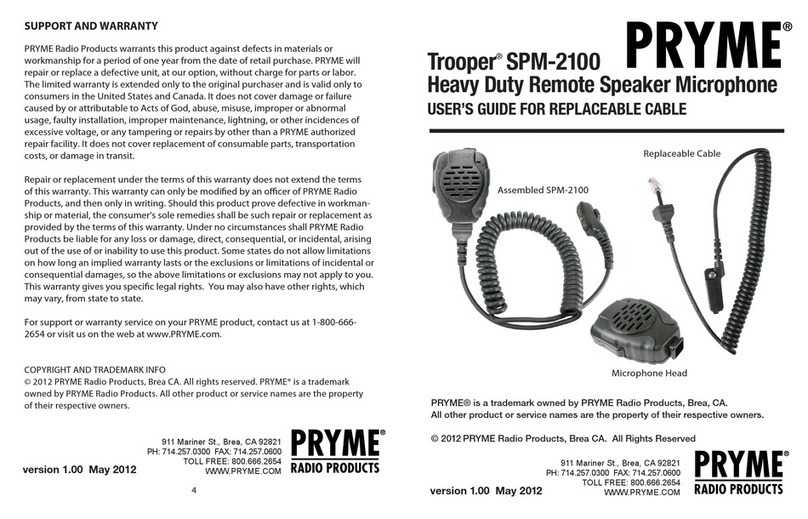
To charge the speaker microphone
1. Ensure the device is turned o using the multifunction button.
2. Plug the charge cable into any powered USB outlet, such as the included AC wall charger, and then
into the charge jack on the bottom of the speaker microphone. You will need to remove the protective
rubber cover that is inserted into the charge jack. (To prevent dust and moisture from damaging your
speaker microphone, always ensure this cover is in place when you are not charging.)
3. Once the charging process has begun, the LED indicator on the bottom of the speaker microphone
will show a constant red light.
4. Typical charge time is approximately three hours. Actual charge time will vary depending on several
factors including the battery’s charge state, condition, and age.
5. Disconnect the charger from the adapter when charging is completed.
Charging Cautions:
- Do not use a wall charger or charge cable that appears to be damaged. (Example: frayed wires,
melted plastic, etc.) Contact PRYME to get a new manufacturer-approved replacement charger.
- Do not tamper with or modify the speaker microphone or charger.
- Always turn the speaker microphone o when charging.
The BTH-SPM100-ZD speaker microphone has an internal Lithium Ion rechargeable battery pack which
must be charged prior to operation, and must be recharged regularly. A fully charged battery will
provide approximately 5 hours (or more) of continuous operation before needing to be recharged.
However, operating time can vary depending on usage and the condition of the battery pack.
Recharge the battery regularly.
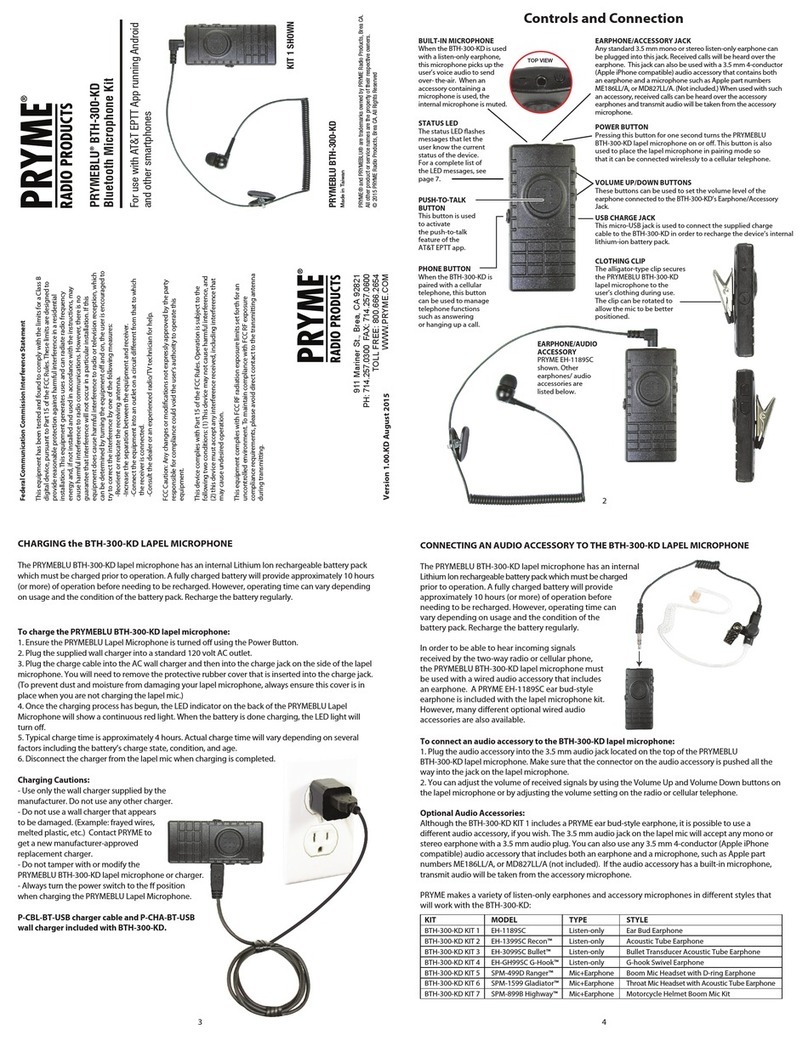
Model No.: BTH-SPM100-ZD
Made in Taiwan
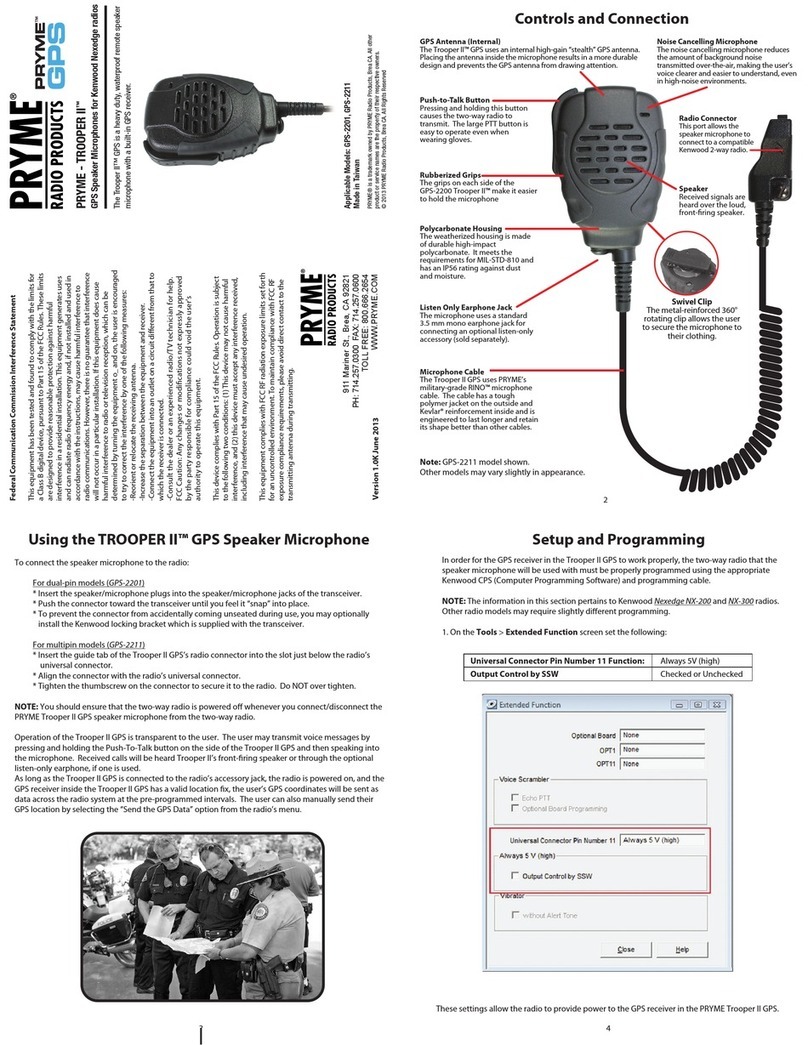
Front Firing Speaker
Received calls are heard over this speaker.
The volume level is controlled using the
volume controls on the phone.
Status LED
The LED ashes messages that
let the user know the current
status of the speaker microphone.
Clothing Clip
The alligator-type clip secures
the speaker ,icrophone
to the user’s clothing during use.
The clip can be rotated to allow the
microphone to be better positioned.
Multifunction Button
Holding down this button for one second
will turn the speaker microphone on and o.
This button can also be used to place the speaker
microphone into pairing mode so that it can be
connected wirelessly to a cellular phone
Microphone:
This microphone picks up
the user’s voice audio
PTT Button
This button is used to activate the
push-to-talk feature of the Zello app.
It can also be used to answer or hang
up incoming telephone calls.
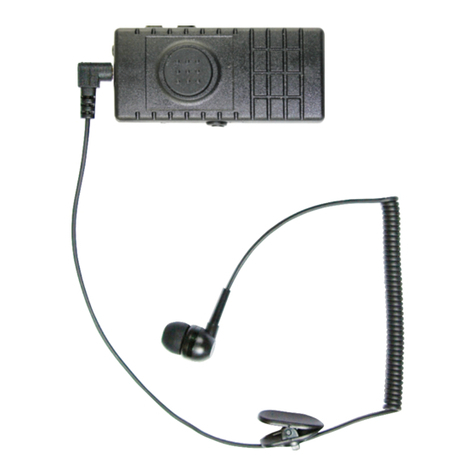
Earphone / Charge Jack
This jack is used to connect the
supplied charge cable to the
speaker microphone. It can also
be used to connect a wired listen-only
earphone for enhanced privacy.