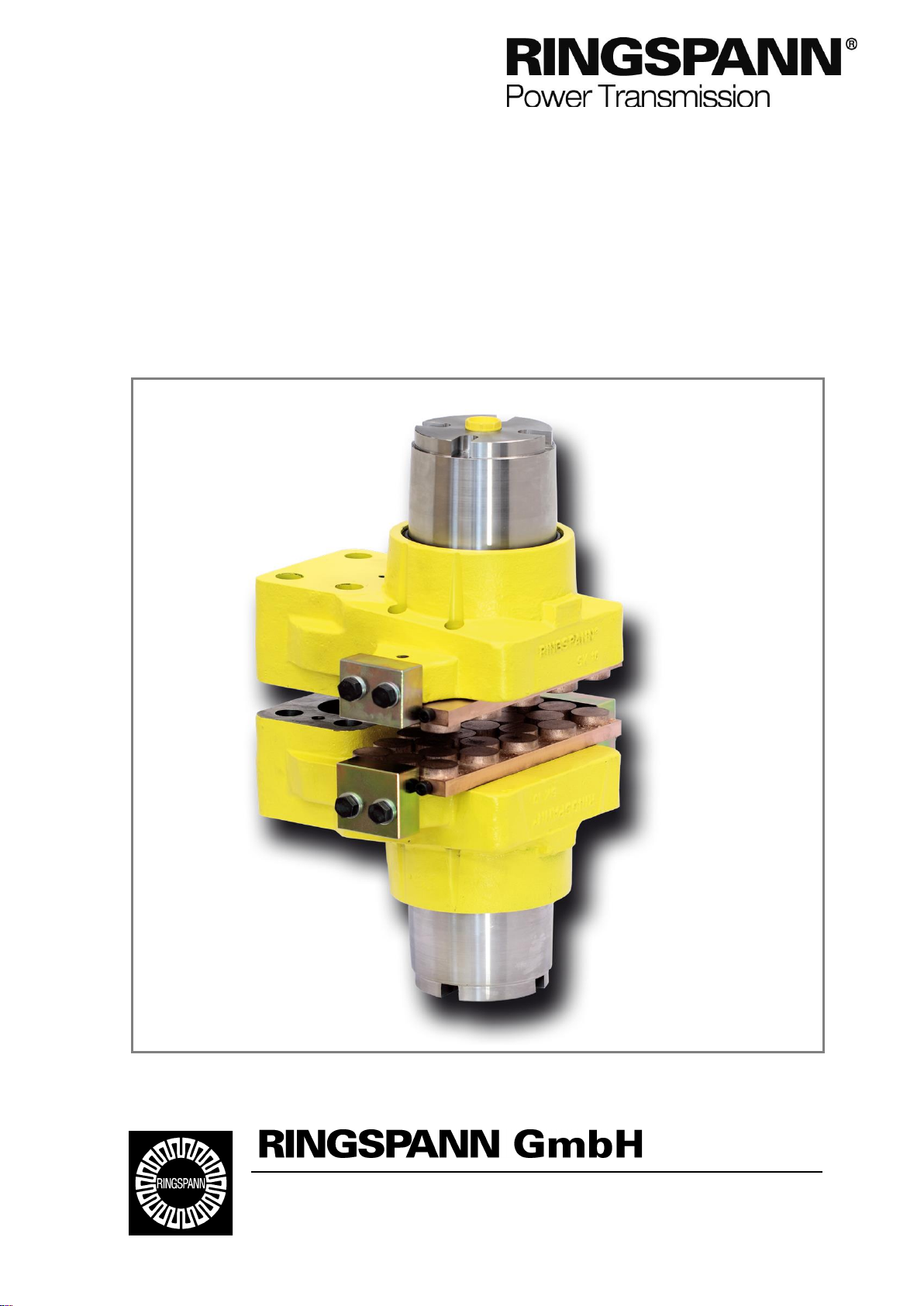
Installation and Operating Instructions
for Brake Caliper HW 075 FHM
spring activated –hydraulic released
8. Installation the RINGSPANN brake
General instructions for assembly and installation
Before installing the brake, the brake disc must be cleaned with alcohol (e.g. spirit (ethanol) or
isopropyl alcohol) or with water-based tenside solutions (soapy water or the like.
If cleaning the brake disc with a diluent, acetone or brake cleaning agent, it must be ensured that
these agents and no residues of these agents come into direct contact with the friction pads. This
must be ensured for pure holding brakes in particular, since no dynamic braking takes place that
would remove any diluent residues from the brake disc.
Caution!
Residues from oil and anti-rust agent considerably reduce the coefficient of
friction and therefore also the braking and holding torque!
Assembly and installation
Caution!
The brake caliper must not be exposed to hydraulic pressure during assembly/
installation. If hydraulic pressure escapes during assembly, the brake can
suddenly close!
The standard brake calliper is fastened to the machine part with 4 srews M24-10.9 tightening
torque 1017 Nm. Tightening torque calculated with μG = 0.12 as the average coefficient of
friction in the thread and μK = 0.12 as the coefficient of friction in the head support according to
VDI 2230 Page 1 of Feb. 2003.
(The screws are not included in the delivery).
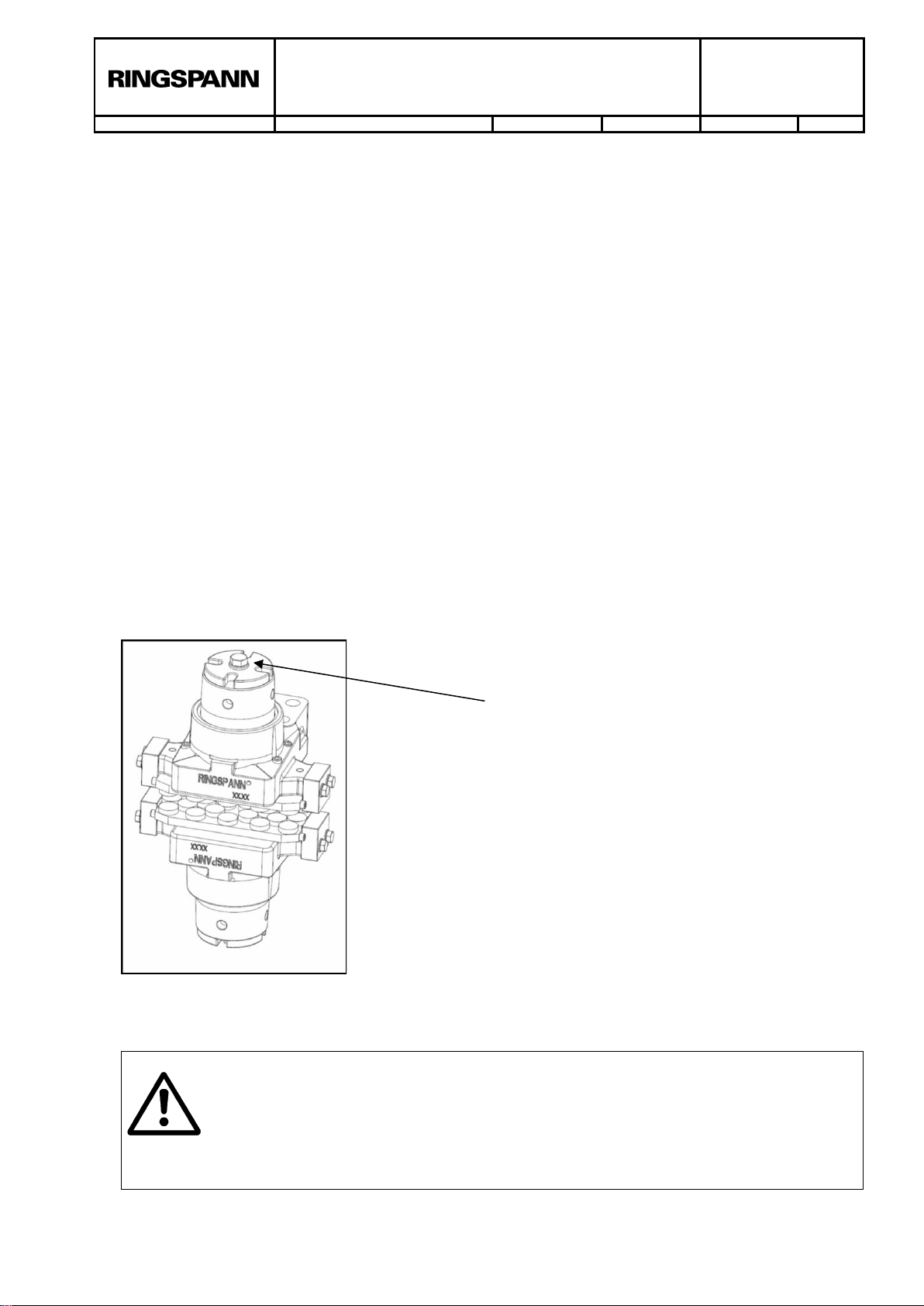
The thickness of the customer’s connection plate between the two halves of the brake caliper
must correspond exactly to the thickness of the brake disc + 3 mm. This provides for a distance
of 1.5 mm between the brake disc and the brake pad on each side.
In order to ensure sufficient space for brake pad changes, a gap of at least 260 mm should be left
on one side, so that the brake pads can be removed and installed easily.
Before assembly it is to be checked whether the the customer connection part is even and the
concentricity between the brake disc and mounting surface is within a tolerance of 0.3 mm.
Examine the axial movement of the brake disc. The axial movement must not be greater than ±
0.3 mm.
The maximum permissible axial run-out of the brake disc is 0.1 mm; a greater axial run-out can
lead to the brake unit rattling and shaking.