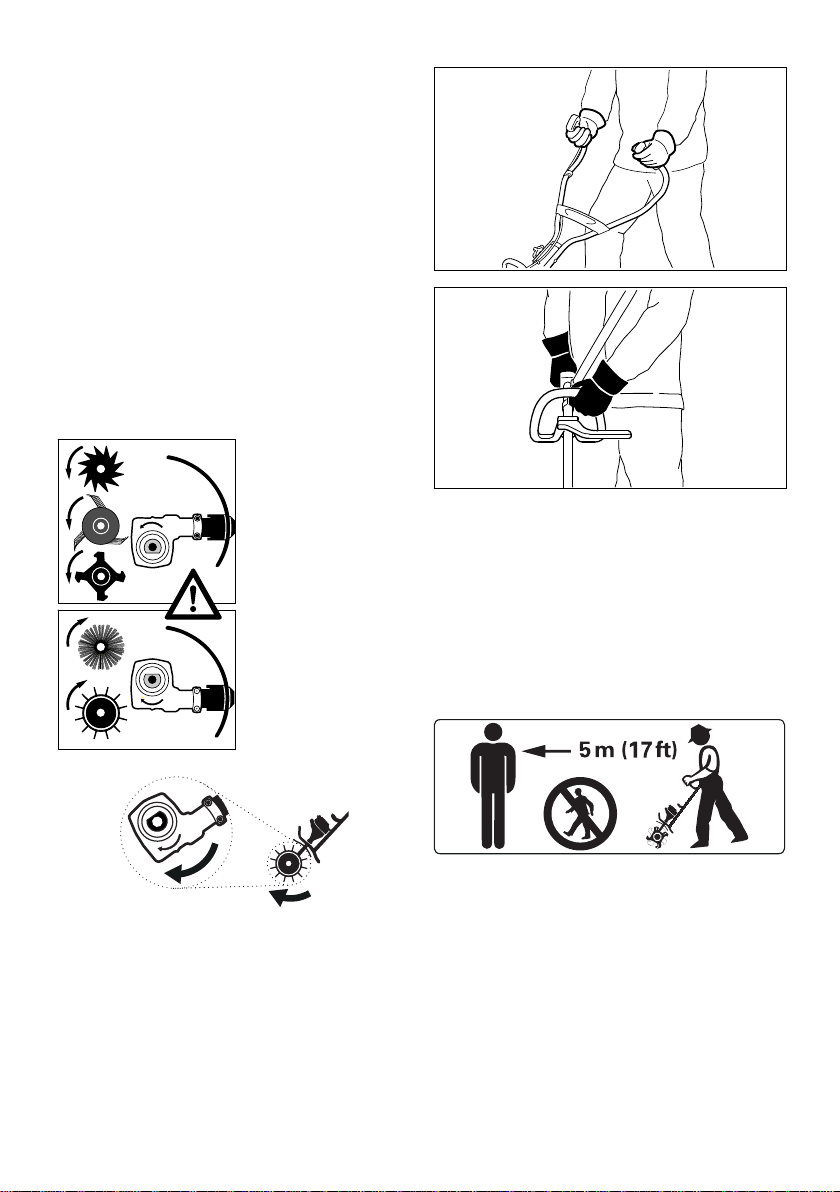
To reduce the risk of injury from thrown objects
or contact with the attachment, never operate the
unit without a properly mounted deflector
designed specifically for the unit and the attach‐
ment.
Always stand behind the deflector or to one side
of the machine during operation – never in front
of the attachment.
Electrostatic charges may build up when working
on synthetic surfaces – risk of electric shock and
accidents!
Dust, fumes and smoke produced
while working may be hazardous to
health! If dust levels are high, wear a
suitable respirator.
To reduce the risk of a dust explo‐
sion, spray very dusty surfaces with
water before sweeping.
Take special care in slippery conditions – damp,
snow, ice, on slopes or uneven ground!
To reduce the risk of accidents or injury, remove
all obstacles and objects from the work area.
Check the work site – rocks, metal
objects etc. may be caught up and
ejected – risk of injury!
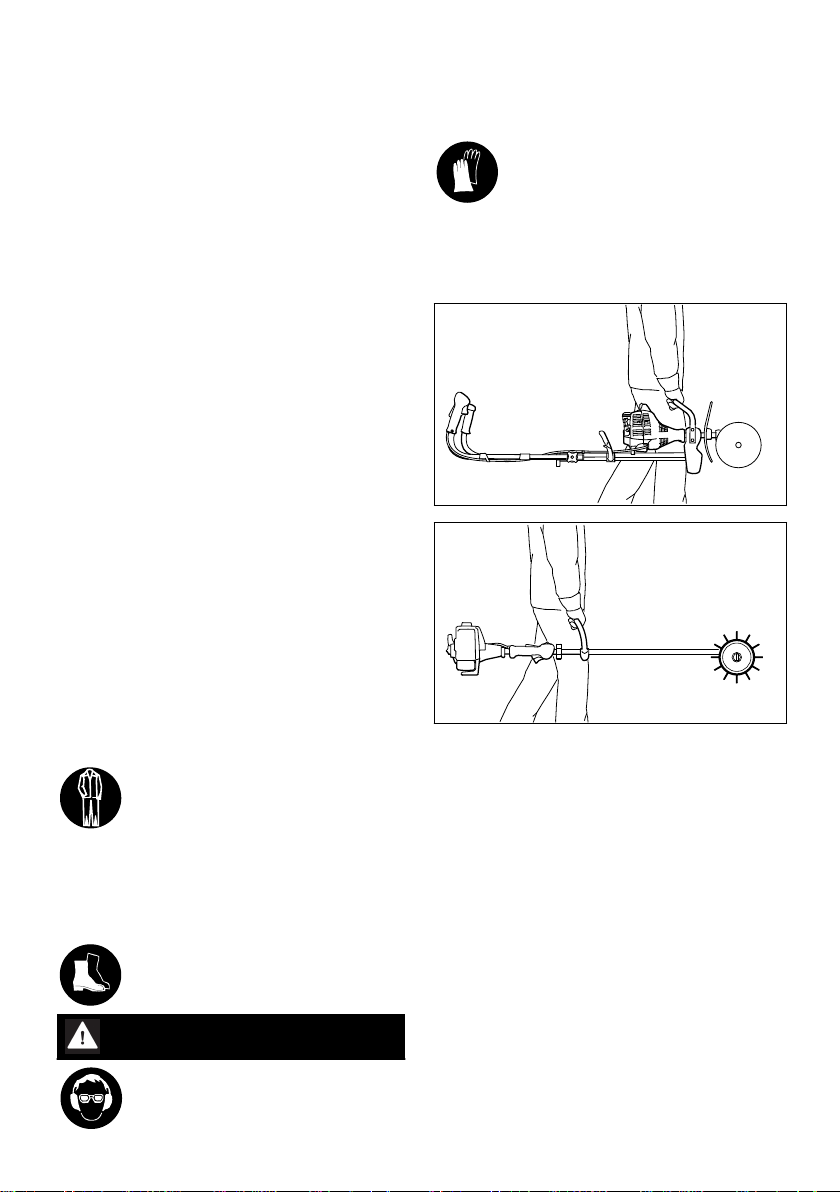
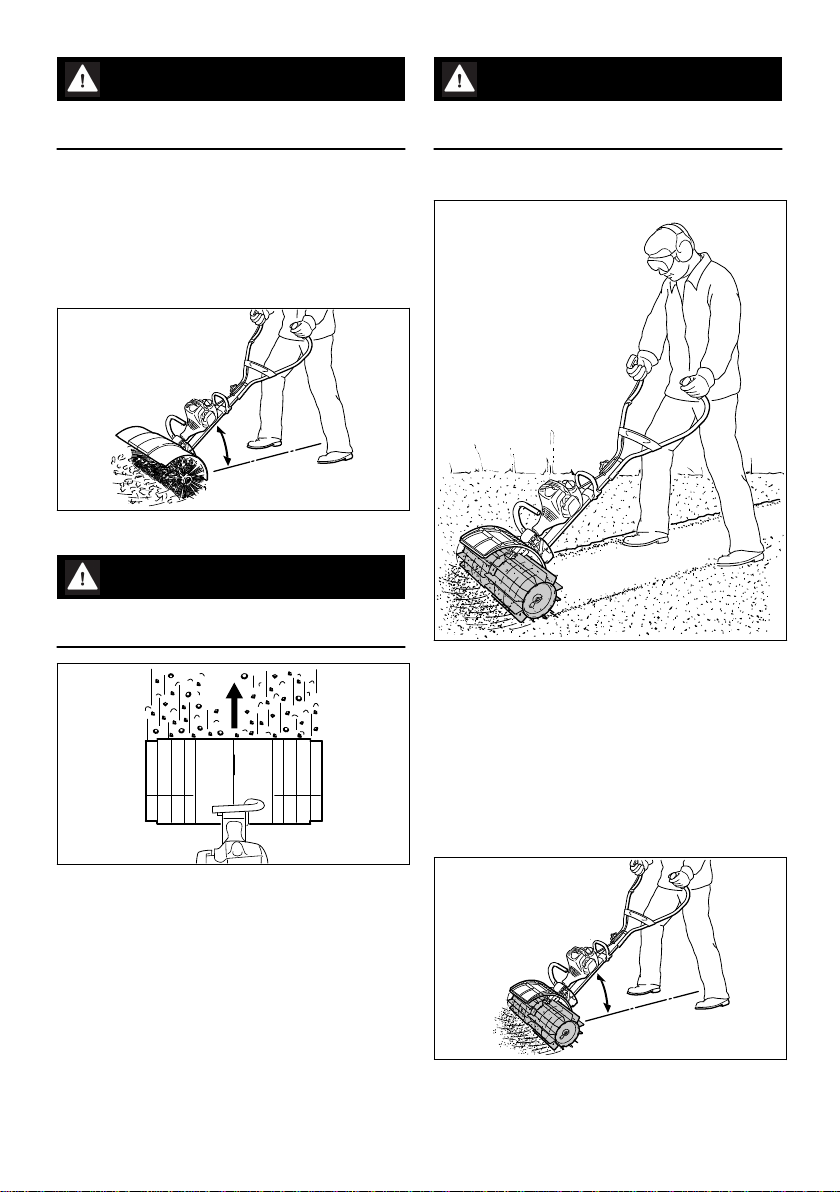
Operate your power tool at normal walking pace
only.
Be extremely cautious when pulling the power
tool towards you because of the risk of injury
from contact with the rotating attachment.
Make sure you always have a firm and secure
footing.
Be extremely cautious when changing direction
with the power tool – especially on slopes.
On slopes, always work parallel to the gradient to
reduce the risk of injury from slipping or contact
with the attachment.
Never work on steep slopes because of the risk
of injury through loss of control of the power tool.
Special care must be taken when working in
overgrown terrain.
When clearing leaves, take care not to harm
small animals.
Be particularly alert and cautious when wearing
ear protection because your ability to hear warn‐
ings (shouts, alarms, etc.) is impaired.
Take breaks when you start getting tired or feel‐
ing fatigue – risk of accidents!
Work calmly and carefully – in daylight conditions
and only when visibility is good. Proceed with
caution, do not put others in danger.
If your power tool is subjected to unusually high
loads for which it was not designed (e.g. heavy
impact or a fall), always check that it is in good
condition before continuing work – see also
"Before Starting". Make sure the safety devices
are working properly. Never use a power tool
that is no longer safe to operate. In case of
doubt, contact a dealer.
Do not touch the attachment while the
engine is running. If the attachment
becomes jammed by an obstruction,
switch off the engine immediately
before attempting to remove the
obstruction – otherwise, risk of injury!
Opening the throttle while the attachment is
blocked increases the load and reduces engine
speed. The clutch then slips continuously and
this causes overheating and damage to impor‐
tant components (e.g. clutch, polymer housing
components) – and this can increase the risk of
injury from the attachment moving while the
engine is idling.
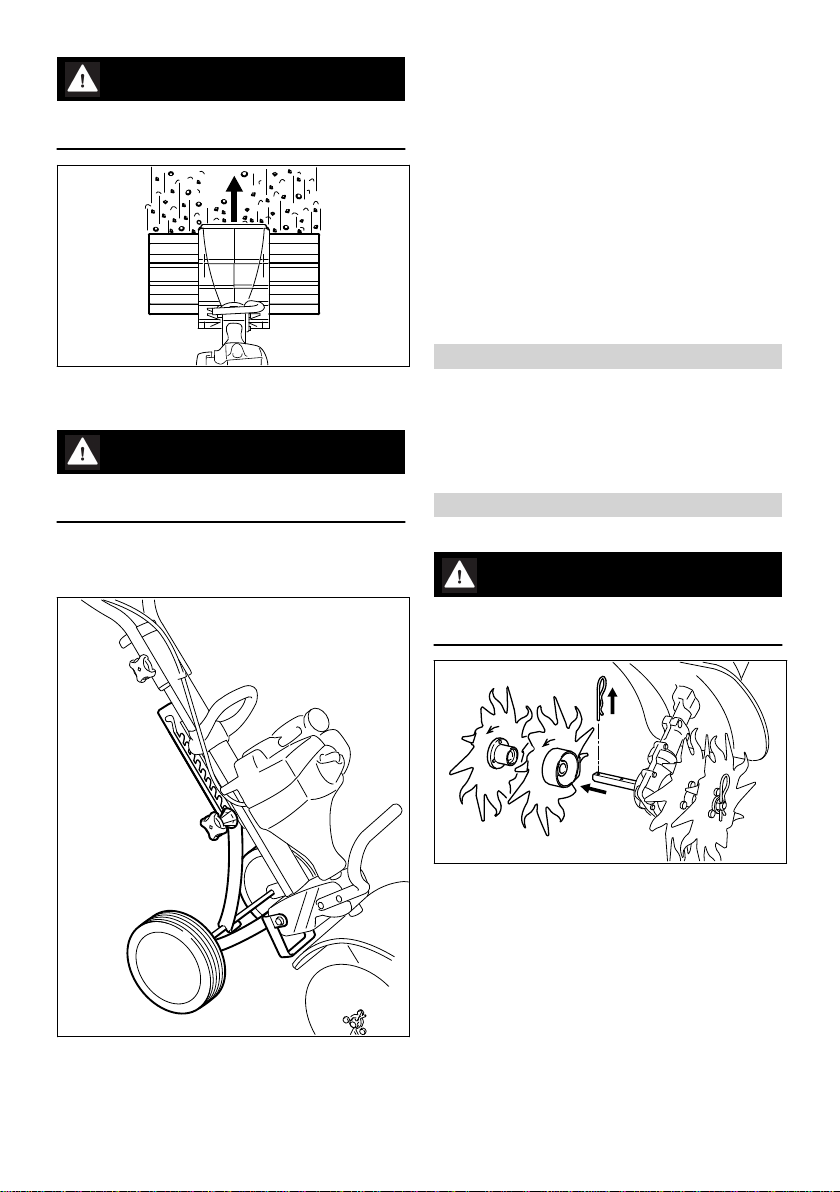
Check the sweeping attachments at regular short
intervals during operation or immediately if there
is a sudden change in behavior:
–Shut off the engine, hold the machine
securely.
–Check condition and proper mounting.
–Replace damaged sweeping attachments
immediately.
Clean the attachment and deflector at regular
intervals during operation.
–Shut off the engine
–Use gloves
–Remove debris from between the sweeping
attachments and from the area around the
gearbox and deflector.
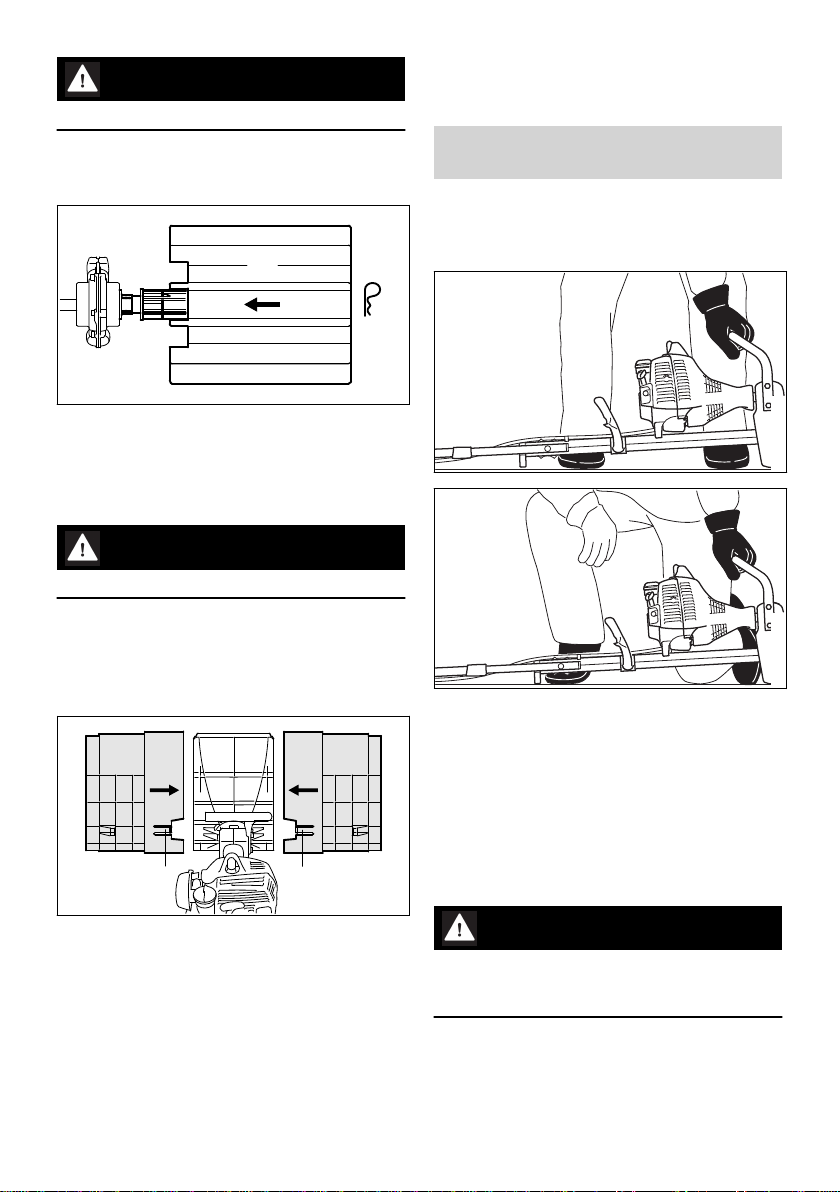
To reduce the risk of injury, shut off the engine
before changing attachments.
3.6 After Finishing Work
After finishing work or before leaving the power
tool unattended: Shut off the engine.
3.7 Maintenance and Repairs
Service the machine regularly. Do not attempt
any maintenance or repair work not described in
the MultiTool and MultiEngine instruction man‐
uals. Have all other work performed by a servic‐
ing dealer.
3 Safety Precautions and Working Techniques English
0458-486-0121-B 5