manuals.online logo
Brands
  1. Home
  2. •
  3. Brands
  4. •
  5. TESTO
  6. •
  7. Measuring Instrument
  8. •
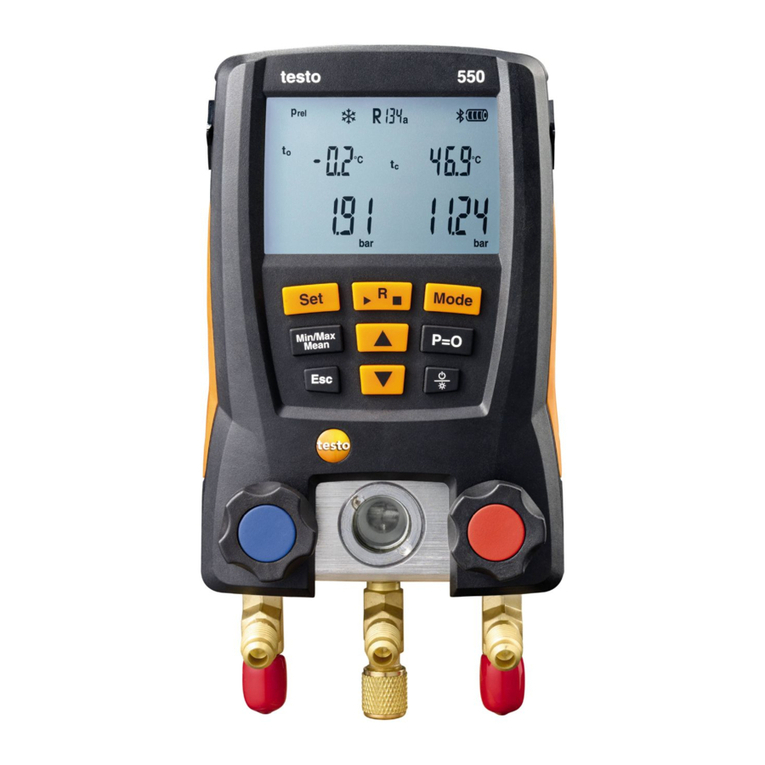
  9. TESTO 550 User manual

TESTO 550 User manual

Other manuals for 550

3

Other TESTO Measuring Instrument manuals

TESTO 110 User manual

TESTO

TESTO 110 User manual

TESTO 350 Maritime V2 User manual

TESTO

TESTO 350 Maritime V2 User manual

TESTO 325-3 User manual

TESTO

TESTO 325-3 User manual

TESTO 545 User manual

TESTO

TESTO 545 User manual

TESTO 327 User manual

TESTO

TESTO 327 User manual

TESTO 174T User manual

TESTO

TESTO 174T User manual

TESTO 350 Maritime V2 How to use

TESTO

TESTO 350 Maritime V2 How to use

TESTO 300 XXL User manual

TESTO

TESTO 300 XXL User manual

TESTO 206 User manual

TESTO

TESTO 206 User manual

TESTO 300 M-I User manual

TESTO

TESTO 300 M-I User manual

TESTO 330 User manual

TESTO

TESTO 330 User manual

TESTO 410-2 User manual

TESTO

TESTO 410-2 User manual

TESTO 315-4 User manual

TESTO

TESTO 315-4 User manual

TESTO 816-1 User manual

TESTO

TESTO 816-1 User manual

TESTO 606-2 User manual

TESTO

TESTO 606-2 User manual

TESTO 330 User manual

TESTO

TESTO 330 User manual

TESTO 350 Maritime V2 User manual

TESTO

TESTO 350 Maritime V2 User manual

TESTO 511 User manual

TESTO

TESTO 511 User manual

TESTO 325-I User manual

TESTO

TESTO 325-I User manual

TESTO 606-1 User manual

TESTO

TESTO 606-1 User manual

TESTO 6446 User manual

TESTO

TESTO 6446 User manual

TESTO 405-V1 User manual

TESTO

TESTO 405-V1 User manual

TESTO 625 User manual

TESTO

TESTO 625 User manual

TESTO 324 User manual

TESTO

TESTO 324 User manual

Popular Measuring Instrument manuals by other brands

Suaoki D40 user manual

Suaoki

Suaoki D40 user manual

Elster BK-G1.6 operating instructions

Elster

Elster BK-G1.6 operating instructions

Endress+Hauser Deltabar FMD71 technical information

Endress+Hauser

Endress+Hauser Deltabar FMD71 technical information

Duratool D03128 manual

Duratool

Duratool D03128 manual

Vega VEGAPULS 65 Quick setup guide

Vega

Vega VEGAPULS 65 Quick setup guide

Tonghui TH2618B Operation manual

Tonghui

Tonghui TH2618B Operation manual

Tenmars TM-801 user manual

Tenmars

Tenmars TM-801 user manual

MSR 145 user manual

MSR

MSR 145 user manual

TPS WP-82 manual

TPS

TPS WP-82 manual

PCB Piezotronics 003C30 Installation and operating manual

PCB Piezotronics

PCB Piezotronics 003C30 Installation and operating manual

Tenma 72-10465 manual

Tenma

Tenma 72-10465 manual

Endress+Hauser Proline Promag 50 Brief operating instructions

Endress+Hauser

Endress+Hauser Proline Promag 50 Brief operating instructions

Siemens SITRANS F Coriolis FCT030 Function manual

Siemens

Siemens SITRANS F Coriolis FCT030 Function manual

KLINGER CMF V Series instruction manual

KLINGER

KLINGER CMF V Series instruction manual

Keysight M8290A Getting started guide

Keysight

Keysight M8290A Getting started guide

Acterna MS1400 Operation manual

Acterna

Acterna MS1400 Operation manual

R&S ZPH manual

R&S

R&S ZPH manual

Datacolor ColorReader DC10-2 user guide

Datacolor

Datacolor ColorReader DC10-2 user guide

manuals.online logo
manuals.online logoBrands
  • About & Mission
  • Contact us
  • Privacy Policy
  • Terms and Conditions

Copyright 2025 Manuals.Online. All Rights Reserved.

testo 550 Digital Manifold
2012 Quick Start Guide
Temperature port on each side
2 line, back lit LCD display
Control keys
Pressure zeroing
Power On/Off
Arrow keys
Backlight
3 x 1/4” SAE connections
Show Min/Max/Mean values
Valve knobs
Vacuum Indication
Testo 550 is capable of gross vacuum indication. The
measurement is performed on the low-pressure side.
1. Press the [Mode] button twice to get to the
vacuum indication menu (Pic. 14).
2. Start the evacuation.
3. The 550 will indicate the vacuum on the
low-pressure side.
Remember, vacuum indication is performed in inHg.
The testo 550 does not have the resolution to read mi-
crons and a separate vacuum gauge is recommended
for vacuum measurement.
1 inHg = 25,400 microns
Warranty
Troubleshoot,
evacuate, charge
Cool, heat pump or
auto mode
Conduct leak test
Testo INC., 40 White Lake Road, Sparta, NJ 07871
(800) 227-0729, email: [email protected],
www.testoUSA.com/refrigeration QSG550_June2012
The testo 550 has a two year warranty
Pic. 14
Changing the batteries
Testo 550 uses 4x 1.5 V, AA batteries.To
replace the batteries please follow these few
steps below:
1. Fold out the hook (Pic. 1).
2. Grab the clip and squeeze it together
and remove the cap (Pic. 2).
3. Insert/Change the batteries.
Observe the polarity.
Power ON / OFF
1. Connect probes to the testo 550 prior
to powering it up.
2. Press the power button [ ] to turn testo
550 on.
3. All display segments are lit (2 s.)
4. Measurement view is displayed
5. Press the power button to turn the testo
550 off.
Set the refrigerant
1. Press the [R, Start/Stop] button so you
can choose the required refrigerant
(Pic. 3).
2. Use the arrow keys [pq] to scroll
through the choices.
3. Press the [R, Start/Stop] button to set
the chosen refrigerant.
Set the Units / Altitude / Mode
1. Press the [Set] button once to get to
temperature units menu (Pic. 4).
2. Choose the required units with the
arrow keys [pq].
3. Press the [Set] button for the second
time to be able to chose the pressure
units (Pic. 5).
4. Choose the desired units with the arrow
keys.
5. Press the [Set] button for the third time
so you select absolute or relative
pressure (Pic. 6).
6. Press the [Set] button four times, so
you can set the barometic pressure in
inHg (Pic. 7) .
7. Press the [Set] button ve times to
select the AC/R [ ], heat pump [ ], or
Auto [ ]. (Pic 8). Auto mode senses if
the Low pressure side is 15 psi higher
than the High pressure side, and will
automatically reserve the display of the
High / Low side pressures
8. Press the [Set] button six times to exit
the [Set]-menu.
Backlight
Testo 550 has a backlight to
improve viewing in dark or daylight
conditions. Press the backlight
[k] button to turn the backlight
on. Press it once again to turn the
backlight off.
Pressure zeroing
Please zero the pressure sensors before every use of the
testo 550.
1. Loosen the hose connections
2. Open the valve knobs to conrm no pressure in the
manifold
3. Press the [p=0] button
The sensors are now zeroed and ready for measurement.
Superheat / Subcooling
The testo 550 calculates superheat and subcooling in
real time.
1. Connect the temperature probes to testo 550.
2. Connect testo 550 and the probes to the air condi-
tioning, refrigeration or heat pump system.
3. Switch on testo 550.
4. You will now see the calculated
evaporation and condensation
and temperature (Ev and Co) and system pressures
at the bottom of the display, (Pic. 8).
5. Press the UP-arrow [p] once to see the tempera-
ture difference (D) (Pic. 9).
6. Press the UP-arrow [p] twice to see the real time
superheating and
subcooling (SH and SC) (Pic. 10).
7. Press the UP-arrow [p] for the third time to see the
real time measured temperature (T1 and T2) (Pic.
11).
8. Press the UP-arrow again to get to back to the
calculated evaporation and condensation tempera-
ture.You can also use the DOWN-arrow to switch
between the menus but the order will be reversed.
Leak Test
The temperature compensated leak test is used to indi-
cate leaks in an AC/R or heat pump system.
1. Plug in the temperature probe into the high side of the
instrument.
2. With the instrument off, simultaneously press the Set
and Mode while turning on the 550. This will turn off the
surface compensation to provide an accurate ambient
air temperature. Temperature surface compensation is
turned back on the next time that the 550 is turned on.
3. Zero the pressure sensors.
4. Connect testo 550 to the system.
5. Press the [Mode] button once to get to the leak test
mode (Pic. 12).
6. Now press the [R, Start/Stop] button to start the test.
7. Press arrow keys [p,q] to see the
measured temperature (Pic. 13).
8. The test duration depends on the system size.
9. Press [R, Start/Stop] again to stop the test.
10. The results will be displayed.
11. Press the [Mode] button twice to return to the normal
measurement mode.
Note: rP could be different from starting
and nal test pressure rP as the true rp is
calculated from the gas laws.
Pic. 13
Pic. 12
Pic. 11
Pic. 10
Pic. 9
Pic. 8
Pic. 7Pic. 6
Pic. 5
Pic. 4
Pic. 3
Pic. 2Pic. 1
Pic. 8