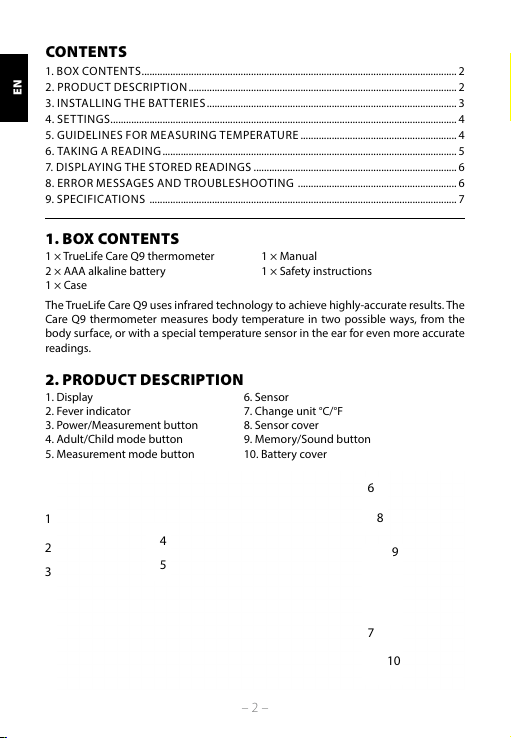
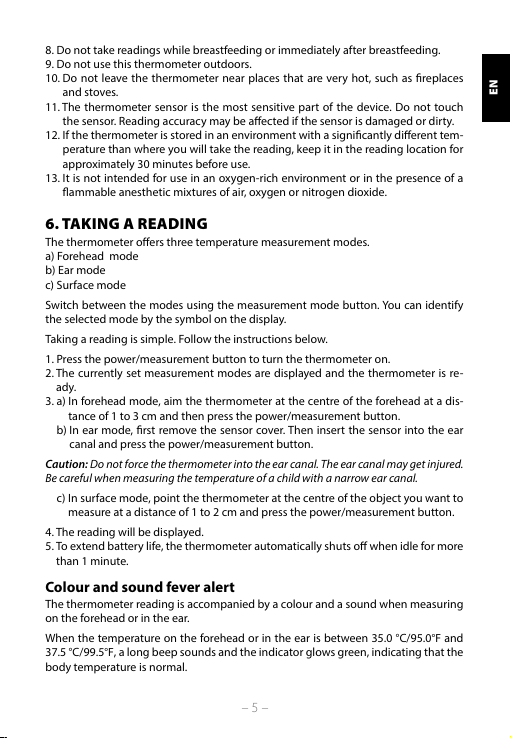
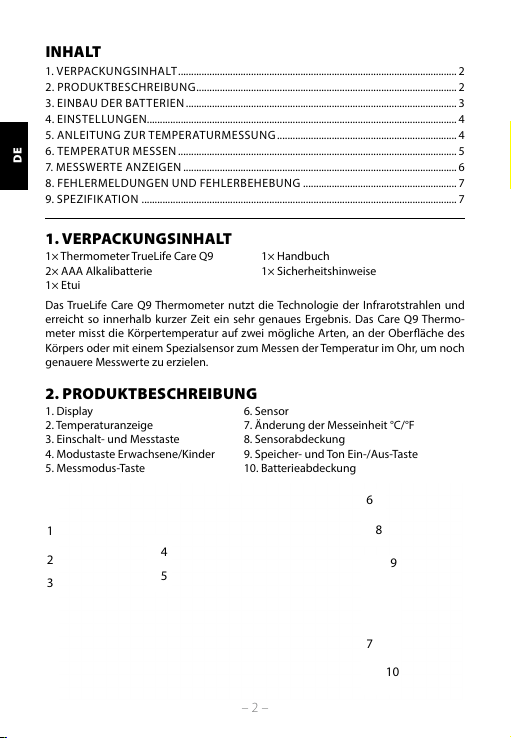
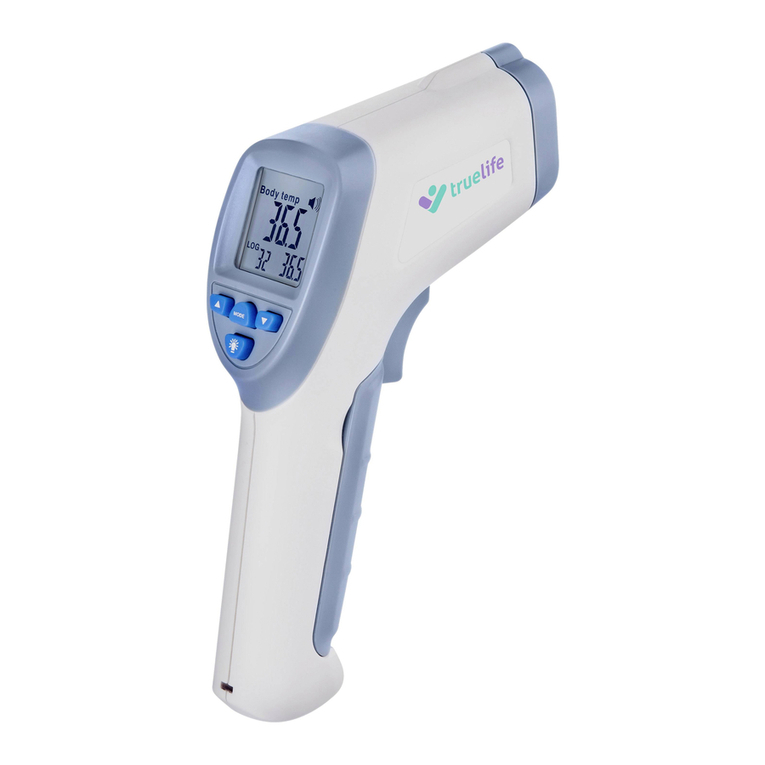
– 4 –
4. SETTINGS
Setting the temperature units
The thermometer reading can be displayed in degrees Celsius (°C) or Fahrenheit (°F).
When the thermometer is turned o, remove the battery cover and select the unit of
measurement using the switch between the batteries. Set the switch the up position
for Celsius (°C) or to the down position for Fahrenheit (°F).
Sound settings
The reading can be accompanied by an audible signal. Follow the instructions below
to turn the beep on or o.
1. Switch on the thermometer with the power/measurement button.
2. Press and hold the memory/sound button for about 2 seconds.
3. When turning on the sound, the thermometer will beep. When turning o the
sound, the mute symbol will appear on the display.
Setting adult or child mode
The thermometer can measure temperature in adult or child mode, on the forehead
or in the ear. Child mode is specially designed for children under 12 years of age.
Select the desired mode using the adult/child mode button. When the child mode is
selected, the child symbol is shown on the display.
5. GUIDELINES FOR MEASURINGTEMPERATURE
To ensure that the reading always shows your body temperature accurately, you
must take into account the following factors that may aect the measurement.
1. It is important to know the normal healthy temperature of each individual. This
is the only way to accurately diagnose a fever. To determine normal temperature,
take several temperature measurements when the individual is healthy. Measure
the temperature with a standard digital thermometer to conrm.
2. Users must be indoors for 30 minutes before taking a reading. Note: Users and the
thermometer should be in the same temperature environment for at least 10 mi-
nutes before taking a reading.
3. Users should not drink, eat or be physically active before taking a reading, inc-
luding bathing, showering, shampooing or drying their hair. Before each mea-
surement, remove any head covering, remove hair from the forehead and wait
10 minutes.
4. Oils or cosmetics on the forehead may lead to a lower reading than the actual
body temperature.
5. Keeping your hand on your forehead for any length of time will eect the reading.
6. Do not measure the temperature on scarred skin, open wounds or abrasions.
7. Do not measure the temperature on a sweaty forehead. The resulting reading may
be distorted.
HR SLO SL HU PL SK CZ DE EN
HR SLO SL HU PL SK CZ DE EN