10
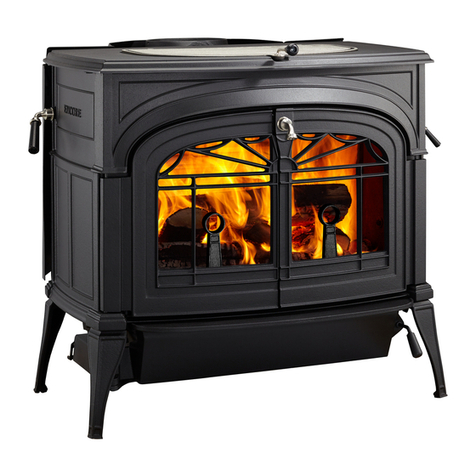
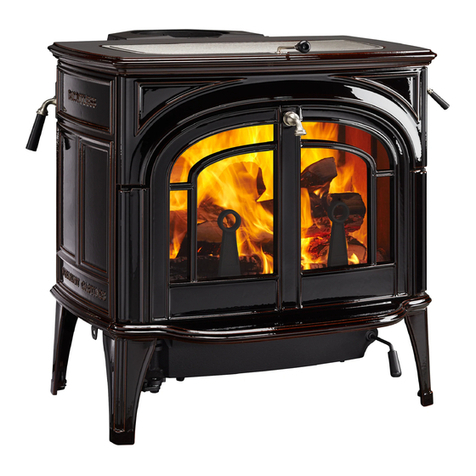
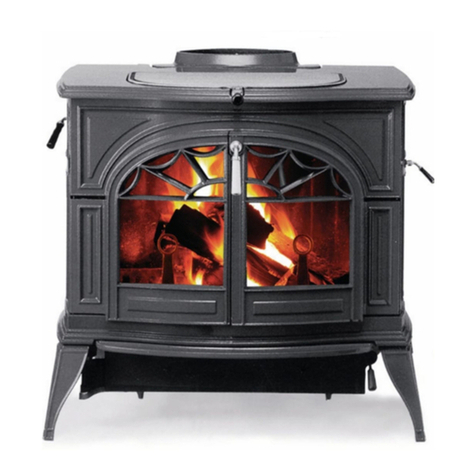
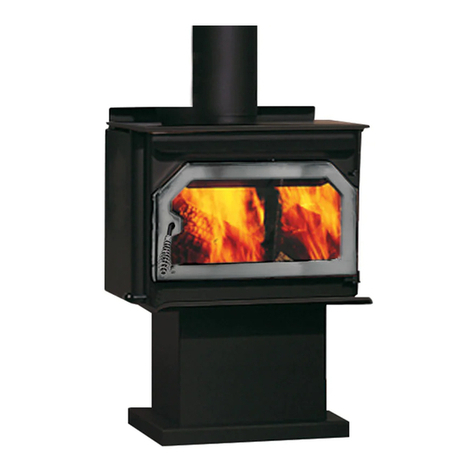
Windsor High Efficiency Wood Stove
30005128
Dry seasoned hardwood should be used. Avoid green
unseasoned wood. Green wood, besides burning
at only 60 percent of the fuel value of dry seasoned
wood, will deposit creosote on the inside of your stove
and along the inside of your chimney.
Wood that has been dried for a period of one year in
a well-ventilated and sheltered area would be consid-
ered dry seasoned wood. Hardwoods are generally
from slow growth trees (Example: Oak and r) Soft-
woods are generally from fast growth trees. (Example:
Pine and spruce).
The quick answer is most of the time. There are many
variables that may affect your success rate when start-
ing a re. Most of those variables and how to deal with
them will be learned through experience. Your ability
to start a good re will signicantly increase with time
and patience. Some of the reasons for poor stove per-
formance will be covered next.
Damp or wet wood and poor draft are the main rea-
sons for poor results in starting a re. Always use dry
seasoned wood for your re. Even wood dried for two
years will be difcult to ignite, if it has become wet.
A large quantity of thick black smoke in the rebox, is
a good indication that the draft is poor.
Your stove has been built with an air wash system that
will help keep the glass clear when the rebox has
reached a good operating temperature and has a good
draft. Cold rebox temperature and poor draft cause
sooting of the glass. Once the rebox temperature and
the draft increases, the soot will burn off.
Draft is the ability of the chimney to exhaust draw by-
products produced during the normal combustion pro-
cess.
The most common factors for poor draft are:
a. Atmospheric pressure and air supply
b. Environmental conditions
c. Cold chimney temperature
d. Poor chimney installation and maintenance
Atmospheric pressure affecting the draft from a
chimney can be either outside the home, inside the
home or both. Outside the home, a high-pressure
day (clear and cool) generally creates a better draft
in the chimney than a low-pressure day (overcast
and damp). Inside the home, normal household
appliances, such as clothes dryers and forced air
furnaces compete for air resulting in inadequate
amounts of air available to fuel a re and create a
condition known as negative pressure. Under ex-
treme conditions of negative pressure the combus-
tion by-products can be drawn from the chimney
and into the house. This condition is commonly re-
ferred to as down drafting. There are several factors
that impact the amount of air available in the home.
Increased amounts of insulation vinyl windows, ex-
tra caulking in various places and door seals can all
keep heat in but may also make a home too airtight.
If you are in doubt about whether or not there is suf-
cient air in your home for your stove, curtail using
those appliances known to consume the air where
possible, or open a window or door to allow air to
enter the home.
High trees, low lying house location such as in a
valley, tall buildings or structures surrounding your
house and windy conditions can cause poor draft or
down drafting.
Avoid cold chimney temperatures by burning a hot
re for the rst fteen to forty minutes, being careful
not to over re. If any part of the chimney or parts of
the stove start to glow, you are over ring the stove.
Where possible, install a temperature gauge on the
chimney so temperature drops can be seen.
Avoid using too many elbows or long horizontal
runs. If in doubt, contact a chimney expert and/or
chimney manufacturer for help. Clean chimney, rain
caps and especially spark arrester regularly, to pre-
vent creosote build up, which will signicantly re-
duce chimney draw and may cause a chimney re.
When shutting down the stove, fully open the air con-
trol. This allows the chimney temperatures to remain
as high as possible for as long as possible. Cold chim-
ney temperatures create creosote.
This instruction is intended as an aid and does
not supersede any local, provincial or state requirements.
Check with ofcials or authorities having jurisdiction in
your area.