5
Aspen®Woodburning Stove
30000369
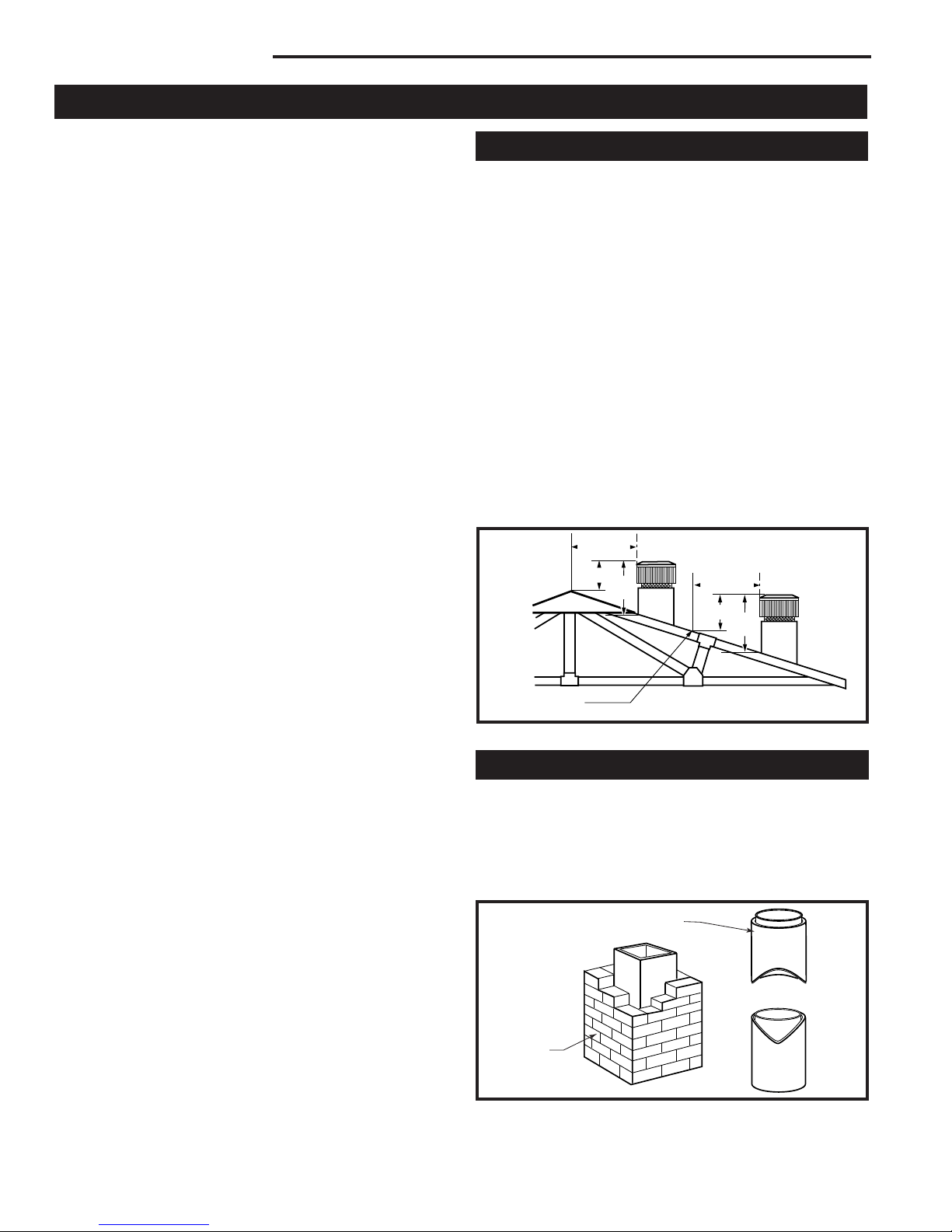
• Unused openings in an existing masonry chimney must
be sealed with masonry to the thickness of the chimney
wall, and the chimney liner should be repaired. Open-
ings sealed with pie plates or wallpaper are a hazard
and should be sealed with mortar or refractory cement.
In the event of a chimney re, ames and smoke may
be forced out of these unused thimbles.
• The chimney should be thoroughly cleaned before
use.
• A newly-built masonry chimney must conform to the
standards of local building code, or, in the absence of
a local code, to a recognized national code. Masonry
chimneys must be lined, either with code-approved
masonry or precast refractory tiles, stainless steel pipe,
or a code-approved, “poured-in-place” liner. The chim-
ney clean-out door must seal tightly to ensure a good
draft.
A prefabricated metal chimney must be one that is tested
and listed for use with solid-fuel burning appliances to the
High-Temperature (H.T.) Chimney Standard UL-103-1985
(2100°F.) for the United States, and High Temperature
(650°C) Standard ULC S-629 for Canada.
This stove is approved for venting into a masonry chimney
with a nominal ue size of 8” x 8” (203 x 203 mm), and into
a round ue size of 8” (203 mm) or 6” (152 mm).
It may be vented into larger chimneys as well. However,
chimneys with liners larger than 8” x 12” (203 x 305 mm)
may experience rapid cooling of smoke and reduction in
draft, especially if they are located outside the home. Such
large chimneys may need to be insulated or have the ue
relined for proper stove performance.
Ask your dealer about components available for connecting
the stove to a steel chimney liner.
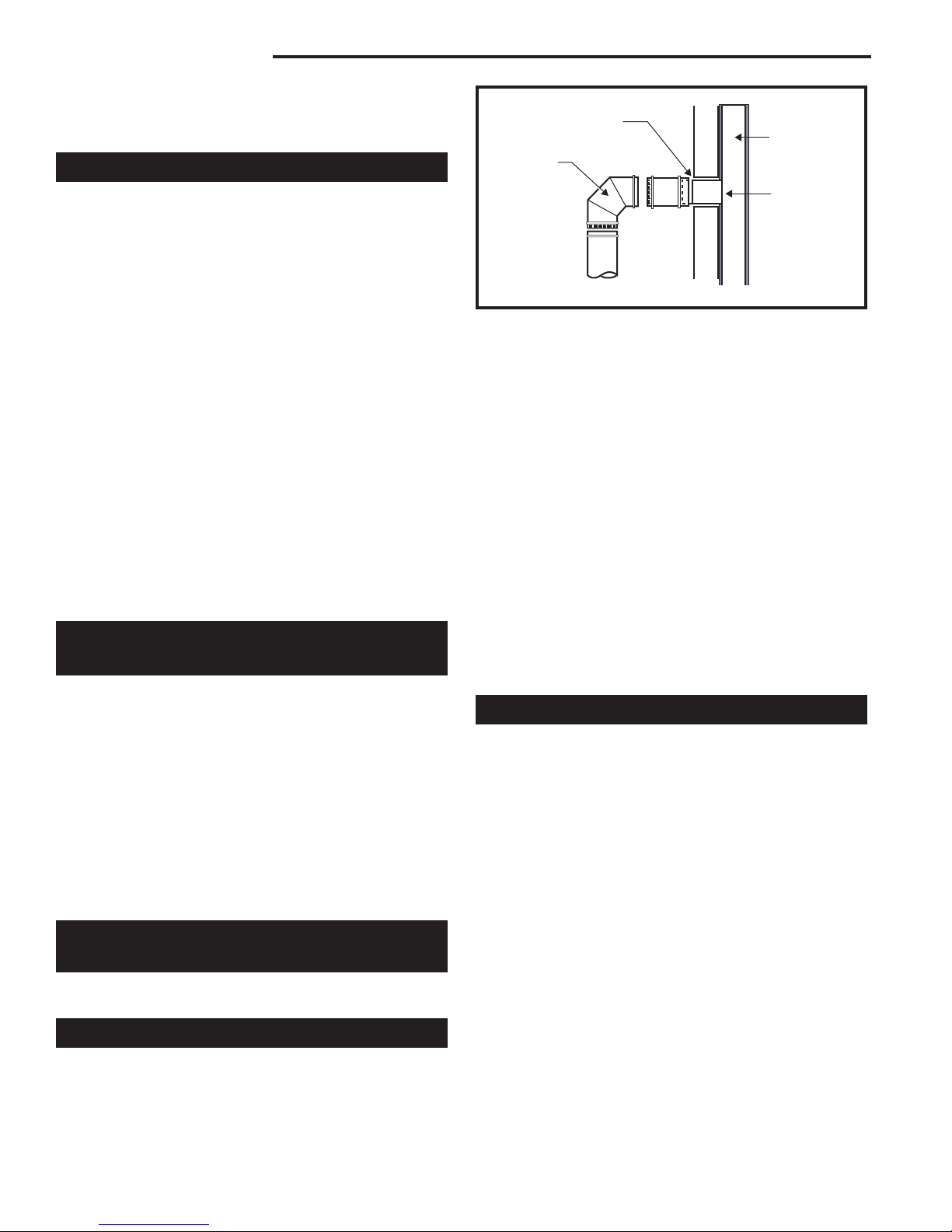
A chimney connector is the double-wall or single-wall pipe
that connects the stove to the chimney. The chimney it-
self is a masonry or prefabricated structure that encloses
the ue. Chimney connectors are used only to make the
connection from the stove to the chimney. They are for
interior use only.
Double-wall connectors must be tested and listed for use
with solid-fuel burning appliances. Single-wall connectors
should be made of 24 gauge or heavier steel, and should be
6” (152 mm) in diameter. Do not use galvanized chimney
connector; it cannot withstand the high temperatures that
can be reached by smoke and exhaust gases, and may
release toxic fumes under high heat.
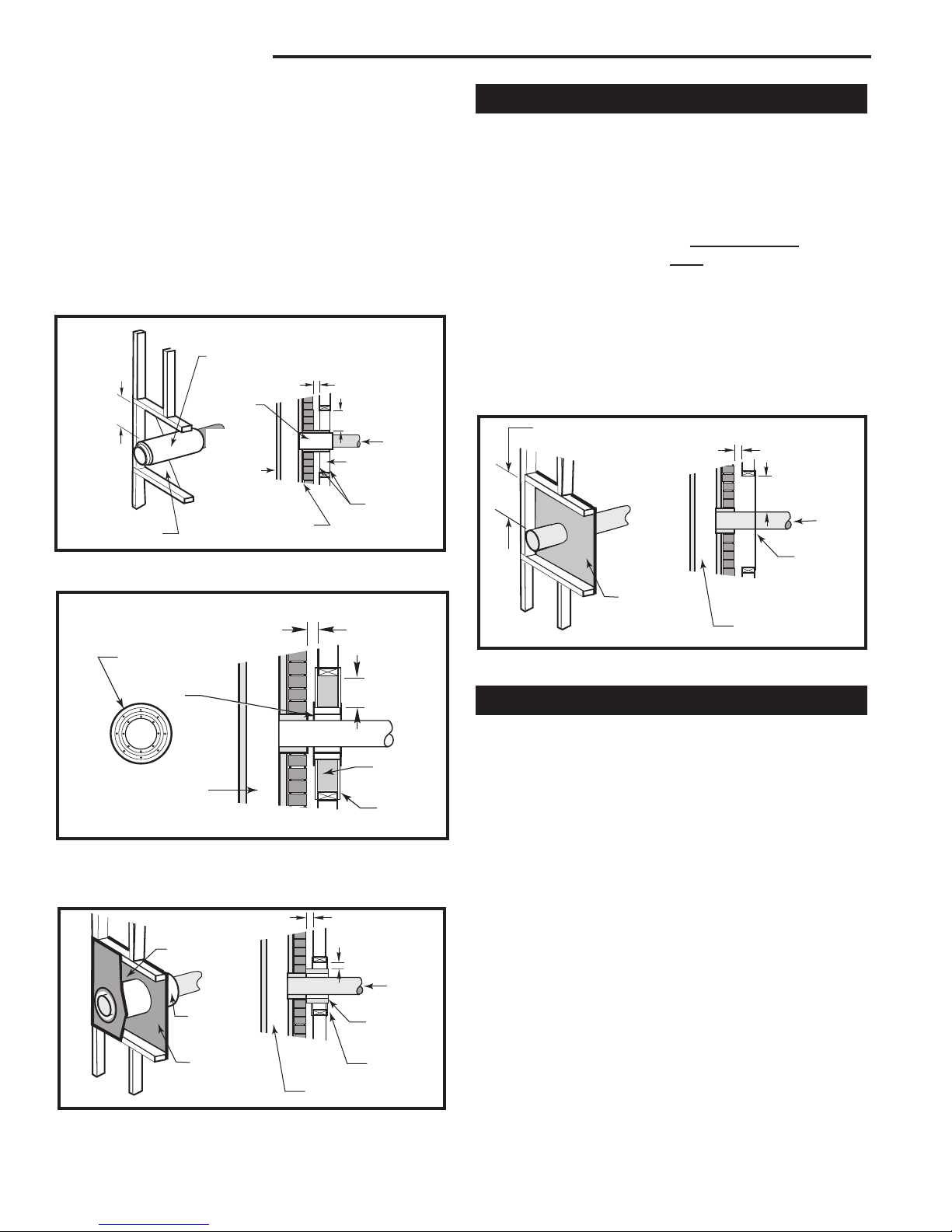
If possible, do not pass the chimney connector through
a combustible wall or ceiling. If passage through a com-
bustible wall is unavoidable, refer to the recommendations
in the section following on
Wall Pass-throughs. Do
not pass the connector
through an attic, a closet
or any similar concealed
space. The whole chim-
ney connector should be
exposed and accessible
for inspection and clean-
ing.
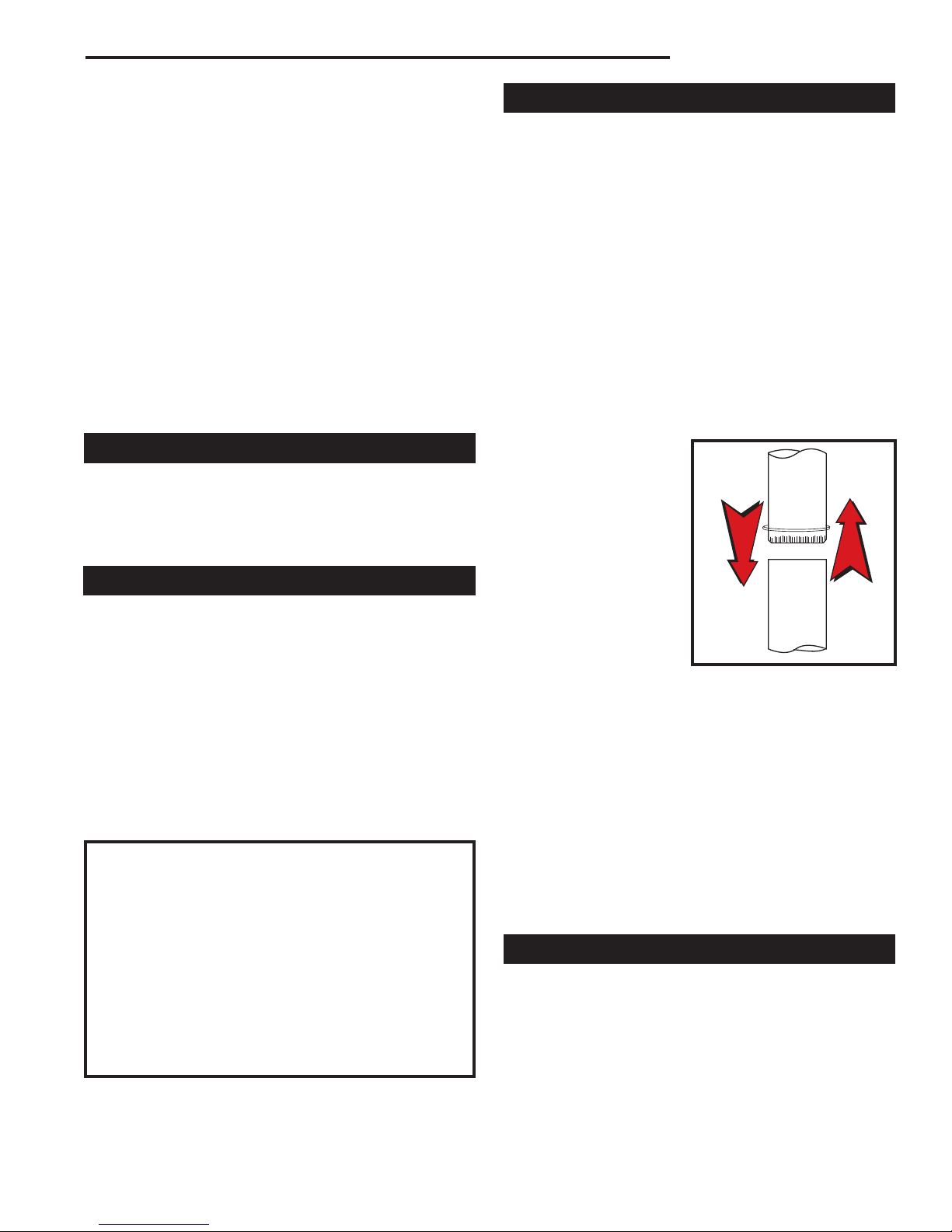
Install the single wall chim-
ney connector not less
than 18” (457 mm) from
the ceiling. Keep it as
short and direct as possible, with no more than two 90
degree turns. If possible, use 45° elbows. Slope horizontal
runs of connectors upward 1/4” per foot (20 mm per meter)
going from the stove toward the chimney. The recom-
mended maximum length of a horizontal run is 3’ (914
mm), and the total length of chimney connector should be
no longer than 8’ (2.5 meters).
In cathedral ceiling installations, extend the prefabricated
chimney downward to within 8 feet (2.4m) of the stove.
The Aspen is approved for installation in the U.S. and
Canada with double-wall chimney connectors that have
been tested and listed for use with solid-fuel burning ap-
pliances by a recognized testing laboratory.
Follow the instructions for assembling and installing
double-wall connectors provided by the manufacturer of
the double-wall chimney. To ease assembly and help as-
sure safety, use chimney components manufactured by a
single source.
ST242
Chimney connector
12/13/99 djt
Flue gas
direction
Toward
stove
Chimney connector.