2
1. Radio frequency interface
The radio system is based on DSSS (Direct Sequence Spread Spectrum) modulation using various "codes"; the
codes have been chosen so as to have a very low correlation with each other allowing the simultaneous transmis-
sion of different systems guaranteeing correct operation.
The spread spectrum modulation, combined with channel coding, enables the communications to reach uncom-
mon distances for the current industry standards, making installations possible without the need to install repeaters.
1.1 Main features of DSSS modulation
1. resistance to interference: it is possible to sustain communications with a Signal/Noise ratio of less than 1,
that is, with the level of the signal (S) lower than that of the noise (N).
2. type of modulation: it makes radio jamming impossible and is virtually immune to any kind of interference.
3. high cryptographic capacity: inherent in the signal modulation/demodulation technology.
4. full bidirectionality between all the devices: enables minimizing the number of transmissions.
5. transmission power: the ability to reduce the power according to the installation requirements makes it
possible to extend the life of batteries by even up to 5 years.
1.2 Technical characteristics
Radio input lines 8 or 16 with single or double balancing, pro-
grammable in all the modes contemplated by the
control panel
Connections with 4 conductors to one of the RS 485 serial
ports as per control panel Instructions
Power supply 12 V— (+/- 20%)
Absorption with LEDs off: 40 mA max.
with LEDs on: 80 mA max.
Ambient conditions -10°C.. +40°C
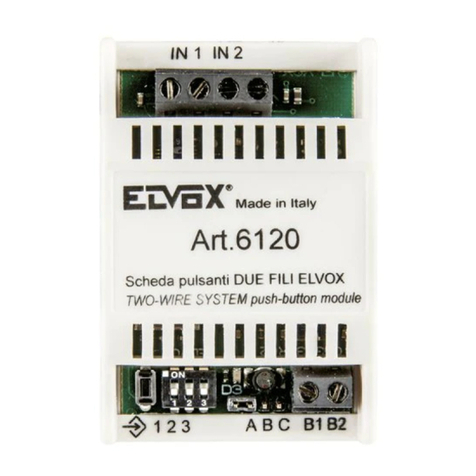
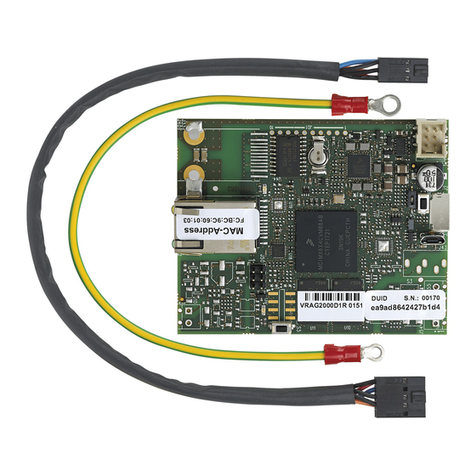
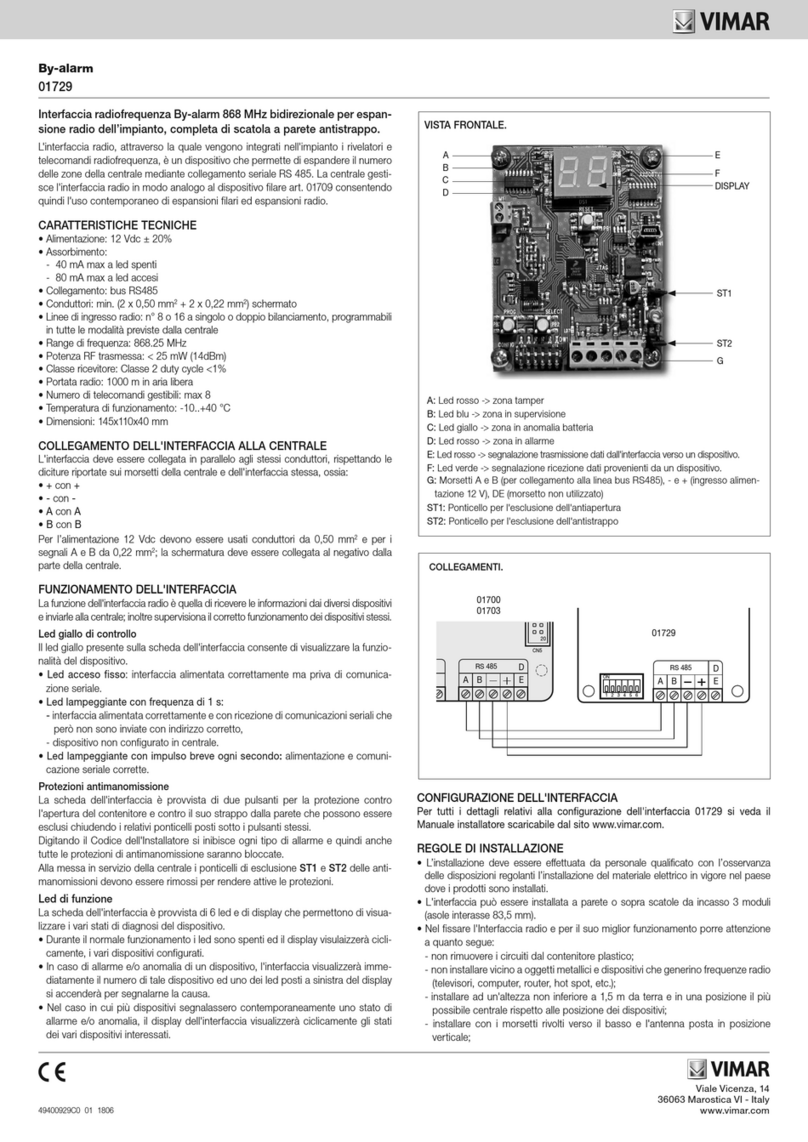
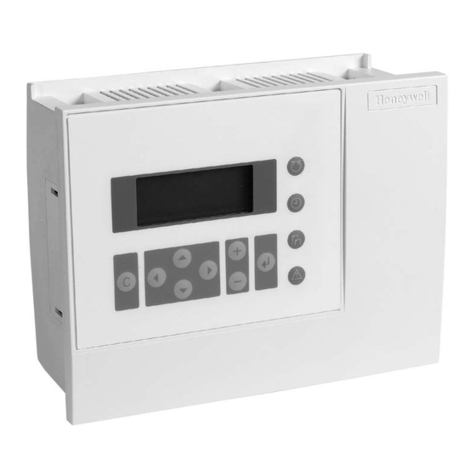
The radio interface is the module for expanding the number of zones of the control panels 01700 and 01703
via an RS485 serial link up to 600 m away from the control panel.
The control panel manages the radio interface exactly like the input expansion module 01709 and 01704 with
which it can be combined, thereby allowing wired and wireless expansions to be used in the same control
panel.
- 8 or 16 radio input lines configurable in the same way as the control panel lines.
- Management of remote controls, max 8.
- Collection and differentiated and identified re-addressing to the control panel on an RS485 serial line of the
different signals for alarm, tamper, supervision and low battery coming individually from the radio field.
- Push buttons for protecting against tampering with the enclosure.
- Allowed band frequency 868MHz, radio range 1000 m in a free field.
- Enclosure dimensions: 145 x 110 x 40 mm.
By-alarm
Radio frequency interface