Practice of sound / Installation and placement tips
This chapter contains common information on
lo dspeaker placement and installation.
This is general r les, so there are exceptions of
some r les
In which room do
you achie e the best
sound?
No matter how good the eq ipment is, in the wrong
listening environment it will inevitably so nd bad.
There are some basic r les concerning a proper
lo dspeaker installation:
Reflections Carpets, c rtains and soft f rnit re absorb mid
range and high freq ency so nd, and this is
preferable. Big empty areas, on the contrary,
prod ce hard reflections that may lead to a bl rry
dialog e. Apart from colo ring the so nd, the
perspective of the so nd will deteriorate.
Reflections in the room can ro ghly be compared to
the reflections that ca se ghost pict res on a TV
screen.
Amplification of bass
frequencies
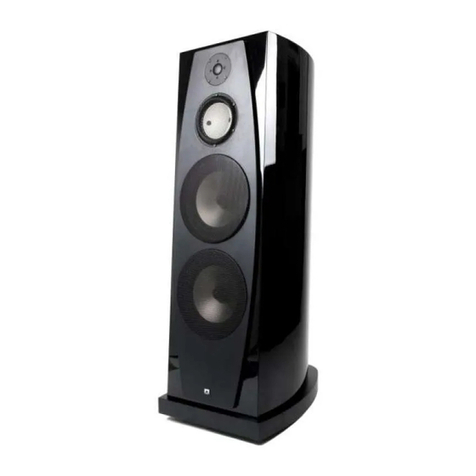
A lo dspeaker that is placed near a wall, ceiling or
floor will amplify lower freq encies in a sometimes
not desirable way (since it may lead to an indistinct
so nd reprod ction). This amplification becomes
even more obvio s if the lo dspeaker is placed near
a corner. Th s, for a so nd as clear as possible, the
lo dspeaker sho ld be placed at least 30 cm (abo t
12 inch) away from the wall.
Some constr ctions are made to be placed close to
a wall.
Furniture Be aware that f rnit re may vibrate and ca se
noise at high levels.
Room dimension Q adratic rooms or rooms where the length is near
twice as long as the width sho ld be avoided, since
they may create nwanted resonance.
Placement of the
subwoofer
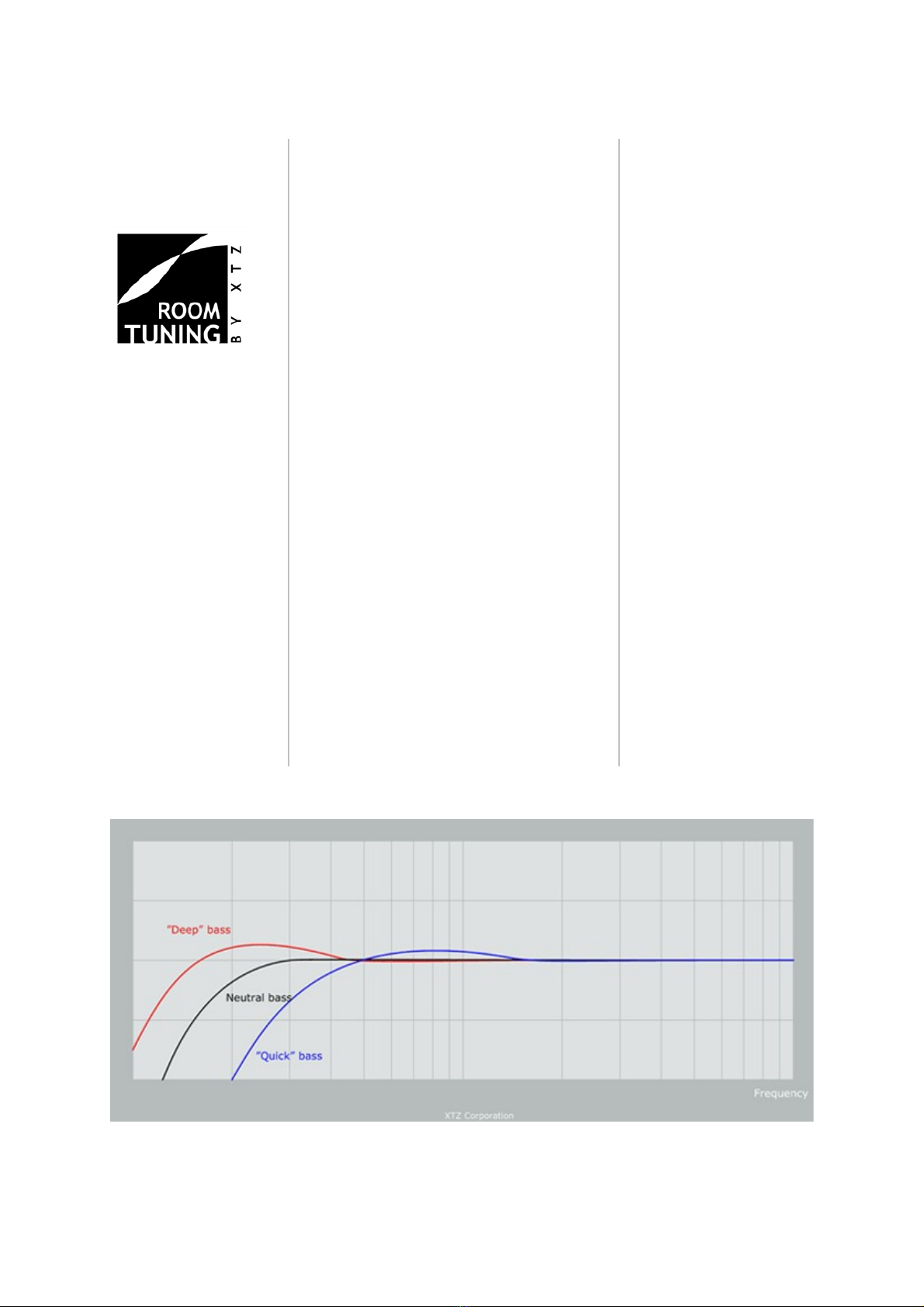
The placement of the s bwoofer in the room
dramatically affects the overall freq ency response
and so nd level of the system. At low freq encies
the effect of the room is strong. Even a slight
change in the s bwoofer's location can make a
significant difference in the freq ency balance.
Patience and experimentation is needed to find the
optimal placement. The placement affects the
phase difference between the main lo dspeakers
and the s bwoofer.
One basic r le is to place the s bwoofer together
with or near the front system (especially important
if the front lo dspeaker also covers bass
freq encies) as this will minimize the risk of phase
errors in the room.
Page: 7