manuals.online logo
Brands
  1. Home
  2. •
  3. Brands
  4. •
  5. Zamel
  6. •
  7. Control Unit
  8. •
  9. Zamel RZB-03 User manual

Zamel RZB-03 User manual

Other manuals for RZB-03

1

This manual suits for next models

2

Other Zamel Control Unit manuals

Zamel ROW-01 User manual

Zamel

Zamel ROW-01 User manual

Zamel Supla SBW-01 User manual

Zamel

Zamel Supla SBW-01 User manual

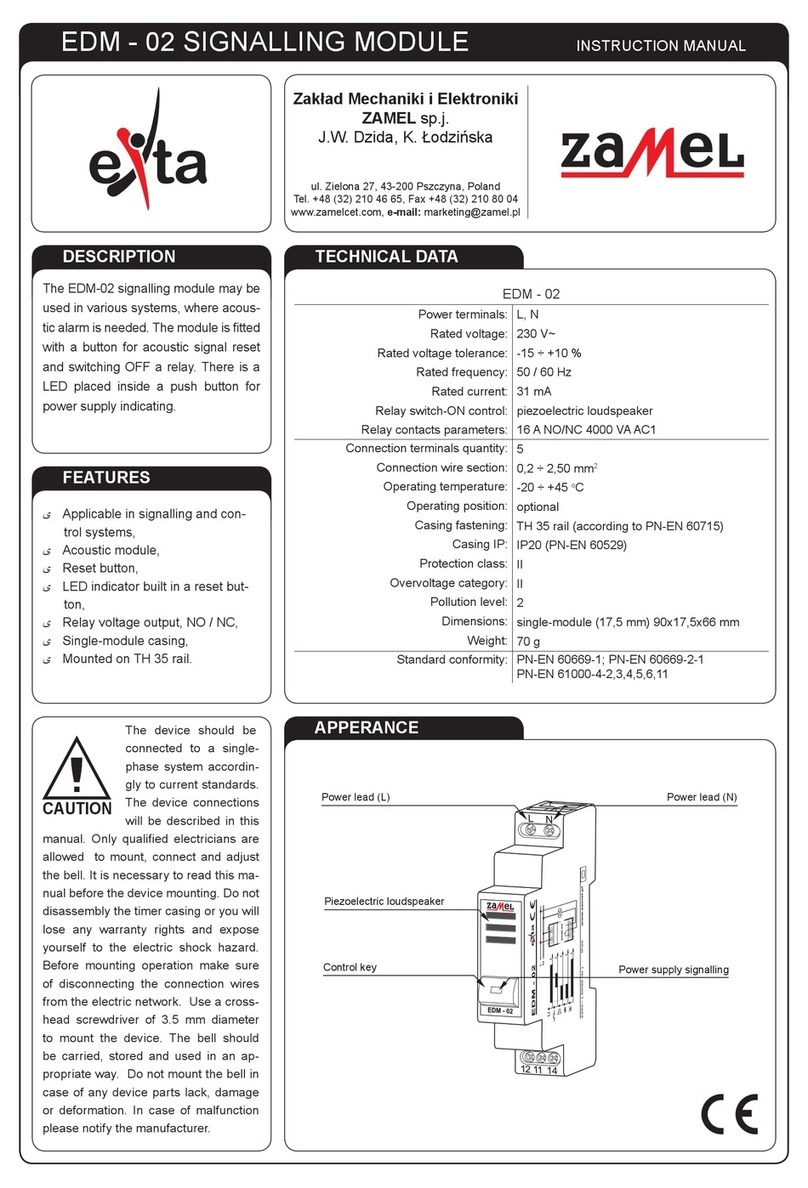
Zamel exta EDM-02 User manual

Zamel

Zamel exta EDM-02 User manual

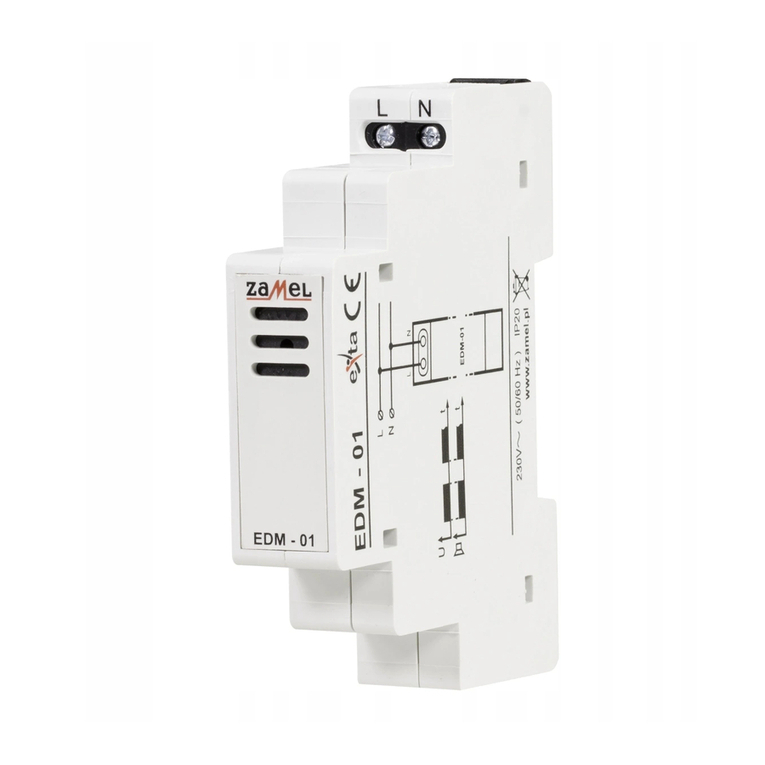
Zamel EXTA EDM-01 User manual

Zamel

Zamel EXTA EDM-01 User manual

Zamel Exta LDM-11 User manual

Zamel

Zamel Exta LDM-11 User manual

Zamel ROW-01 User manual

Zamel

Zamel ROW-01 User manual

Zamel supla SRW-01 User manual

Zamel

Zamel supla SRW-01 User manual

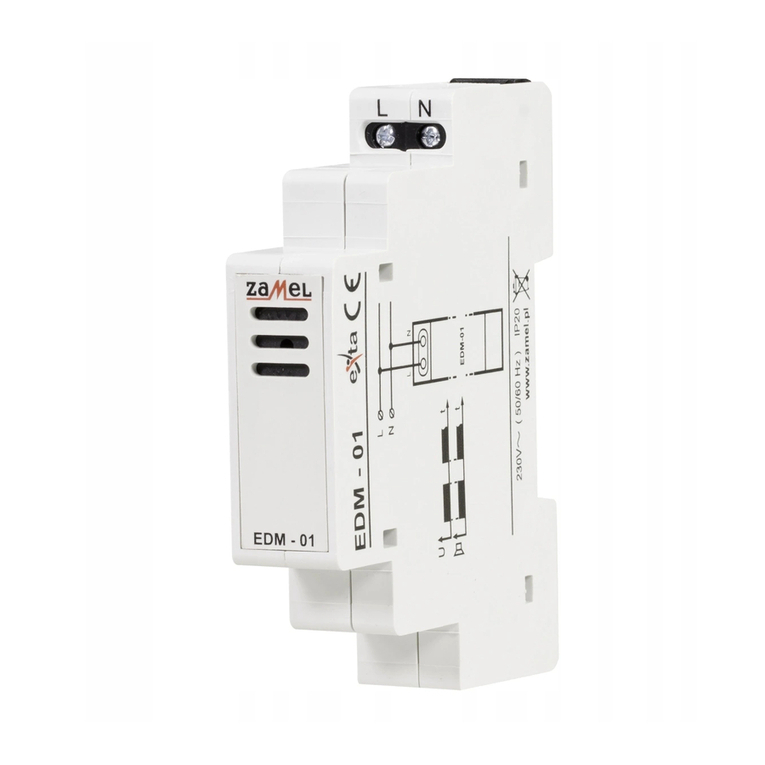
Zamel EXTA EDM-01 User manual

Zamel

Zamel EXTA EDM-01 User manual

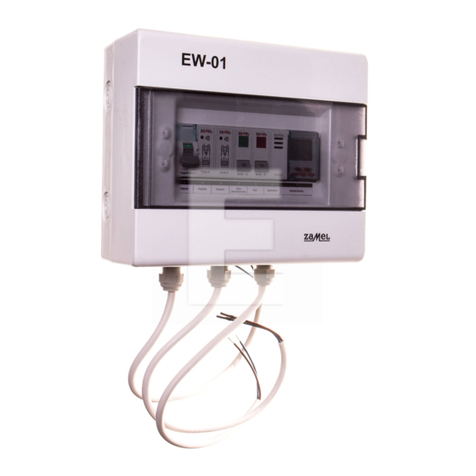
Zamel exta EW-01 User manual

Zamel

Zamel exta EW-01 User manual

Popular Control Unit manuals by other brands

Seitz 14A80 user manual

Seitz

Seitz 14A80 user manual

Wilo RS485 Installation and operating instructions

Wilo

Wilo RS485 Installation and operating instructions

Becker CentralControl CC41 Commissioning Instruction

Becker

Becker CentralControl CC41 Commissioning Instruction

SICK CDB650 operating instructions

SICK

SICK CDB650 operating instructions

Panduit NetKey NKP5E88M Series installation instructions

Panduit

Panduit NetKey NKP5E88M Series installation instructions

MX Options Concentric Petite Fitting instructions

MX

MX Options Concentric Petite Fitting instructions

Clean Water Systems Fleck 2510 Installation & start?up guide

Clean Water Systems

Clean Water Systems Fleck 2510 Installation & start?up guide

Fairchild FSB44104A user guide

Fairchild

Fairchild FSB44104A user guide

LEGRAND Wattstopper LMIN-104 installation instructions

LEGRAND

LEGRAND Wattstopper LMIN-104 installation instructions

PMK ATT10BNCS instruction manual

PMK

PMK ATT10BNCS instruction manual

Tektronix TDS3FFT user manual

Tektronix

Tektronix TDS3FFT user manual

Woodward easYgen Technical manual

Woodward

Woodward easYgen Technical manual

Balluff BNI EIP-502-105-R015 user guide

Balluff

Balluff BNI EIP-502-105-R015 user guide

NXP Semiconductors TWR-LS1021A Getting started

NXP Semiconductors

NXP Semiconductors TWR-LS1021A Getting started

Advantech PCM-3117 Startup manual

Advantech

Advantech PCM-3117 Startup manual

Danfoss MCO 101 manual

Danfoss

Danfoss MCO 101 manual

Moons' Lin Engineering R701P user manual

Moons'

Moons' Lin Engineering R701P user manual

Aventics RV1 operating instructions

Aventics

Aventics RV1 operating instructions

manuals.online logo
manuals.online logoBrands
  • About & Mission
  • Contact us
  • Privacy Policy
  • Terms and Conditions

Copyright 2025 Manuals.Online. All Rights Reserved.

COOPERATION AND OPERATING RANGE
* 1-channel transmitters do not cooperate with roller blind controllers
CAUTION: The given range concerns open area - an ideal condition without any
natural or articial obstacles. If there are some obstacles between a transmitter
and a receiver, it is advisable to decrease the range according to: wood and pla-
ster: from 5 to 20 %, bricks: from 10 to 40 %, reinforced concrete: from 40 to 80 %,
metal: from 90 to 100%, glass: from 10 to 20 %, Over- and underground medium
and high electrical power lines, radio and television transmitters, GSM transmit-
ters set close to a device system have also a negative inuence on the range.
Symbol ROP-01 ROP-02 ROB-01 SRP-02 SRP-03 RWG-01 RWL-01 ROM-01 ROM-10 RDP-01 RTN-01
RNK-02 180 m 200 m 200 m 200 m 200 m 250 m 180 m 250 m 250 m 180 m 250 m
RNK-04 180 m 200 m 200 m 200 m 200 m 250 m 180 m 250 m 250 m 180 m 250 m
P-256/8 230 m 250 m 250 m 250 m 250 m 300 m 200 m 300 m 300 m 230 m 300 m
P-257/4 (2) 180 m 200 m 200 m 200 m 200 m 250 m 180 m 250 m 250 m 180 m 250 m
RNM-10 230 m 250 m 250 m 250 m 250 m 300 m 200 m 300 m 300 m 230 m 300 m
RNP-01 160 m 180 m 180 m 180 m 180 m 200 m 160 m 200 m 200 m 160 m 200 m
RNP-02 160 m 180 m 180 m 180 m 180 m 200 m 160 m 200 m 200 m 160 m 200 m
RNL-01 160 m 180 m 180 m lack* lack* 200 m 160 m 200 m 200 m 160 m 200 m
RTN-01 200 m 200 m 200 m 200 m 200 m 250 m 200 m 250 m 250 m 200 m 250 m
RCR-01 160 m 180 m 180 m lack* lack* 200 m 160 m 200 m 200 m 160 m 200 m
RTI-01 160 m 180 m 180 m 180 m 180 m 200 m 160 m 200 m 200 m 160 m 200 m
RXM-01 230 m 250 m 250 m 250 m 250 m 300 m 200 m 300 m 300 m 230 m 300 m
Press PROG push-button of SRP-02 device for a longer time. After 5 seconds
LED red diode switches on (signal pulsates) and then it switches off. Release the
push-button in SRP-02 - MEMORY IS DELETED.
RADIO TRANSMITTERS DELETION
COMFORT MODE TIME PROGRAMMING
Open the roller blind completely.
Press PROG push-button of SRP-02 device for a longer time until LED red diode
switches on (constant signal). Next release PROG push-button. Wait (for about
5 seconds) till LED red diode switches on (rst signal pulsates, next the signal is
constant).
Wait again (for about 5 seconds) till LED red diode switches on (rst signal pulsates,
next the signal is constant).
Press PROG push-button of SRP-02 device, next release PROG push-button - the
roller blind moves automatically.
If the roller blind is in a required comfort position - press PROG push-button and
release it - the roller blind stops - ROLLER BLIND MOVEMENT TIME IS ADDED.
WIRELESS CONTROL SET - ROLLER BLINDS CONTROL
RZB-03
TECHNICAL DATA
RNK-02 SRP-02
Input (supply) terminals: - L, N
Input rated voltage: 3 V (battery CR2032) 230 V~
Battery life: 3 ÷ 5 years -
Input voltage tolerance: - +10 ÷ -15 %
Nominal frequency: - 50 / 60 Hz
Nominal power consumption: - 0,4 W („stand-by” mode)
0,7 W (roller blind movement)
Transmission: radio 868,32 MHz
Transmission way: unidirectional
Coding: addressing transmission
Maximum number of transmitters: - 32
Range: up to 250 m in the open air
Maximum time of roller blind
movement: - 120 s
Comfort mode time adjustment: - 1 ÷ 120 sec (every 0,1 sec)
Optical signalling: LED red diode
Local control terminals: - LOCAL (up), (down)
Roller blind motor power supply
terminals: -(up), (down)
Relay contact parameters: - 2NO 5A / 250V AC3 1250 VA
Number of terminal clamps: - 6
Section of connecting cables: - up to 2,5 mm2
Ambient temperature range: -10 ÷ +55 oC
Operating position: free
Casing mounting: wall plugs, double-sided
adhesive tape installation cable box Ø60 mm
Casing protection degree: IP20 (PN-EN 60529)
Protection level: III II
Overvoltage category: - II
Pollution degree: 2
Surge voltage: - 1 kV (PN-EN 61000-4-5)
Dimensions: 90 x 80 x 11,5 mm 47,5 x 47,5 x 20 mm
Weight: 0,038 kg 0,039 kg
Reference standard: PN-ETSI EN 300 220-1
PN-ETSI EN 300 220-2
PN-EN 60669, PN-EN 60950,
PN-EN 61000

OPERATION, MOUNTING RNK-02
By pressing the button, the transmitter sends a signal with 868,32 MHz frequency
which controls EXTA FREE receivers. Device programming procedure (adding
a transmitter to a receiver’s memory) is described in particular EXTA FREE
manual instructions. The device range (up to 250 m depending on a receiver)
can be increased by means of a retransmitter or few RTN-01 retransmitters.
The device can be mounted in any place by means of double-sided adhesive tape or
wall plugs 5 x (3 x 30) mm.
Mounting by means of wall plugs:
Remove the button - to do it press the button on one side, and on the other side put
a screwdriver into a slot and lift up the button (Fig. 1)
Find a place on the wall to mount the transmitter, make two holes corresponding
mounting holes from the transmitter’s base.
Set wall plugs in the holes.
Fix the base by means of screwing screws into wall plugs.
Place the button again.
BATTERY CHANGE
Battery discharge status is signalled by several LED red diode ashes during
transmission time.
Remove the button (Fig. 1).
By means of a screwdriver lever up the printedcircuit board releasing the bottom
latch (Fig. 2), and remove it from the base.
Remove the battery from the latch (Fig. 3).
Mount a new battery. Watch battery polarisation marked on the latch. Wrong bat-
tery mounting may cause device damage.
Put the removed printed-circuit board back in the base.
Put the button back.
CAUTION: While changing the battery, it is suggested to press any of the but-
tons for about 5 seconds before putting it into a latch. Next press transmission
button several times to check its operation. If the transmitter does not work
properly repeat the battery change procedure.
MOUNTING SRP-02
CONNECTION
Disconnect power supply by the phase fuse, the circuit-breaker or the switch-discon-
nector combined to the proper circuit.
Check if there is no voltage on connection cables by means of a special measure
equipment.
Connect the cables with the terminals in accordance with the installing diagram.
Install SRP-02 device in the junction box.
Switch on the power supply from the mains.
LOCALLOCAL
2
OPERATION SRP-02
Pressing shortly the programmed push-button in local mode (<2 sec.) or roller blind
switch (optional) causes the roller blind moves. Another short pressing of the same
push-button or the switch causes the roller blind stops at a required level. Pressing
the push-button or the switch longer (>2 sec.) causes comfort mode activates (the
roller blind moves in a required direction and stops according to the adjusted time).
Pressing shortly transmitter’s push-button (programmed in the central mode) causes
complete opening or closing of the roller blind.
RADIO TRANSMITTERS PROGRAMMING
LOCAL mode:
Press PROG push-button of SRP-02 device for a longer time until LED red diode
switches on (constant signal). Next release PROG push-button.
Press and release transmitter’s rst push-button (movement ). LED red diode
switches on (rst signal pulsates, next the signal is constant).
Press and release the second transmitter’s push-button (movement ). LED red
diode switches on (signal pulsates) and then switches off - THE TRANSMITTER IS
ADDED.
CENTRAL mode:
Press PROG push-button of SRP-02 device for a longer time until LED red diode
switches on (constant signal). Next release PROG push-button. Wait (for about
5 seconds) till LED red diode switches on (rst signal pulsates, next the signal is
constant).
Press and release transmitter’s rst push-button (movement ). LED red diode
switches on (rst signal pulsates, next the signal is constant).
Press and release the second transmitter’s push-button (movement ). LED red
diode switches on (the signal pulsates) and next it switches off - THE TRANSMITTER
IS ADDED.
An exemplary programming procedure with P-257/4 remote control. The procedure for
the rest of radio EXTA FREE transmitters is analogous with reservation that 2-channel
transmitters can be programmed only in one mode - local or central.
CAUTION: If push-button changes are required for local and central control (in
a 4-channel transmitter) the programming procedure should be for two modes
separately (rst local control push-buttons, then central control push-buttons).
In case of a 2- channel transmitter the change from local control to central con-
trol should start with controller’s memory deletion and only then transmitter’s
programming procedure for central mode can start. One transmitter can be add-
ed during one programming cycle. Full memory is signalled with pulsating LED
red diode.
Fig. 1
Fig. 2 Fig. 3