manuals.online logo
Brands
  1. Home
  2. •
  3. Brands
  4. •
  5. C-TEC
  6. •
  7. Control Panel
  8. •
  9. C-TEC CAST ZFP Instruction Manual

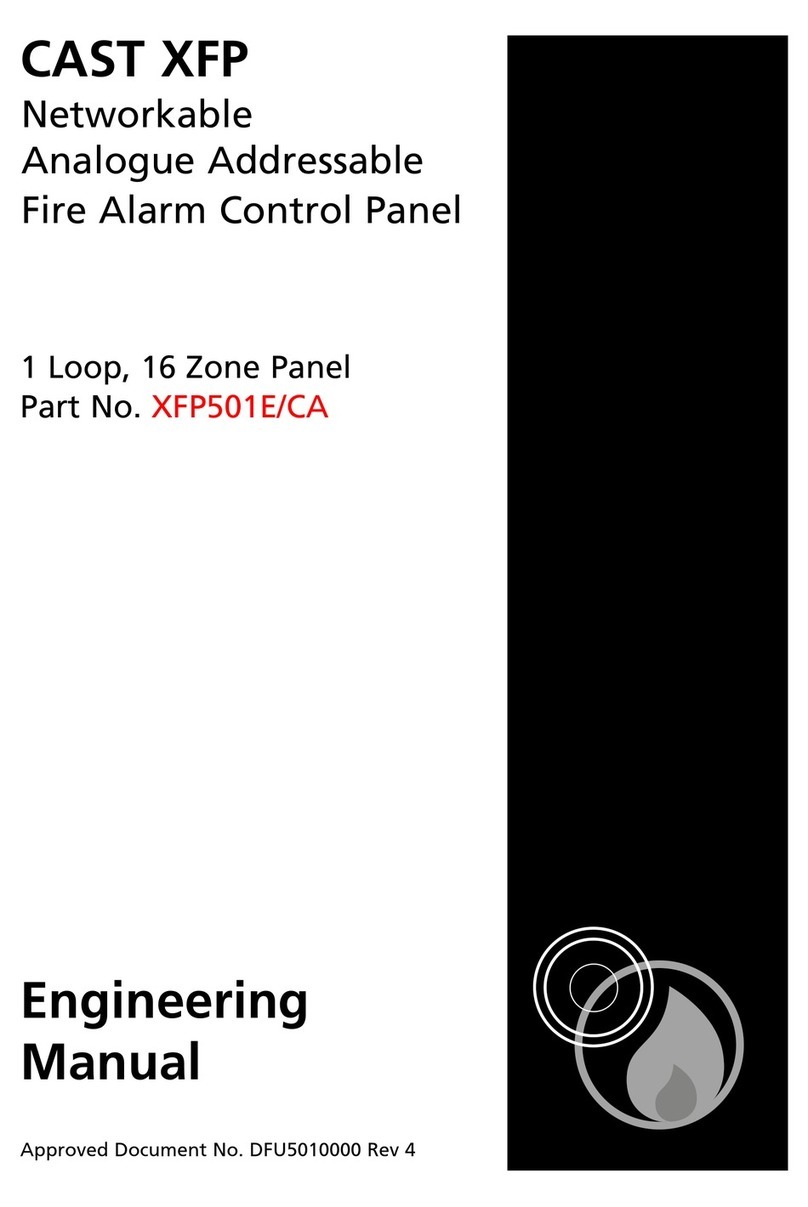
C-TEC CAST ZFP Instruction Manual

Other manuals for CAST ZFP

2

Other C-TEC Control Panel manuals

C-TEC XFP502/X User manual

C-TEC

C-TEC XFP502/X User manual

C-TEC XFP510-32 User manual

C-TEC

C-TEC XFP510-32 User manual

C-TEC CAST ZFP Operating and maintenance manual

C-TEC

C-TEC CAST ZFP Operating and maintenance manual

C-TEC XFP User manual

C-TEC

C-TEC XFP User manual

C-TEC AlarmSense CFP702-2 Instruction Manual

C-TEC

C-TEC AlarmSense CFP702-2 Instruction Manual

C-TEC CAST XFP Installation and operation manual

C-TEC

C-TEC CAST XFP Installation and operation manual

C-TEC XFP501E/CA Product guide

C-TEC

C-TEC XFP501E/CA Product guide

C-TEC EACIE Operating and maintenance manual

C-TEC

C-TEC EACIE Operating and maintenance manual

C-TEC CAST XFP Installation and operation manual

C-TEC

C-TEC CAST XFP Installation and operation manual

C-TEC CAST XFP User manual

C-TEC

C-TEC CAST XFP User manual

Popular Control Panel manuals by other brands

GENEVO PRiMA 6 installation manual

GENEVO

GENEVO PRiMA 6 installation manual

NAPCO X 255 - Programming instructions

NAPCO

NAPCO X 255 - Programming instructions

Next Systems UNIR1 230 instruction manual

Next Systems

Next Systems UNIR1 230 instruction manual

HORNER HE-XPW1E0 user manual

HORNER

HORNER HE-XPW1E0 user manual

DSC CLASSIC PC1555 instruction manual

DSC

DSC CLASSIC PC1555 instruction manual

Bosch Solution 2000 installation guide

Bosch

Bosch Solution 2000 installation guide

VRinsight MS Panel user manual

VRinsight

VRinsight MS Panel user manual

Zeiss SYCOP 3 Quick reference guide

Zeiss

Zeiss SYCOP 3 Quick reference guide

HULTSTEINS ECOFRIDGE DISPLAY user manual

HULTSTEINS

HULTSTEINS ECOFRIDGE DISPLAY user manual

Elkron C420 Programming manual

Elkron

Elkron C420 Programming manual

GST GST200-2 Installation and operation manual

GST

GST GST200-2 Installation and operation manual

Efka Variocontrol V810 instruction manual

Efka

Efka Variocontrol V810 instruction manual

RDZ PC-HRX user manual

RDZ

RDZ PC-HRX user manual

STG-BEIKIRCH MZ3 operation instruction

STG-BEIKIRCH

STG-BEIKIRCH MZ3 operation instruction

AMX AutoPatch CP-15 instruction manual

AMX

AMX AutoPatch CP-15 instruction manual

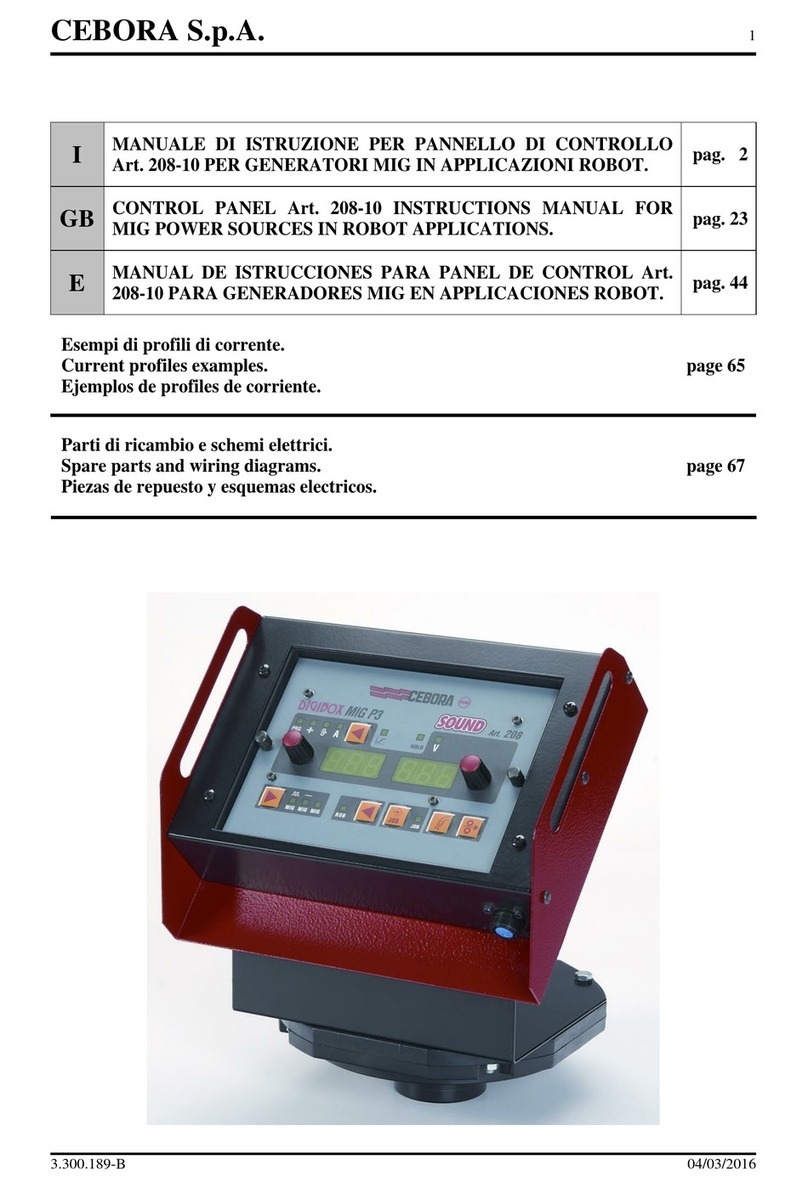
Cebora 208-10 instruction manual

Cebora

Cebora 208-10 instruction manual

Satel CA-6 KLED-S user manual

Satel

Satel CA-6 KLED-S user manual

Evolution IQ plus 800 installation manual

Evolution

Evolution IQ plus 800 installation manual

manuals.online logo
manuals.online logoBrands
  • About & Mission
  • Contact us
  • Privacy Policy
  • Terms and Conditions

Copyright 2025 Manuals.Online. All Rights Reserved.

CAST ZFP - Quick Start Installation Guide
Approved Document No. DFU5030010 Rev 2 Page 1 of 2
WARNING! DO NOT connect or disconnect the panel’s internal wiring/looms, or terminate field wiring at the PCBs, with the panel’s power applied (either mains or battery).
Failure to observe this will destroy the panel’s electronic components and the warranty will be void.
ENSURE YOU HAVE ATTENDED C-TEC’S AUTHORISED TRAINING COURSE BEFORE ATTEMPTING TO INSTALL AND PROGRAM THE PANEL
THIS GUIDE IS FOR EXPERIENCED INSTALLERS OF ANALOGUE FIRE SYSTEMS ONLY AND SUMMARISES
KEY INFORMATION PROVIDED IN THE MAIN INSTALLATION AND PROGRAMMING MANUAL (DOCUMENT
NO.DFU5030000). IF YOU ARE IN ANY DOUBT WHATSOEVER,READ THE FULL MANUAL.
This product is a piece of Class 1 equipment and MUST BE EARTHED.
Anti-static handling guidelines: Make sure that handling precautions for electro-static devices (ESD) are
taken immediately before handling PCBs and other ESD components.
Section numbers, e.g. ,reference sections in the full manual with additional information.
DETAIL 1
EXTERNAL MAINS CONNECTION
Isolate mains power to the panel until it is ready to be tested (one method is to
open and lock off the main circuit breaker to the panel).
The panel is supplied with 230V, 50Hz mains. Terminate incoming mains to L
(Live), N (Neutral) and (Earth) terminals at CONN1 on the Power Supply
PCB, shown right.
CABLES
RECOMMENDED CABLE TYPES
All cables must be installed in accordance with the relevant national, regional or local regulations.
Mains wiring is fixed wiring, using fire resistant, 3-core cable (no less than 1mm2and no more than 2.5mm2),
or a suitable three conductor system fed from an isolating switched fused spur, fused at 3A. Mains wiring should
be segregated from extra low voltage field wiring.
Extra low voltage field wiring includes loop circuits, conventional sounder circuits and auxiliary inputs/outputs.
Fire resistant, screened cable may be used such as FP 200™, Firetuff™, Firecel™ and MICC. All screens must be
terminated to the earth bar provided in the panel’s back box.
DETAIL 2
INTERNAL BATTERIES CONNECTION
Isolate battery power to the panel until it is ready to be tested (one method is to
disconnect the green battery link wire).
Fit two new, good quality and fully charged 12V VRLA batteries. Use the
connection wires (supplied) to connect the batteries to CONN7 on the Power Supply
PCB, shown right.
INSTALLATION PROCEDURE
RECOMMENDED SHORTFORM INSTALLATION &COMMISSIONING PROCEDURE
Note: DO NOT connect mains or battery power to the panel until the installation is complete, i.e. panel PCBs
are fitted and field wiring has been tested and connected to the panel.
Remove the panel’s lid and chassis.
Fit the panel’s back box to a wall.
Connect field cables to the panel via glands and terminate all screens to the earth bar in the back box.
Test field cables and ensure they are fault-free, i.e. check continuity of cable runs (including screens).
Check the continuity on the negative (-ve) line of the device loop to ensure it is fault free.
Remove the small cable cover on the PSU and connect external mains cable to the panel (with mains
isolated) –SEE DETAIL 1, opposite. Refit the cover.
Connect the panel’s internal batteries (with battery supply isolated) –SEE DETAIL 2, opposite.
Refit the panel’s chassis and lid.
Connect analogue loop(s) wiring to the panel –SEE DETAIL 3, opposite.
Connect conventional sounder circuit(s) to the panel –SEE DETAIL 4, opposite.
Connect additional field wiring to the panel –SEE DETAIL 5, opposite.
Apply mains and battery supply to power up the panel.
Investigate and rectify any messages reported as faults on the panel’s touchscreen.
Commission the panel by entering AL3 and performing an auto address or loop learn (see overleaf).
Program the panel using the CAST ZFP Programming Tools (Part No. ZTOOLS).
DETAIL 3
TYPICAL ANALOGUE LOOPS CONNECTION
Two analogue loop connectors
(Loop1 & Loop2) areprovided on the
Main 2-Loop PCB, shown right.
Note:A1-LoopPCBisalsoavailable.
N.B. Some protocols and systems
have different methods of loop
isolation. The example shown right
has loop isolators in every +ve leg of each device. See full manual for details.
Terminate all screens to the earth bar in the panel’s back box.
DETAIL 4
CONVENTIONAL SOUNDER CIRCUITS CONNECTION
Two conventional sounder circuit
connectors (SNDR1 & SNDR2) are
provided on the Main 2-Loop PCB,
shown right.
Terminate all screens to the earth bar in
the panel’s back box.
ALWAYS make sure the two 6k8 EOL resistors (supplied) are fitted at the last sounder on each circuit. If a
sounder circuit is unused, you must still connect the resistor at the panel terminals.
DETAIL 5
ADDITIONAL FIELD WIRING
Auxiliary inputs AUX 24V output Relay outputs A-Bus (RS485)
Disclaimer: Errors and omissions excepted. No responsibility can be accepted by the manufacturer or distributors of this range of fire panels for any misinterpretation of an instruction or guidance note or for the compliance of the system as a whole. The manufacturer’s policy is one of continuous improvement and we reserve the right to make changes to product specifications at our discretion and without prior notice.

CAST ZFP - Quick Start Programming Guide
Page 2 of 2 Manufacturer: Computionics Limited (C-TEC), Challenge Way, Martland Park, Wigan, Lancashire WN5 0LD. www.c-tec.com Approved Document No. DFU5030010 Rev 2
The quick start programming steps detailed below provide a basic configuration of the system when the panel is first
powered up. It is assumed that all loops are correctly wired to the panel with no wiring/crossover faults.
Hint: CAST ZFP Programming Tools (Part No. ZTOOLS) are available that allow quick and easy input of
data, cause and effect programming, naming of devices, zones and groups, etc. Contact your supplier for details.
The following touchscreen buttons are available in the steps listed below:
- displays user menus - returns to previous menu - scroll up - scroll down
- confirms changes/settings - cancels changes/settings
Section numbers, e.g. , reference sections in the full manual with additional information.
STEP 4
EDITING DEVICE DETAILS (WITHOUT USING ZTOOLS)
Enter AL3 (4444) > Engineering Functions press button. A window similar to the one
shown below left appears. Select a loop (loop 1 is shown selected) and a window similar to the one shown below
right appears.
Select a loop device (device 1 is shown selected above) and a window similar to the one shown below left appears.
Press button and a window similar to the one shown above right appears. This display allows
the selected device’s parameters to be edited including device type, zone, input / output group and device name.
STEP 1
ENTER ACCESS LEVEL 3(AL3)
First, press button on the panel’s touchscreen to display the access level 1 menu options.
Then, press button and the AL3 login window appears (shown below left).
Using the touchscreen’s numeric keypad, enter the four-digit AL3 code (default code is: 4444).
When the code has been entered correctly, the AL3 menu options appear (shown below right).
STEP 2
SET PANEL’S TIME AND DATE
Enter AL3 (4444) press button and a window
similar to the one shown right appears.
Set the time and date using the touchscreen’s numeric keypad and
buttons. Also, set/unset the daylight saving time (DST).
When correct, press the button to return to the AL3 menus.
ACCESS LEVEL 3 (AL3) MENUS
STEP 3
AUTO ADDRESS
During an auto address the panel automatically assigns an address to
each loop device in sequentially wired order. An alternative function
to auto address is loop learn which is used with pre-addressed devices.
EnterAL3 (4444)>CommissioningFunctionspress
button. The window shown right appears for example. Select the
loop(s) you want the panel to auto address (Loop 1 and Loop 2 are
shown selected), then press the button.
Follow the instructions displayed at the panel.
Investigate and rectify any messages reported as faults on the touchscreen.
AFTER A SUCCESSFUL AUTO ADDRESS YOU WILL HAVE A “ONE OUT,ALL OUT”FIRE
ALARM SYSTEM!