BP2 OPERATOR’S MANUAL
Air-assisted electrostatic sprayers produce electrically charged spray drops that
are carried to the target in a low pressure, gentle, air stream. The heart of the BP2
Sprayer is the patented MaxCharge™ nozzle.
Air and liquid enter separately at the rear of the nozzle. Just before leaving the
nozzle, the air hits the liquid stream to make many thousands of tiny spray
droplets that pass through the charging ring. An electrical charge is applied to the
spray droplets by the charging ring. Then the charged spray droplets are blown
out of the nozzle and move onto the target where they are attracted to surfaces
by electrostatic forces. The electrostatic charge induced by the MaxCharge™
nozzle is strong enough to allow the droplets to move in any direction to cover
surfaces, even defying gravity to coat the underside of leaves and the back side of
the target objects. The result is uniform spray coverage on hidden surfaces that
other sprayers miss. Air-assisted electrostatic sprayers give more than twice the
deposition efficiency of hydraulic sprayers and non-electrostatic types of
air-assisted sprayers. The grower benefits in terms of significant reductions in
application costs and optimized insect and disease control, sanitization of beef or
other coverage.
The MaxCharge™ nozzle is easy to clean and corrosion-proof. The interior
ceramic outlet resists wear three times better than stainless steel outlets. These
features combine to give the best spray coverage on the market. This quality
product is virtually maintenance-free and assures you of savings in the application
of chemical.
The comparison of air-assisted electrostatic spraying versus conventional spraying
is dramatic.
The Maxcharge™spray nozzle is
what makes ESS the industry leader
in the production of electrostatic
spraying equipment .
The University of California completed a series of tests to
investigate what happens to spray liquid after it leaves the
nozzle.
Conclusion: ESS technology places over 4 times the amount of
spray onto the plant surface using 1/2 the amount of chemicals.
Furthermore, they also reported that ESS sprayers send 2/3 less
chemicals to the ground and into the air. Less chemical used
overall, less waste, and less drift than conventional equipment.
Imagine the environmental benefit!
ESS SPRAYER
WHERE DOES THE SPRAY GO?
Electrostatically charged droplets are
strongly attracted to the underside
of surfaces.
CONVENTIONAL SPRAYER
A Picture Worth A Thousand Words…
In this test, fluorescent dye has been sprayed
on two round knobs. The left knob was
sprayed with the electrostatic system ON;
the right knob was sprayed with the same
sprayer, but with the electrostatic system OFF.
Note how even the coverage is on the
electrostatic knob.
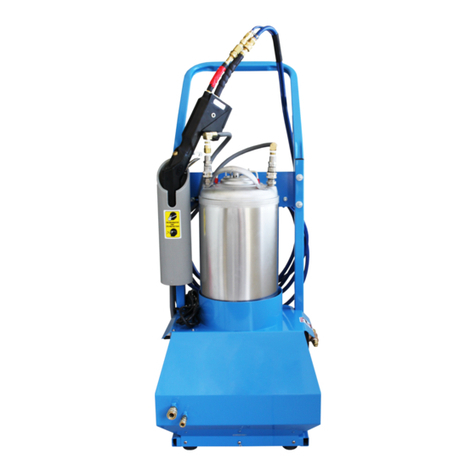
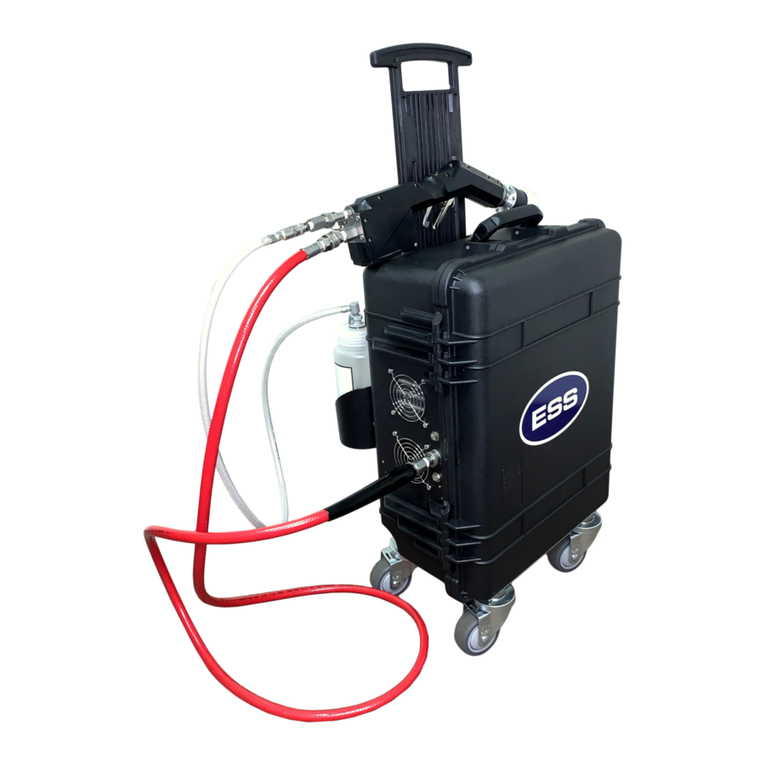
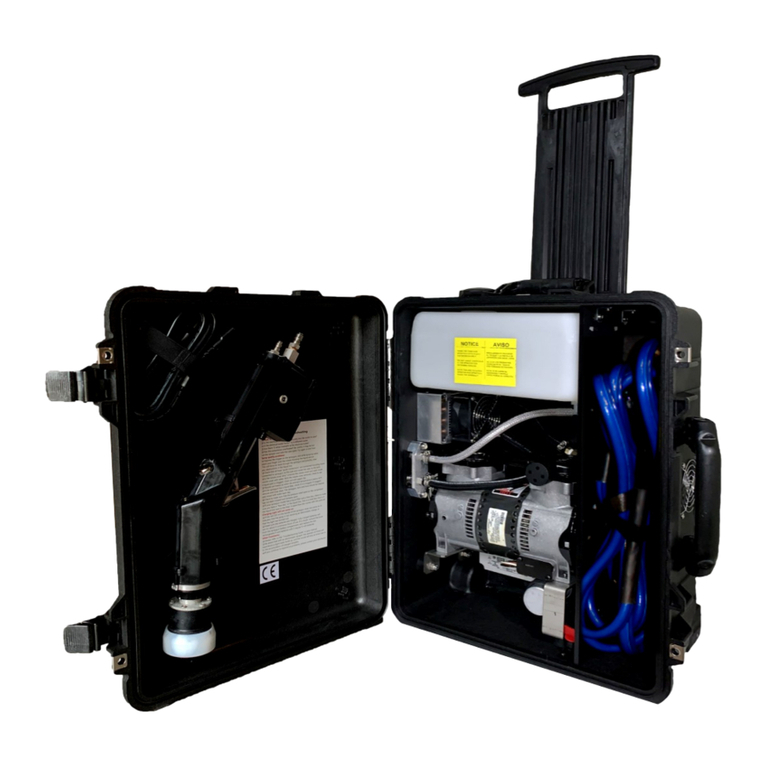
OVERVIEW OF THE ESS MODEL BP2 AIR-ASSISTED ELECTROSTATIC SPRAYER____
1
ESS SPRAYER CONVENTIONAL SPRAYER