GENERAL DESCRIPTION
E
N
G
I
S
H
9
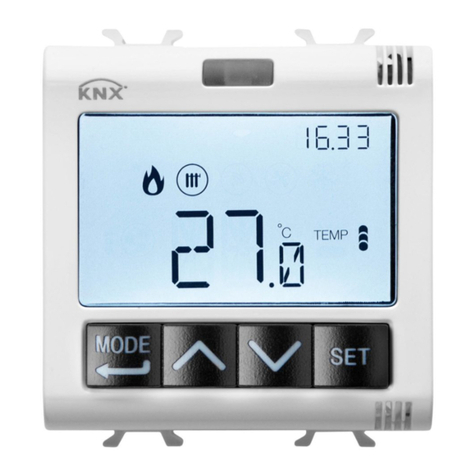
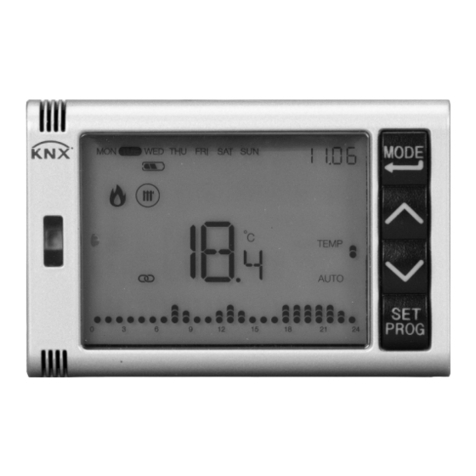
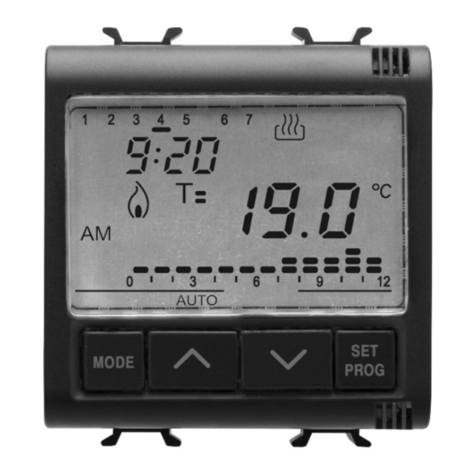
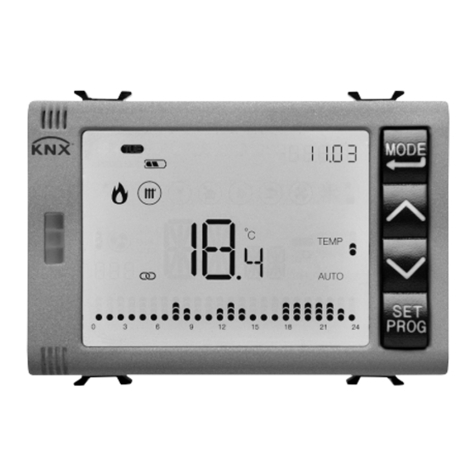
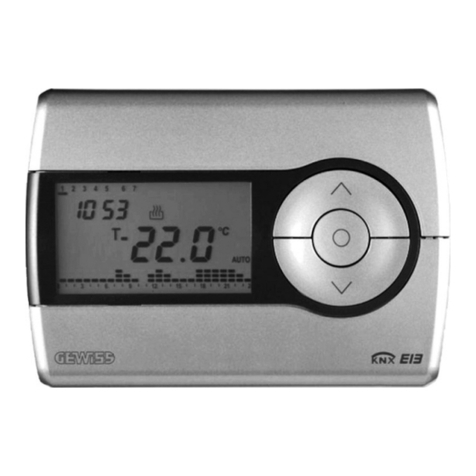
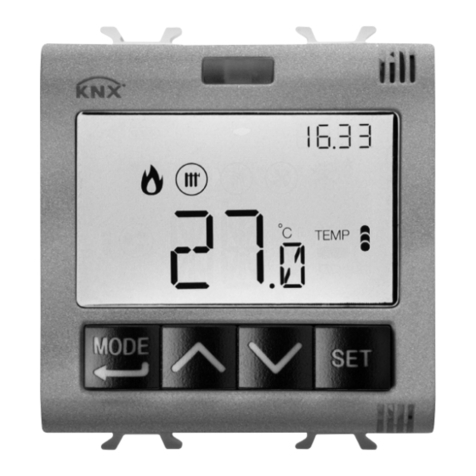
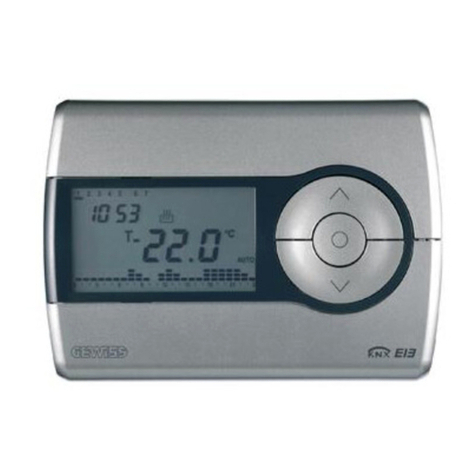
During operation, the activation of heating or conditioning mode is indicated in the
following way:
Heating
The symbol indicates that the activation command has
been sent to the command actuator of the boiler or area
solenoid valve (1° stage of the heating system(1)). f the load
notifications have been activated via ETS, and the thermostat
does not receive confirmation of effective implementation
from the actuator, the symbol will begin to flash.
Subsequently, the thermostat sends the activation command
every 60 seconds until it receives confirmation. The
symbol indicates that the 2° stage of the heating system(1)
has been activated.
Air-conditioning
The symbol indicates that the activation command has
been sent to the command actuator of the air-conditioner or
area solenoid valve (1° stage of the air-conditioning
system(1)). f the load notifications have been activated via
ETS, and the thermostat does not receive confirmation of
effective implementation from the actuator, the symbol
will begin to flash. Subsequently, the thermostat sends the
activation command every 60 seconds until it receives
confirmation. The symbol indicates that the 2° stage of
the air-conditioning system(1) has been activated.
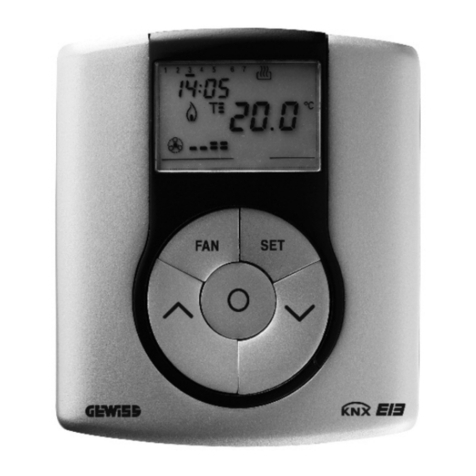
Operation with active fan coil control
f the fan coil control function has been activated in the
setting of the parameters via ETS, the display will show the
symbol.
n addition, you will be offered the page on which you can
manually alter the fan coil speed or set the AUTO mode
(whereby the fan coil speed is automatically adjusted on the
basis of the difference between the set-point fixed on the
device and the detected temperature).
(1) Some temperature adjustment systems (e.g. floor-mounting ones) have a very high thermal inertia level, so
it takes considerable time to bring the room temperature into line with the required set-point; in order to reduce
this inertia, another system with less inertia is often installed to help the main system to heat/cool the room
when the difference between the set-point and the detected temperature is particularly marked. This system,
known as 2° stage, helps to heat/cool the room during the initial phase, then it stops working when the
difference between the set-point and the temperature can be managed in a faster way.