manuals.online logo
Brands
  1. Home
  2. •
  3. Brands
  4. •
  5. Hach
  6. •
  7. Control Unit
  8. •
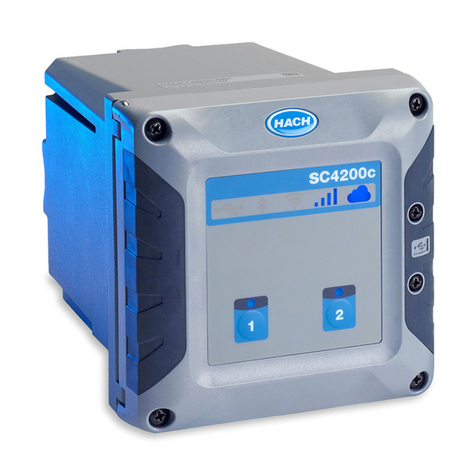
  9. Hach SC4200c User manual

Hach SC4200c User manual

Other manuals for SC4200c

4

Other Hach Control Unit manuals

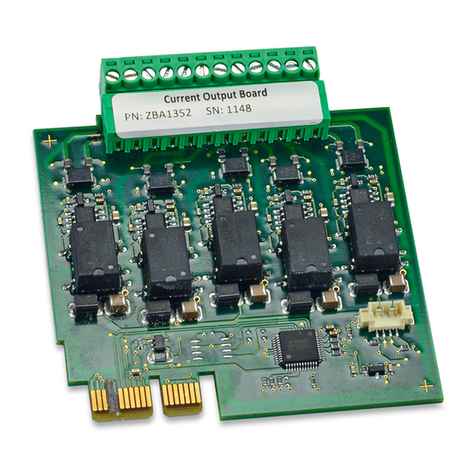
Hach 4-20 mA User manual

Hach

Hach 4-20 mA User manual

Hach 8350.3 User manual

Hach

Hach 8350.3 User manual

Hach AV9000S User manual

Hach

Hach AV9000S User manual

Hach TU5 Series User manual

Hach

Hach TU5 Series User manual

Hach Lachat QuikChem User manual

Hach

Hach Lachat QuikChem User manual

Hach TU5 Series User manual

Hach

Hach TU5 Series User manual

Hach RTC101 Quick manual

Hach

Hach RTC101 Quick manual

Hach sc200 4-20 User manual

Hach

Hach sc200 4-20 User manual

Hach 2100Q User manual

Hach

Hach 2100Q User manual

Hach SIGMATAX 2 User manual

Hach

Hach SIGMATAX 2 User manual

Hach IO9004 User manual

Hach

Hach IO9004 User manual

Hach LANGE LZV813 User manual

Hach

Hach LANGE LZV813 User manual

Hach 8398 Series User manual

Hach

Hach 8398 Series User manual

Hach sc200 User manual

Hach

Hach sc200 User manual

Hach sc200 User manual

Hach

Hach sc200 User manual

Hach IO9000 User manual

Hach

Hach IO9000 User manual

Hach RTC User manual

Hach

Hach RTC User manual

Hach SC4200c User manual

Hach

Hach SC4200c User manual

Hach SC4200c User manual

Hach

Hach SC4200c User manual

Hach sc200 4-20 User manual

Hach

Hach sc200 4-20 User manual

Hach Lange 4-20 mA Module User manual

Hach

Hach Lange 4-20 mA Module User manual

Hach SC4500 User manual

Hach

Hach SC4500 User manual

Hach TU5400 User manual

Hach

Hach TU5400 User manual

Popular Control Unit manuals by other brands

Festo Compact Performance CP-FB6-E Brief description

Festo

Festo Compact Performance CP-FB6-E Brief description

Elo TouchSystems DMS-SA19P-EXTME Quick installation guide

Elo TouchSystems

Elo TouchSystems DMS-SA19P-EXTME Quick installation guide

JS Automation MPC3034A user manual

JS Automation

JS Automation MPC3034A user manual

JAUDT SW GII 6406 Series Translation of the original operating instructions

JAUDT

JAUDT SW GII 6406 Series Translation of the original operating instructions

Spektrum Air Module System manual

Spektrum

Spektrum Air Module System manual

BOC Edwards Q Series instruction manual

BOC Edwards

BOC Edwards Q Series instruction manual

KHADAS BT Magic quick start

KHADAS

KHADAS BT Magic quick start

Etherma eNEXHO-IL Assembly and operating instructions

Etherma

Etherma eNEXHO-IL Assembly and operating instructions

PMFoundations Attenuverter Assembly guide

PMFoundations

PMFoundations Attenuverter Assembly guide

GEA VARIVENT Operating	 instruction

GEA

GEA VARIVENT Operating instruction

Walther Systemtechnik VMS-05 Assembly instructions

Walther Systemtechnik

Walther Systemtechnik VMS-05 Assembly instructions

Altronix LINQ8PD Installation and programming manual

Altronix

Altronix LINQ8PD Installation and programming manual

Eaton Powerware Series user guide

Eaton

Eaton Powerware Series user guide

WAGO 750-407/040-000 manual

WAGO

WAGO 750-407/040-000 manual

Sony CCU-590 Operation manual

Sony

Sony CCU-590 Operation manual

Graco 25D614 instructions

Graco

Graco 25D614 instructions

Task Force Tips YE-RF-900 Instructions for installation, safe operation and maintenance

Task Force Tips

Task Force Tips YE-RF-900 Instructions for installation, safe operation and maintenance

Shini SPV-U Series manual

Shini

Shini SPV-U Series manual

manuals.online logo
manuals.online logoBrands
  • About & Mission
  • Contact us
  • Privacy Policy
  • Terms and Conditions

Copyright 2025 Manuals.Online. All Rights Reserved.

DOC273.97.90589
SC4200c Relay Module
01/2020, Edition 6
User Instructions
Instructions d'utilisation
Instrucciones para el usuario
使用说明
Table of Contents
English..............................................................................................................................3
Français......................................................................................................................... 14
Español.......................................................................................................................... 25
中文................................................................................................................................. 36
2
Table of Contents
1 Specifications on page 3
2 General information on page 3
3 Installation on page 5
4 Configuration on page 13
Section 1 Specifications
Specifications are subject to change without notice.
Specification Details
Relay type Change over contacts (SPDT)
Switching voltage 30 VRMS or 42.2 VPeak, 60 VDC maximum
Switching current 2 A maximum
Switching power 62.5 VA, 60 W maximum
Wiring Wire gauge: 0.08 to 1.5 mm2 (28 to 16 AWG) with an insulation rating of 300 VAC or
higher 1
Operating temperature -20 to 60 °C (-4 to 140 °F); 95% relative humidity, non-condensing
Storage temperature -20 to 70 °C (-4 to 158 °F); 95% relative humidity, non-condensing
Certification Listed for use with the SC4200c controller in Class 1, Division 2, Group A, B, C and D,
Zone 2, Group IIC hazardous locations to FM and CSA safety standards by ETL
Section 2 General information
In no event will the manufacturer be liable for direct, indirect, special, incidental or consequential
damages resulting from any defect or omission in this manual. The manufacturer reserves the right to
make changes in this manual and the products it describes at any time, without notice or obligation.
Revised editions are found on the manufacturer’s website.
2.1 Safety information
N O T I C E
The manufacturer is not responsible for any damages due to misapplication or misuse of this product including,
without limitation, direct, incidental and consequential damages, and disclaims such damages to the full extent
permitted under applicable law. The user is solely responsible to identify critical application risks and install
appropriate mechanisms to protect processes during a possible equipment malfunction.
Please read this entire manual before unpacking, setting up or operating this equipment. Pay
attention to all danger and caution statements. Failure to do so could result in serious injury to the
operator or damage to the equipment.
Make sure that the protection provided by this equipment is not impaired. Do not use or install this
equipment in any manner other than that specified in this manual.
2.1.1 Use of hazard information
D A N G E R
Indicates a potentially or imminently hazardous situation which, if not avoided, will result in death or serious injury.
WARNING
Indicates a potentially or imminently hazardous situation which, if not avoided, could result in death or serious
injury.
1Do not use wire gauge other than 0.08 to 1.5 mm2 (28 to 16 AWG), unless wires can be isolated
from mains power and relay circuits.
English 3

CAUTION
Indicates a potentially hazardous situation that may result in minor or moderate injury.
N O T I C E
Indicates a situation which, if not avoided, may cause damage to the instrument. Information that requires special
emphasis.
2.1.2 Precautionary labels
Read all labels and tags attached to the instrument. Personal injury or damage to the instrument
could occur if not observed. A symbol on the instrument is referenced in the manual with a
precautionary statement.
This symbol, if noted on the instrument, references the instruction manual for operation and/or safety
information.
This symbol indicates that a risk of electrical shock and/or electrocution exists.
This symbol indicates the presence of devices sensitive to Electro-static Discharge (ESD) and
indicates that care must be taken to prevent damage with the equipment.
Electrical equipment marked with this symbol may not be disposed of in European domestic or public
disposal systems. Return old or end-of-life equipment to the manufacturer for disposal at no charge to
the user.
2.1.3 Class 1 Division 2 label
CL 1 DIV 2 Gr A-D
See Manual
Voir manuel
This label indicates that the module is approved for use in a Class I Div 2 A-D, T4/ Class I
Zone 2 IIC, T4 environment when used with a Class I Div 2 approved SC4200c Controller and
sensors: LDO and TSS-Ex 1.
2.1.4 Precautions for hazardous location installation
D A N G E R
Explosion hazard. Only qualified personnel should conduct the installation tasks described in this
section of the manual. This equipment is suitable for use in Class 1, Division 2, Groups A, B, C & D
Hazardous Locations with specified sensors and options appropriately certified and rated for Class I,
Division 2, Group A, B, C & D , Zone 2, Group IIC Hazardous Locations.
D A N G E R
Explosion hazard. Do not remove or replace modules while power is supplied to the controller unless
there are no ignitable gases in the area.
D A N G E R
Explosion hazard. Do not connect or disconnect electrical components or circuits to the equipment
unless power has been removed or the area is known to be non-hazardous.
4 English
D A N G E R
Explosion hazard. Connect only peripheral components that are clearly marked as certified for Class
1, Division 2 Hazardous Locations.
Never connect any sensor or digital or analog module to an SC Controller that is not clearly marked
as certified for Class 1, Division 2 Hazardous Locations.
2.2 Product overview
The relay module is an expansion card that supplies four low-voltage relay connections to the
SC4200c controller. The module connects to the expansion modules slots inside the controller. The
relays are commonly used to control other external devices
2.3 Product components
Make sure that all components have been received. Refer to Figure 1. If any items are missing or
damaged, contact the manufacturer or a sales representative immediately.
Figure 1 Product components
1 Relay module 3 Label with wiring information
2 Module connector 4 Screwdriver, 2-mm wide blade
Section 3 Installation
D A N G E R
Multiple hazards. Only qualified personnel must conduct the tasks described in this section of the
document.
D A N G E R
Electrocution hazard. Remove power from the instrument before this procedure is started.
D A N G E R
Electrocution hazard. High voltage wiring for the controller is conducted behind the high voltage
barrier in the controller enclosure. The barrier must remain in place unless a qualified installation
technician is installing wiring for power, alarms, or relays.
English 5
WARNING
Electrical shock hazard. Externally connected equipment must have an applicable country safety
standard assessment.
N O T I C E
Make sure that the equipment is connected to the instrument in accordance with local, regional and national
requirements.
3.1 Electrostatic discharge (ESD) considerations
N O T I C E
Potential Instrument Damage. Delicate internal electronic components can be damaged by static
electricity, resulting in degraded performance or eventual failure.
Refer to the steps in this procedure to prevent ESD damage to the instrument:
• Touch an earth-grounded metal surface such as the chassis of an instrument, a metal conduit or
pipe to discharge static electricity from the body.
• Avoid excessive movement. Transport static-sensitive components in anti-static containers or
packages.
• Wear a wrist strap connected by a wire to earth ground.
• Work in a static-safe area with anti-static floor pads and work bench pads.
3.2 Install the module
Install the module in the controller. Refer to the illustrated steps that follow.
Notes:
• To keep the enclosure rating, make sure that all unused electrical access holes are sealed with an
access hole cover.
• To maintain the enclosure rating of the instrument, unused cable glands must be plugged.
• The current to the relay contacts must be 2 A or less. Make sure to have a second switch available
to remove power from the relays locally in case of an emergency or for maintenance.
• Use all the relays at low voltage (less than 30 V-RMS and 42.2 V-PEAK, or less than 60 VDC). For
high voltage applications use the controller relays. Refer to the controller documentation for
additional information.
• The relays are isolated from each other and the low-voltage input/output circuitry.
6 English
English 7
8 English
English 9
N O T I C E
Use cabling with a wire gauge of 0.08 to 1.5 mm2 (28 to 16 AWG)2 and an insulation rating of 300 VAC or higher.
2Do not use wire gauge other than 0.08 to 1.5 mm2 (28 to 16 AWG), unless wires can be isolated
from mains power and relay circuits.
10 English