01/21 1210 Series Bottle Fillers Page 3 of 17
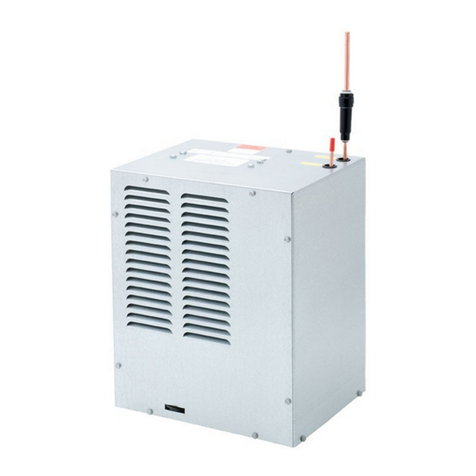
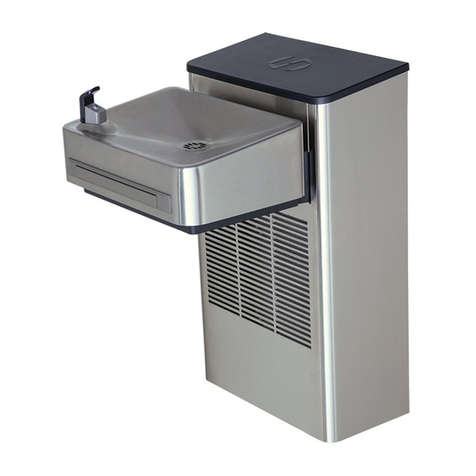
A. INSTALLATION OF LOWER UNIT (CHILLING SYSTEM)
1. Verify that the electrical receptacle, water supply/valve, and drain locations are all in accordance with the installation
drawing.
a. NOTE: The installation drawing addresses new installations as well as retrofits. Consult the retrofit pages of the
installation drawing if uncertain whether a retrofit will be possible in your case.
2. Remove the hanger bracket from the back of the unit by removing (1) screw.
3. Mount the hanger bracket on the wall using (4) 1/4” structural screws.
a. NOTE: The screws must engage into structural material such as concrete, metal backing, wood blocking, etc.
DO NOT use drywall anchors.
b. NOTE: The hanger bracket has a notch indicating the centerline of the unit, as well as a second notch off-
center indicating the ideal drain line location at the wall. If the centerline of the drain does not align with the
second notch, consider moving the bracket location to accommodate.
c. NOTE: It is recommended to mount the bottle filler bracket at this time. Refer to the applicable steps in those
sections.
4. With the lower unit laying on its back, remove the (4) screws holding the skirt to the bottom of the frame. Then remove
the skirt by sliding the skirt away.
5. Hang the lower unit onto the hanger bracket.
a. NOTE: The hanger bracket must go through the holes in the frame that are shaped
like a sideways letter “P”.
b. NOTE: The bracket allows for some lateral adjustment of the unit’s location. Slide
the unit laterally as needed at this time.
6. Secure both the lower right and lower left ends of the lower unit to the wall using at least (2)
1/4” or 3/8” structural screws. These screws should go through the holes which are
approximately 5” from the bottom of the lower unit. Washers may be required.
a. NOTE: The screws must engage into structural material such as concrete, metal
backing, wood blocking, etc. DO NOT use drywall anchors.
7. Connect the water inlet line (attached to either the strainer or filter, as applicable), to the water
stop by following the steps below.
a. Cut the inlet line square and clean to the appropriate length, if needed.
b. Install the compression nut (included with your supply valve), followed by the plastic
ferrule (supplied), and the brass tube support (supplied) onto the inlet line. Note the
correct orientation of the plastic ferrule, as shown in Figure 2. Do not use the brass
ferrule included with your supply valve.
c. Insert the inlet line into the supply valve until it bottoms out. Thread the nut
down onto the supply valve until finger tight. Put a line on the nut using a
marker. Tighten exactly one additional full (360 degrees) turn with a wrench,
using the line to count turns.
8. Install the P-trap. If necessary, trim the drain tailpiece in place so it interfaces properly
with the P-trap inlet. Pliers may be required to tighten the nuts to a leak-tight condition.
9. If the unit has a filter, install the filter now. Take care not to damage the circuit board
which is near the filter head.
10. Note that the thermostat is factory set at 50°F (±5°F) under normal conditions. The
minimum thermostat set point varies with altitude. Adjust 1/16th turn counterclockwise
(warmer) from cold position for every 1500 ft above sea level to prevent freezing of
water.
11. CAUTION: Make sure that the main power plug is NOT connected at this time.
Proceed to section B.
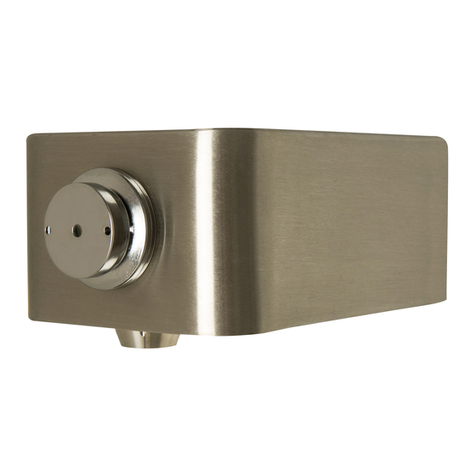
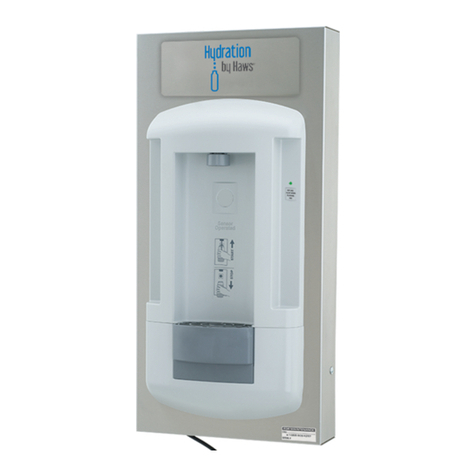
B. INSTALLATION OF BOTTLE FILLER
12. NOTE: The lower unit must NOT be powered on (plugged in) while installing the bottle filler.
13. Remove the bottle filler wall bracket from the bottle filler by removing the (1) screw. Mount the bracket on the wall using
(4) 1/4” structural screws and the (4) supplied washers. See installation drawing for dimensional details.
a. NOTE: The screws must engage into structural material such as concrete, metal backing, wood blocking, etc.
DO NOT use drywall anchors.
b. NOTE: The hanger bracket has a notch indicating the centerline of the bottle filler, which should align with the
centerline of the lower unit.
14. Check that the bottle filler wiring harness extends through the upper rear of the lower unit. If it does not, pull it out through
the upper rear of the lower unit.
15. Begin to feed the bottle filler water tubing through the slot in the back of the lower unit. With the lower brackets partially
engaged into the slots, connect the wiring harness to the circuit board on the back of the bottle filler.
16. Fully install the bottle filler by sliding it down fully onto its wall bracket. Route the water tubing out the left side of the lower
unit. The bottle filler should rest completely against the top of the lower unit, with no gap. It should also be flush with the
wall surface.
17. Slide the supplied foam insulation tubing over the end of the bottle filler water tubing, which is now running down through
the lower unit.
18. Connect the bottle filler water tubing to the 1/4” push-in elbow connector located inside of the lower unit. Tuck this tubing
into the lower unit so that it does not protrude or kink.
19. Install the (2) supplied #10-24 torx drive machine screws through the sides of the lower unit and into the lower bottle filler
brackets. Tightening these screws will lock the bottle filler into position, so be sure that the bottle filler is fitting tightly
against the top of the lower unit.
20. If present, remove the protective plastic film from the sensor area of the bottle filler.
21. Proceed to START-UP section.