HOTSY 965SS-1075SS • 8.914-401.0 • Rev. 09/11
OPERATOR’S MANUAL
PRESSUREWASHER
10
2. Install the provided battery terminals as shown in
Figure 4.
3. To reduce the possibility of sparking attach the wires
to the battery in the following order. Refer to Figure
4.First attach the red wire from the voltage regulator
and the red wire from the control box to the positive
“+" terminal of battery. Next, attach the black wire
fromthe voltageregulatorand the blackwirefromthe
control box to the negative“-" terminal of the battery.
To disconnect the battery remove the wires in the
opposite order as installed. Install battery box cover
and fasten in place.
Figure 4 - Battery Installations/Connections
Box Strap
Battery
Box Lid
RedWire From
Control Box
BlackWire
FromVoltage
Regulator
RedWire From
Voltage Regulator
12Volt
Battery
Battery
Terminal
Battery Box
BlackWire From
Control Box
ASSEMBLY & INSTALLATION INSTRUCTIONS
INSTALLATION
Responsibility
Theowner and/oruser musthave anunderstanding of
themanufacturer’s operatinginstructions andwarnings
before usingthisHotsy pressurewasher.Warning infor-
mation should be emphasized and understood. If the
operator is not fluent in English, the manufacturer’s in-
structions andwarnings shallbe readto anddiscussed
with the operator in the operator’s native language by
the purchaser/owner, making sure that the operator
comprehends its contents.
Owner and/or user must study and maintain for future
reference the manufacturers’instructions.
This manual should be considered a permanent part
of the machine and should remain with it if machine
is resold.
When ordering parts, please specify model and se-
rial number.
Getting Started
IMPORTANT: Proper initial installation of equipment
will assure more satisfactory performance, longer
service life, and lower maintenance cost.
IMPORTANT: The use of a backflow preventer on
the water supply hose is recommended and may be
required by local code.
The pressure washer should be run on a level surface
and in a protected area where it is not readily influenced
by outside forces such as strong winds, freezing
temperatures, rain, etc. The pressure washer should
be located to assure easy access for filling of fluids,
adjustments and maintenance. Normal precautions
should be taken by the operator to prevent moisture
from reaching the pressure washer. It is recommended
that a partition be made between the wash area and the
pressure washer to prevent direct spray from the wand
fromcomingincontactwiththe pressure washer.Moisture
reachingtheequipment will reduce thepressurewasher’s
service life. All installations must comply with the local
codes covering such installations.
Venting
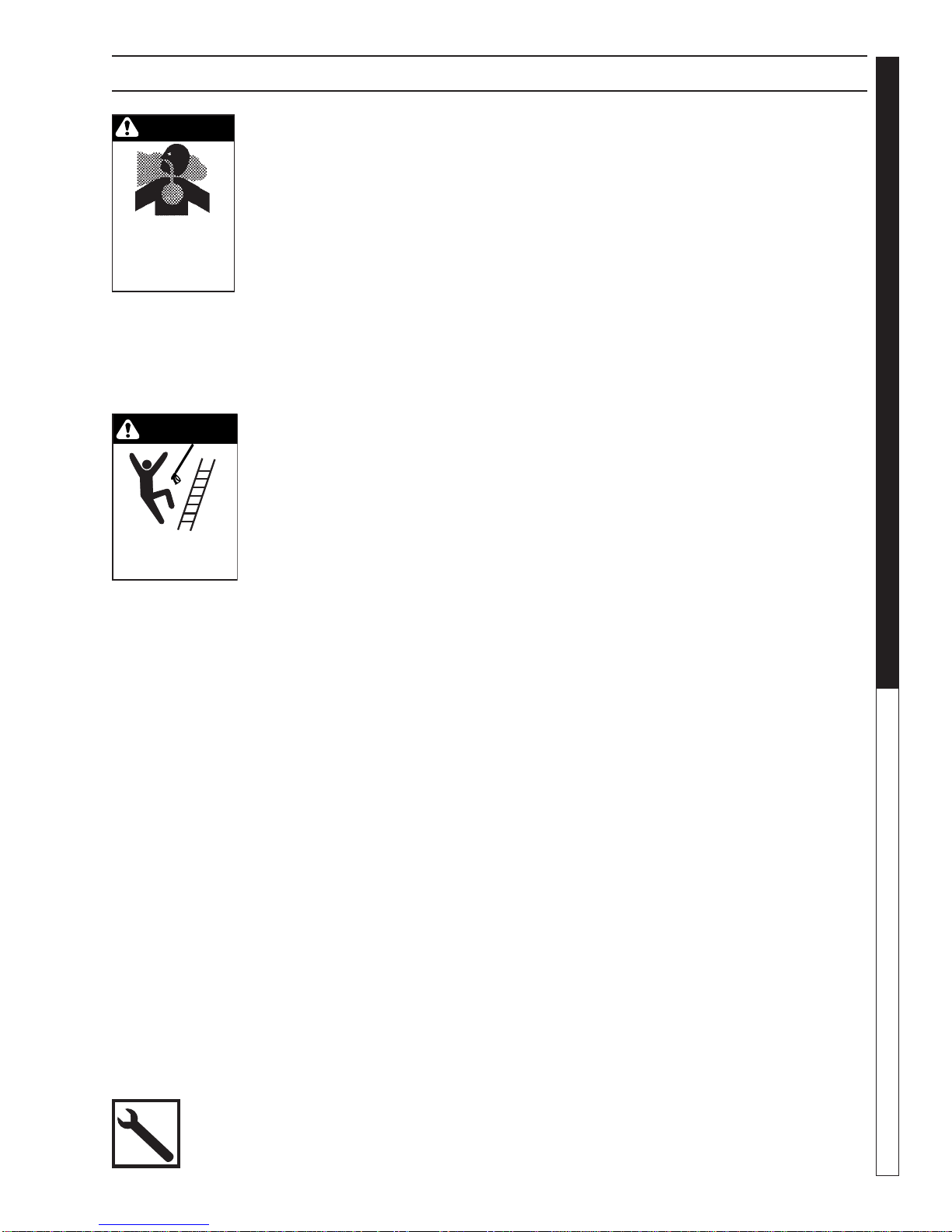
CAUTION:All venting must be in accordance with ap-
plicable federal and state laws, and local ordinances.
Consult local heating contractors
.
If the pressure washer is to be used in an enclosed area,
afluemustbe installed toventburner and engineexhaust
to the outside atmosphere. Be sure the flue is the same
size as the burner exhaust vent on the pressure washer.
See Component Identification for location. Poor draft
will cause the pressure washer to soot and not operate
properly. When selecting the location for installation,
beware of poorly ventilated locations or areas where
exhaust fans may cause an insuffi cient supply of oxygen.
Proper combustion can only be obtained when there is a
sufficientsupplyof oxygenavailableforthe amountoffuel
being burned.If it is necessary to install the machine in a
poorly ventilated area, outside fresh air may have to be
piped to the burner and a fan installed to bring sufficient
air into the machine. Locate the pressure washer so
that the flue will be as straight as possible and protrude
throughthe roof ataproper height andlocationto provide
adequate draft.This oil fired pressure washer must have
a draft regulator installed in the flue (available from most
heating contractors). A draft regulator will permit proper
upward flow of exhaust flue gases.
Inaddition,thepressurewashershould never be operated
in an enclosed area where high ambient temperatures
exist. High ambient temperatures (above 100oF) can
cause engine oil failure and will greatly reduce the
engine’s performance.