-5-
over the horizon. Shading causes loss of output, even though the factory fitted bypass diodes of
the PV module will minimize any such loss.
Do not install the PV module near open flame or flammable materials.
When solar modules are used to charge batteries, the battery must be installed in a manner,
which will protect the performance of the system and the safety of its users. Follow the battery
manufacturer’s guidelines concerning installation, operation and maintenance recommendations.
In general, the battery (or battery bank) should be away from the main flow of people and animal
traffic. Select a battery site that is protected from sunlight, rain, snow, debris, and is well
ventilated. Most batteries generate hydrogen gas when charging, which can be explosive. Do
not light matches or create sparks near the battery bank. When a battery is installed outdoors, it
should be placed in an insulated and ventilated battery case specifically designed for the
purpose.
Do not install the PV module in a location where it would be immersed in water or continually
exposed to water from a sprinkler or fountain etc.
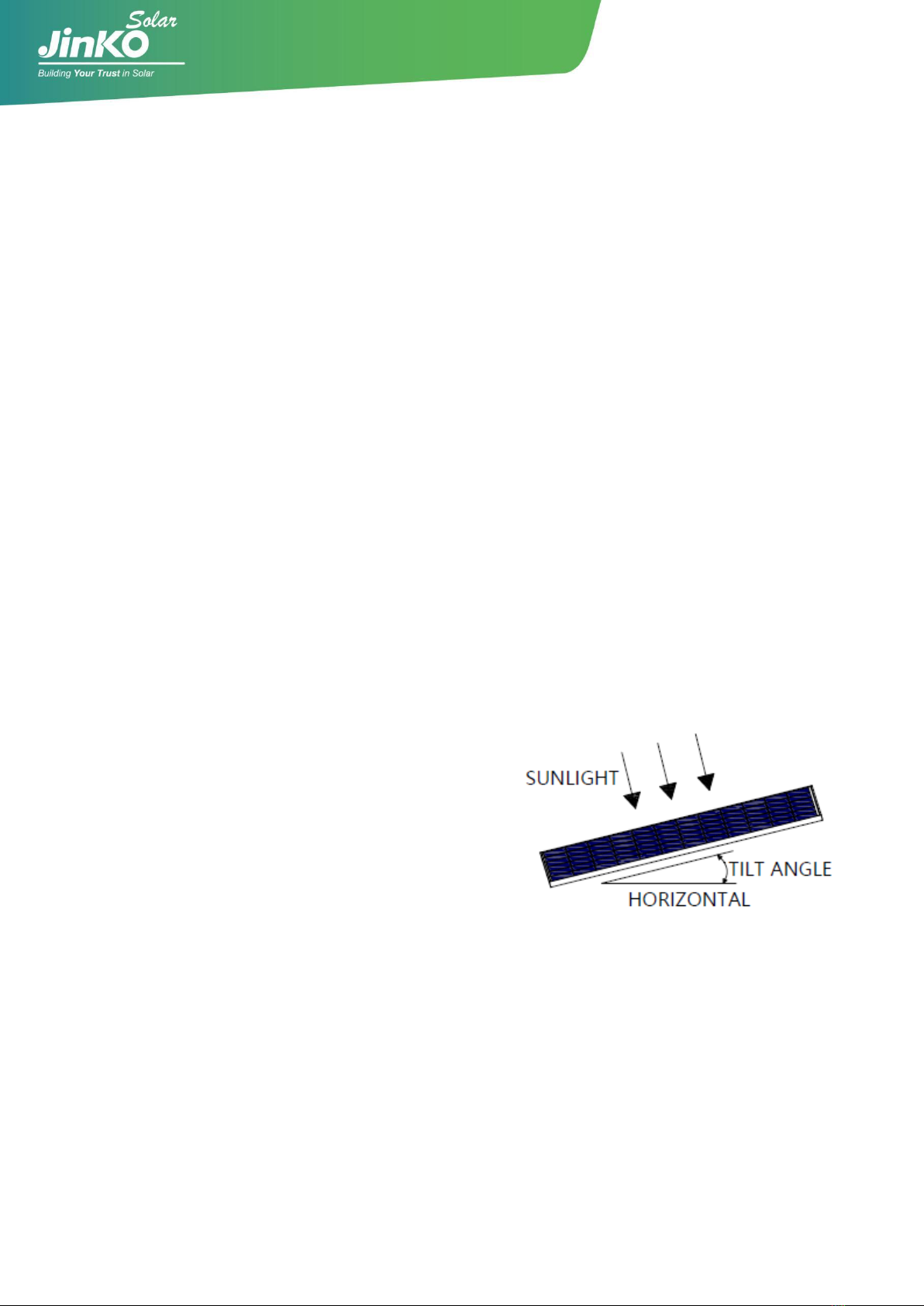
2.2.3 Tilt Angle Selection
The tilt angle of the PV module is measured between the surface of the PV module and a
horizontal ground surface (Figure 1). The PV module generates maximum output power when it
faces the sun directly.
For standalone systems with batteries where the PV modules are attached to a permanent
structure, the tilt angle of the PV modules should be selected to optimize the performance based
on seasonal load and sunlight. In general, if the PV
output is adequate when irradiance is low (e.g.,
winter), then the angle chosen should be adequate
during the rest of the year. For grid-connected
installations where the PV modules are attached to a
permanent structure, PV modules should be tilted so
that the energy production from the PV modules will
be maximized on an annual basis.
Figure1: PV module tilt angle
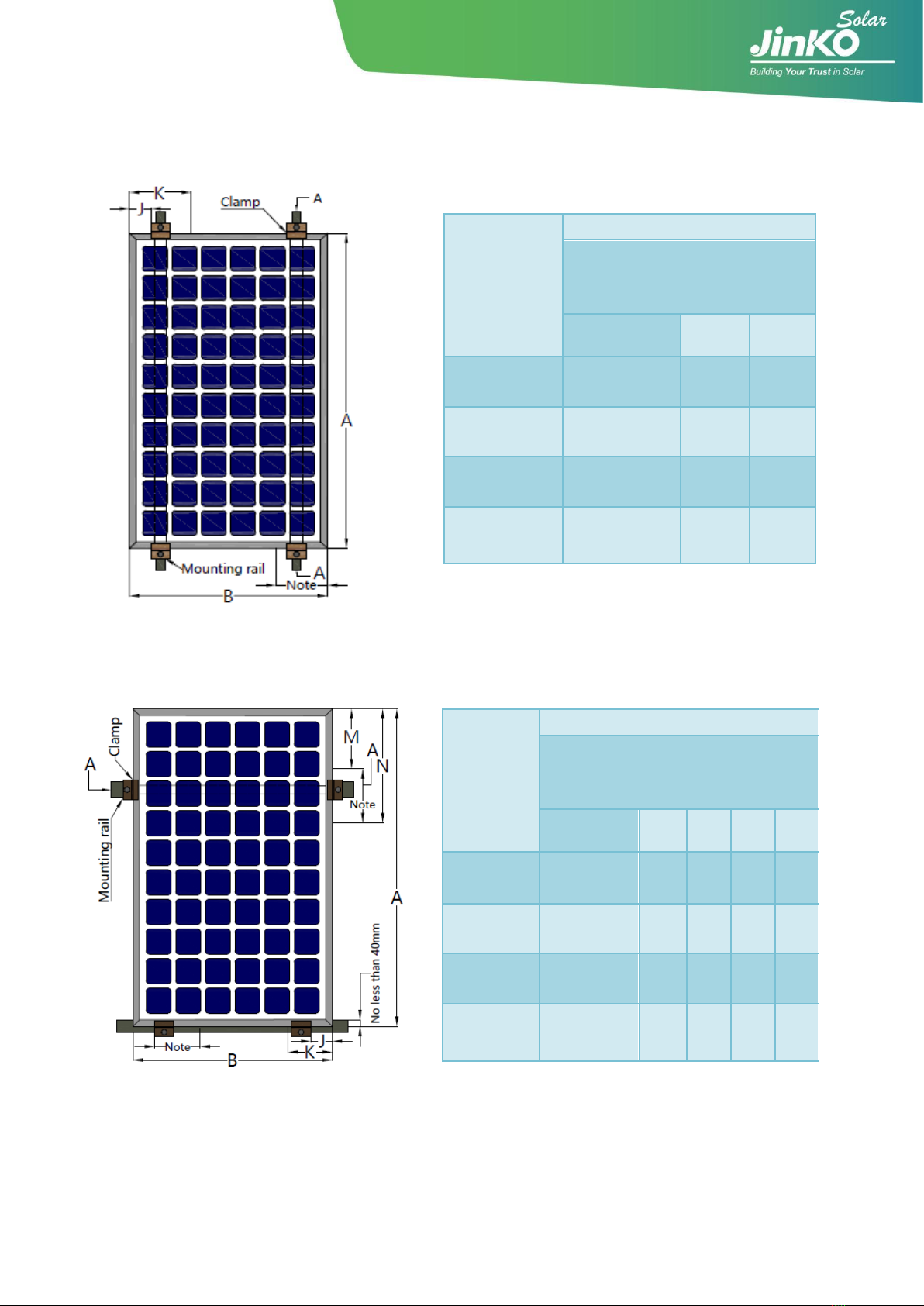
2.3 Mechanical Installation Introduction
Solar PV modules usually can be mounted by using the following methods: bolts and clamps.
﹡Note:
1) All installation methods herein are only for reference, and Jinko solar will not provide related
mounting components, the system installer or trained professional personnel must be