-4-
During the installation or operation, don’t use sharp tools to wipe the back sheet and glass. Scratches
can appear on the module.
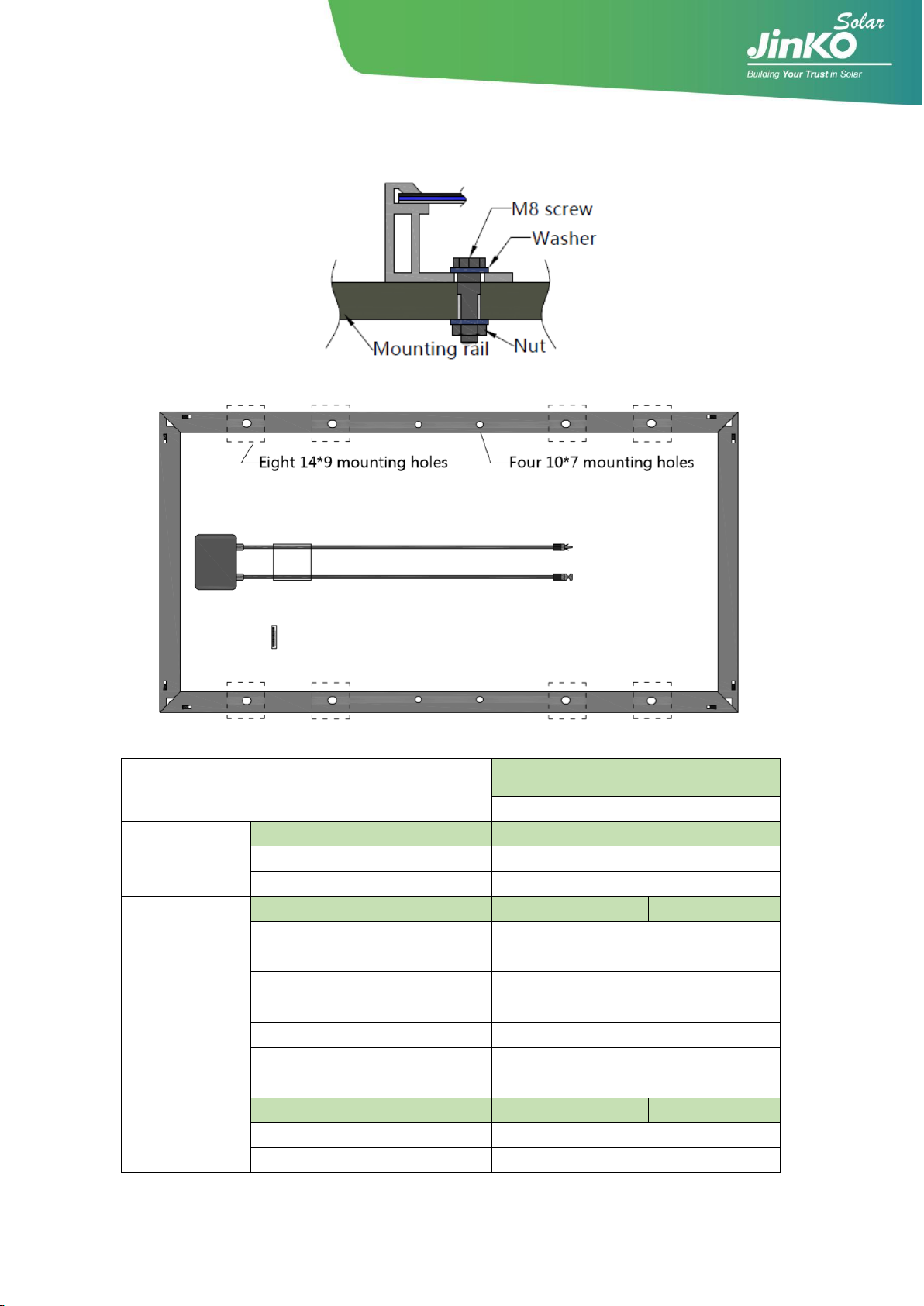
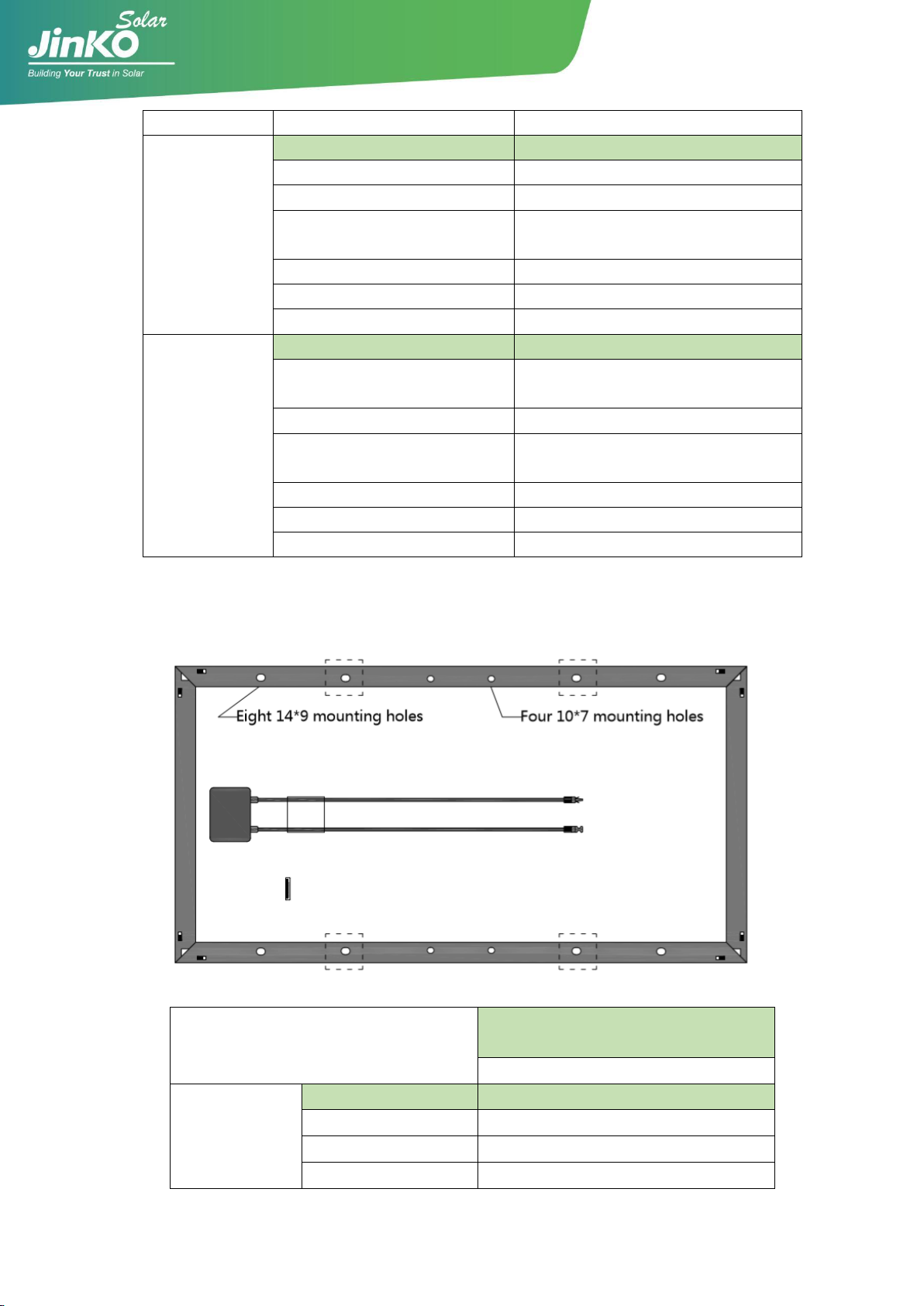
Do not drill holes in the frame. It may cause corrosion of the frame.
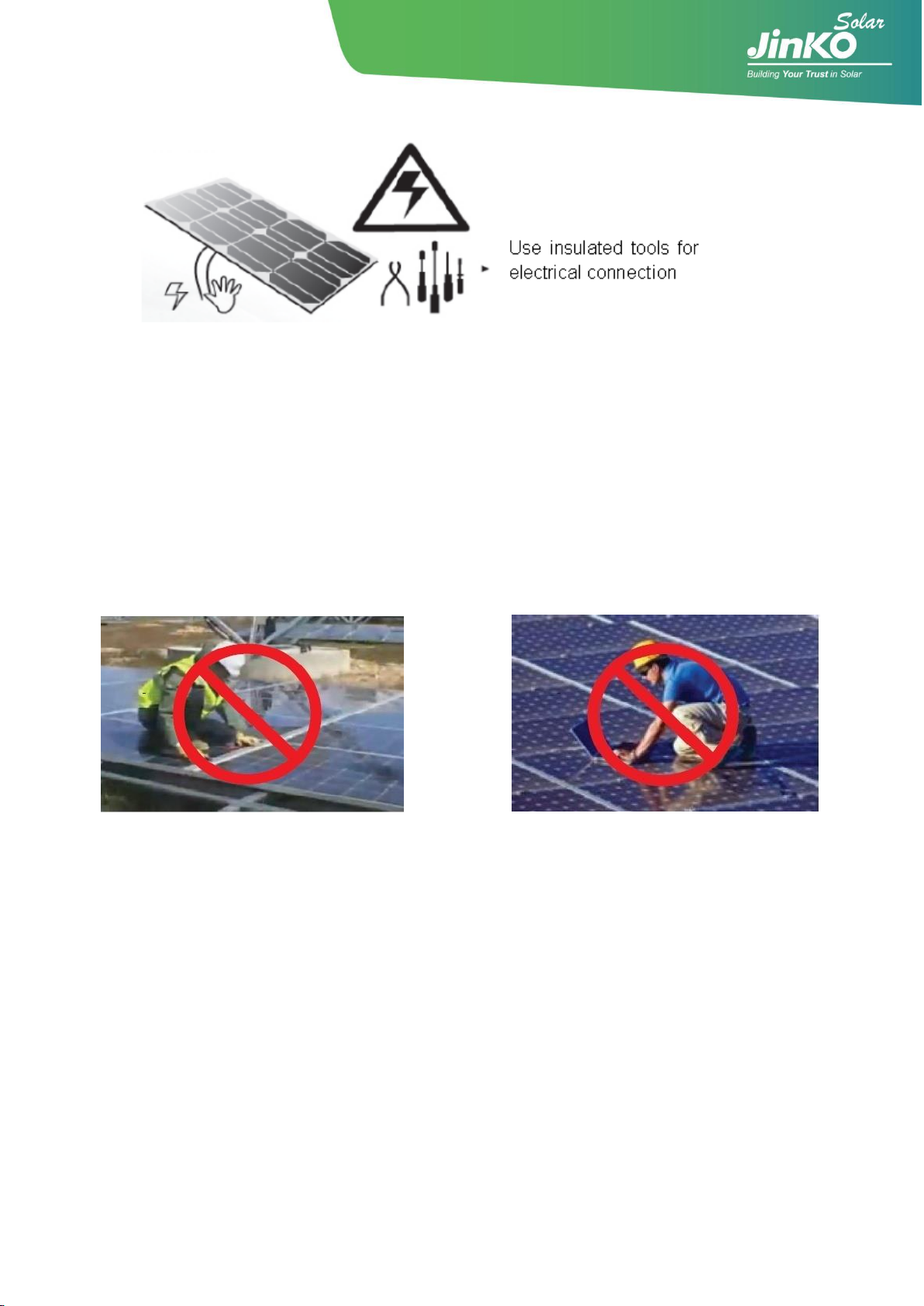
When installing modules on roof mounted structures, please try to follow the “from top to bottom” and/or
“from left to right” principle, and don’t step on the module. This will damage the module and would be
dangerous for personal safety.
2.2 Installation Condition
2.2.1 Climate Condition
Please install the modules in the following conditions:
a) Operating temperature: within –40°C(-40℉) to 85°C (185℉)
b) Humidity: < 85RH%
﹡Note: The mechanical load bearing (include wind and snow loads) of the module is based on the approved
mounting methods. The professional system installer must be responsible for mechanical load calculation
according to the system design.
2.2.2 Site Selection
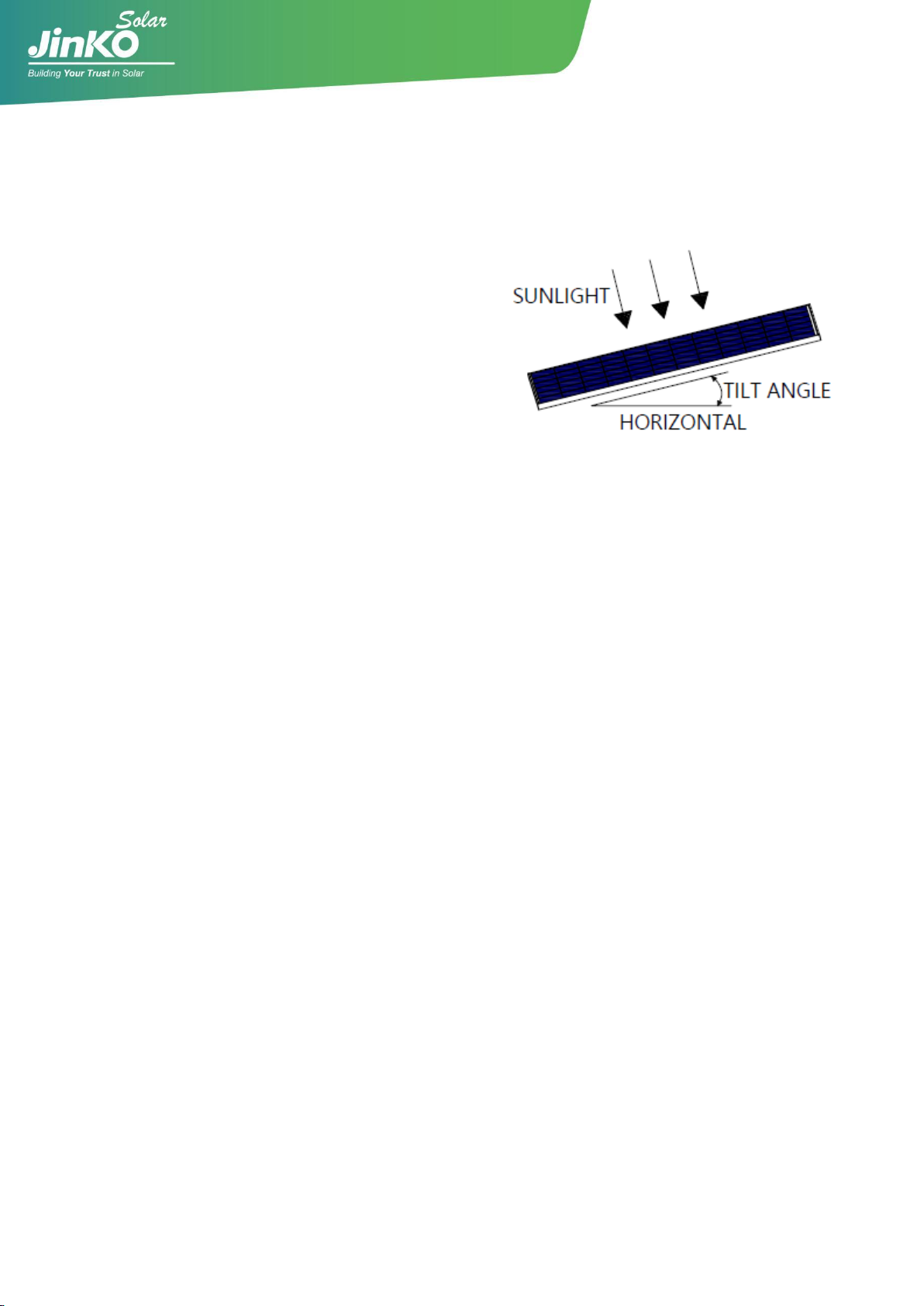
In most applications, Jinko solar PV modules should be installed in a location where they will receive
maximum sunlight throughout the year. In the Northern Hemisphere, the module should typically face south,
and in the Southern Hemisphere, the modules should typically face north. Modules facing 30 degrees away
from true South (or North) will lose approximately10 to 15 percent of their power output. If the module faces
60 degrees away from true South (or North), the power loss will be 20 to 30 percent.
When choosing a site, avoid trees, buildings or obstructions, which could cast shadows on the solar
photovoltaic modules especially during the winter months when the arc of the sun is lowest over the horizon.
Shading causes loss of output, even though the factory fitted bypass diodes of the PV module will minimize
any such loss.
Do not install the PV module near open flame or flammable materials.
When solar modules are used to charge batteries, the battery must be installed in a manner, which will protect
the performance of the system and the safety of its users. Follow the battery manufacturer’s guidelines
concerning installation, operation and maintenance recommendations. Ingeneral, the battery (or battery bank)
should be away from the main flow of people and animal traffic. Select a battery site that is protected from
sunlight, rain, snow, debris, and is well ventilated. Most batteries generate hydrogen gas when charging,
which can be explosive. Do not light matches or create sparks near the battery bank. When a battery is
installed outdoors, it should be placed in an insulated and ventilated battery case specifically designed for the
purpose.
Do not install the PV module in a location where it would be immersed in water or continually exposed to
water from a sprinkler or fountain etc.