INSTRUCTION MANUAL
AAL Profiline alarm receiver
HC-501-BA V1.05 Alarm receiver Page 1 of 4
AAL Homecare Fon +49 2208 9339170 Fax +49 2208 9339063 www.aal-homecare.com
Warning
The use of a call device does not release supervisors from the obligation to supervise the persons supported by such
a device. This system is radio-based and must therefore not be used for monitoring purposes if life-threatening
conditions are foreseeable.
Package Contents
AAL Profiline wireless alarm receiver
1Order number and frequency can be found on the identification decal.
Note: While unpacking, each shipment should be inspected for completeness and damage.
Note: In this manual, the AAL Profiline wireless alarm receiver is referred to as “alarm receiver”.
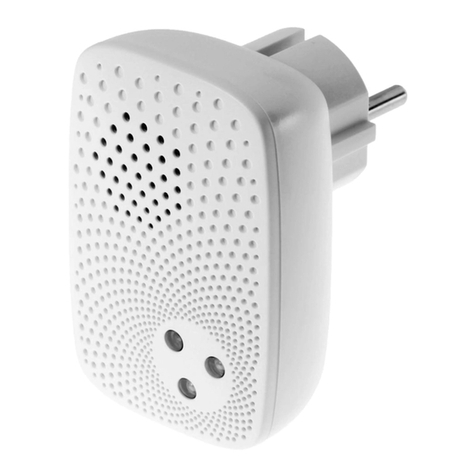
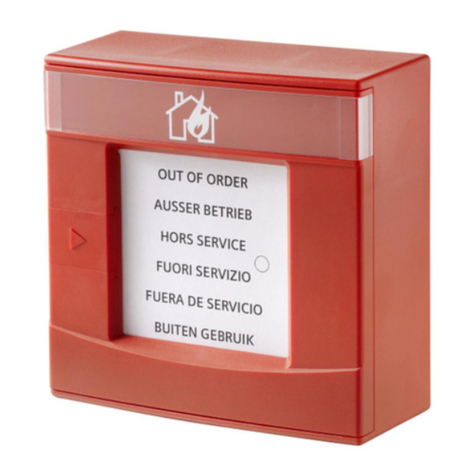
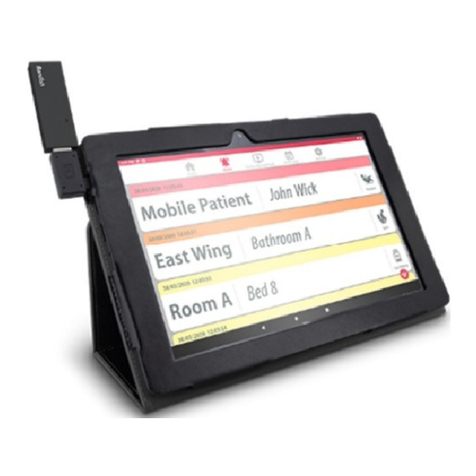
Fig. 1: alarm receiver
Putting into Operation:
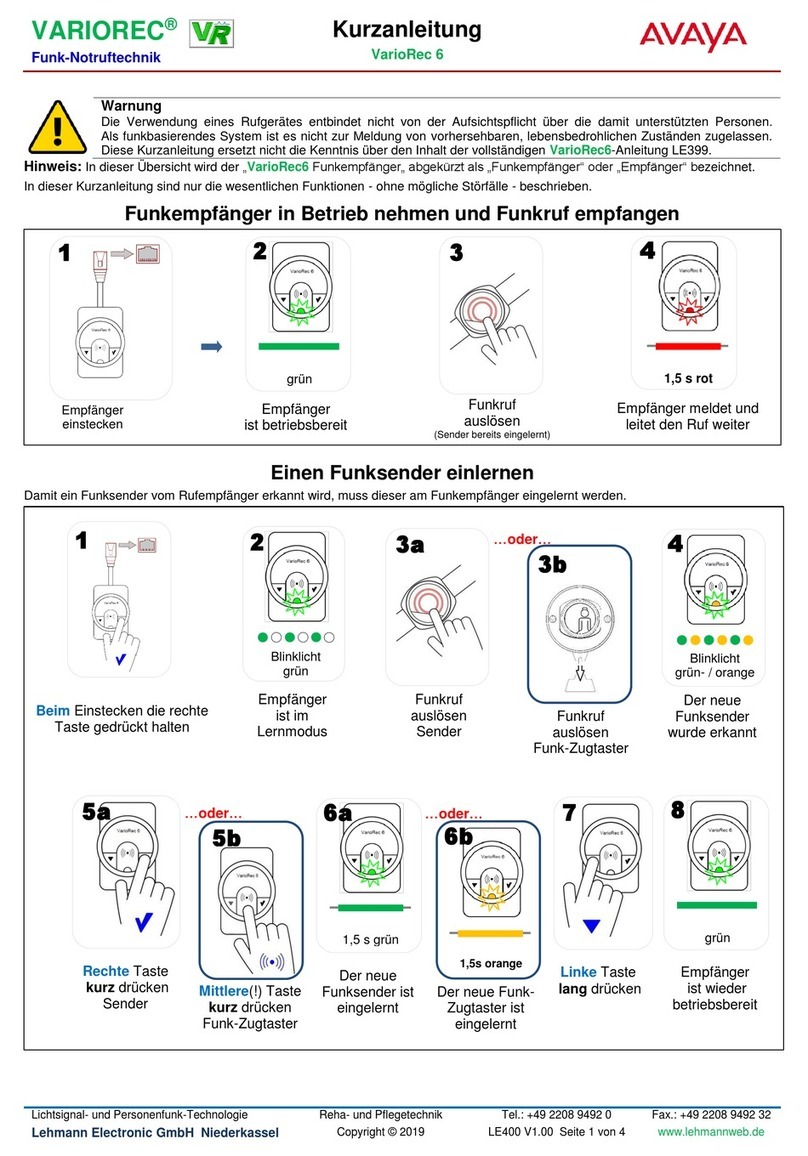
Programming / Deleting Transmitters to / from the Alarm Receiver
The “programming” to the radio receiver required for initial putting into operation is described in Fig. 3, and the optional “deletion“
from the radio receiver is described in Fig. 6.
Checking the Safe Range of the Radio Link
The range of the matching AAL Profiline transmitters meets the requirements of the technical inspection body of the German health
insurance companies. Within buildings, a range of approx. 30 m can be expected. The range depends to a large extent on the local
conditions.
Before using the device for the first time, an interference-free operation of the radio link should be ensured. Proceed as follows:
1. Switch on all electronic entertainment and communication devices (e.g., television sets, game consoles, and computers) in the
immediate vicinity.
2. Check if the radio message is received by the alarm receiver at a distance exceeding the intended usage distance by approx.
5 to 10 m. Make sure that the message is trigged by a single radio signal.
Transmitters to be Programmed
Generally, transmitters can be programmed as call or shut-down transmitters. The call transmitters (wristband transmitter and/or
contact mat, etc., for example) are with the person in need of care. They transmit a call that triggers an alarm in the alarm receiver.
A shut-down transmitter (a necklace transmitter, for example) is with the nursing person; alternatively, it can also be permanently
installed within the range of the alarm receiver. If the receiver is difficult to access, a shut-down transmitter allows for externally
switching off a triggered call. If an alarm receiver is plugged above a skirting board, for example, it is not required to bend down in
order to switch off the call. Shut-down transmitters are provided with green actuating areas which help to identify their functionality.
(no button!)
button:
Alarm type
button:
Shut-down
transmitter
Emergency call
transmitter
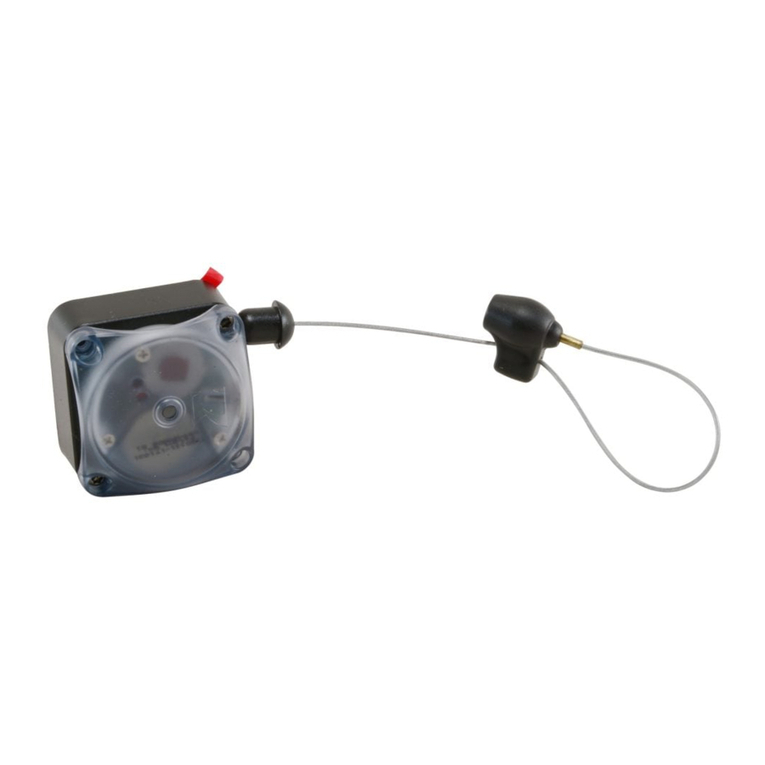
Wireless
momentary pull
switch
call pad
Fig. 2 (example): selection of compatible transmitters