ORI-652 Jupiter®Model JM4 Magnetostrictive Transmitter – SIL Safety Manual 3
1.0 Introduction
1.1 Product Description
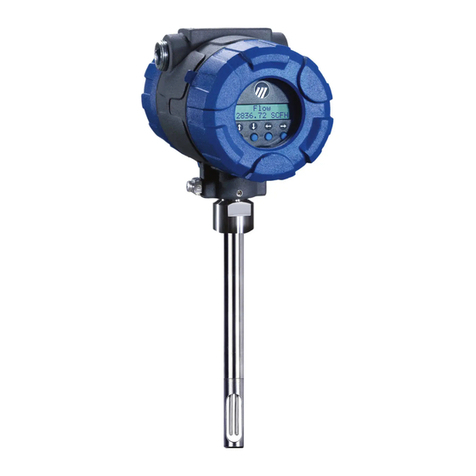
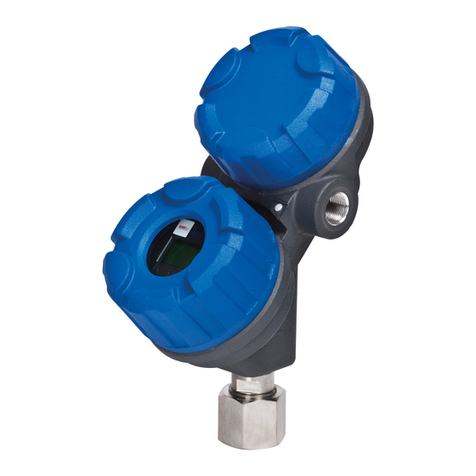
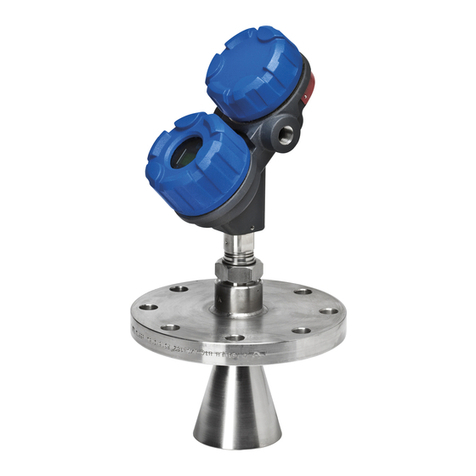
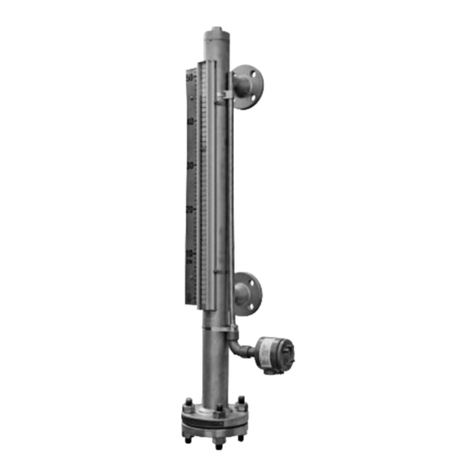
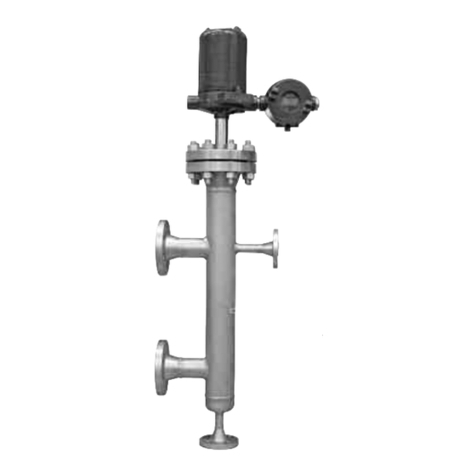
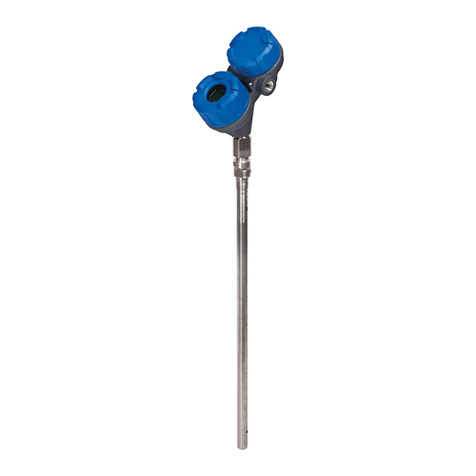
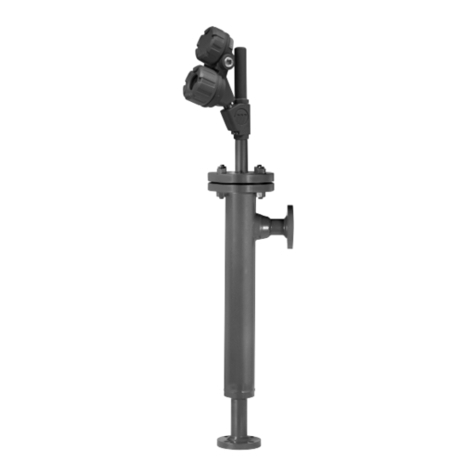
e JUPITER Model JM4 magnetostrictive level transmitter is a
loop-powered 24 VDC level transmitter based on magnetostric-
tive technology.
NOTE: For Safety Instrumented Systems usage, it is assumed that
the 4-20 mA output is used as the primary safety variable.
e analog output for the Model JM4 meets the NAMUR
NE 43 standard (3.8 mA to 20.5 mA usable). e transmitter
contains self-diagnostics and is programmed to drive the output
to a user-selected failure state, either low or high, upon internal
detection of a diagnostic indicator. e device can be equipped
with or without a graphic liquid crystal display (LCD).
Table 1 indicates the version of the JUPITER Mode JM4
transmitter suitable for SIL 2 applications based on the hardware
assessment.
1.2 Theory of Operation
Magnetostrictive level sensors are based on “time-of-ight”
technology.
Permanent magnets contained within a oat device track the
process liquid as it changes level. e JUPITER probe is xed
within close proximity to this magnetic eld. A short current
pulse is then applied to a specially designed wire alloy contained
within the probe. e interaction of the current pulse and
magnetic eld causes distortion in a small section of the wire
alloy. is in turn creates a vibratory disturbance which begins
to travel through the wire at a very constant rate of speed. e
disturbance is later detected via a sensing device at the top of
the probe and sent to the electronics unit where it is ltered and
amplied.
Extremely accurate level measurement can thus be obtained
precisely measuring the elapsed time between the current pulse
(start), and the returned pulse (stop). e JUPITER electronics
module processes these signals, and then performs various math-
ematical operations in order to provide the user with an analog
and/or digital representation of the liquid level.
1.3 Determining Safety Integrity Level (SIL)
e JUPITER Model JM4 is classied as a Type B device
according to IEC61508.
Tables 2 & 3 dene the criteria for the achievable SIL against the
target mode of operation in Demand Mode Operation.
• Table 2 shows the relationship between the Safety Integrity
Level (SIL) and the Probability of Failure on Demand Average
(PFDavg).
Table 1
JUPITER JM4 Model Number
Table 2
SIL vs. PFDavg
Safety
Integrity Level
(SIL)
Target Average
probability of failure on
demand (PFDavg)
4≥ 10-5 to < 10-4
3≥ 10-4 to < 10-3
2≥ 10-3 to < 10-2
1≥ 10-2 to < 10-1
Table 3
Minimum hardware fault tolerance
Type B sensors, nal elements and non-PE logic solvers
SFF
Hardware Fault
Tolerance (HFT)
0 1 2
None: < 60% Not
Allowed SIL 1 SIL 2
Low: 60% to < 90% SIL1 SIL 2 SIL 3
Medium: 90% to <99% SIL 2 SIL3
High: ≥99% SIL 3
Model:JM4-511X-XXX (HART Transmitter)
2YX-XXXX-XXX-XX-XXX (Probe)