www.moorecoinc.com | 800.749.22584
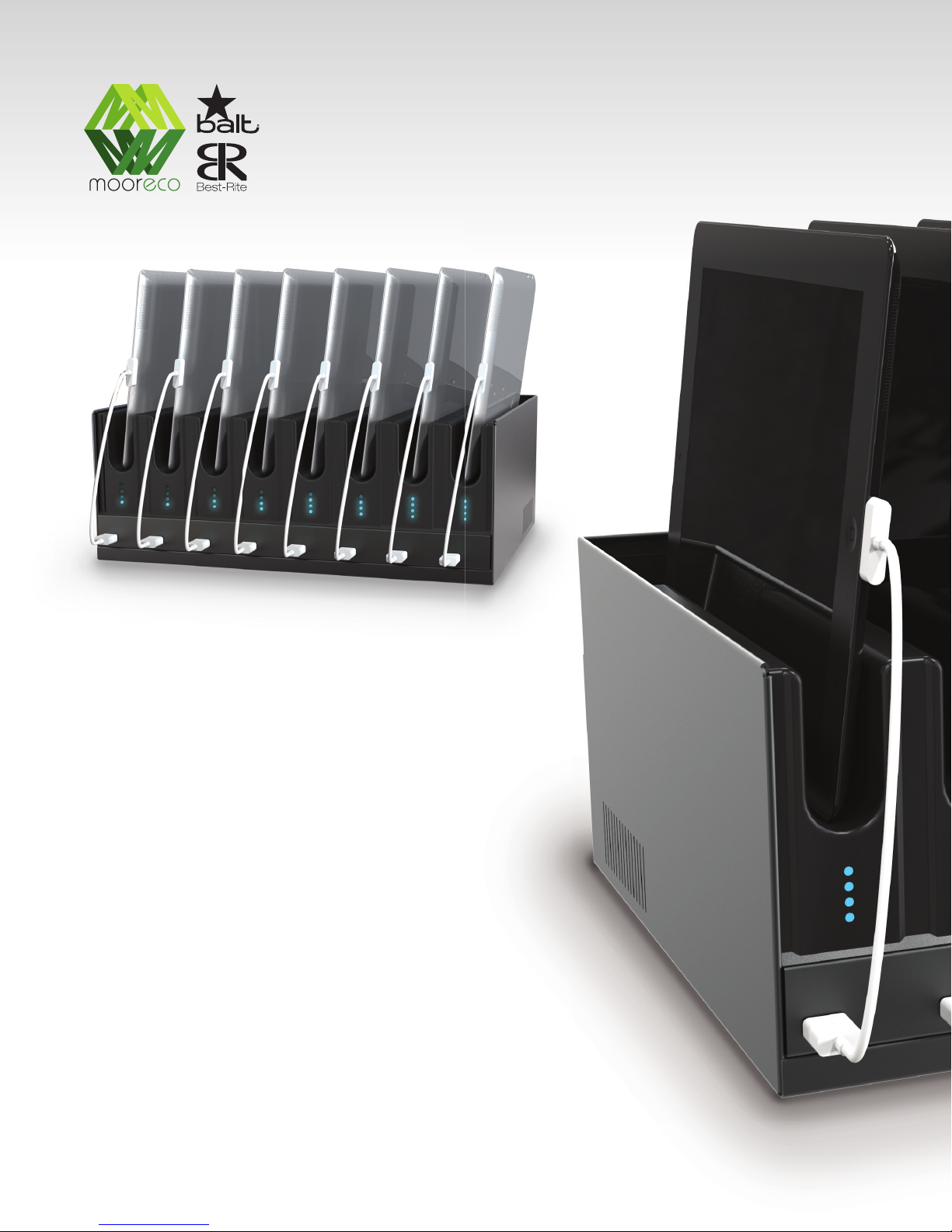
The iTeach®Desktop Charger is designed to charge Apple
iPad devices, Apple iPod Touch devices, Samsung Galaxy
tablets, Amazon Kindle, Barnes and Noble Nook, and other
devices that support charging via USB. Multiple brands can
be mixed within the iTeach Desktop Charger. Please contact
MooreCo at 1-800-749-2258 for additional compatibility
information.
Before using the iTeach Desktop Charger, it must be
plugged into an AC outlet (100-120 VAC, 60Hz) with a
minimum of 15 Amp rating. The iTeach Desktop Charger
uses a maximum of 10.0 Amps, but should be powered by
an outlet with extra capacity.
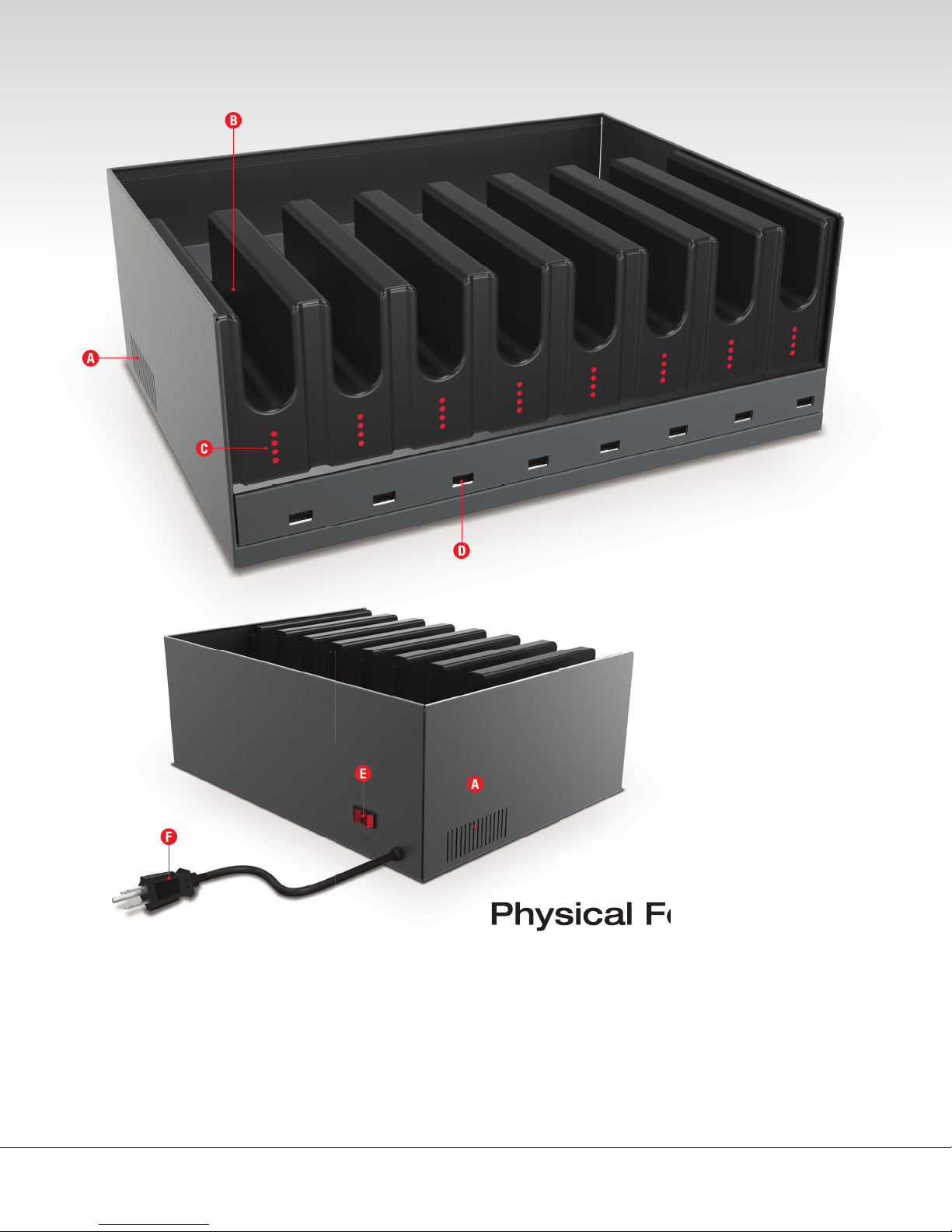
Each charging port consists of a row of four LEDs and
a charging cable ending with a female USB Type A
connector. In order to charge a particular type of device,
the corresponding style cable must be plugged into the
charging cable. For example, an Apple iPad cable is
required for charging an iPad.
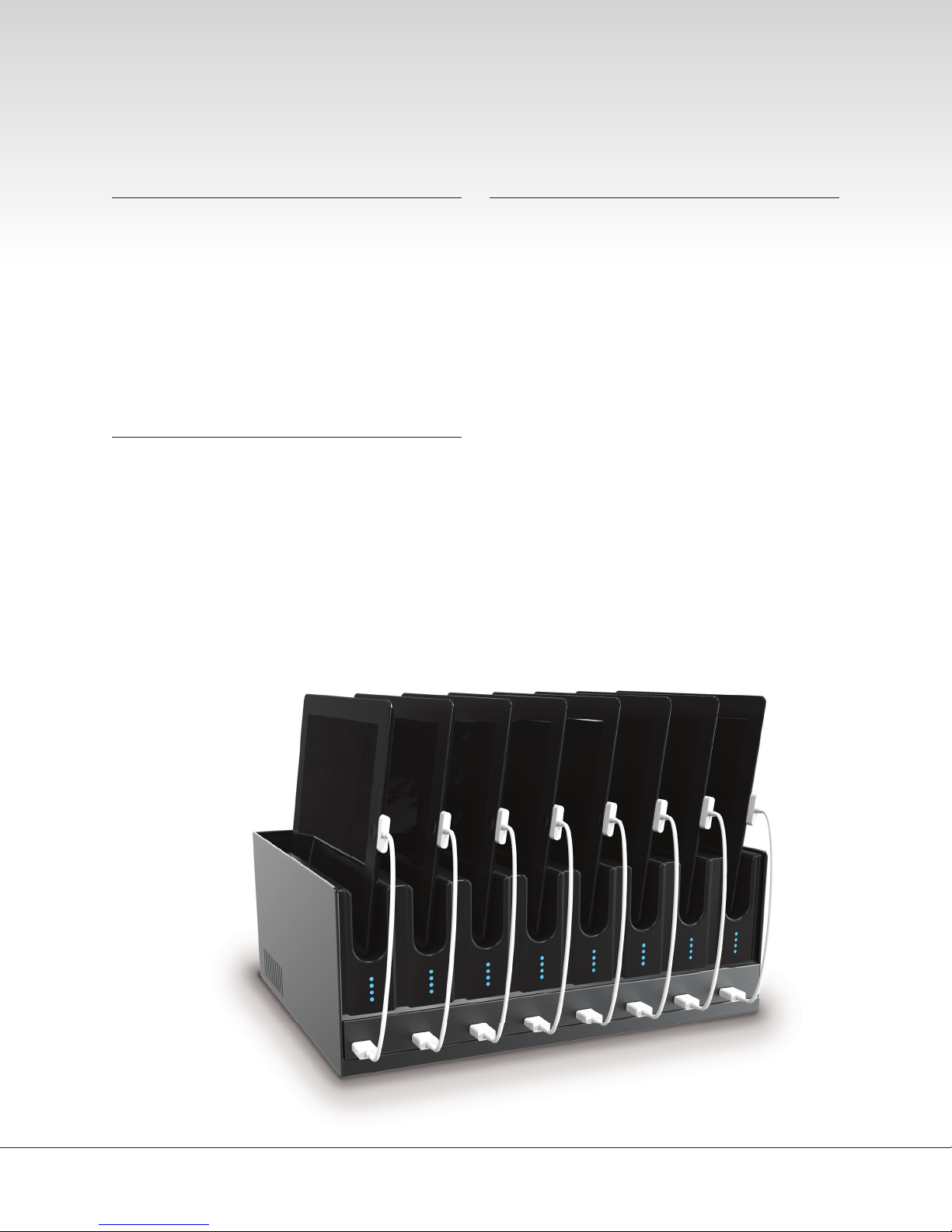
As a tablet is charged, additional blue LEDs will appear to
indicate charging time. One blue LED is visible for the initial
90 minutes (1.5 hours) of charging. After 90 minutes, a
second blue LED appears. Once an additional 90 minutes
has passed, a third blue LED lights up. The fourth blue
LED becomes visible after the tablet has been charged 4.5
hours.
The following list summarizes the meaning of each LED
status indication:
1 red LED: Nothing connected
1 blue LED: tablet connected, less than 1.5 hours
charge time
2 blue LEDs: tablet connected, charge time between
1.5 and 3 hours
3 blue LEDs: tablet connected, charge time between
3 and 4.5 hours
4 blue LEDs: tablet connected, charge time more
than 4.5 hours
Any time the iTeach Desktop Charger has power, each port
should display one of the LED indications above.
In the event that the iTeach Desktop Charger is plugged
into an AC outlet without lighting any LEDs, the unit is not
receiving power. This can be caused by a blown fuse
located inside the iTeach Desktop Charger, or by a problem
with the AC outlet (such as a blown breaker). In such
circumstances, a properly trained technician should be
contacted to address the situation.
Unit Operation