manuals.online logo
Brands
  1. Home
  2. •
  3. Brands
  4. •
  5. PRESIDENT
  6. •
  7. Radio
  8. •
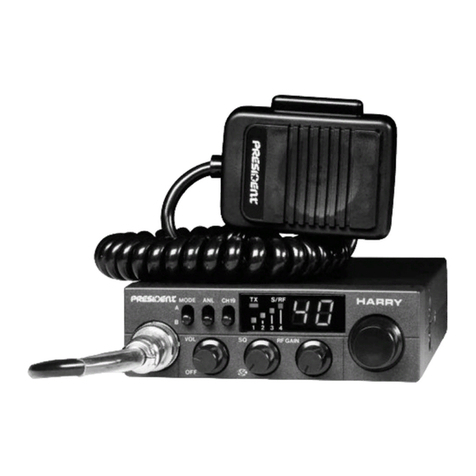
  9. PRESIDENT HARRY II CLASSIC User manual

PRESIDENT HARRY II CLASSIC User manual

Other PRESIDENT Radio manuals

PRESIDENT JOHNSON II User manual

PRESIDENT

PRESIDENT JOHNSON II User manual

PRESIDENT TOMMY User manual

PRESIDENT

PRESIDENT TOMMY User manual

PRESIDENT TRUMAN User manual

PRESIDENT

PRESIDENT TRUMAN User manual

PRESIDENT TAYLOR III User manual

PRESIDENT

PRESIDENT TAYLOR III User manual

PRESIDENT TOMMY User manual

PRESIDENT

PRESIDENT TOMMY User manual

PRESIDENT TAYLOR 3 User manual

PRESIDENT

PRESIDENT TAYLOR 3 User manual

PRESIDENT George User manual

PRESIDENT

PRESIDENT George User manual

PRESIDENT JACKSON II User manual

PRESIDENT

PRESIDENT JACKSON II User manual

PRESIDENT HENRY classic ASC 12/24 User manual

PRESIDENT

PRESIDENT HENRY classic ASC 12/24 User manual

PRESIDENT LINCOLN User manual

PRESIDENT

PRESIDENT LINCOLN User manual

PRESIDENT HARRISON User manual

PRESIDENT

PRESIDENT HARRISON User manual

PRESIDENT TEDDY R. User manual

PRESIDENT

PRESIDENT TEDDY R. User manual

PRESIDENT HARRY III User manual

PRESIDENT

PRESIDENT HARRY III User manual

PRESIDENT HARRISON User manual

PRESIDENT

PRESIDENT HARRISON User manual

PRESIDENT JFK II User manual

PRESIDENT

PRESIDENT JFK II User manual

PRESIDENT HARRY User manual

PRESIDENT

PRESIDENT HARRY User manual

PRESIDENT Ronald 10 User manual

PRESIDENT

PRESIDENT Ronald 10 User manual

PRESIDENT JOHNSON II User manual

PRESIDENT

PRESIDENT JOHNSON II User manual

PRESIDENT Randy II M User manual

PRESIDENT

PRESIDENT Randy II M User manual

PRESIDENT MC KINLEY II FCC User manual

PRESIDENT

PRESIDENT MC KINLEY II FCC User manual

PRESIDENT HARRY III CLASSIC User manual

PRESIDENT

PRESIDENT HARRY III CLASSIC User manual

PRESIDENT Glenn User manual

PRESIDENT

PRESIDENT Glenn User manual

PRESIDENT HARRY II User manual

PRESIDENT

PRESIDENT HARRY II User manual

PRESIDENT Jackson User manual

PRESIDENT

PRESIDENT Jackson User manual

Popular Radio manuals by other brands

EisSound KBSound iSelect user manual

EisSound

EisSound KBSound iSelect user manual

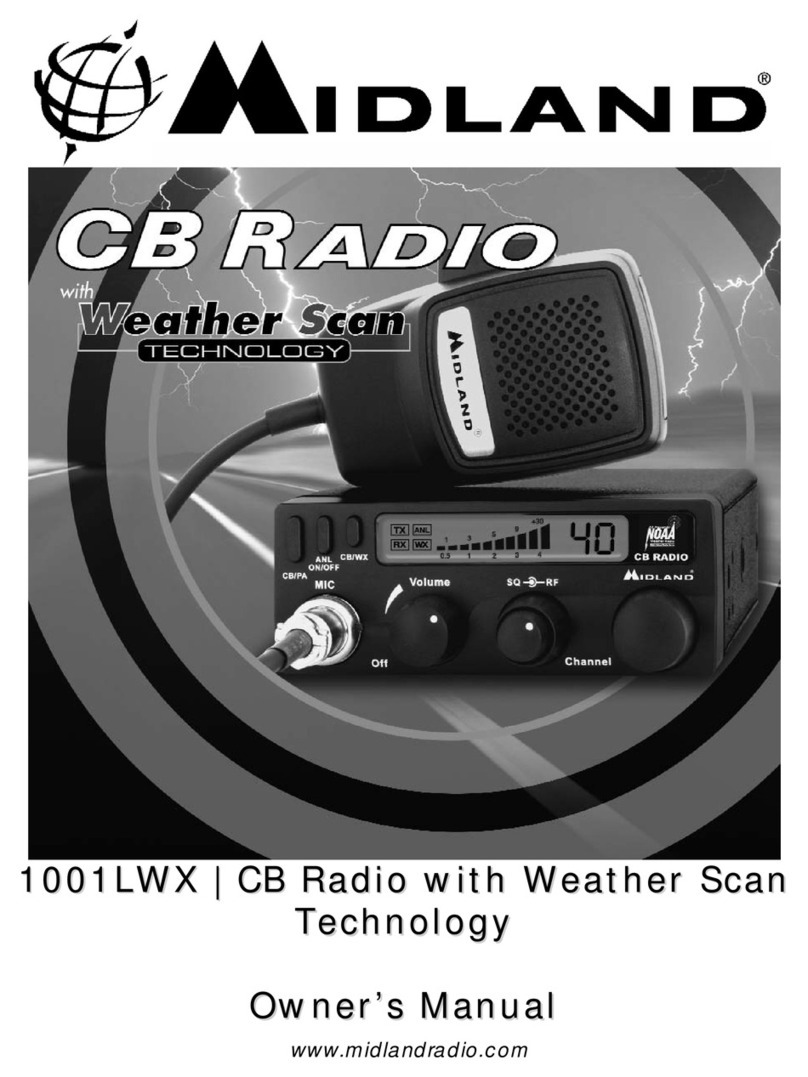
Midland 1001LWX owner's manual

Midland

Midland 1001LWX owner's manual

Konig HAV-SR41 manual

Konig

Konig HAV-SR41 manual

Roberts exprssion manual 

Roberts

Roberts exprssion manual 

VDigi DD3.0 Operation manual

VDigi

VDigi DD3.0 Operation manual

Radio Shack 21-1863 owner's manual

Radio Shack

Radio Shack 21-1863 owner's manual

Roberts Stream 207 instruction manual

Roberts

Roberts Stream 207 instruction manual

Sony Walkman SRF-M97 Service manual

Sony

Sony Walkman SRF-M97 Service manual

Stanley FatMax FMC770 manual

Stanley

Stanley FatMax FMC770 manual

auna DAB-Radio 10026947 manual

auna

auna DAB-Radio 10026947 manual

SOUNDMASTER UR190 instruction manual

SOUNDMASTER

SOUNDMASTER UR190 instruction manual

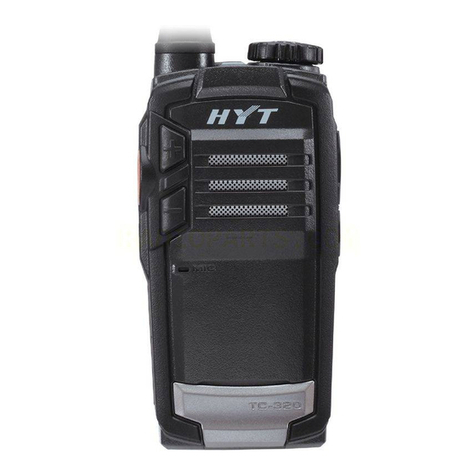
HYT TC-320 user manual

HYT

HYT TC-320 user manual

B-Tech GMRS-V2 manual

B-Tech

B-Tech GMRS-V2 manual

Weierwei VEV-V8 user manual

Weierwei

Weierwei VEV-V8 user manual

SOUNDMASTER DAB750 instruction manual

SOUNDMASTER

SOUNDMASTER DAB750 instruction manual

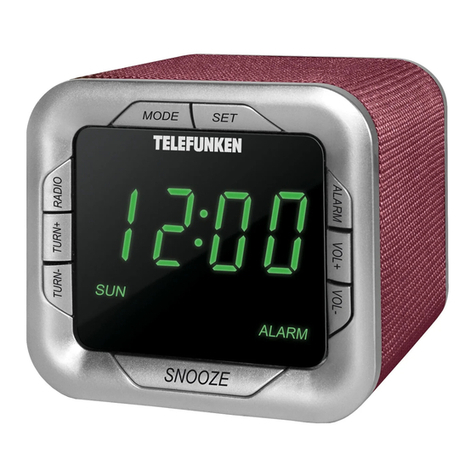
Telefunken TF-1505 instruction manual

Telefunken

Telefunken TF-1505 instruction manual

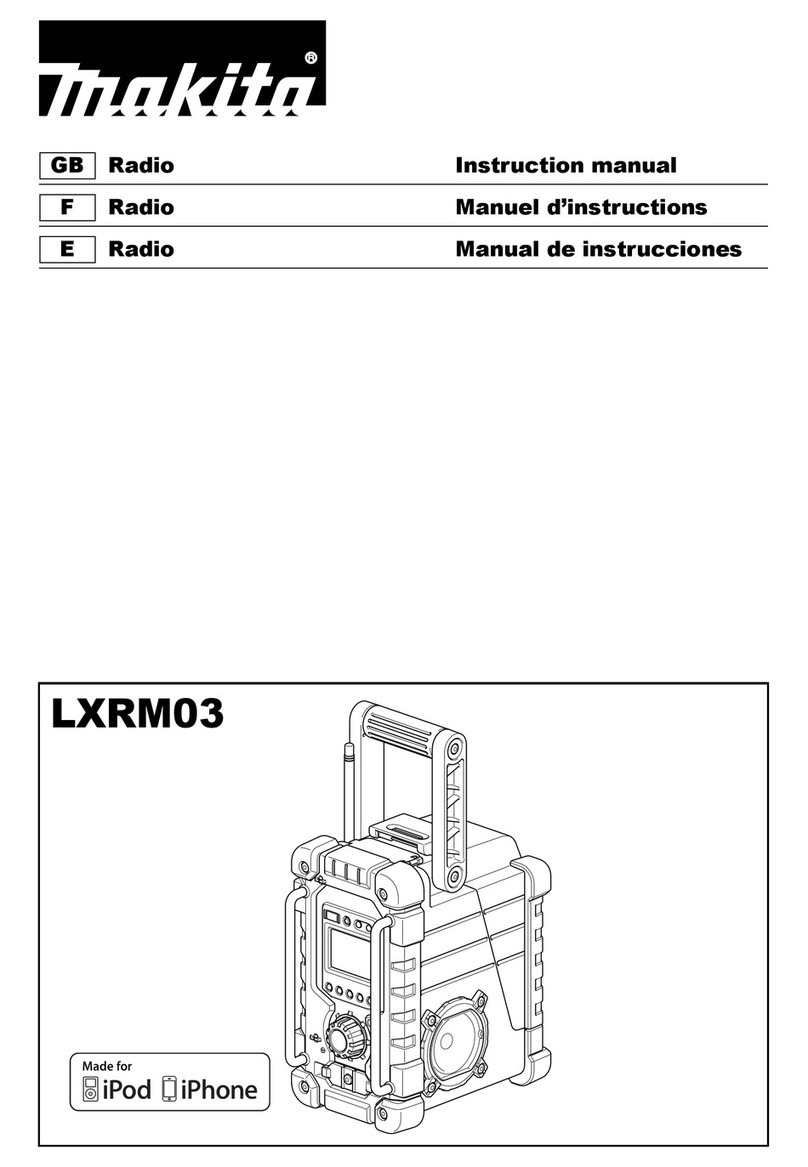
Makita LXRM03 instruction manual

Makita

Makita LXRM03 instruction manual

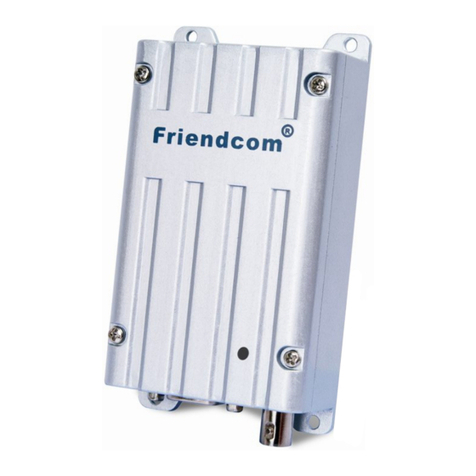
FRIENDCOM FC-302V user manual

FRIENDCOM

FRIENDCOM FC-302V user manual

manuals.online logo
manuals.online logoBrands
  • About & Mission
  • Contact us
  • Privacy Policy
  • Terms and Conditions

Copyright 2025 Manuals.Online. All Rights Reserved.

Manuel d'utilisation / Manual del usuario
Owner's manual / Handbuch
Votre PRESIDENT HARRY II Classic en un coup d'œil
Un vistazo a vuestro PRESIDENT HARRY II
Classic
Ihr PRESIDENT HARRY II
Classic
auf einen BlickYour PRESIDENT HARRY II
Classic
at a glance
3
SOMMAIRE
INSTALLATION 5
UTILISATION 7
CARACTÉRISTIQUES TECHNIQUES 9
GUIDE DE DÉPANNAGE 9
COMMENT ÉMETTRE/RECEVOIR UN MESSAGE 9
GLOSSAIRE 10
DÉCLARATION DE CONFORMITÉ 13
GARANTIE 14
TABLEAUX DES FRÉQUENCES 47 ~ 49
NORMES EUROPÉENNES 50
SUMARIO
INSTALACIÓN 17
UTILIZACIÓN 19
CARACTERÍSTICAS TÉCNICAS 21
GUÍA DE PROBLEMAS 21
COMO EMITIR O RECIBIR UN MENSAJE 21
LÉXICO 22
DECLARACIÓN CE DE CONFORMIDAD 25
GARANTÍA 26
TABLAS DE FRECUENCIAS 47 ~ 49
NORMAS EUROPEAS 50
SUMMARY
INSTALLATION 29
HOW TO USE YOUR CB 31
TECHNICAL CHARACTERISTICS 33
TROUBLE SHOOTING 33
HOW TO TRANSMIT OR RECEIVE A MESSAGE 33
GLOSSARY 34
CERTIFICATE OF CONFORMITY 46
FREQUENCY TABLES 47 ~ 49
EUROPEAN NORMS 50
INHALTSANGABE
INSTALLATION 37
BEDIENUNG 39
TECHNISCHE DATEN 41
BEI PROBLEMEN 41
TIPS FÜR DEN FUNKVERKEHR 42
BEURTEILUNG DER EMPFANGSQUALITÄT 42
KONFORMITÄTSERKLÄRUNG 45
CB-KANÄLE UND IHRE FREQUENZEN 47 ~ 49
EUROPÄISCH NORMEN 50
Français
Deutsch
Español
English
28
English
WARNING !
Before using, be careful never to transmit without
first having connected the antenna (connection
"B" situated on the back panel of the equipment)
or without having set the SWR (Standing Wave
Ratio) ! Failure to do so may result in destruction of
the power amplifier, which is not covered by the
guarantee.
The garantee of this transceiver is valid only in the country pf purchase.
MULTI-NORMS TRANSCEIVER!
See function “F” on page 32 and the European
Norms table on page 50.
29
English
MOUNTING
DIAGRAM
Welcome to the world of the new generation of CB radios. The
new PRESIDENT range gives you access to top performance CB
equipment. With the use of up-to-date technology, which guar-
antees unprecedented quality, your PRESIDENT HARRY II Classic is
a new step in personal communication and is the surest choice for
the most demanding of professional CB radio users. To ensure that
you make the most of all its capacities, we advise you to read
carefully this manual before installing and using your PRESIDENT
HARRY II Classic.
A) INSTALLATION:
1) WHERE AND HOW TO MOUNT YOUR MOBILE CB RADIO:
a)You should choose the most appropriate setting from a simple and practical point of
view.
b) Your CB radio should not interfere with the driver or the passengers.
c) Remember to provide for the passing and protection of different wires (e.g. power,
antenna, accessory cabling) so that they do not in any way interfere with the driving
of the vehicle.
d) To install your equipment, use the cradle (1) and the self-tapping screws [2] provided
(drilling diameter 3.2 mm). Take care not to damage the vehicle’s electrical system
while drilling the dash board.
e) Choose where to place the microphone support and remember that the micro-
phone cord must stretch to the driver without interfering with the controls of the
vehicle.
- N.B. : As the transceiver has a frontal microphone socket, it can be set into the dash
board. In this case, you will need to add an external loud speaker to improve the
sound quality of communications (connector EXT.SP situated on the back panel: C).
Ask your dealer for advice on mounting your CB radio.
30
English
OUTPUT RADIUS PATTERN
2) ANTENNA INSTALLATION:
a) Choosing your antenna:
- For CB radios, the longer the antenna, the better its results. Your dealer will be
able to help you with your choice of antenna.
b) Mobile antenna:
- Must be fixed to the vehicle where there is a maximum of metallic surface (ground
plane), away from windscreen mountings.
- If you already have a radio-telephone antenna installed, the CB antenna should be
higher than this.
-There are two types of antenna: pre-regulated which should be used on a good
ground plane (e.g. car roof or lid of the boot), and
. adjustable which offer a much larger range and can be used on a smaller ground
plane (see p 31 § 5, Adjustment of SWR).
- For an antenna which must be fixed by drilling, you will need a good contact
between the antenna and the ground plane. To obtain this, you should lightly scratch
the surface where the screw and tightening star are to be placed.
- Be careful not to pinch or flatten the coaxial cable (as this runs the risk of break down
and/or short circuiting).
- Connect the antenna (B).
c) Fixed antenna:
- A fixed antenna should be installed in a clear a space as possible. If it is fixed to a mast,
it will perhaps be necessary to stay it, according to the laws in force (you should seek
professional advice). All PRESIDENT an-
tennas and accessories are designed to
give maximum efficiency to each CB ra-
dio within the range.
3) POWER CONNECTION:
Your PRESIDENT HARRY II Classic is protected against an inversion of polarities.
However, before switching it on, you are advised to check all the connections. Your
equipment must be supplied with a continued current of 12 volts (A). Today, most cars
and lorries are negative earth. You can check this by making sure that the negative
terminal of the battery is connected either to the engine block or to the chassis. If this
is not the case, you should consult your dealer.
WARNING: Lorries generally have two batteries and an electrical installation of 24
volts, in which case it will be necessary to insert a 24/12 volt converter (type CV 24/
12 PRESIDENT) into the electrical circuit. The following connection steps should be
carried out with the power cable disconnected from the set.
a) Check that the battery is of 12 volts.
b) Locate the positive and negative terminals of the battery (+is red and -is black).
Should it be necessary to lengthen the power cable, you should use the same or a
superior type of cable.
c) It is necessary to connect your CB to a permanent (+) and (-). We advise you to
connect the power cable directly to the battery (as the connection of the CB cable
to the wiring of the car-radio or other parts of the electrical circuit may, in somecases,
increase the likelihood of interference).
d) Connect the red wire (+) to the
positive terminal of the battery
and the black (-) wire to the
negative terminal of the battery.
e) Connectthepowercabletoyour
CB radio.
WARNING: Never replace the
original fuse (2 A) by one of a
different value.

31
English
4) BASIC OPERATIONS TO BE CARRIED OUT BEFORE USING YOUR
SET FOR THE FIRST TIME (without transmitting and without using
the «push-to-talk» switch on the microphone):
a) Connect the microphone
b) Check the antenna connections
c) Turn the set on by turning the knob VOLUME clockwise.
d) Turn the SQUELCH knob to minimum (anti-clockwise). Adjust the volume to a
comfortable level.
e) Go to Channel 20 using the rotary knob on the front panel.
5) ADJUSTMENT OF SWR (Standing wave ratio):
WARNING: This must be carried out when you use your CB radio for the first time (and
whenever you re-position your antenna). The adjustment must be carried out in an
obstacle-free area.
* Using an external SWR meter (e.g. SWR 1 or SWR 2):
a) To connect the SWR meter :
- Connect the SWR meter between the CB radio and the antenna as close as possible
to the CB (use a maximum of 40 cm cable, type President CA 2C).
b) To adjust the SWR meter:
- Set the CB to channel 20.
- Put the switch on the SWR meter to position CAL ou FWD.
- Press the «push-to-talk» switch on the microphone to transmit.
- Bring the index needle to Wby using the calibration key.
- Change the switch to position SWR (reading of the SWR level). The reading on the V.U.
meter should be as near as possible to 1. If this is not the case, re-adjust your antenna
to obtain a reading as close as possible to 1. (An SWR reading between 1 and 1.8 is
acceptable).
- It will be necessary to re-calibrate the SWR meter after each adjustment of the
antenna.
WARNING: In order to avoid any losses and attenuations in cables used for connec-
tion between the radio and its accessories, PRESIDENT recommends to use a cable
with a length inferior to 3m.
Your CB is now ready for use.
B) HOW TO USE YOUR CB:
1) ON/OFF - VOLUME:
a) To turn the set on, turn the knob (1) clockwise
b) To increase the sound level, turn the same knob further clockwise.
2) SQUELCH:
Suppresses undesirable back-ground noises when there are no communication.
Squelch does not effect neither sound nor transmission power, but allows a consid-
erable improvement in listening comfort.
Turn the squelch knob clockwise to the exact point where all back-ground noise
disappears. This adjustment should be done with precision as, if set to maximum, (i.e.
fully clockwise) only the strongest signals will be received.
3) RF GAIN:
This knob is for adjusting sensitivity during reception. For long distance communica-
tions RF GAIN should be set to maximum. RF GAIN can be reduced to avoid distortion,
when your correspondent is close by and who does not have the RF POWER function.
The normal setting of this knob is on maximum (fully clockwise).
4) CHANNEL SELECTOR ROTARY KNOB:
Turning this knob allows you to choose a channel (1-40) for transmitting and receiving.
32
English
5) DISPLAY:
The display shows all the different functions. The bargraph shows the level of
reception and the level of power emitted. The TX LED lights up when the set goes into
transmission mode.
6) FREQUENCY BAND SELECTION
The frequency bands must be chosen according to the country where you are going
to operate. Do not use another configuration. Some countries require user’s licence.
a) Radio set switched OFF.
b) Slide the F/OFF switch on Fposition.
c) Switch ON the radio.
d) Choose the request configuration with the channel rotary switch (see the chart p. 50).
e) Slide the F/OFF switch on OFF position.
f) And then, for final confirmation of the choice before operating in the configuration,
switch OFF then ON the radio set.
7) MODE:
Use this key to select AM or FM. The modulation mode must correspond with that of
the person with whom you communicate.
AM/ Amplitude Modulation (AM) is for communications in areas where there are
obstacles and over medium distances.
FM/ Frequency Modulation (FM) is for nearby communications in flat, open areas. It
gives better quality of communication (squelch adjustment needs more finesse).
8) CH 19:
Channel 19 is automatically selected when you activate this switch. To activate this
function, move the switch to CH19 position, and to return to the previous channel
move the same switch to OFF position.
9) 6-PIN MICROPHONE PLUG:
This plug is situated on the front panel, thereby making it easier to set the equipment
into the dashboard. See the cabling diagram on page 49.
10) PTT (push to talk):
Depress this knob to transmit a message and release to listen to an incoming
communication.
A) DC-POWER TERMINAL (13,2 V)
B) ANTENNA CONNECTOR (SO-239)
C) EXTERNAL SPEAKER JACK (8
ΩΩ
ΩΩ
Ω
, Ø 3,5 mm)
33
English
C) TECHNICAL CHARACTERISTICS:
1) GENERAL:
- Channels : 40
- Modulation modes : AM/FM
- Frequency ranges : from 26.965 MHz to 27.405 MHz
- Antenna impedance : 50 ohms
- Power supply : 13.2 V
- Dimensions (in mm) : 115 (L) x 180 (H) x 35 (D)
- Weight : 0,8 kg
- Accessories supplied : Electret microphone with support,
mounting cradle, screws.
- Filter : ANL (Automatic Noise Limiter) built-in
2) TRANSMISSION:
- Frequency allowance : +/- 300 Hz
- Carrier power : 1 W AM / 4 W FM
- Transmission interference : inferior to 4 nW (- 54 dBm)
- Audio response : 300 Hz à 3 KHz in AM/FM
- Emitted power in the adj. channel : inferior to 20 µW
- Microphone sensitivity : 10 mV
- Drain : 1,7 A (with modulation)
- Modulated signal distortion : 1,8 %
3) RECEPTION:
- Maxi. sensitivity at 20 dB sinad : 0.5 µV - 113 dBm (AM/FM)
- Frequency response : 300 Hz à 3 kHz in AM/FM
- Adjacent channel selectivity : 60 dB
- Maximum audio power : 5 W
- Squelch sensitivity : minimum 0.2 µV - 120 dBm
maximum 1 mV - 47 dBm
- Frequency image rejection rate : 60 dB
- Intermediate frequency rej. rate : 70 dB
- Drain : 500 mA nominal / 800 mA maximum
D) TROUBLE SHOOTING:
1) YOUR CB RADIO WILL NOT TRANSMIT OR YOUR TRANSMISSION
IS OF POOR QUALITY:
- Check that the antenna is correctly connected and that the SWR is properly
adjusted.
- Check that the microphone is properly plugged in.
- With the «push-to-talk» switch activated, the display flashes. Release the «push-to-
talk» switch, then re-press it to go into transmission.
2) YOUR CB RADIO WILL NOT RECEIVE OR RECEPTION IS POOR:
- Check that the squelch level is properly adjusted.
- Check that the volume is set to a comfortable listening level.
- Check that the microphone is properly plugged in.
- Check that the antenna is correctly connected and that the SWR is properly
adjusted.
- Check that you are using the same modulation mode as your correspondent.
3) YOUR CB WILL NOT LIGHT UP:
- Check the power supply.
- Check the connection wiring.
- Check the fuse.
E) HOW TO TRANSMIT OR RECEIVE A MESSAGE:
Now that you have read the manual, make sure that your CB Radio is ready for use
(i.e. check that your antenna is connected).
Choose your channel (19, 27).
34
English
Choose your mode (AM/FM) which must be the same as that of your correspondent.
Press the «push-to-talk» switch and announce your message «Attention stations,
transmission testing» which will allow you to check the clearness and the power of
your signal. Release the switch and wait for a reply. You should receive a reply like,
«Strong and clear».
If you use a calling channel (19, 27) and you have established communication with
someone, it is common practice to choose another available channel so as not to
block the calling channel.
F) GLOSSARY:
Belowyou willfindsome ofthe most frequentlyused CB radioexpressions. Remember
this is meant for fun and that you are by no means obliged to use them. In an
emergency, you should be as clear as possible.
INTERNATIONAL PHONETIC ALPHABET:
AAlpha HHotel OOscar VVictor
BBravo IIndia PPapa WWhiskey
CCharlie JJuliett QQuebec XX-ray
DDelta KKilo RRomeo YYankee
EEcho LLima SSierra ZZulu
FFoxtrott MMike TTango
GGolf NNovember UUniform
TECHNICAL VOCABULARY:
AM : Amplitude Modulation
CB : Citizen’s Band
CH : Channel
CW : Continuous Wave
DX : Long Distance Liaison
DW : Dual Watch
FM : Frequency Modulation
GMT : Greenwich Meantime
HF : High Frequency
LF : Low Frequency
LSB : Lower Side Band
RX : Receiver
SSB : Single Side Band
SWR : Standing Wave Ratio
SWL : Short Wave Listening
SW : Short Wave
TX : CB Transceiver
UHF : Ultra High Frequency
USB : Upper Side Band
VHF : Very High Frequency
CB LANGUAGE:
Advertising : Flashing lights of police car
Back off : Slow down
Basement : Channel 1
Base station : A CB set in fixed location
Bear : Policeman
Bear bite : Speeding fine
Bear cage : Police station
Big slab : Motorway