manuals.online logo
Brands
  1. Home
  2. •
  3. Brands
  4. •
  5. Reimo
  6. •
  7. Tent
  8. •
  9. Reimo Marina High Air 2.9 User manual

Reimo Marina High Air 2.9 User manual

Other manuals for Marina High Air 2.9

1

This manual suits for next models

5

Other Reimo Tent manuals

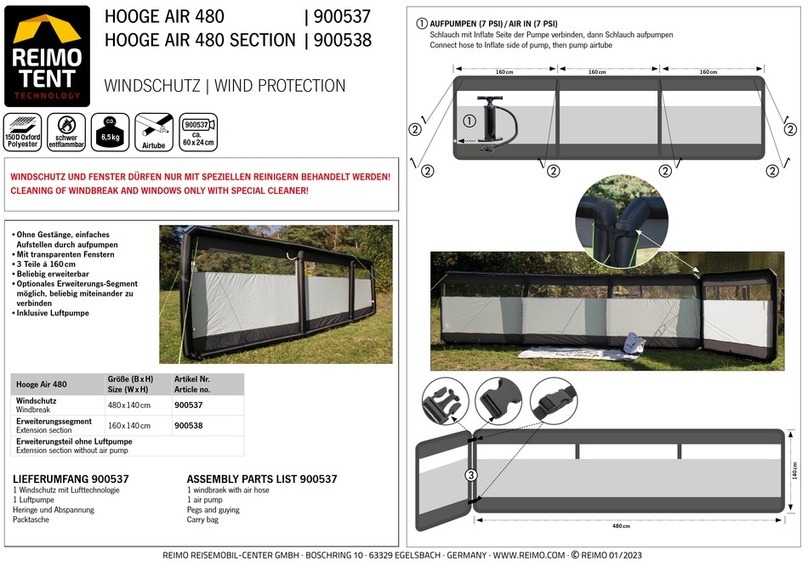
Reimo HOOGE AIR 480 User manual

Reimo

Reimo HOOGE AIR 480 User manual

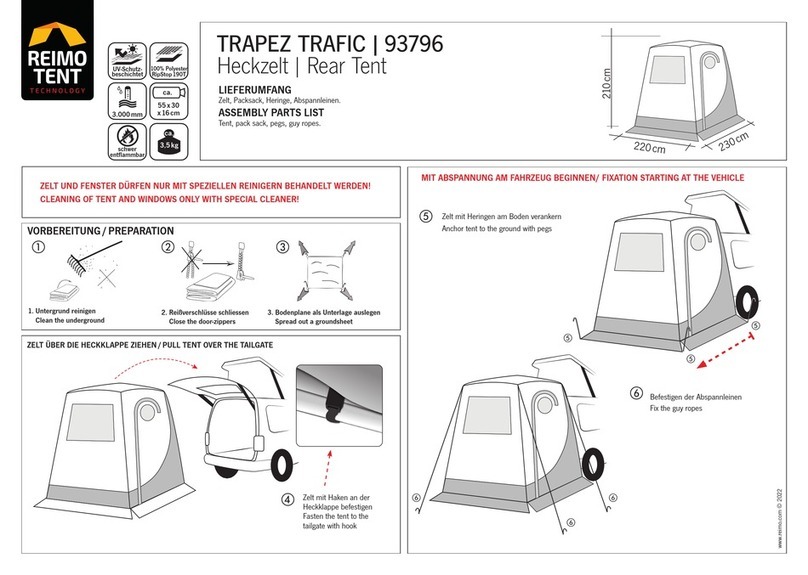
Reimo TRAPEZ TRAFIC 93796 User manual

Reimo

Reimo TRAPEZ TRAFIC 93796 User manual

Reimo Tour Action Air User manual

Reimo

Reimo Tour Action Air User manual

Reimo ALICANTE User manual

Reimo

Reimo ALICANTE User manual

Reimo Victoria Installation instructions

Reimo

Reimo Victoria Installation instructions

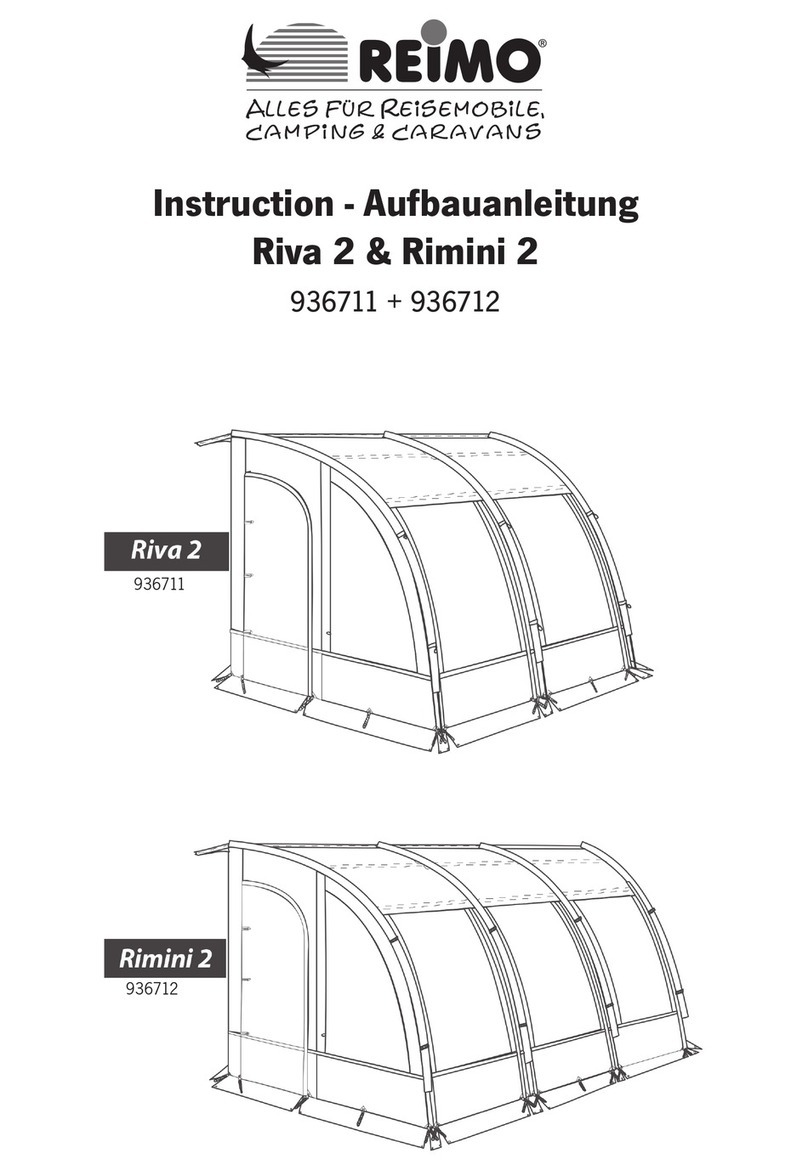
Reimo Riva 2 User manual

Reimo

Reimo Riva 2 User manual

Reimo ADRIA ACTION AIR 391 User manual

Reimo

Reimo ADRIA ACTION AIR 391 User manual

Reimo Marina User manual

Reimo

Reimo Marina User manual

Reimo One Beam Air User manual

Reimo

Reimo One Beam Air User manual

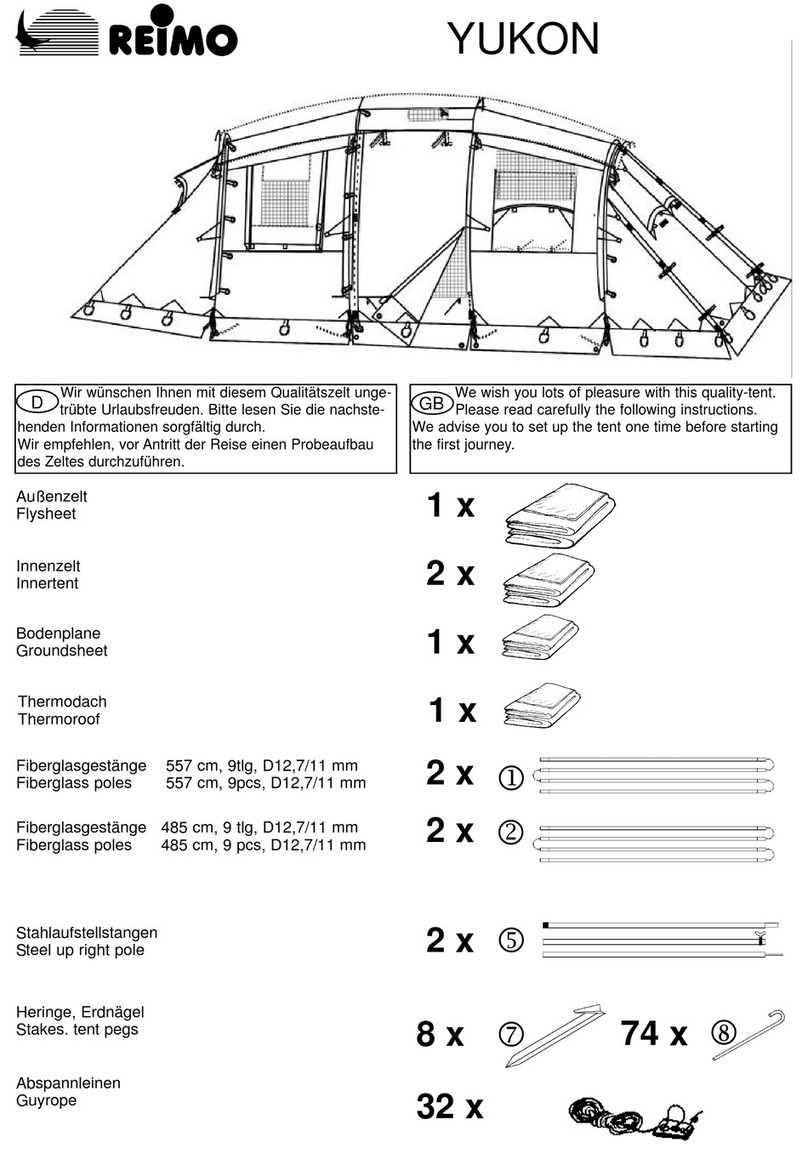
Reimo Yukon User manual

Reimo

Reimo Yukon User manual

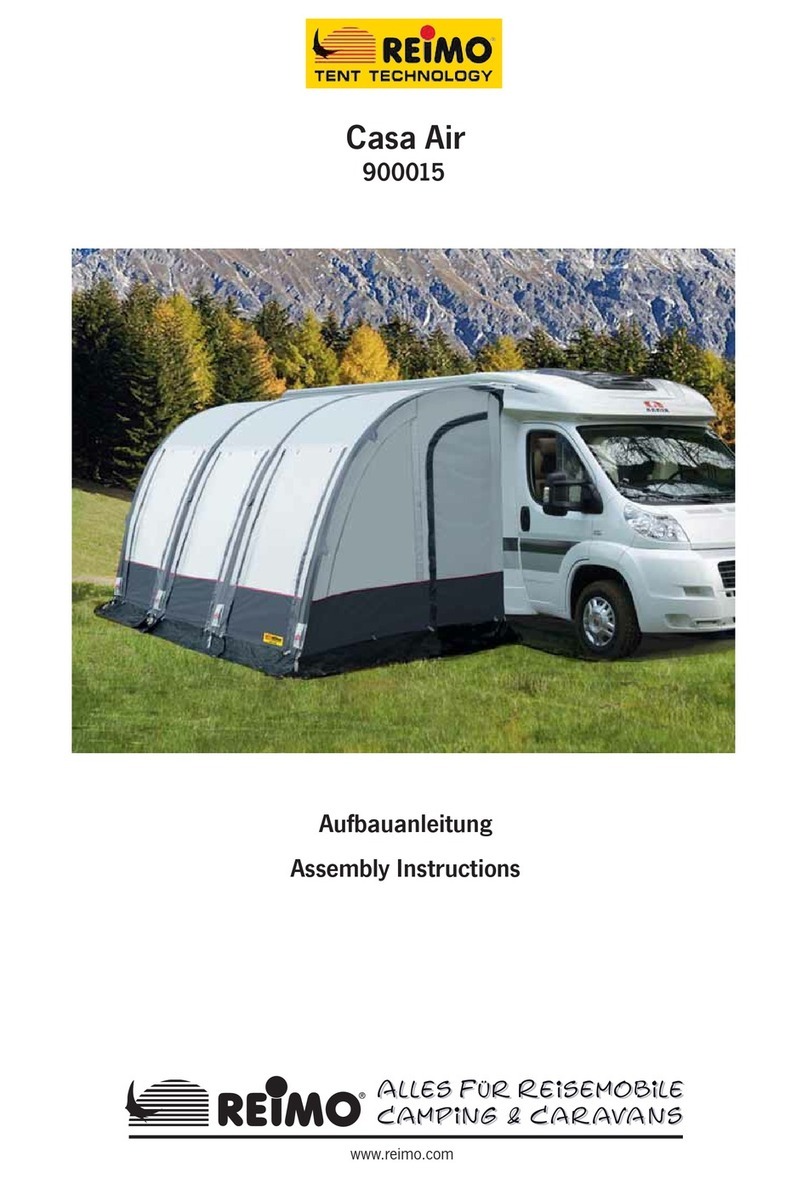
Reimo Casa Air User manual

Reimo

Reimo Casa Air User manual

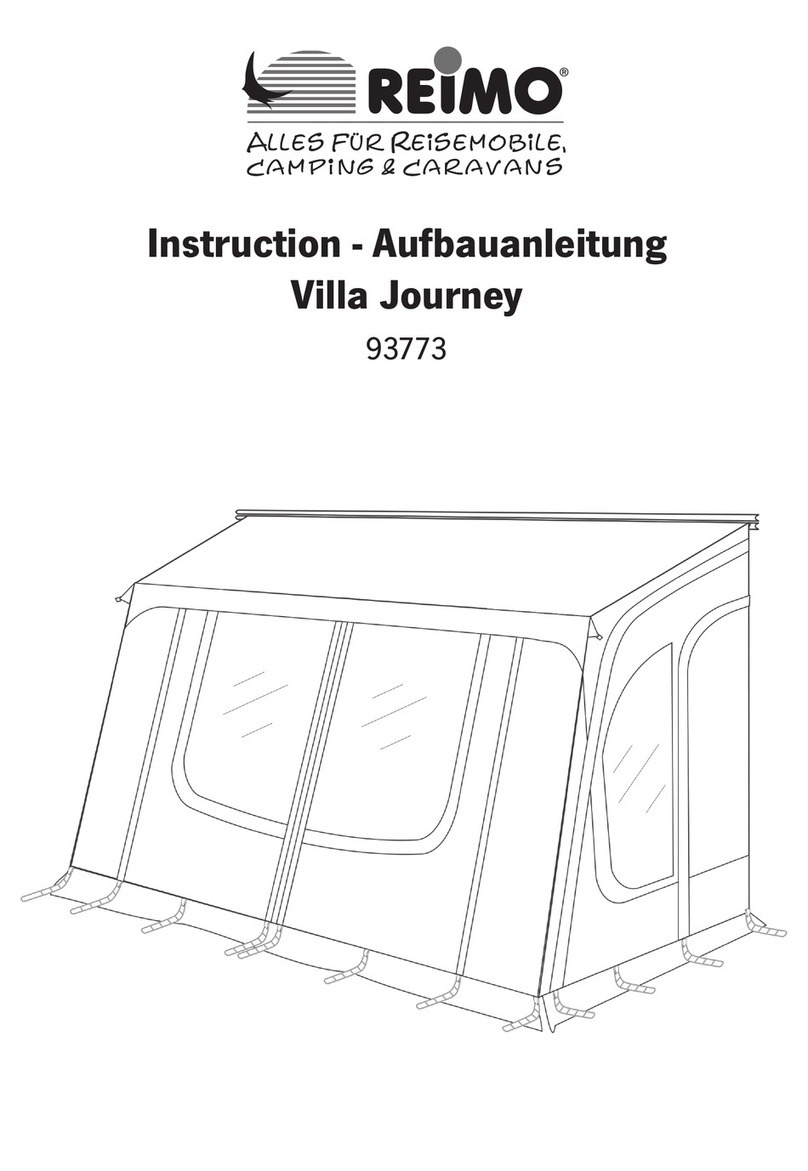
Reimo Villa Journey User manual

Reimo

Reimo Villa Journey User manual

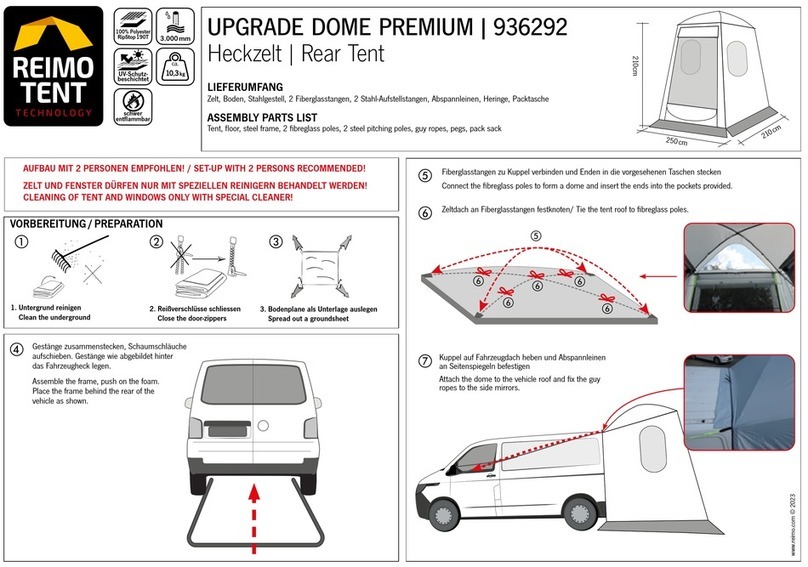
Reimo UPGRADE DOME PREMIUM 936292 User manual

Reimo

Reimo UPGRADE DOME PREMIUM 936292 User manual

Popular Tent manuals by other brands

OZTENT JV SIGNATURE EDITION owner's manual

OZTENT

OZTENT JV SIGNATURE EDITION owner's manual

GigaTent Summer Chalet Mini Tent owner's manual

GigaTent

GigaTent Summer Chalet Mini Tent owner's manual

ShelterLogic 107153 Assembly instructions

ShelterLogic

ShelterLogic 107153 Assembly instructions

Outsunny 84C-230 manual

Outsunny

Outsunny 84C-230 manual

Napier SPORTZ COVE 61 Series instructions

Napier

Napier SPORTZ COVE 61 Series instructions

EuroTrail ATLANTIS PRO manual

EuroTrail

EuroTrail ATLANTIS PRO manual

TiiTENT TB300 manual

TiiTENT

TiiTENT TB300 manual

Coleman 2000033134 Assembly & instruction manual

Coleman

Coleman 2000033134 Assembly & instruction manual

Ozark Trail W784.1 Assembly instructions and owner's manual

Ozark Trail

Ozark Trail W784.1 Assembly instructions and owner's manual

SlingFin CrossBow 2 instructions

SlingFin

SlingFin CrossBow 2 instructions

Coleman 9600-141 instructions

Coleman

Coleman 9600-141 instructions

Palram Arizona 5000 Wave - WINGS manual

Palram

Palram Arizona 5000 Wave - WINGS manual

COVERPRO 56184 Owner's manual & safety instructions

COVERPRO

COVERPRO 56184 Owner's manual & safety instructions

Vango Zenith 100 instructions

Vango

Vango Zenith 100 instructions

Costway PATIOJOY OP70818 user manual

Costway

Costway PATIOJOY OP70818 user manual

Clarke PUC 88 Assembly guide

Clarke

Clarke PUC 88 Assembly guide

Coleman MONTANA 14'x7' installation manual

Coleman

Coleman MONTANA 14'x7' installation manual

Crivit Outdoor 96716 instruction manual

Crivit Outdoor

Crivit Outdoor 96716 instruction manual

manuals.online logo
manuals.online logoBrands
  • About & Mission
  • Contact us
  • Privacy Policy
  • Terms and Conditions

Copyright 2025 Manuals.Online. All Rights Reserved.

1
Marina Air 2.9
93702
Marina Air 3.9
93703
Marina Air 4.9
93704
Aufbauanleitung
Assembly Instructions
www.reimo.com
2
Vielen Dank, dass Sie sich für das Marina Air Vorzelt entschieden haben. Bitte lesen Sie sich vor dem Aufbau diese
Anleitung ausführlich durch und bewahren Sie diese für zukünftiges Nachschlagen gut auf.
Bei sachgemäßer Verwendung werden Sie sehr lange Freude an Ihrem neuen Vorzelt haben. Wir empfehlen Ihnen, Ihr
Zelt gegen versehentliche Schäden sowie Sturmschäden zu versichern, da diese nicht durch die Garantie abgedeckt sind.
Thank you for purchasing your Marina Air awning. Please read these instructions carefully before attempting to set up
your awning and retain them for future reference.
If used correctly, your awning shoud give you years of trouble free use. We recommend that your awning is insured
against accidental and storm damage as this is not covered by the warranty.
INHALT / INDEX
Lieferumfang / Assembly parts list .....................................................................................................3
Empfehlungen / Recommendations....................................................................................................4
Luftschläuche / About the airtubes.....................................................................................................5
Aufblasen und Entleeren / Inflating and deflating .........................................................................6 - 7
Aufbauanleitung / Assembly instructions.....................................................................................8 - 11
Auswechseln der Luftschläuche / Replace a TPU airtube ................................................................13
Allgemeine Pflege- und Gebrauchshinweise / General Care and usage instrutions .........................14
Bitte lesen Sie vor dem Aufbau diese Anleitung ausführlich durch und bewahren Sie diese
für zukünfiges Nachschlagen auf
Please read instructions and warnings carefully before attempting to set up! Please keep
it for future reference!
Marina Air 3.9Marina Air 2.9
Marina Air 4.9
3
LIEFERUMFANG MARINA AIR/ ASSEMBLY PARTS LIST MARINA AIR
Packsack / Carry Bag
Abspanngurte/Storm Strap
Gummiösen/Elastic Ring
Abspannleiterchen /
Pegging Ladder
Abspannleiterchen /
Pegging Ladder
Abspannleiterchen /
Pegging Ladder
TPU Reparaturflicken /
TPU repair patch
Außenzelt / Flysheet
Aufstellstange für Tür /
Canopy Poles Kit
Andruckstange /
Rear Poles Kit
Sturmstange /
Rear Poles Kit
Sturmstange /
Rear Poles Kit
Sturmstange /
Rear Poles Kit
Windblende und Radabeckung /
Draft Skirt & Wheel Cover
Metall - und Plastikheringe/
Metal and Plastic Peg
Metall - und Plastikheringe/
Metal and Plastic Peg
Metall - und Plastikheringe/
Metal and Plastic Peg
Luftpumpe mit Überdruckventil
Pump & Safety Pressure Valve
1x 1x
13x
14x
15x
13x
14x
15x
28/39x
32/38x
36/61x
18x
22x
26x
2x
1x
1x1x
1x
Marina Air 2.9
Marina Air 3.9
Marina Air 4.9
2x
3x
4x
Marina Air 3.9
4
EMPFEHLUNGEN
• Bitte legen sie vor dem Auspacken eine Bodenplane aus, um das Material Ihres Vorzeltes vor Nässe, Schmutz und
Schaden zu schützen.
• Bauen Sie das Vorzelt vor Antritt Ihrer Reise schon einmal zuhause auf, um sich mit dem Aufbau vertraut zu ma-
chen und um sicherzustellen, dass Sie vor dem ersten Gebrauch alle benötigten Teile haben.
• Wählen Sie zum Aufbau eine glatte, ebene Fläche und entfernen Sie alle spitzen Gegenstände.
• Vermeiden Sie, den Eingang gegen den Wind aufzustellen und das Zelt unter Bäumen aufzustellen (Harz und her-
abfallende Äste können das Zelt schädigen).
• Unter Bestimmten Bedingungen kann sich im Inneren des Vorzeltes Kondenswasser bilden. Abhängig von
den gegebenen Bedingungen, dem Wetter sowie der Bodenfeuchtigkeit, kann Kondenswasser schwerwie-
gende Folgen haben und mit Undichtigkeit verwechselt werden, da es entlang der Innenseite des Daches
herablaufen sowie an Einrichtungsgegenständen heruntertropfen kann. Wenn sie vermuten, Ihr Vorzelt sei
undicht, ist dies in den meisten Fällen durch Kondenswasser begründet und kann durch gute Belüftung
verbessert werden.
• Dieses Vorzelt ist als Reisevorzelt entwickelt worden, sowie zur Nutzung bei leichtem bis mäßigem Wetter. Bei
starkem Wind oder Schneefall empfehlen wir Ihnen, das Vorzelt abzubauen. Dieses Zelt ist nicht als Dauerstandzelt
geeignet.
• Die Ventile der Luftschläuche können sich mit der Zeit lockern wenn sie nicht benutzt werden. Versichern Sie sich
vor dem Aufblasen, das die Ventile dicht sind
RECOMMENDATIONS
• Please lay down a groundsheet in advance, to prevent your awning fabric becoming wet, dirty and damaged, before
uppacking.
• Assemble the awning at home before setting off on your trip in order to familiarise yourself with its assembly and
ensure you have not forgotten anything, especially the first use.
• Choose preferably a smooth, level site and remove all sharp objects.
• Avoid placing the entrance toward the wind and avoid to place the tent under trees (resin or debris can damage
your awning)
• Under certain conditions awnings will suffer from condensation.
Depending upon the conditions, the weather and the amount of moisture in the ground, the condensation
could be quite servere and is commonly mistaken for leaking, it can run down the inside of the roof and
drips off internal fittings. If you suspect your awning is leaking it is almost certainly condensation this
can be improved by ensuring adequate ventilation.
• This awning is designed as a touring awning and for touring use in light to moderate weather. During strong winds
or snowfall we recommend that you take the awning down.
This awning is not designed for static, seasonal, permanent pitching or commercial use.
• The valves on the air tubes can become loose over time even when not used, so before you inflate your awning you
should always cjeck that the valves are tight otherweise they could leak.
5
DER LUFTKAMMER-RAHMEN
• Der Rahmen besteht aus 3-lagigen Luftschläuchen, welche sich in Reißver-
schluss-Schutzhüllen befinden. So sind diese sicher, geschützt und lassen
sich bei Bedarf einfach austauschen.
• Der innere Luftschlauch besteht aus einem extra stabilen TPU-Material,
welches robust und wetterbeständig ist und lange halten wird.
• Die Schutzhüllen bestehen aus einem robusten, stichfesten PE-Material. Die
Schutzhüllen werden an Hülsen an der Innenseite des Zeltes per Reißver-
schluss befestigt.
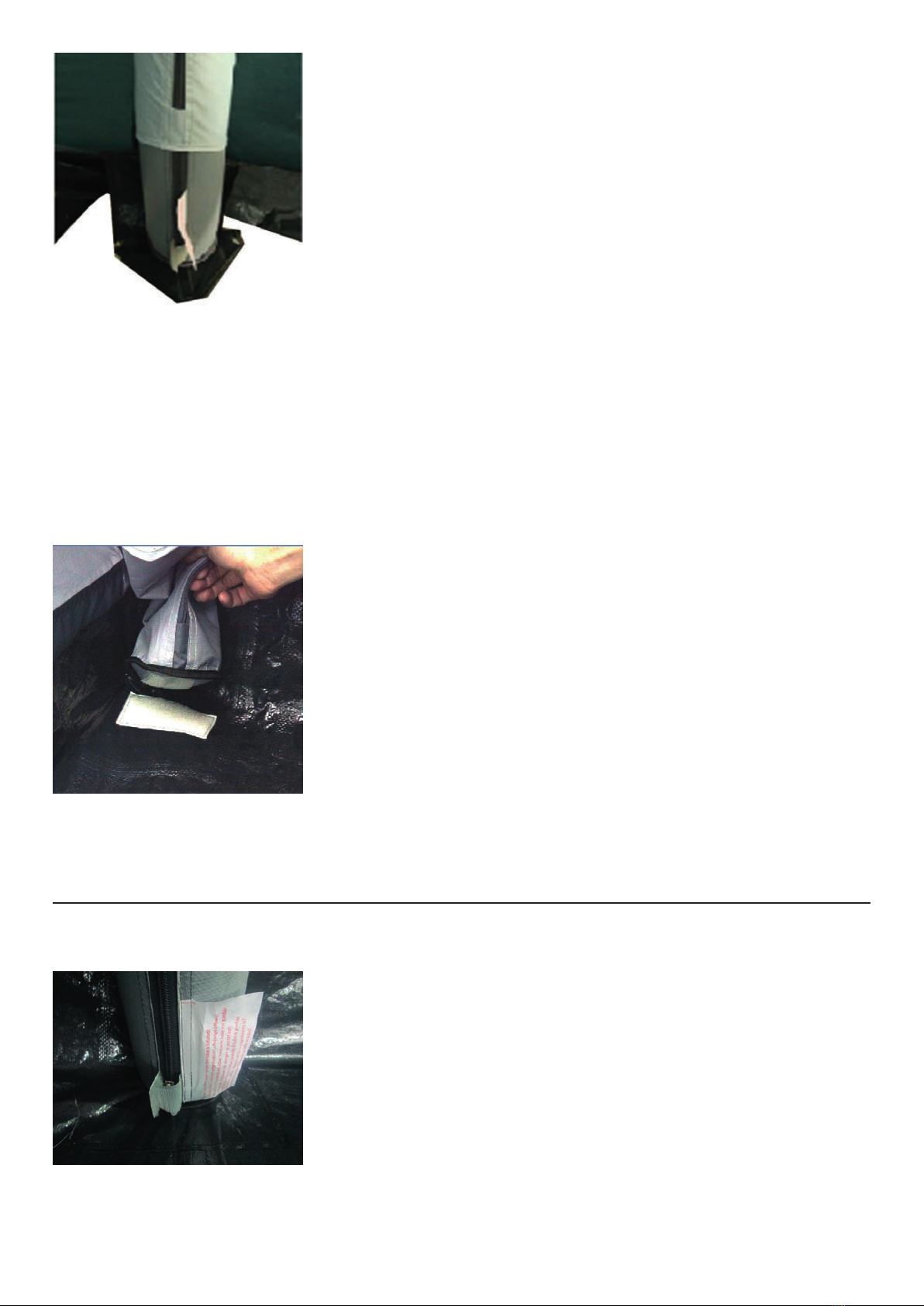
• Die Reißverschlüsse von Schutzhülle und Hülse müssen mit Verbindern
(z.B. Kabelbindern) aneinander befestigt sein. Diese Verbinder sollten
bei normaler Nutzung niemals entfernt werden. Die Reißverschlüsse
dürfen Sie nicht öffnen. Entfernen Sie diese nur, wenn Sie einen Luft-
schlauch entfernen, ersetzen oder reparieren müssen. Wenn Sie die
Verbinder entfernen, muss dies geschehen bevor Sie das Zelt aufpum-
pen, da Sie sonst die Luftschläuche beschädigen oder auch durchste-
chen könnten, was nicht durch die Garantie abgedeckt wird.
• Um sicherzustellen, dass sich das aufblasbare Gestänge in der richtigen Po-
sition befindet, achten Sie bitte darauf, dass der Klettverschluss der Kammer
mit dem Klettverschluss am Zeltboden verbunden ist.
ABOUT THE INFLATABLE FRAME
• The frame is made up of air tubes which are placed inside zipped protective
covers making them secure, protected and easy to replace if required.
• The air tubes themselves are made of very strong TPU material which is
strong, resistant to weather and will last for years.
• The protective covers are made from a strong, puncture resistant PE materi-
al. The protective cover is zipped inside the sleeve on the awning.
•
The zips on the sleeve and protective cover are locked together with ties.
These ties should never be removed under normal use. They are only to
be removed,if you need to remove, replace or repair your air tube.
If you do remove the ties then you must replace them before inflating
your awning otherwise you could cause damage to the air tube, even
puncturing it which is not covered under your warrranty.
• To ensure the air tube frame is in the correct position, please check that the
protective cover is located on the velcro pads at all times.
!!ACHTUNG!!
Die Reißverschlüsse von Schutzhülle und Hülse müssen mit Verbindern
(z.B. Kabelbindern) verriegelt werden. Diese Verbinder sollten bei norma-
ler Nutzung niemals entfernt werden. Die Reißverschlüsse dürfen sich
nicht öffnen können. Wenn dieser Verbinder entfernen wurde, können
die Luftschläuche und auch ihr Zelt beschädigt oder durchstochen
werden, was nicht durch die Garantie abgedeckt wird.
Pumpen Sie die Luftschläuche niemals auf, wenn einer der beiden Reiß-
verschlüsse geöffnet ist.
!!ATTENTION!
The zips on the air tube sleeve and protective cover are locked together
by a plastic tie. Never remove this plastic tie under normal use. If this tie
is removed then it could cause damage to your air tubes or awning and
is not covered by the warranty.
Never inflate the air tube if either of the zips are undone.
a
c
b
aSchlauch / Sleeve
bPE Überzug / PE Cover
cReißverschluss / Zipper

6
AUFPUMPEN
LUFTPUMPE
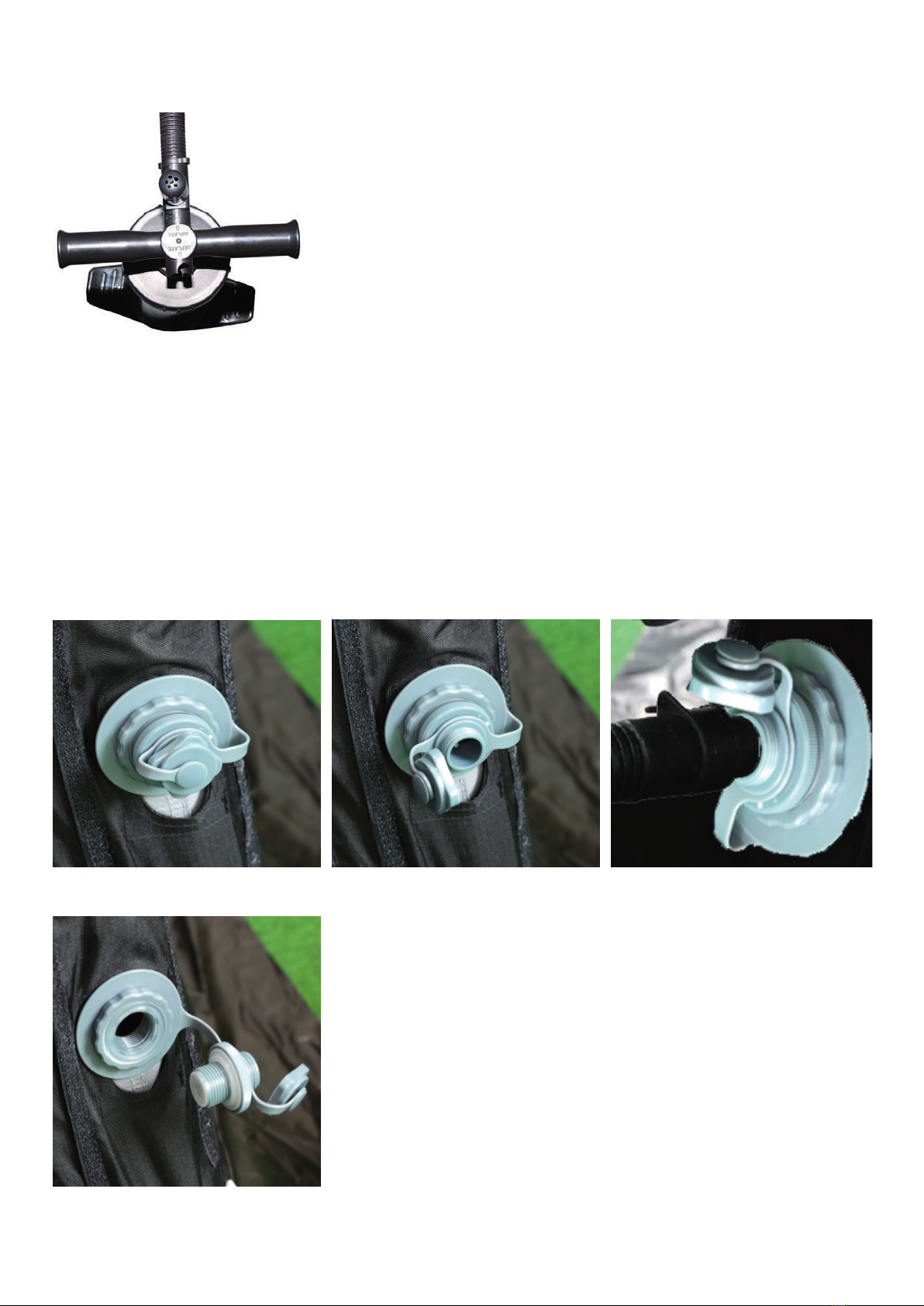
Verbinden Sie das Sicherheitsventil mit der Inflate Seite der Luftpumpe und
befestigen Sie den Schlauch am Sicherheitsventil, wie in der Abbildung links dar-
gestellt. Verwenden Sie die Luftpumpe niemals ohne das Sicherheitsdruckventil
mit Ihrem Vorzelt. Das Sicherheitsdruckventil stellt sicher, dass Sie nicht zu viel
Luft in das Gestänge pumpen können.
Eine Nichtverwendung des Sicherheitsdruckventils beim Aufblasen ihres Zeltes
kann dazu führen, dass Sie die Luftschläuche zu stark aufpumpen, was zu einem
Verlust der Garantie führt.
Wichtig:
Der Ideale Luftdruck für dieses Vorzelt beträgt 0,48 bar ( 7 PSI).
Bitte achten Sie darauf, dass Sie diesen Druck nicht überschreiten. Wenn Sie
ihre eigene Luftpumpe nutzen, stellen Sie sicher, dass diese über ein Sicherheits-
druckventil, welches auf 0,48 bar voreingestellt ist, bzw. über ein Manometer
verfügt, so dass Sie jederzeit den Druck kontrollieren können.
PUMPEN SIE IHR ZELT NICHT ZU STARK AUF. ÜBERMÄßIGES AUFPUMPEN FÄLLT NICHT UNTER DIE GARAN-
TIE UND KANN IHR VORZELT BESCHÄDIGEN!
AUFPUMPEN:
• Um die Luftschläuche aufzupumpen, lösen Sie die Abdeckkappe und verbinden sie das Ventil der Luftpumpe mit
dem Lufteinlass (wie unten abgebildet). Sie können nun die Luftschläuche aufpumpen. Wenn Ihr Luftschlauch
gleich wieder Luft verliert, überprüfen Sie bitte, ob das Ventil richtig befestigt wurde, da fehlerhaftes Anschließen zu
ausströmender Luft führen kann.
ENTLEEREN:
• Zum Ablassen der Luft, entfernen Sie einfach das Luftventil vom Schlauch,
indem Sie es abschrauben.
Seien Sie vorsichtig, wenn sie das Ventil abschrauben, da ein unnötiges
Verdrehen des Ventils und des Schlauchs zu einer unnötigen Belastung des
Ventils führen kann. Beim Abschrauben des Ventils halten sie den Schlauch
mit einer Hand fest und Schrauben das Ventil mit der anderen Hand ab, um
sicherzustellen, dass sich Ventil und Schlauch nicht verdrehen können.
• Wenn Sie das Ventil wieder aufschrauben, achten Sie darauf, dass der Rand
der Ventillasche nicht unter das Ventil gerät, da dies dazu führen kann, dass
das Ventil nicht mehr vollständig abdichtet und die Schläuche auch ohne eine
Beschädigung Luft verlieren.
Wenn Ihre Luftschläuche Luft verlieren, überprüfen Sie immer zuerst den korrekten Sitz des Ventils.
7
PUMP AND INFLATION
PUMP:
Connect the safety valve to the inflate side of the pump and attach the hose to the safety valve as shown in the diagram
to the left. Never attach the pump to the awning without the included safety pressure valve. The safety pressure valve
ensures that you cannot over inflate the awning.
Failure to use the safety pressure valve when inflating the awning could case you to over inflate the air tube which would
invalidate your warranty.
IMPORTANT:
The ideal inflation pressure for this awning is 7 PSI (0.48 bar).
Do not inflate the awning any more than this. If you use your own pump then ensure it is connected to a safety pressure
valve set to 7PSI or has a pressure gauge on so you can tell what the pressure is at all times.
Over inflation is not covered under your warranty.
Note: Do not over inflate, over inflation is not covered under your warranty and could damage your awning!
INFLATION:
• To inflate your air tube, unscrew the top cap and attach the pump nozzle to the air inlet (as shown below). You are
now ready to pump your air tube up.
If your air tube deflates straight away check that the value is correctly fitted as this could lead to air escaping from
the tube.
DEFLATION:
• To deflate your air tube simply remove the air valve by unscrewing it from the tube.
Be careful when unscrewing the valve as twisting the valve and tube unnecessarily could cause unneeded stress
on the valve. When unscrewing the valve hold the tube in place with one hand and unscrew the valve with the
other thus ensuring the valve and tube are not twisted.
•
When you screw the valve back in place be careful not to get it caught on the rim of the valve pocket as this can stop
you creating a seal with the valve and can lead to air being lost from the tube even though there is no puncture.
If your air tube does deflate always first check that the valve is correctly screwed into place.
8
• Stellen Sie sicher, dass alle Türen des Vorzelts geschlossen sind und der
Bodenspanngurt angebracht ist.
• Ziehen Sie das Zelt in den Kederkanal ein und bringen das Vorzelt so in
die gewünschte Position.
Hinweis:
Dieses Vorzelt besitzt einen Doppelkeder in zwei Kedergrößen. 6mm für
Wohnwagen und 4mm für Wohnmobile.
• Ensure all the doors on the awning are zipped shut and the floor strap is
attached.
• Slide the awning beading into the rail on your caravan, motorhome or
vehicle and pull the awning along the rail to the desired poistion.
Note:
There are two sizes of beading on this awning. It has 6mm beading for cara-
vans and 4mm beading for motorhomes.
•Verankern Sie die hinteren Ecken ihres Vorzelts unter ihrem Fahrzeug.
Ziehen Sie das Zelt dabei so nah an Ihr Fahrzeug wie möglich.
• Peg the rear corners of the awning under the caravan, pulling the
awning as close to the caravan as possible.
• Sie sind nun bereit, ihr Vorzelt aufzupumpen.
• Bevor Sie mit dem Aufpumpen des Vorzeltes beginnen, stellen Sie sicher,
dass Sie die Hinweise und Anweisungen zur Nutzung der Pumpe sorgfältig
gelesen und verstanden haben. Sie müssen diese Anweisungen befolgen,
um Ihr Zelt richtig aufzupumpen.
•
Stellen Sie sicher, dass der Bodengurt vor dem Aufpumpen geschlossen ist.
• Pumpen Sie das Zelt auf, achten Sie dabei darauf, dass das Sicherheits-
druckventil immer mit der Pumpe verbunden ist.
• You are ready to inflate your awning.
• Before you inflate your awning make sure you have read and understood
the pump and inflation section of these instructions.
You must follow these instructions to ensure proper inflation of your
awning.
• Ensure that the floor strap is locked before inflation.
• Inflate your awning using the pump supplied ensuring the safety pressure
valve is connected to the pump at all times.
AUFBAUANLEITUNG / PITCHING INSTRUCTIONS
9
Windblende
• Schieben Sie die Windblende in die dafür vorgesehene Kederschiene an
der Unterseite ihres Fahrzeugs oder Wohnmobils.

• Befestigen Sie dann die Radabdeckung in der vorgesehenen Halterung
am Radkasten oder verbinden Sie sie mit dem oberen Rand der
Windblende.
Draftskirt
• Fit the draft skirt by sliding it into the lower rail on the bottom
of your caravan, motorhome or vehicle.
• The wheel cover either slides into the rail on the wheel arch or uses the
figure of eight tubing and connects to the top of the draft skirt.
AUFBAUANLEITUNG / PITCHING INSTRUCTIONS
• Sobald die Luftkammer aufgepumpt ist, befestigen Sie die ersten
Spannleinen wie in der Abbildung gezeigt.
• Die Spannleine sollte mit einer der enthaltenen Gummiösen am Zelt
angebracht werden (siehe Abbildung oben), um das Vorzelt im Wind zu
schützen und zudem die Spannleine vor Stolperschäden zu bewahren.
• Once the air tube has been inflated peg the storm strap as
shown in the diagram.
• The storm strap should be used with the included elastic ring
on top which helps protect the awning in the wind and the storm
straps from trip hazard damage.
• Das Vorzelt sollte automatisch die richtige Form annehmen. Aufgrund der
Bodenverhältnisse kann es jedoch nötig sein, das Vorzelt durch leichte
Bewegungen in die richtige Form zu bringen.
• Nachdem das Zelt vollständig aufgepumpt ist und die richtige Form einge-
nommen hat, befestigen Sie die andere Abspanngurte.
• Ihr Vorzelt sollte nun aussehen wie in der unteren Abbildung. Verankern
Sie nun Ihr Vorzelt.
• Wir empfehlen, zuerst die Ecken zu befestigen und anschließend von der
hinteren Ecke nacheinander die restlichen Befestigungspunkte zu veran-
kern.
• The awning should assume the correct shape, but depending upon
ground conditions you may have to move the awning in or our slightly to
get the correct shape.
• Once the last tube has been pumped and the awning is in the correct
shape peg the other storm strap.
• Your awning should look like the diagram below. You can now peg the
awning.
• We recommend pegging the corners first then working forward from the
rear corner in turn until all pegging points have been pegged.
4
6
PITCHING INSTRUCTIONS
read and understood thepump and inflationsection of
these instructions.
You must follow these instructions to ensure proper
inflationof your awning.
ensuring the safety pressure valve is connected
to the pump at alltimes.
4
5
strap as shown in the diagram.
5
6
pumpedup and sprung into place.
depending upon ground conditions you mayhave to move
the awning in or our slightly to get thecorrect shape.
in the correct shape peg the other stormstrap.
Youcan now peg the awning.
working forward from the rear corner in turn until
allpegging points have been pegged.
6
10
AUFBAUANLEITUNG / PITCHING INSTRUCTIONS
Anbringen der Sturmstangen
• Montieren Sie die Dachstangen wie in den obigen Abbildungen
dargestellt.
• Stecken Sie je ein Ende der Dachstangen in eine der vorgese-
henen Taschen und das andere Ende in die gegenüberliegende
Tasche. Spannen Sie diese nun.
• Überspannen Sie die Stangen nicht.
Storm Roof Poles
• Assemble the storm roof poles as shown in the diagrams above.
• Insert each pole in turn, into their pocket and extend into the
opposite pocket.
• Do not over tension these poles
Andruckstange
• Nehmen Sie eine der Andruckstangen, stecken Sie das abge-
flachte Ende in die Tasche am oberen Ende der Seitenwand und
verlängern die Stange, bis sie den Boden berührt.
• Drücken Sie das Polster mit Hilfe der Andruckstangen an die
Wand Ihres Fahrzeugs.
• Die Stange sollte ausreichend gespannt sein, um das Polster in
Position zu halten. Zu starkes Spannen kann jedoch zu Beschädi-
gungen führen.
• Befestigen Sie die Stange mit den Klettstreifen an der Rückwand.
Rear pole Kit
• Take one of the rear poles and place the flattened end into the
pocket in the top corner of the side panel and extend the leg until
it touches the ground.
• Push the pole against the pad and the pad will be pushed
against your caravan, motorhome or vehicle. This creates the
seal against your vehicle.
• This pole should be tight enough to hold the pole in place, but
must not be over tensioned as it could cause damage if over
tensioned.
• Tie the pole in place using the velcro tie backs along the rear of
the panel.