3
caution
• Themaskisnotforusewithventilatorswhich
have a combination of:
a) little or no ability to compensate for mask leak
and variation in mask leak (eg volume-cycled
ventilators with no compensation for leak, or
pressure-cycled ventilators which are unable
todeliveradequateextraowinthepresence
of increased leak); and
b) no expired ventilation alarms.
Ifaventilatorwithpoorleakcompensationis
used, special reliance is placed on the expired
ventilation alarm.
• Aswithallmaskventilationsystems,signicant
leak may occur between the mask and the
patient’s face. The leak may vary depending
on such factors as the patient’s position and
sleep stage. Variation in leak may significantly
affect patient ventilation, potentially producing
profound hypoventilation or hyperventilation.
The magnitude of this effect depends on the
ventilator’s ability to compensate for leak.
• Leakorvariationintheleakmaycause
mistriggering of the ventilator.
• Increasedface-to-maskleakwillreduceeffective
deadspacebywashingoutexpiredgases.In
a pressure-cycled ventilator which tolerates
moderate leak, the effect may be a reduction in
arterialPCO2with no change in ventilator settings.
additional inforMation
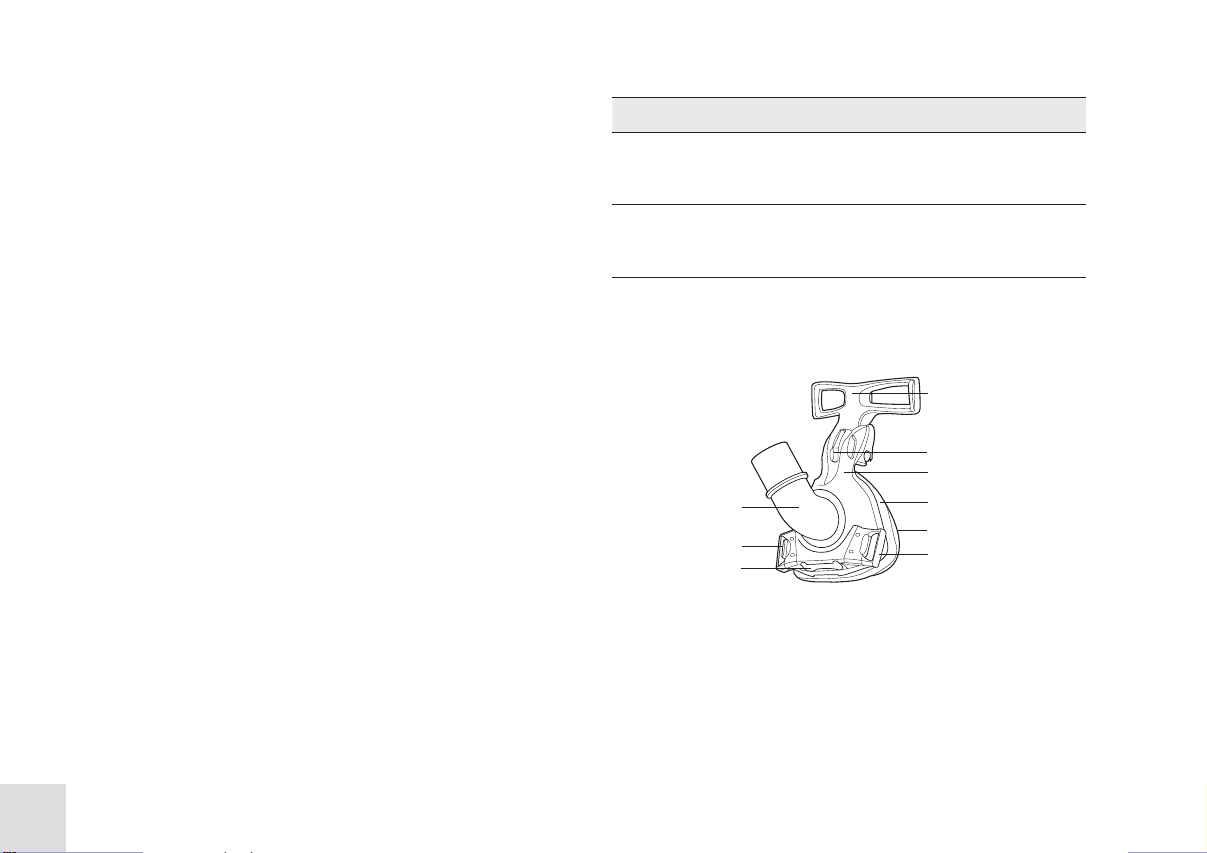
• ResMedhastintedtheUltra Mirage NV Mask frame
and elbow blue to help you identify it as a non-
vented mask for use with active-exhaust non-
invasive ventilator systems only.
• Themaskelbowhasastandardfemale22mm
taperedtting(ISO5356-1)forexternalconnection
to the ventilator.
• Indeterminingtheinitialventilatorsettings,and
in particular the tidal volume for volume-cycled
ventilators, make appropriate allowances for mask
dead space and leak, both directly from the mask
itself(primarilyattheelbow-maskframejunction),
andbetweenthefaceandmask.RefertotheMask
Characteristicssectionformoreinformation.
• Refertotherelevantventilatorsystemoperating
instructions for detailed information concerning
connecting the mask.
608331 UMNV Nasal Clinical Guide EUR Multi.indb 3 17/04/2012 3:28:17 PM