Automotive Power and Motor Drive
Evaluation Kit for Automotive 2-Channel
Half-Bridge Gate Driver IC
BD16950EFV-EVK-001
The ROHM BD16950EFV-C is an AEC-Q100 automotive qualified 2-channel Half-Bridge Gate Driver IC, suitable for DC motor drive
in Automotive applications such as Power Window Lifter, Sunroof Module, Wiper, Seat belt tensioner, Seat positioning, 2H motors etc.
This EVK enables the performance evaluation of this IC in research and development laboratories.
ٴ Description
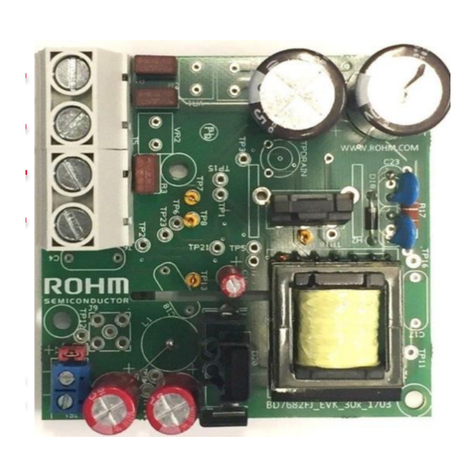
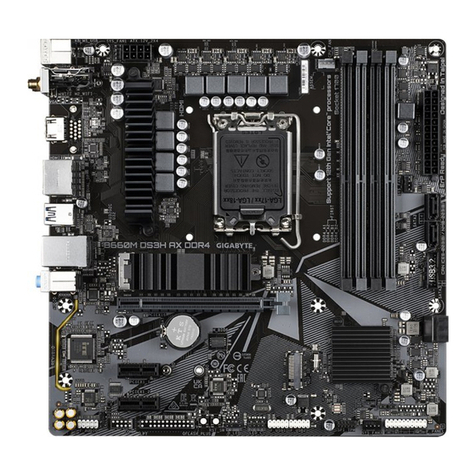
This EVK consists of an evaluation board for the Automotive 2-
channel Half-Bridge Driver IC and USB cable. Also a GUI can be
provided by ROHM for easy SPI register configuration.
The key component of the evaluation board is the ROHM
BD16950EFV-C which is an AEC-Q100 automotive qualified 2-
channel Half-Bridge Gate Driver, controlled by an external MCU
through a 16-bit Serial Peripheral Interface (SPI). Independent
control of low-side and high-side N-MOSFETS allows for several
MCU controlled modes. A programmable drive current is
available to adjust slew-rates, in order to meet EMI and power
dissipation requirements. Diagnostics can be read and reset by
an external MCU.
Besides this motor driver IC the evaluation board contains all
external components necessary for operation including a full
bridge created by discrete FETs, an LDO for logic supply, SPI
interface and various test points for signal monitoring.
䖃 BD16950EFV-C Key Specifications
¾ Wide Input voltage range…………………...5.5 to 40V
¾ Gate Drive Voltage (Half Bridge) …..………..…….11V
¾ VS quiescent㻌supply current...............................0 μA
¾ VCC quiescent supply current …………….……..2 μA
¾ Integrated Charge Pump Frequency ……..…500 kHz
¾ Programmable Parameters..…...…..SPI (7 MHz max)
䖃 EVK Features
¾ Plug & Play DC Motor Evaluation Kit
¾ No need for driver installation due to GUI design as
Human Interface Device
¾ Single Power Supply with Reverse Polarity Protection
¾ On Board Logic Supply by LDO or USB
¾ Discrete H-Bridge FETs with high current capability
¾ Test pins for easy signal monitoring