manuals.online logo
Brands
  1. Home
  2. •
  3. Brands
  4. •
  5. Salter Labs
  6. •
  7. Medical Equipment
  8. •
  9. Salter Labs Nasal Cannula Service manual

Salter Labs Nasal Cannula Service manual

Other Salter Labs Medical Equipment manuals

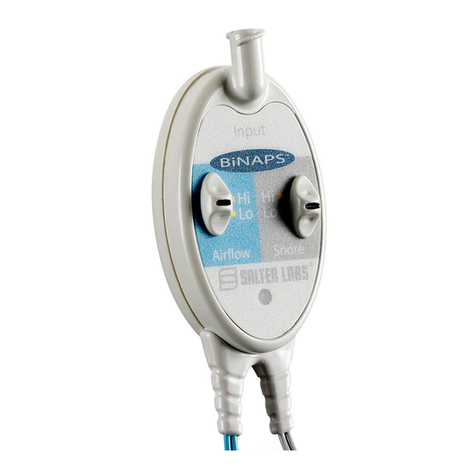
Salter Labs BiNAPS 5500 User manual

Salter Labs

Salter Labs BiNAPS 5500 User manual

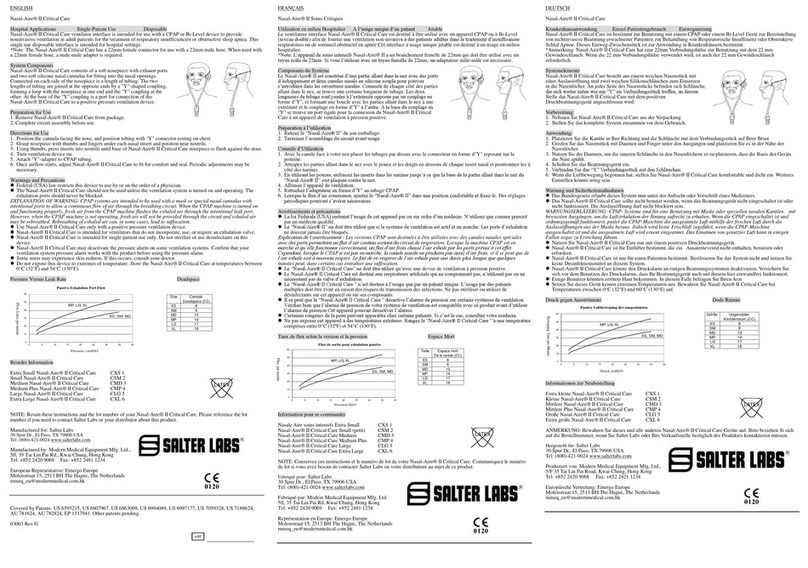
Salter Labs Nasal-Aire II User manual

Salter Labs

Salter Labs Nasal-Aire II User manual

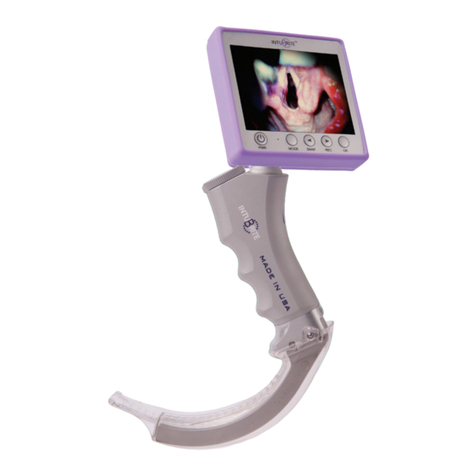
Salter Labs INTUBRITE VLS 6600 Series User manual

Salter Labs

Salter Labs INTUBRITE VLS 6600 Series User manual

Salter Labs IntuBrite VLS 8800 User manual

Salter Labs

Salter Labs IntuBrite VLS 8800 User manual

Salter Labs OTC -103-7 User manual

Salter Labs

Salter Labs OTC -103-7 User manual

Popular Medical Equipment manuals by other brands

Itamar Medical WatchPAT Operation manual

Itamar Medical

Itamar Medical WatchPAT Operation manual

PROTEOR 1P650 KNEE Assembling and adjustment instructions

PROTEOR

PROTEOR 1P650 KNEE Assembling and adjustment instructions

Liberate Medical VentFree user manual

Liberate Medical

Liberate Medical VentFree user manual

Dicarre DA20 user guide

Dicarre

Dicarre DA20 user guide

Stryker Medical M Series Operation manual

Stryker Medical

Stryker Medical M Series Operation manual

Invacare ScanBed 750 user manual

Invacare

Invacare ScanBed 750 user manual

Getinge Arjohuntleigh Nimbus 3 Professional Instructions for use

Getinge

Getinge Arjohuntleigh Nimbus 3 Professional Instructions for use

Mettler Electronics Sonicator 730 Maintenance manual

Mettler Electronics

Mettler Electronics Sonicator 730 Maintenance manual

Pressalit Care R1100 Mounting instruction

Pressalit Care

Pressalit Care R1100 Mounting instruction

Denas MS DENAS-T operating manual

Denas MS

Denas MS DENAS-T operating manual

bort medical ActiveColor quick guide

bort medical

bort medical ActiveColor quick guide

AccuVein AV400 user manual

AccuVein

AccuVein AV400 user manual

agiliti NP Trio user manual

agiliti

agiliti NP Trio user manual

Rocket Medical Rocket Digital Oocyte Aspiration Pump Service manual

Rocket Medical

Rocket Medical Rocket Digital Oocyte Aspiration Pump Service manual

Monteris Medical Neuroblate Instructions for use

Monteris Medical

Monteris Medical Neuroblate Instructions for use

Otto Block 8E33 7 manual

Otto Block

Otto Block 8E33 7 manual

ADVANCED HOME CARE Helios Guide

ADVANCED HOME CARE

ADVANCED HOME CARE Helios Guide

NeuLog NUL-208 Guide

NeuLog

NeuLog NUL-208 Guide

manuals.online logo
manuals.online logoBrands
  • About & Mission
  • Contact us
  • Privacy Policy
  • Terms and Conditions

Copyright 2025 Manuals.Online. All Rights Reserved.

Nasal
Cannula
1. Wash hands. Remove nasal cannula from package.
2.Attach end connector to oxygen source, e.g., oxygen supply
tubing or oxygen flowmeter
3. Adjust flow control knob to the prescribed liter flow. Check for
gas flow from the nasal prongs.
4.
5.
(Continued on the next page)
7KH1DVDO&DQQXODLVXVHGWRGHOLYHUVXSSOHPHQWDOR[\JHQWR
SDWLHQWVZKRKDYHDSUHVFULSWLRQIRUR[\JHQWKHUDS\1DVDO
&DQQXODVDUHGLVSRVDEOHDQGIRUVLQJOHSDWLHQWXVH7KH1DVDO
&DQQXODLVLQWHQGHGIRUXVHLQWKHKRPHRXWSDWLHQWH[WHQGHGFDUH
WUDQVSRUWDQGKRVSLWDOHQYLURQPHQWV Salter Labs nasal cannulas
are not manufactured with natural rubber latex.
Product use
Hospital Use - Technical Bulletin
3OHDVHUHDGDQGIROORZWKH,QVWUXFWLRQVIRU8VHprovided with the Nasal Cannula
SULRUWRXVe
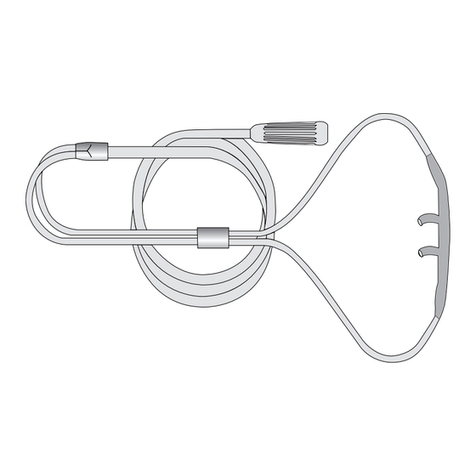
Nasal
Prongs
Headset
Loop
End Connector
Wye
Connector
Supply
Tubing
Bolo
0.
5
2
1
5a
4
3
2
1
6
5b
6. a–Squeeze the sides of the bolo and glide the bolo up under
your chin.
b–Leave enough space to fit at least two fingers between the bolo
and chin.
a–Wrap the headset loop up and over both ears.
b–Alternative placement: Secure headset loop behind head.
Care and Cleaning Instructions
a–Position the nasal cannula with the nasal prongs facing upward
and curved toward the face
b–Insert the two nasal prongs into the nostrils.
1.
Once a day, use a clean damp cloth to wipe off the nasal
prongs and headset tubing.
2.
3.
Do not sterilize nasal cannula. Do not reuse.
Replace nasal cannula once every 7 days. Replace if
cannula becomes soiled or damaged.
SLML-121 Rev C, Oct 2017
1
Hospital Use - Technical Bulletin (continued)
Safety Precautions
•Do allow the patient or anyone around them to smoke.This includes the use of
electronic cigerattees, pipes, cigars and cigerattes. Although, oxygen is a
nonflammable gas, it does support combustion.
•Keep oxygen equipment at least 6 feet away from flames or any heat source.
≥6 ft
•Do not use petroleum based products or oil-based creams and lotions in or
around the patients nose.
(Continued on the next page)
SLML-121 Rev C, Oct 2017
•Do not use flammable products such as aerosol sprays or cleaning products near
the oxygen source.
•Avoid using electrical equipment that may cause a spark; for example, hair dryers
electric razor, and electric toothbrushes.
•Follow physician prescription for oxygen use.
• The total length of the nasal cannula and oxygen tubing should not exceed 57 feet to
ensure there is enough pressure to deliver prescribed oxygen flowrate.
•Do not kink, bend or tie the oxygen tubing.
Do not place anything on top of nasal cannula and oxygen tubing that could obstruct flow.
• Keep excess tubing loosely coiled and out of the way to prevent tripping on oxygen tubing.
• Do not place oxygen tubing or nasal cannula under blankets, bedsheets, etc.
•Do not let children play with oxygen equipment.
•
2
Inform your patient how to safely use their nasal cannula while on oxygen.
•Use of swivel connector can help prevent tubing from twisting.
Hospital Use - Technical Bulletin (continued)
Troubleshooting Tips
Problem Possible Cause Corrective Action
No oxygen flow from
nasal prongs
1. Patient unable to feel the airflow in their nostrils.
2. Flow control valve is not turned on.
3. Oxygen system is not functioning
properly or oxygen container is empty.
4. The nasal cannula is disconnected from
oxygen device or supply tubing.
5. Nasal cannula or oxygen tubing kinked
or blocked.
1. Check air flow by placing prongs next to hand or
place nasal prongs into a small container of
clean water. Bubbles will appear if there is
oxygen flow.
2. Set flow control to prescribed setting.
3. Check pressure guage on oxygen cylinder,
ensure flow is coming from oxygen source.
4. Reconnect oxygen tubing. Ensure all tubing
connections are tight and secure.
5. Inspect cannula and oxygen tubing for
kinks or damage. Ensure nothing is placed on top
the tubing.
Water in nasal cannula or
oxygen supply tubing
1. Humidifier bottle overfilled or tipped over. 1. Pour out the excess water. Ensure humidifier bottle
is upright. Add a water trap to tubing.
Nasal dryness or
irritation
1. Gas flow is dry.
2. No humidifier is being used.
1. Try using a normal saline spray or water soluble
ointment to moisten the inside of nostrils.
2. Add a bubble humidifier to add some humidification.
Soreness or irritation
around ears 1. Headset tubing too tight.
2. Tubing pressing against skin.
1. Loosen headset tubing.
2. Place a cotton padding or cushion (e.g., E-Z Wrap,
DuoDerm patch) under headset tubing.
Skin rash and/or sores
caused by nasal cannula 1. Sensitivity or reaction to nasal cannula
material.
2. Nasal cannula is dirty.
3. Most cannula are made with a PVC material,
which may harden if used too long, or if
cleaned with an alcohol based product.
1. Contact the patient's physician. Try using a cannula
made from another material, e.g., silicone.
2. Replace the nasal cannula.
3. Replace the nasal cannula.
SLML-121 Rev C, Oct 2017
3
2.High humidity environoment or rapid drop in
room temperature.2.Add a water trap to tubing.