Important:
Please read, study and understand these instructions
before use. The materials used in this product are
high spec polyesters.
Use:
This harness has been designed for your protection
and therefore is (PPE) personal protective equipment.
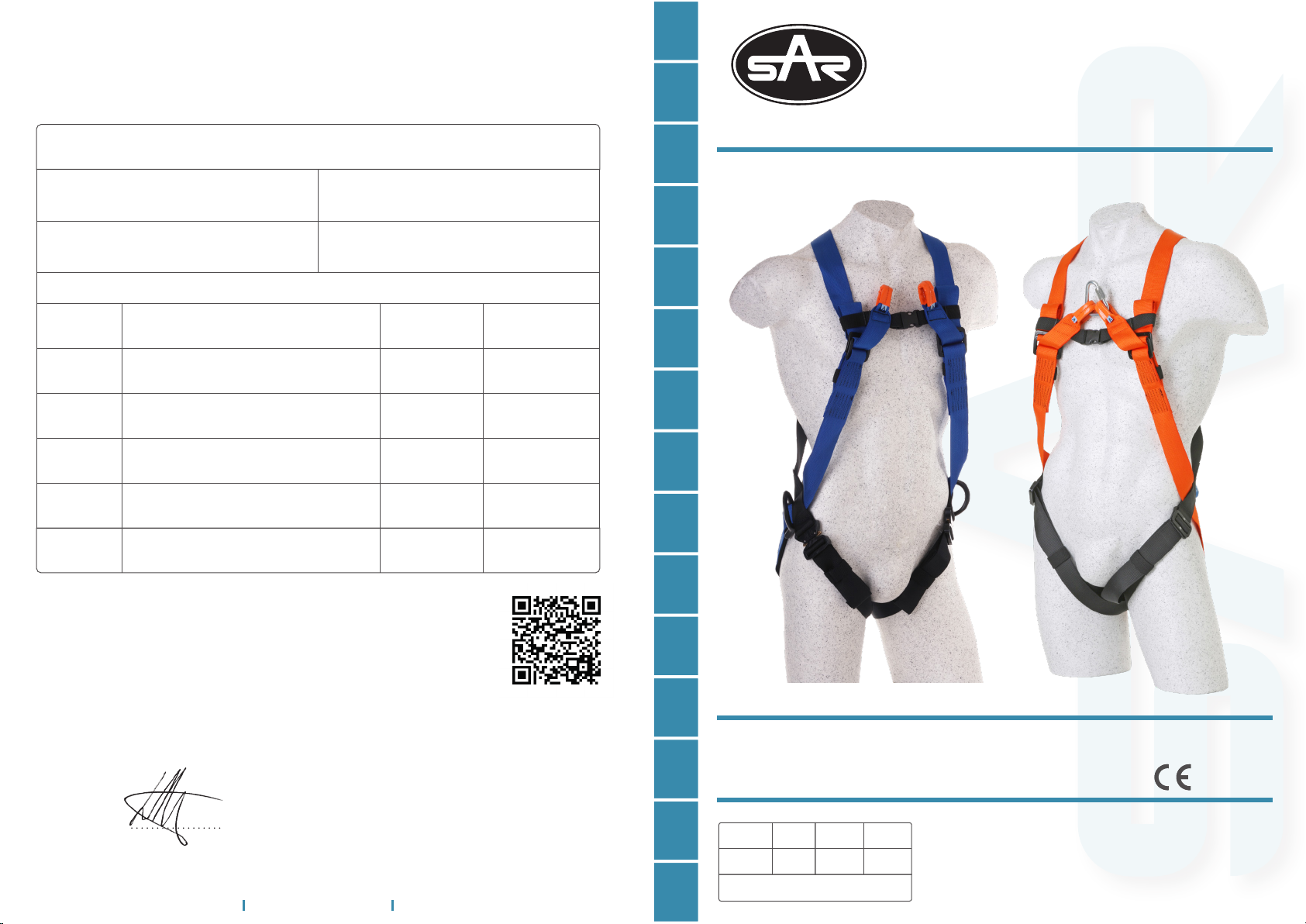
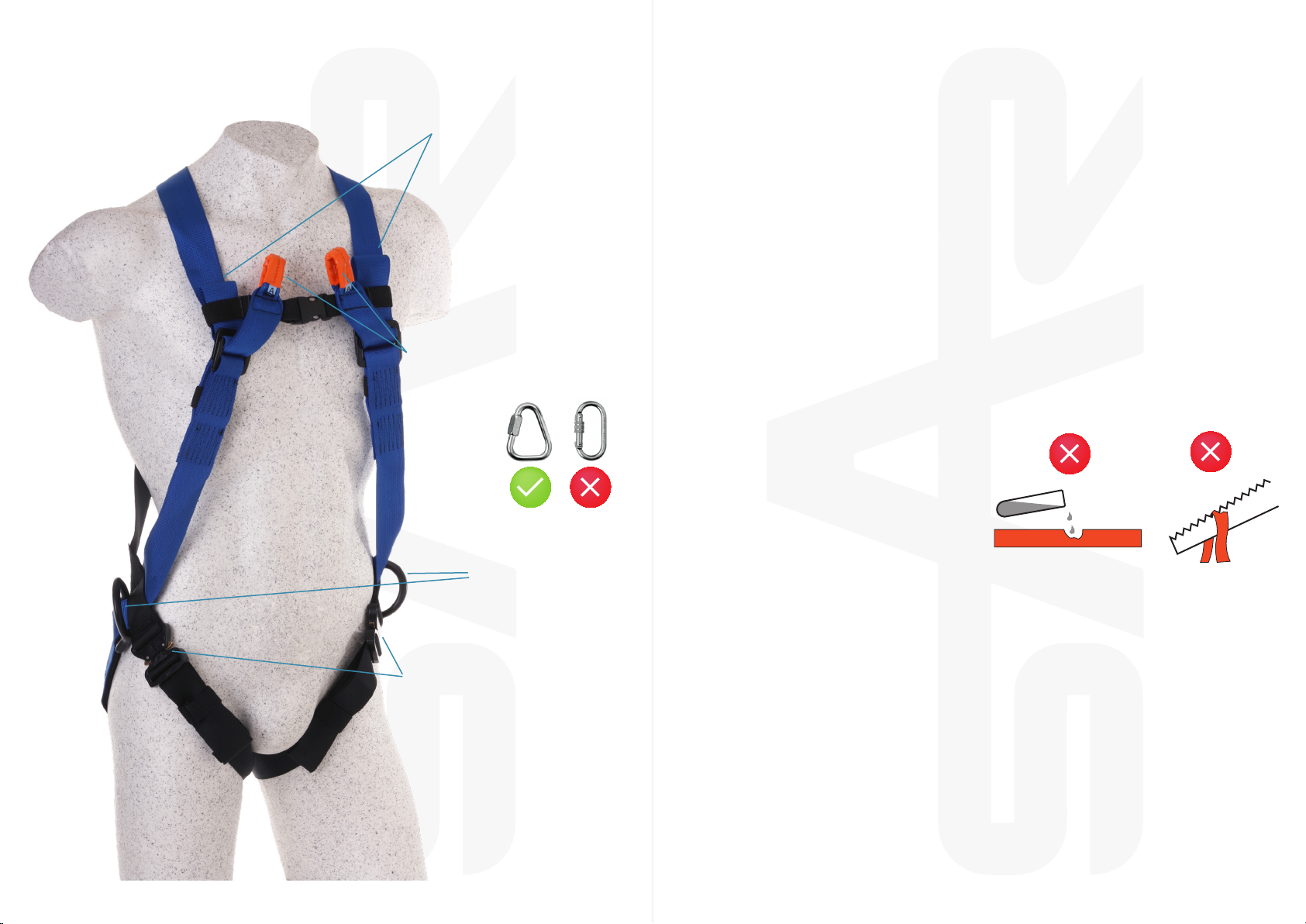
It is a full body harness for fall arrest with front sternal
and back dorsal attachments. The Kestrel 4 has two
side Dee’s for work positioning. Use only as instructed
and with compatible items of equipment. These
should conform to the relevant European standards or
those your country follows. Check that the safe
function of any one component within a system will
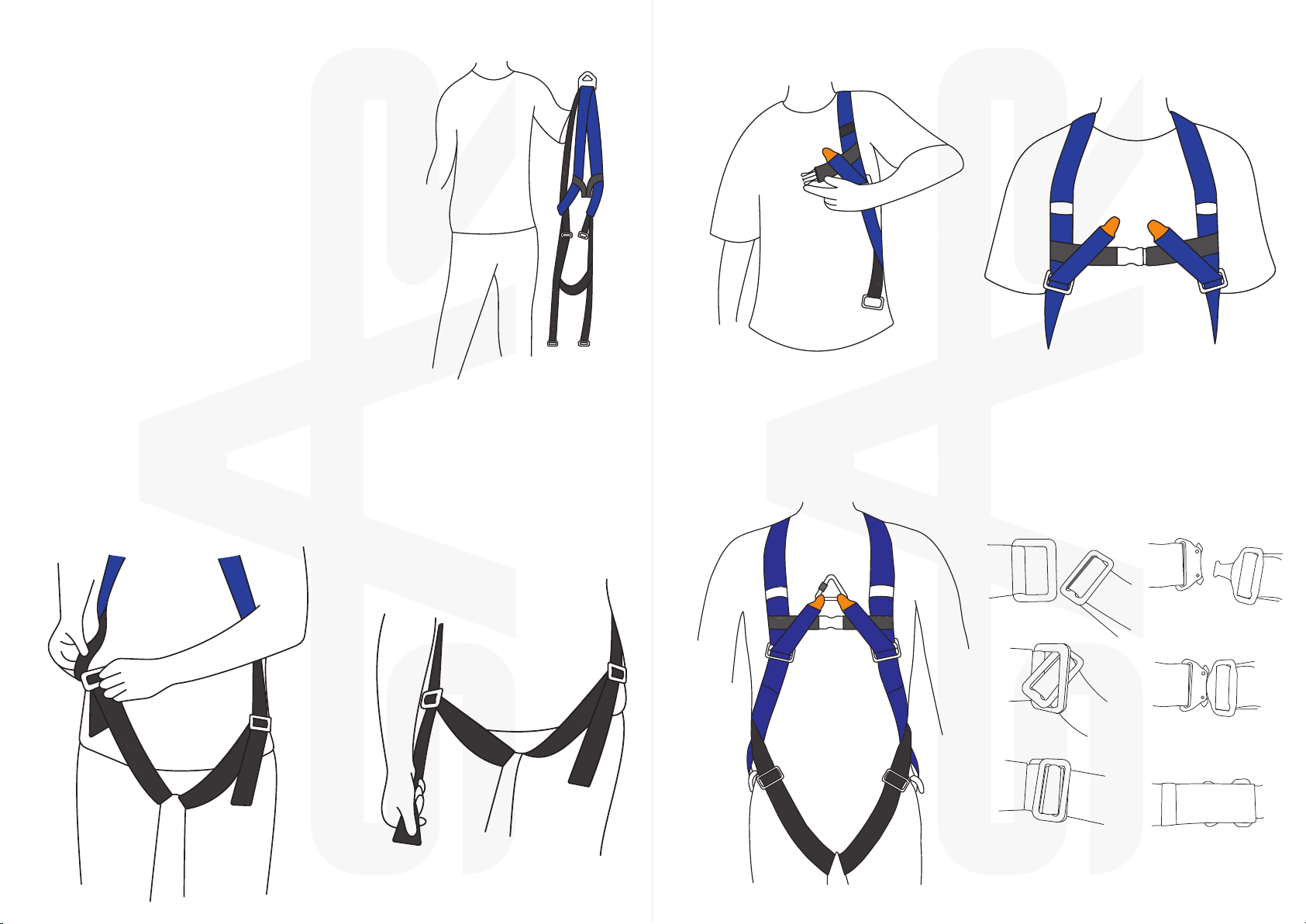
not interfere with the safe function of another. Twists
in the webbing and buckles fastened incorrectly, can
cause problems, weakness, serious injury or death.
Neatness is strength. Users should be trained,
competent or under the supervision of such a person.
Note: The information in this guide meets the PPE EU
Regulations 2016/425. It is not comprehensive and
cannot be substituted for the correct training, which
can be provided if required. If in any doubt please
don’t hesitate to contact us.
Safety:
The safety provided by this harness depends on its
strength and skill of the user. The strength will be
reduced through age, wear and tear, abrasion, cuts,
high impact loads, tight/sharp edges, knots, some
chemicals (e.g. alkalis, etc.), UV or failure to store and
maintain as recommended. This list is not exhaustive.
The SAR harnesses have a higher strength rating than
a sports climbing harness and will help against the
above however, there are exceptions, which include
chemical attack or very high temperatures. Do not
alter the product in any way. Any harness subjected to
a minor fall should be examined and discarded if
there is any sign of defect or any doubts about its
safety.
Lifespan:
This is difficult to estimate but we advise as follows:
Do not use more than ten years after the date of
manufacture, assuming it is used correctly and
correctly stored. The working life can vary between a
single use in extreme circumstances (e.g. highly
chemical environment, serious fall) to the maximum
of ten years, depending on how the product is used.
The working life will be reduced through age, general
wear and tear, abrasion, cuts, damage to component
parts, inappropriate ancillary equipment, high impact
load, prolonged exposure to UV light including
sunlight, elevated temperature (50° C max) exposure
to some chemicals (e.g. alkalis, etc.) or failure to store
and maintain as recommended. This list is not
exhaustive.
Inspection:
Before each use visually inspect to ensure the product
is in a serviceable condition and operates correctly.
An examination should be carried out at least every 6
months by a competent person authorised by the
manufacturer.
These inspections should be recorded paying
particular attention to areas of potentially high wear
such as attachment points, buckles, connectors and
sewn joints. Inspect as follows:
Textiles: Check for cuts, tears, and abrasions, damage
due to deterioration, contact with heat,
alkalis or other corrosives.
Sewing: Check for broken, cut or worn threads.
Metals: Check for cracks,distortion, corrosion, wear
by abrasion, burrs, worn or loose rivets or
screws, discolouration caused by extreme
heat (greater than 100° C) broken springs,
frays or cuts, seizure of moving parts,
broken or missing components.
Immediately withdraw from service any items
showing defects. The user’s life depends on it. All
repair work should be carried out by the
manufacturer or with their authorisation.
Anchorage
Anchor points should always be strong enough to
hold the user particularly in the event of a fall. They
should be at least 15kN. A webbing lanyard or rope
should be effectively sleeved to protect against
damage if structural members with sharp edges
cannot be avoided as anchorage points.
Anchor points, wherever possible, should be
above the user to limit Any fall to less than the
length of The safety line or lanyard.
Distance of a possible fall should be considered so as
to keep clear of contact with ground or other objects
below the work place. Check all user manuals of
ancillary equipment.
Back Attachment
EN361 Fall Arrest‘A’
Side Dee’s
EN358 Kestrel 4 Only.